The global magazine and marketplace for classic car enthusiasts, by enthusiasts.


Filter
Classic N.A.G. for sale - N.A.G. cars for sale
-

Chenard & Walcker Model G
The Chenard & Walcker is a 1905 Model G, equipped with a 5-liter, four-cylinder engine producing 20 horsepower, enabling the car to reach a top speed of approximately 85 km/h | 50 mp/h. The body is a Double Phaeton and was crafted by the renowned coachbuilder Jean-Henri Labouredette. In addition to the radiator b.. -
1939 Rolls Royce Wraith James Young Razor Edge Saloon
1939 Rolls Royce Wraith James Young Razor Edge Saloon Chassis Number: WEC72 Registration Number: 39D25 (Ireland) £200k spent upon the restoration of this car to make it in effect a brand new Rolls Royce Wraith being delivered 86 years late!!! Simply.. -
1936 Bentley Derby 4.25 Sedanca by Thrupp & Maberly
1936 Bentley Derby 4.25 Sedanca by Thrupp & Maberly Chassis number: B-36-GA Registration Number: CXE213 A stunningly beautiful car which wows onlookers wherever it is seen, this 4.25 Litre Derby Bentley Sedanca Coupe has fabulous and possibly unique aluminium Sedanca coachwork by Thrupp and Maberly... -
Cadillac V16 - Series 452 - 1930 - Imperial Sedan 4330
Offers invited a round € 200.000 - This ONE of 4 Survivors of Serie 4330 body style - book C.W. Cummings - 2014) ***excellent driving car, the V16 gives you a special experience, no other car has***https://www.prewarcar.com/a-stately-cadillac-v16-in-the-netherlandsBuilt; no 9 of 50 - Engine no. 700163Lengt.. -
1925 Lancia Lambda 5th Series Torpedo
With a monocoque body, four-wheel brakes, independent front suspension and V4 overhead camshaft engine, many enthusiasts view the Lancia Lambda as one of the great and innovative automobiles of all time. The Lambda was also successful in competition with privately entered cars finishing fourth and fifth behind the works OMs in the first Mille Mi.. -
1930 Bentley Speed Six
1930 Bentley Speed Six Chassis Number: SB2774 Engine Number: SB2772 Reistration Number: GH8974 New to market & freshly restored to perfection. This car has over the past two years been fully rebuilt & built up as a LeMans style tourer by noted Rolls Royce &.. -
Renault NN Torpedo Commerciale (1926)
Highlights Complete, coherent, unmodified exampleExcellent base for a full restorationAttractive 1920s torpedo body styleVery accessible entry priceIdeal for workshops or enthusiasts looking for a rewarding project Restoration project – Complete car – Solid base but major work r.. -
Société des Automobiles Pilain
The 1911 Pilain is the Type 4.0, equipped with a four-cylinder engine and a single Zenith carburetor. This car has undergone a comprehensive restoration over the past few years. Since the original body was too deteriorated to restore, it was decided to install an alternative body. The current elegant body is sourced from a Bianchi, which perfect.. -
Lane Model 15 | Steam car
This unique steam car is a completely original 1909 Lane Model 15, offering a highly distinctive design that sets it apart from most other steam vehicles. It is the only surviving Lane Model 15 in existence. Experts consider the Lane to be one of the finest steam cars of the early automotive era, produced between 1900 and 1910. Lan.. -
1934 Railton -Hudson Original Alpine Trials Racer
By 1933, Railton built a variety of the larger versions which were powered by Hudson. The Hudson engine and chassis were built in the US and exported to England for Railton. This 1934 Railton is one of the two original Alpine Trials cars sponsored by Railton and driven by Habmit Davids. Both cars not only completed the trials but also..


N.A.G.
D, 1902 – 1934
(1) Allgemeine Elektrizitäts – Gesellschaft, Berlin, 1902 – 1908
(2) Neue Automobil-Gesellschaft, Berlin, 1908 – 1915
(3) Nationale Automobile-Gesellschaft, Berlin, 1915 – 1934
The electrical concern A.E.G. became interested in the production of motor cars and bougth the Allgemeine Automobil-Gesellschaft (A.A.G.). They set up the Neue Automobil-Gesellscahft (NAG cars) organization to sell the NAG cars produced in the A.E.G. factory. The A.A.G. Klingenberg was continued until 1902 when A.E.G. acquired the firm of Kühlstein and its chief designer Joseph Vollmer. He designed the first NAG cars, the 2-cylinder NAG Model A and the 4-cylinder NAG Model B. Several improved NAG cars followed. NAG also produced commercials, especially buses, which appeared on the roads in large numbers. In 1908 AEG withdrew from car production, which was taken over by NAG cars. A light NAG car with a 6/12PS 1.570cc engine was marketed as the Puck after 1908; later this NAG car was renamed the Darling and re-engined with a 6/18PS unit. At least one NAG car was used by the Kaiser. The NAG car firm also produced electric and petrol-electric cars. A great variety of NAG cars was offered until 1914, headed by the NAG K8 with a 33/75PS 9-litre engine.
After World War 1 NAG cars concentrated on their NAG C4 with a 4-cylinder 33PS 2.536cc engine. This NAG car was the basis of the NAG C4b or NAG Monza sports version, which NAG car was quite successful in several events. In 1926 NAG cars took over the Protos factory and the Presto works were acquired one year later. Ohv sixes were sold under the name NAG-Protos. A V8 100bhp 4.5-litre NAG car appeared in 1931 and then NAG cars started experimenting with front-wheel drive. The V8 engine was also used in a front-drive NAG car, but this never reached the public. The small front-drive NAG Voran of 1933 had an opposed 4-cylinder 1.468cc engine and was based on Voran designs. This NAG car was not a success and led to the end of NAG car production in 1934. Commercial NAG cars were continued in conjunction with Büssing for some years.
Source: Georgano, encyclopedia of motorcar; HON
The information is written with the greatest of care. However, if you have any suggested amendments please contact us at office@prewarcar.com


Featured
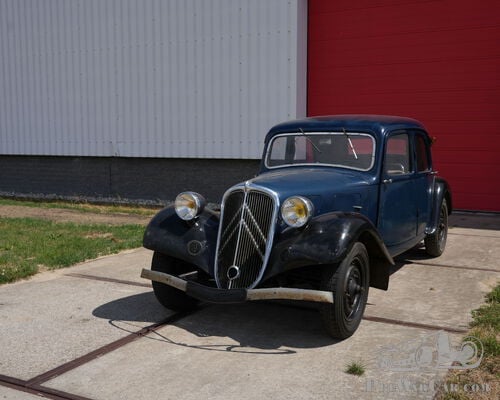
1935 Citroën Traction Avant
Early-production Traction AvantExceptionally original, unrestored conditionRecently part of a major museum collection
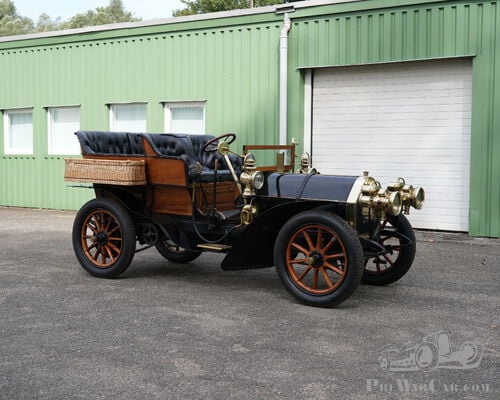
1904 Aster 16/20 HP Four-Cylinder Five-Seat Rear-Entrance Tonneau
Powerful four-cylinder engineFour-speed gearboxChain driveFive seatsMore than €100,000 recently invested
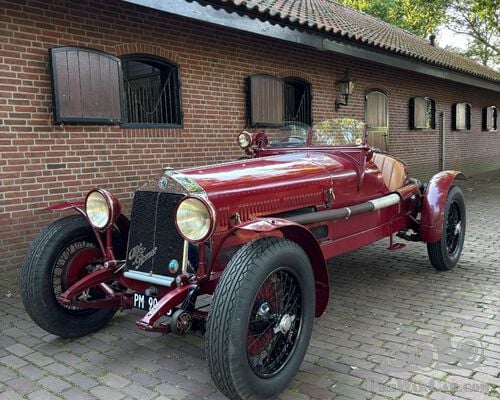
1930 Alfa Romeo 6C 1750 Spider
1930 Alfa Romeo 6C 1750 Spider with complete history from delivery to first owner in 1930 in Firenze till today with copy Libretto/license plate.