The global magazine and marketplace for classic car enthusiasts, by enthusiasts.


Filter
Classic Nash for sale - Nash cars for sale
Change your filters to get results, or show all
Sorry, there are no results with your filters Cars
.
Nash
US, 1917 – 1957
(1) Nash Motor Co, Kenosha, Wisc., 1917 – 1954
(2) American Motors Corp, Kenosha, Wisc., 1954 – 1957
Charles W. Nash, the former President of General Motors, acquired the Thos. B. Jeffery Co in July 1916, and from the 1918 season onwards the cars were marketed under his name, Nash cars. The first Nash car was a 4-litre six with push-rod-operated overhead valves, followed in 1922 by a 4-cylinder Nash car which also had overhead valves at a time when most American manufacturers adhered to the L-head. Rubber-mounted engines appeared in the same year on Nash cars, when Nash sold 41.000 medium-priced Nash cars (the Nash four cost $985, the Nash six about $500 more). In 1924 Nash cars acquired the defunct Mitchell concern at Racine and the ailing Lafayette Co of Milwaukee, producers of a luxury V8 (when the latter name was revived in 1934 it was used for an uninspired sv 6-cylinder machine selling for under $600). They also produced, in 1925 – 1926, the 6-cylinder Nash Ajax, an sv Nash cars that they developed into a cheap line. During the latter part of the Vintage era the Nash carcompany concentrated on 6-cylinder Nash cars, with side valves in the cheaper Nash car models and overhead valves in the higher-priced range, though 1930 saw a Nash car with a 4.9-litre straight-8 with dual coil ignition and overhead valves, a type that was progressively developed until 1942. Engines of this type Nash car were used in the British Jensen of 1939.
The Nash car company successfully rode out the Depression though sales dropped to below 15.000 Nash cars in 1933, when the Nash car company were building a really big eight Nash car with an 11ft 10in wheelbase and a capacity of 5.3-litres as well as two sixes and a smaller straight-8. Synchromesh had been adopted on Nash cars in 1932, and overdrive became an option in 1935, when the bigger Nash cars had the fashionable fastbacks and spatted rear wheels. Other options on the Nash car widely publicized in the later 1930s were seats convertible into a bed and the Nash car firm’s ‘Weather Eye’ system of air conditioning. Coil-spring independent front suspension and steering-column gear-change followed in 1939, in which year a version of the Nash Ambassador Six was available in England with the option of a Perkins 4.7-litre diesel engine in place of the usual push-rod ohv petrol unit. Unitary construction appeared for the first time on the inexpensive sv 6-cylinder 600 Nash car sedan, introduced for 1941 at $785. This Nash car was the ancestor of the famous Rambler series and reappeared in 1945. Only 6-cylinder Nash cars were made from 1945 until 1954, and with the advent of the Nash Airflyte range in 1949 unitary construction was standardized. These Nash cars had all four wheels enclosed, and a one-piece wrap-around windscreen.
In 1950 there came the experimental NXI Nash car convertible with an Austin A40 engine, later made for Nash cars by Austin of Birmingham as the Metropolitan, while in 1951 there appeared the 3.8-litre Nash-Healey roadster, a British Healey with an ohv 6-cylinder Nash car engine. From 1950 onwards the Rambler accounted for most of Nash cars production, but the original Nash carname survived the amalgamation with Hudson and the creation of American Motors in 1954. In 1955 the big Nash cars were fitted with an ohv 5.244cc V8 engine, this and its Ultramatic transmission being made by Packard. A 5.8-litre AMC-built eight was adopted in 1957 by Nash cars, but sales were negligible and the 1958 Nash cars were known as Rambler Ambassadors.
Source: Georgano, encyclopedia of motorcar; MCS
The information is written with the greatest of care. However, if you have any suggested amendments please contact us at office@prewarcar.com


Featured
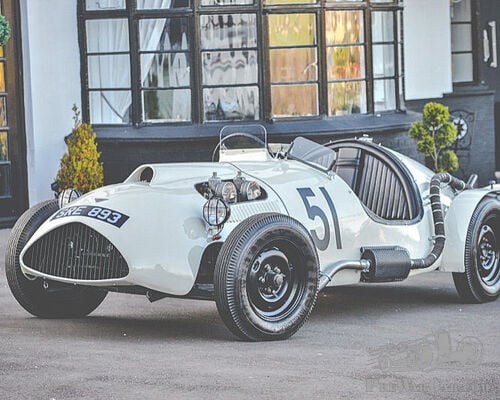
1933 Alvis 3.0 Special - One-Off Alloy Body | Period Competition Car | Featured in “Alvis – A Century of Drivers”
1933 Alvis 3. 0 Special - One-Off Alloy-Body | Period Competition Car | Featured in “Alvis – A Century of Drivers”
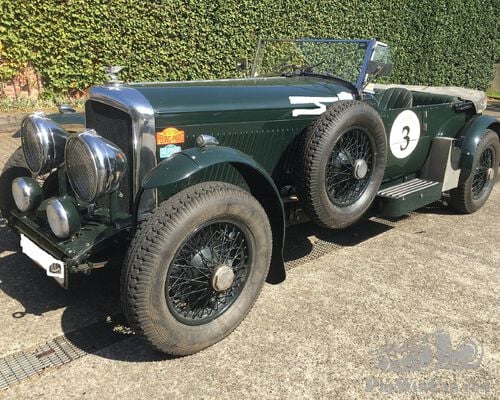
Bentley Derby Special Open Rally Car
This Bentley Derby, manufactured in 1935, has been rebuilt into a short and long-distance rally car. Full rebuilt engine in 2021, Since 2021 low mi..
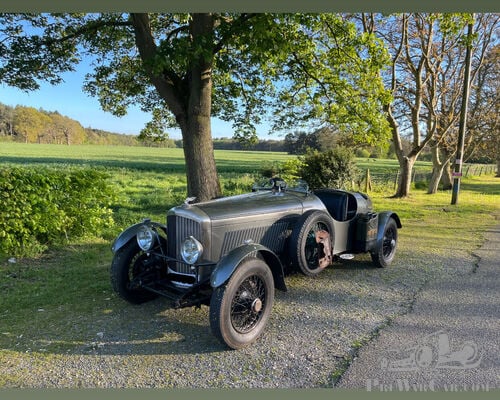
Derby Bentley Special 4-1/4
Sadly i am having to sell on my Bentley special ( Icarus). It is currently a work in progress and still needs finalising/ refining. A great o..