The global magazine and marketplace for classic car enthusiasts, by enthusiasts.


Filter
Classic Simplex for sale - Simplex cars for sale
-

1916 Simplex, Crane model 5
1916 Simplex, Crane MODEL 5CUSTOM MADE HISTORIC PRESERVATION VEHICLE – READY TO TOUR!This Simplex recently completed the 48th Modoc tour hosted by Rodney Flournoy. This five-day tour took place in the scenic northeast corner of California. The participants drove approximately 300 miles to a variety of beautiful destin..

Simplex
NL, 1899 – 1914
NV Maatschappij Simplex, Amsterdam
The first Simplex car was a belt-driven vis-à-vis made on Benz-lines, but by 1902 a new model Simplex car was introduced with a vertical single-cylinder Fafnir engine mounted at the front, wheel steering and single chain drive. Shaft drive came in soon on the Simplex car afterwards, and 1907 an 8hp 2-cylinder and 14/16hp 4-cylinder Simplex car were made. The largest model Simplex car was the 35hp 4-cylinder model of 1911, still with Fafnir engine. A considerable number of the smaller Simplex cars were sent, partly knocked down, to the Nederlands East Indies, and assembled there. Production of Simplex cars ceased with World War 1, and although a prototype 3-wheeler Simplex car with 10hp V-twin engine was shown in 1919, this Simplex car never went into production.
US, 1907 – 1917
Simplex Automobile Co Inc, New Brunswick, N.J.
After the 1907 bankruptcy of Smith & Mabley, the firm was taken over by Herman Broesel, who formed the Simplex Automobile Company. The best-known model of the new Simplex car company was the 50hp Simplex car, a massive chain-driven car of high quality whose 4-cylinder T-head engine had a capacity of 10 litres. The chassis price of the Simplex car was $4.500 and bodies were made for Simplex under contract by such firms as Quimby, Demarest, Holbrook and Brewster. In 1908 a stripped down version Simplex car won the 24 hour race at Brighton Beach, and famous drivers who drove for Simplex cars included George Robertson, Al Poole and Joe Tracy. The Simplex cars were designed by Edward Franquist who introduced a 38hp 7.8-litre shaft-drive model in 1911, and a 75hp 10-litre chain-drive roadster in 1912. By 1914 this Simplex car was the only chain-driven model in the range, and this Simplex car was said to be the last chain-driven American car. Some of these Simplex cars had a sharply-pointed V-radiator, although most Simplex cars used a flat, Mercedes-type radiator.
The 1914 Simplex car range consisted of the 38hp, 50hp and 75hp fours, and a 50hp six, but towards the end of that year a new Simplex car appeared with heralded a complete change in the Simplex car company. This was the 46hp L-head Simplex Crane Model 5, designed by Henry M. Crane who had replaced Franquist as chief designer of the Simplex cars after a company reorganization. The new Simplex car was a very high quality machine and carried beautiful coachwork, mainly by Brewster, but it lacked the sporting qualities of ìt predecessor. The Simplex car was made until 1917, and bodies were still being fitted to Crane chassis in 1921. By this time the Simplex car company had been bought by Hare’s Motors, and a re-organized company, the Crane-Simplex Company of New-York, made a few cars in 1923 and 1924.
France, 1920
The French Simplex car was quite a large open tourer with a bullnose radiator, but underneath the bonnet of the Simplex car there was a horizontal single-cylinder engine of 735cc. A special balance weight coupled to the connecting rod and to an eccentric was supposed to avoid vibration. Front wheel brakes were fitted on the Simplex car.
Source: Georgano, encyclopedia of motorcar; GNG
The information is written with the greatest of care. However, if you have any suggested amendments please contact us at office@prewarcar.com



Featured
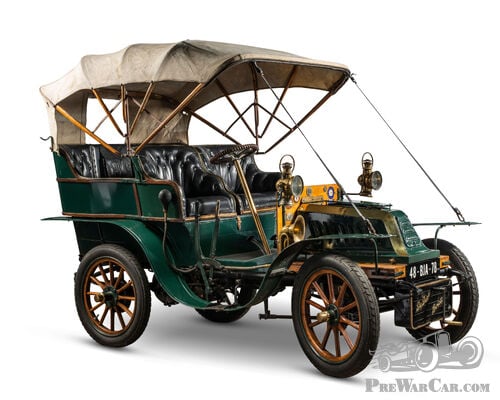
De Dion Bouton Type z in good running condition
De Dion Bouton Type Z from 1905. The car is in good condition, works and runs well. Serie number 36. Engine number 18190. French Carte grise.
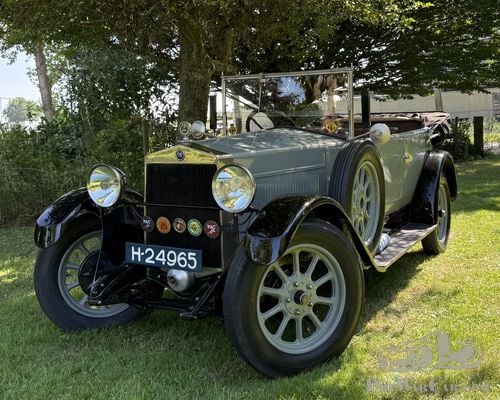
Fiat 509 Torpedo / Spider – Exceptionally Original and Complete
A Rare and Highly Original Example with Long-Term Dutch HistoryOffered for sale is an exceptionally original and remarkably complete Fiat 50..
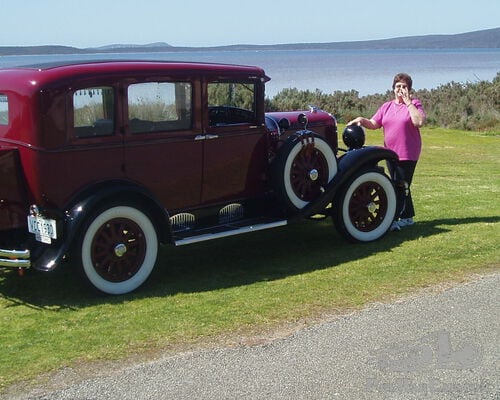
1930 Chrysler 66 Six-Wheel Equipped Royal Sedan
An exceptionally well restored and highly awarded Chrysler 66 Royal Sedan, with only two owners in nearly 97 years.The present owner ..