The global magazine and marketplace for classic car enthusiasts, by enthusiasts.


Filter
Classic Opel, Plymouth for sale - Opel, Plymouth cars for sale
-

1940 Plymouth P10 Deluxe Convertible Coupe | RM Sotheby's | The Hershey Auction
Sold | $43,680 USD One of 6,986 Deluxe Convertible Coupes produced for 1940Benefits from an excellent rotisserie restoration under previous ownershipL-head inline six-cylinder engine; three-speed manual with overdriveWonderfully presented in Boatswain Blue over red leather Richly appointed with a remark.. -
OPEL DOKTORWAGEN 1910
Old restoration on a very original car. The owner before me was a big dealership in Denmark who found it in 1939 and had it ever since . Photos from all the years goes with it , as well as other documents. It start easily and runs good . Comes with Danish registration-document -
1932 Plymouth Model PB Sport Roadster | RM Sotheby's | The Hershey Auction
Sold | $22,400 USD One of just 2,163 Sport Roadsters produced for 1932Final year for Plymouth's original Silver Dome four-cylinder engineEquipped with dual side-mounted spares, rumble seat, and folding rear luggage rackOne of Plymouth's most attractive and desirable pre-war open body styles By 1932, ..


Opel
D, 1898 to date
(1) Adam Opel, Rüsselsheim, 1898 – 1928
(2) Adam Opel AG, Rüsselsheim, 1928 to date
The Opel concern was well-established in bicycle and sewing machine manufacture when the five Opel brothers decided to start Opel car production. Opel cars bought the production rights of the Lutzmann and the first Opel-Lutzmann car appeared in 1898 with a rear-mounted single-cylinder engine. This Opel car was soon replaced by a 2-cylinder engine. The Opel car model was not very successful and the Opel brothers looked for another design. They reached an agreement with the French firm of Darracq and started to produce cars under licence in 1902. Opel importing Darracq’s chassis and mounting their own bodies. These Opel cars were advertised as Opel-Darracqs. Import of Darracq cars continued after Opel introduced the first of their own Opel car designs in 1902. This Opel car was a 10/12hp car with a 2-cylinder 1.884cc engine. In 1903 they produced their first 4-cylinder Opel car, an Opel 20/24hp. The Opel car range was completed with a 2-cylinder 8/14hp and a 4-cylinder 35/40hp Opel car in 1905 and in the following year co-operation with Darracq was discontinued.
The Opel car firm was very active in sports and racing events; in 1905 Opel cars gained more than 100 victories. The Herkomer and Prince Henry Trials saw Opel car entries and in the 1907 Kaiserpreis Race a third place was gained by an Opel car. Until 1911 Opel was one of the leading German car producers, offering a wide range of Opel cars from the very popular 2-cylinder Opel 8/14PS ‘Doctor’s Car’ to a Opel 33/60PS 9.240cc luxury model. In 1911 the Opel car factory was destroyed by fire, but after complete rebuilding which allowed the application of the most modern production techniques, Opel regained their position. The 10.000th Opel car was delivered in 1912, and the production of lorries was taken up in 1913. The biggest of the 1914 Opel car range, the 10.2-litre Opel 40/100PS, had overhead valves and this Opel car was credited with 75mph. The small 5/14PS and 6/16PS Opel cars became very popular in the years up to World War 1, and the heavier Opel car types were built in greater quantities. During the first years after the war political reasons prevented the resumption of large-scale production of Opel cars.
In 1923 the Opel car range covered seven Opel cars from 9/32PS to 30/80PS; five of them were cancelled when Opel installed an assembly line in 1923/1924 and started mass production of Opel cars on American principles, being the first German company to do so. The new 4/12PS Opel car – presented in 1924 – was almost a copy of the Citroën 5CV. This Opel car had a 4-cylinder 951cc engine and a two-seater body. This Opel car was commonly known as the Laubfrosch (tree frog) because of its green paint. Sales of this Opel car amounted to 39.000 by 1927. Opel started to build up a widespread service organization covering all German districts; Opel cars were the first German producers to guarantee repairs at fixed prices. After 1926 a four-seater body was used on a lengthened Laubfrosch Opel car chassis and engine capacity was raised to 1.016cc. This Opel car was made until 1929. Heavier Opel cars followed, such as the 4-cylinder, 2.612cc 10/45PS and various 6-cylinder Opel cars, still with side valves. In 1928 Opel were Germany’s largest car manufacturers, producting 37,5% of all cars in that country. It is interesting to note that Opel were then the biggest bicycle producers in the world.
Interesting experiments were carried out by Opel with rocket-driven Opel cars in 1927 and 1928 in co-operation with the rocket specialists Valier and Sander. Fritz von Opel drove the rocket-car on the Avus track at over 125mph.
The approach of economic crisis in the late 1920s made the Opel family decide to change their Opel car firm into a joint-stock company. The majority of the shares were acquired by General Motors. In 1929 Opel’s first 8-cylinder car was introduced, the 24/110PS, 5.970cc Opel Regent. In the same year a 4/20PS 1.016cc Opel car appeared as the successor to the range of small Opel cars which had started with the Laubfrosch.
The 1930 Opel cars were characterized by three model ranges. The small 4/20PS Opel car was developed into the Opel 1-litre (1931/ 1933), 1.2-litre Opel car (1933/ 1935), Opel P4 (1936/ 1938) and the Opel Kadett (1937/ 1939), the latter having an engine capacity of 1.074cc. This Opel car sold in England for a mere £135. The Opel Regent 1.2-litre (1932/ 1933) grew into the 1.3-litre Opel car (1934/ 1935) and the Opel Olympia (1935/ 1937), both having a 1.279cc engine. The 1938 Opel Olympia had an increased engine capacity of 1.488cc and an output of 37bhp. The 6-cylinder Opel car models of the 1920s were developed into the 1.8-litre Opel car (1931/ 1933) and 2-litre Opel car (1934-1937), the 2.473cc Opel Super (1937/ 1938) and the Opel Kapitän (1938/1939) with the same engine. The 6-cylinder 3.520cc Opel Admiral rounded off the pre-war range of Opel cars. Dubonnet-type independent suspension was introduced in the 1934 2-litre, and was standard in all Opel cars by 1939.
During the 1930s Opel ranked first in European car production. The 1935 Opel Olympia was the first mass-produced car with a chassis-less all-steel body. The Opel P4 at 1.450 marks was the cheapest car on the German market, a true four-seater Opel car of 32bhp capable of 55mph. The end of World War 2 brought the enforced dismantling of the Opel Kadett production lines. These Opel cars were transferred to Russia and the Opel Kadett, identical to the pre-war Opel car, re-appeared as the Moskvitch. At the Opel works production of Opel cars started again in 1947 with the Opel Olympia, followed in 1948 by the Opel Kapitän. Bodies and engines of this Opel cars were similar to the pre-war designs. While bodies changed frequently of Opel cars during the following years the engines were built according to the old proved design. In 1962 a new Opel Kadett appeared, built in a new factory at Bochum. This Opel car had a 993cc, 40bhp engine, increased in 1965 to 1.087cc. The Opel Olympia became the Opel Rekord in 1953 and its 1.488cc engine was supplemented by 1.680cc and 1.897cc Opel cars in 1959 and 1965 respectively. Overhead camshafts were adopted for this Opel car series in 1965. As the Opel Rekord L6, this Opel car was also available with the 2.605cc Kapitän engines. The Opel Kapitän’s 2.473cc power unit was increased to 2.605cc in 1959 and 2.784cc in 1965. The name Admiral was also revived in 1964 for an Opel car with Kapitän engines. In the same year the Opel Diplomat was introduced to top the Opel car range. V8 Chevrolet engines of 4.638cc (190bhp) and 5.354cc (230bhp) were used for this Opel model. Kapitäns and Admirals were also available with Opel Diplomat engines on request. Car production rose from 6.028 in 1948 to 623.989 Opel cars in 1965. The 1968 Opel car range was widened still further by the addition of fast-back 2- and 4-door Opel Kadetts, and a new Opel Olympia based on the Kadett, but available with 1.1-litre, 1.7-litre or 1.9-litre engines.
A sporting image began to emerge for Opel cars in 1969, with active support for Opel cars in rallies and the introduction of a Opel GT coupé combining Kadett mechanical elements with retractable headlamps and front disc brakes; with the optional 1.9-litre ohc engine this Opel car was capable of 115mph. Opel car components were also used in Belgian versions of General Motors’ new make, the Ranger. A new high-performance six-cylinder Opel car appeared in 1970, the Opel Commodore GS, its 2.8-litre engine offered with the option of fuel injection. A year later came Opel cars answer to the Anglo-German Ford Capri, the Opel Manta coupé. This Opel car had double-wishbone independent front suspension and a choice of 4-cylinder ohc power units with outputs of up to 90bhp. The same theme was perpetuated in a saloon, the Opel Ascona, which had front disc brakes as standard and was available with 1.584cc or 1.897cc engine. In May 1971 the Opel car factory converted an Opel GT to electric propulsion, and this Opel car covered a flying kilmetre at 117.2mph, breaking the official electric car record held since 1899 by Camille Jenatzy’s La Jamais Contente.
Redesigned versions of the intermediate Rekord Opel car series appeared in 1972; in addition to new 1.7-litre and 1.9-litre ohc engines, there was a 2.1-litre diesel option on the Opel car. During the year Opel replaced Volkswagen as the home market’s best-selling make. Opel cars offered a formidable diversity of models: the Opel Kadett with 1.078cc or 1.196cc engines; the Rallye Kadett Opel car with the option of a 1.9-litre 90bhp unit; the ohc 4-cylinder Opel Asconas and Opel Rekords; the Opel GT and Opel Manta coupés; the 6-cylinder Opel Commodore and Opel Admiral series; and the 5.3-litre Chevrolet-engined Opel Diplomat V8. Front disc brakes were standard on all Opel cars but the basic Kadetts, and only these and the V8 retained push-rod-operated ohv. The Opel Admiral and Opel Diplomat apart, Opel cars had fallen into line with Vauxhall, using rigid axles and coils at the rear, though various forms of independent front suspension were found. New for 1973 were a high-performance Opel Ascona, the 1900SR, and its Manta equivalent, the Opel Berlinetta. Both Opel cars had 90bhp 1.897cc engines.
Source: Georgano, encyclopedia of motorcar; HON
The information is written with the greatest of care. However, if you have any suggested amendments please contact us at office@prewarcar.com
Plymouth
US, 1928 to date
Chrysler Corporation, Detroit, Mich.
The 4-cylinder 21hp Plymouth car appeared in 1928 at a list price of $725 for a sedan. This Plymouth car replaced the earlier 4-cylinder Chryslers and represented a serious challenge for Ford and Chevrolet in their lowest price class. The Plymouth car had side valves, internal-expanding hydraulic brakes and ribbon-type radiator and gave the Plymouth car a close resemblance to the 1928 Chryslers and De Sotos, and Plymouth cars sold over 100.000 in its first year, even improving its sales position in the bleak economic climate of 1932. Plymouth cars adhered to four cylinders until 1933, when the Plymouth PD-series 6-cylinder was listed at less than $600. 1934 de luxe models of Plymouth cars had independent front suspension, but this was dropped after a year and did not reappear for some time on Plymouth cars. The standard engine in the later 1930 Plymouth cars had a capacity of 3.3-litres, rather smaller than that used in comparable Chevrolets and Fords: a small-bore 2.8-litre version Plymouth car was made for export up to 1939, but the name Plymouth was not usually found on Plymouth cars sold in England, which were nominally Chrysler Kew and Wimbledon sixes. After World War 2 evolution followed that of other Chrysler Corporation cars closely, the old-fashioned styling losing the Plymouth car division its long-held third place in American sales to Buick. Further, Plymouth cars retained the L-head six as its staple power unit right up to 1955, when Flight Sweep versions were introduced with over-square ohv V8 engines on accepted American lines in a variety of powers from 157 to 177bhp. The capacity of these Plymouth cars had 4.3-litres, while the six, now of 3.8-litres, remained available. These 1955 Plymouth cars were lower and longer than their predecessors and could be obtained with synchromesh, overdrive or automatic gearboxes.
The Plymouth Fury models of the ensuing decade represented a breakaway from the traditional Plymouth stolid family car, while the Plymouth Car Division was also responsible for Chrysler’s contribution to the compacts, the Plymouth Valiant launched for 1960. This Plymouth car had rather more European styling than its competitors, with a dummy spare-wheel moulding on the tail; interesting items of specification were the unitary construction of the Plymouth car, alternator ignition, and inclined in-line 2.8-litre ohv 6-cylinder engine. The influence of the Plymouth GT car on America resulted in the Plymouth Barracuda of 1965, a fastback coupé using the Valiant’s 8ft 10in wheelbase and a 4½-litre V8 power unit. Plymouth cars, like Ford and Chevrolet, was aiming at comprehensive coverage of the low and medium price market in 1966, with the compact Plymouth Valiant, the sports-compact Plymouth Barracuda, the medium-sized Plymouth Belvedere, the full-size Plymouth Fury, and the luxurious ‘VIP’ 4-door hardtop Plymouth car, offered only with a 5.2-litre V8 engine and selling for $2.930. An increasing emphasis on sporting Plymouth cars was detectable by 1968, when in addition to the established Barracuda there were two other sports coupés Plymouth car, the Plymouth GTX and the Plymouth Road Runner. All three Plymouth cars were available with 4-speed manual gearboxes and the 6.981cc 425bhp hemi-head V8 also used by Dodge. In 1970, when Valiant prices started at a low $2.172, there was also a Valiant sports coupé, the Plymouth Duster.
In 1971 Plymouth car company added a sub-compact to their Plymouth car range when they offered the 1½-litre Hillman Avenger as the Plymouth Cricket. The 1972 range of Plymouth cars embraced the Valiant on a 9ft wheelbase, the Barracudas and Satellites, and the full-size Furys with V8 engines and automatic transmission as standard. Engines in the Plymouth cars ranged from the Valiant’s 3.2-litre and 3.7-litre sixes up to the largest Chrysler unit, a V8 of 7.210cc. Electronic ignition was offered on the costliest Barracuda model. Casualties of new Federal regulations were the hemi-head engine and convertibles, and the same range Plymouth cars with minor improvements, among them manually-operated sun roofs, was offerd in 1973.
Source: Georgano, encyclopedia of motorcar; MCS
The information is written with the greatest of care. However, if you have any suggested amendments please contact us at office@prewarcar.com


Featured
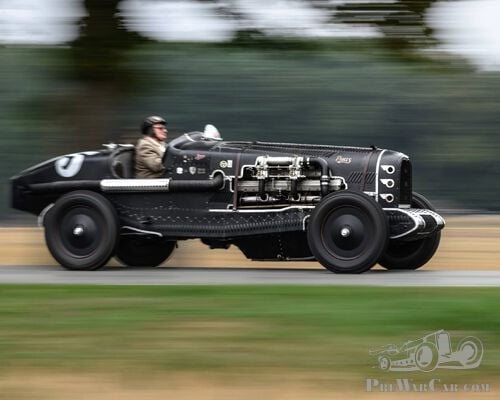
Delage DI, 1924, IL DRAGO RUGGENTE, one of few cars with an Aircraft engine and with war history.
A COLLECTOR'S OPPORTUNITY ONE-OFF. HAND-BUILT. UNREPEATABLE.A MACHINE WITH NO COMPARISONThere are special cars, there are racing cars..
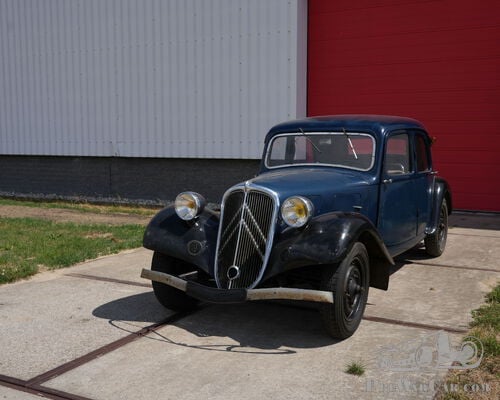
1935 Citroën Traction Avant
Early-production Traction AvantExceptionally original, unrestored conditionRecently part of a major museum collection
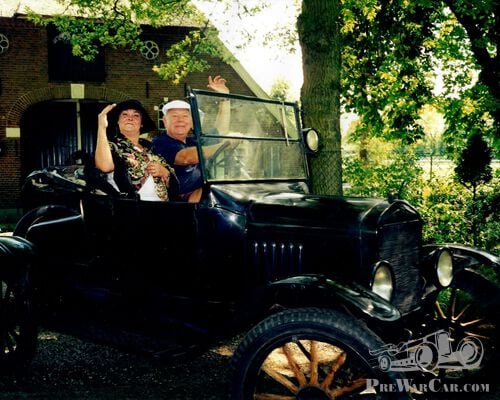
Zeer originele Ford Model T runabout
2 zits cabrio, motor is los, niet gerestaureerd, volledig orgineel, ingevoerd uit california in 1998, van de 2e eigenaar (m'n Oom) die hem van zn b..