The global magazine and marketplace for classic car enthusiasts, by enthusiasts.


Filter
Classic Flint, Orient for sale - Flint, Orient cars for sale
-

1905/6 Orient Buckboard
Build by Waltham , mass. Usa . very original and unrestored , except the engine which is restored and running .Known history back to before ww2 . Last ovner found it in 1950.Eur 25.800

Flint
US, 1902 – 1904
Flint Automobile Co, Flint, Mich.
The Flint was a light two-seater runabout with a rear-mounted single-cylinder engine and no mudguards. The Flint was designed by A.B.C. Hardy who was later general manager of Marquette and then Chevrolet. Flint is sometimes erroneously called the Hardy after the designer.
US, 1923 – 1927
Flint Division, Locomobile Co of America, Long Island City, N.Y., 1923 – 1924, Elizabeth, N.J., 1924 – 1927, Flint, Mich., 1924 – 1926
Fitted with a 7-bearing crankshaft and a steel tube for added reinforcement, the Flint occupied an important niche in William C. Durant’s car empire. With its 6-cylinder Continental engine and a price of less than $2.000 for the closed models, Flint was popular in its class and as many as 3.000 Flint cars were sold in a year. Lockheed hydraulic 4-wheel brakes came with the 1925 Flint model, and during the company’s last two years there were two big sixes of 3.8-litres and 4½-litres, as well as the 2.8-litre ‘Flint Junior’. A compact six Flint with rear wheel brakes only.
Source: Georgano, encyclopedia of motorcar; GNG, KM
The information is written with the greatest of care. However, if you have any suggested amendments please contact us at office@prewarcar.com
Orient
US, 1898 – 1908
Waltham Mfg Co, Waltham, Mass.
The Orient car company made an experimental electric runabout in 1898, but did not put this Orient car into production. Their first petrol-engined Orient cars were motor cycles, tricycles and light runabouts powered by De Dion engines. In 1902 they introduced the Orient Buckboard, a very simple Orient car consisting of two seats on a wooden platform, with a 4hp air-cooled engine geared to the rear axle, and, originally, only one speed. There were no springs on this Orient car, as the wooden platform was said to have enough resilience. The weight was 350lb and the price $375.
Although the simple Buckboard was continued, more sophisticated Orient cars were gradually introduced, including a four-seater version Orient car which in turn became a side-entrance tonneau. Wheel steering and small bonnets to cover the driver’s feet appeared in 1904, although the engine of the Orient car was still at the back, and the Buckboard ancestry remained obvious.
In 1905 a completely new Orient car appeared, known as the Waltham Orient. This Orient car had a 4-cylinder air-cooled 18/20hp engine mounted in front in the conventional manner, friction transmission and shaft drive. A slightly smaller 16hp Orient car model was also made. In 1908 Waltham merged with the C.H. Metz Company, and for the following year the cars were known as Metz.
Source: Georgano, encyclopedia of motorcar; GNG
The information is written with the greatest of care. However, if you have any suggested amendments please contact us at office@prewarcar.com


Featured
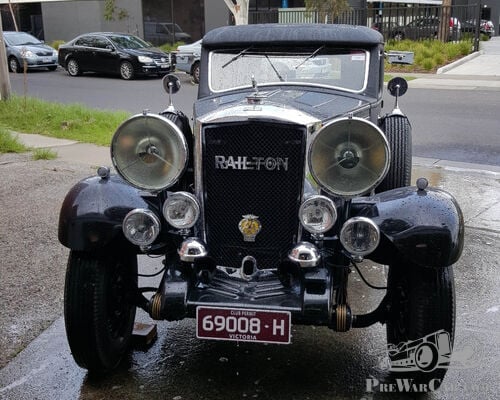
Railton straight 8 sports coupe for rallying REDUCED PRICE run with the bentleys at a fraction of the price
1934 Railton Sports CoupeBuilt for long distance rallyingRebuilt 2017built up at a cost of $160,000AUD, OFFERED FOR SALE AT A ..
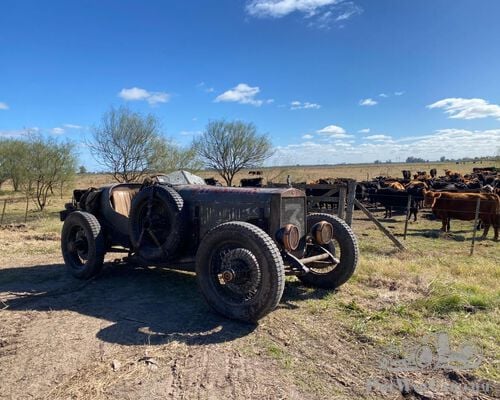
Studebaker 1927 for sale
Authentic race car of the time - Everything is working - All parts of its original mechanics - I have the history of the car - 6 cylinders - Ready ..
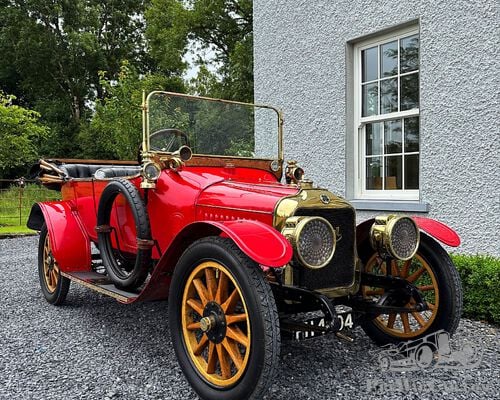
1914 Brasier
1914 Brasier Tourer 9ABrasier were a French manufacturer who were in business from 1901 until 1930, when the company became victim of the gr..