The global magazine and marketplace for classic car enthusiasts, by enthusiasts.


Filter
Classic Overland, Stoewer for sale - Overland, Stoewer cars for sale
-

1910 Overland Model 46 Roadster
1910 Overland Model 46 RoadsterChassis number: 46366Registration Number: BF7057 This Model 46 two-seat roadster has right-hand drive, as did all Overlands before 1915. The car was imported into Norway from the USA in 1969 and then to Sweden by the family the previous owner purchased it from. The Overland .. -
1924 Stoewer type D3 roadster
Rare opportunity to buy a vintage 1924 Stoewer type D3 roadster in fully restored condition. More than € 50K were spent in 2018 and 2019 on its restoration . Detailed work invoices come with the car. A video can be sent on request . Price € 64000 ex Eibergen Netherlands imported EEC.


Overland
US, 1903 – 1963
(1) Standard Wheel Co, Terre Haute, Indiana, 1903 – 1905
(2) Overland Co, Indianapolis, Indiana, 1905 – 1907
(3) Willys-Overland Co, Toledo, Ohio, 1908 – 1963
The makes Willys, Overland and Willys-Knight are inseparable, if only ecause of their confusing nomenclature. The original product of the Standard Wheel Co, as Overland cars were originally called, was a tiller-steered single-cylinder runabout with solid tyres which differed from most of its contemporaries in having its engine mounted in front under a real bonnet. This Overland car sold for $595. This Overland car had grown up by 1905 into a wheel-steered 1.3-litre twin, still with planetary transmission, and the company changed its style and moved to Indianapolis. Financial difficulties In 1907 brought John North Willys, and Elmira, N.Y. automobile dealer into the picture, and under his ownership a $1.250 4-cylinder Overland cars was produced, this having a pedal-controlled planetary transmission in the Ford manner, separately-cast cylinders, and a transaxle. There were two sixe-cylinder Overland cars in 1909, an Overland car at $2.000, and the 45hp Willys costing $250 more. Both the Willys name and multi-cylinder engines disappeared in 1910, and production of 4-cylinder Overland cars was concentrated in the old Pope factory at Toledo. During these years Willys continued to distribute the Marion, for which he had held an agency in the Elmira days. High-tension magneto ignition was used on the 1912 Overland cars, which included a 3.2-litre 2-speed Overland Model 58 at $850, a 3-speed version (Model 59 Overland car) with conventional gearbox at $900, and two bigger 4 Overland cars at $1.200 and $1.500 respectively. By 1914 Overland cars had moved into the ranks of the best-sellers with the 79 series Overland car at $950, a 4-litre car which helped to sell 80.000 Overland cars that year. 1915 saw a sv Overland 6 at $1.145, with the group moving up into second place behind Ford in the sales race. Willys-Knight, still a young make, was placed eighteenth: and in 1916 a second Willys 6, with 5-litre engine, joined the range, to remain there for three seasons. Willys-Knight had a V8 on a 10ft 5in wheelbase for $1.950 in 1917, but in 1919 4s Overland cars only were being made, the chassis L-head Overland car having made its appearance at the low price of $495. The 4-cylinder Willys-Knight had 3.3-litre engines and sold around the $1.400 mark.
In 1920 Willys Overland Crossley Ltd was formed in England with works at Stockport: this was a subsidiary of Crossley Motors Ltd, and assembled Overland cars for the British market. It originated nothing save in 1924 version of the Overland car powered by a 1.802cc Morris-Oxford engine. Overland cars continued to sell well in America, the Overland Model-92 ‘Redbird’ appearing in 1923 and helping to push the year’s sales up to 196.000 Overland cars. Sixes were back in the Overland carprogramme for 1925, the Overland car being a straightforward 3.3-litre sv machine selling for $895, while Willys-Knight’s Model-66 had a 60bhp 3.9-litre unit and front wheel brakes, and cost $1.845. It supplanted the sleeve-valve 4s the following year, and 1926 also saw the first of Overland cars 2.2-litre 4-cylinder ‘Whippet’ series, priced at $625: these Overland cars repeated the success of the 1919 type. ‘Whippets’ had front wheel brakes in 1927, in which year a companion 2.4-litre 6 Overland car was listed, as well as a smaller and cheaper Model-70 Willys-Knight. This could be bought for only $1.145 in 1928 – a record year both for the group and for the Knight-engined machines, which found 55.000 customers. Other Willys-Overland car products during this period were the Stearns-Knight and Falcon-Knight. The Whippet Overland car was restyled for 1929. The Whippet was now a Willys rather than an Overland car, and in 1931 the 4-cylinder cars were dropped. Sales also slumped, and the sleeve-valve Willys-Knights were allowed to die out with the 87bhp Model-66E of 1932. From 1933 to 1936 the Overland car company struggled through a receivership, making only a 2.2-litre sv 4, the Overland Model 77, with some pretensions to aerodynamic shape and a low price of $445, but this Overland car was brought up to date in 1937 with new styling and synchromesh. The Overland car acquired hydraulic brakes in 1939, reverting briefly to the name of Overland cars: both name and styling of the Overland car were different again by 1941, when the Overland car went under the designation ‘Willys-Americar’, with roomier bodywork, hypoid final drive, and a list price of $705.
During World War 2, Willys-Overland cars, along with Ford, were responsible for series production of the famous 4x4 Bantam inspired ‘Jeep’, and Willy-Overland cars continued its manufacture to civilian account after the War, licences being sold to Hotchkiss in France and Mitsubishi in Japan among others.
Source: Georgano, encyclopedia of motorcar; MCS
The information is written with the greatest of care. However, if you have any suggested amendments please contact us at office@prewarcar.com
Stoewer
D, 1899 – 1939
(1) Gebrüder Stoewer, Fabrik für Motorfahrzeuge, Stettin, 1899 – 1916
(2) Stoewer-Werke AG vorm. Gebr. Stoewer, Stettin, 1916 – 1939
The Stoewer car factory developed out of the Stoewer ironworks and was among the pioneers of the German car industry. After manufacturing motor cycles, tricycles and quadricycles for two years, Stoewer turned to cars in 1899. The first Stoewer car had a rear-mounted 2-cylinder engine. 4-cylinder Stoewer cars followed in 1901, and electric Stoewer cars were also produced. Best known were the 2-cylinder Type T Stoewer car (2.280cc and 3/12PS), the 4-cylinder Stoewer P4 (3.052cc and 11/22PS), the Stoewer G4 (1.500cc and 6/12PS) and the 6-cylinder Stoewer P6 (8.820cc and 34/60PS), evolved in the 1905-1907 period all Stoewer cars with shaft-drive. The Stoewer B1 of 6/16PS and the Stoewer B6 of 9/22PS which appeared in 1910 were also built by Mathis under licence. The G4 Stoewer car was the basis for the Stoewer B5, which Stoewer car in 1912 became famous by setting up a record at Brooklands with 67.7mph. The new range of Stoewer cars which appeared in 1913 was also based on successful earlier cars. They were the Stoewer C1 (6/18PS), Stoewer C2 (10/28PS) and C3 Stoewer car (6-cylinder and 19/45PS). Shortly before the outbreak of World War 1 the Stoewer car range was headed by the F4 Stoewer car with a 4-cylinder, 8.8-litre 33/100PS ohc engine. After the war an enormous Stoewer car appeared, the Stoewer D7, using a 6-cylinder 11.2-litre 42/120PS aero engine, as well as some conservative sv 4- and 6-cylinder Stoewer cars with rear wheel and transmission brakes. Front wheel brakes appeared on Stoewer cars in 1925. Stoewer introduced 8-cylinder Stoewer cars in 1928. These were the Stoewer Superior, Stoewer Marschall, Stoewer Gigant and Stoewer Repräsentant with engines ranging from 2-litres and 45bhp to 4.9-litres and 100bhp. The Stoewer car firm re-entered the economy class in 1931 with the V5, a front-driven Stoewer car with a V4 1.188cc engine, followed by the front-drive models R140 (1.369cc), R150 (1.488cc) and R180 (1.769cc). Another 8-cylinder was the front wheel drive Greif V8 with a 2.488cc engine, which was replaced by the conventional 6-cylinder 3.609cc Arcona Stoewer car in 1938. In 1934 the 1½-litre 4-cylinder Stoewer car and 2½-litre V8 Stoewer car were shown at the Brussels Salon by Monsieur Dewaet under the name D.S. (Dewaet-Stoewer). The Greif Junior was built under Tatra licence with an opposed 4-cylinder 1.474cc engine. It succeeded the Röhr Junior. In the middle of the range was the Stoewer Sedina with a 4-cylinder engine of 2.4-litres.
Production of private Stoewer cars was given up at the outbreak of World War 2 in 1939. The Stoewer car factory was destroyed during the war and production of Stoewer cars was not resumed.
Source: Georgano, encyclopedia of motorcar; HON
The information is written with the greatest of care. However, if you have any suggested amendments please contact us at office@prewarcar.com


Featured
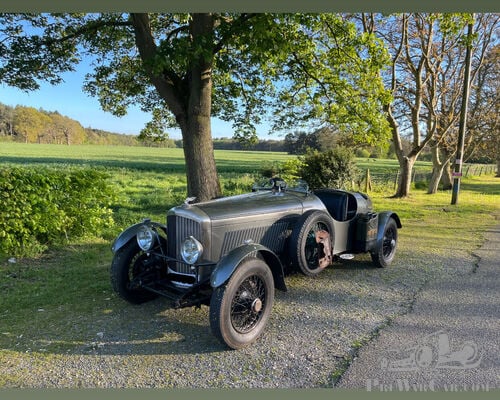
Derby Bentley Special 4-1/4
Sadly i am having to sell on my Bentley special ( Icarus). It is currently a work in progress and still needs finalising/ refining. A great o..

1915 Rolls-Royce Silver Ghost Barker Tourer
⁃ An exceptionally rare original bodied pre-war Silver Ghost⁃ Desirable Barker tourer in exciting barn find condition⁃ ..
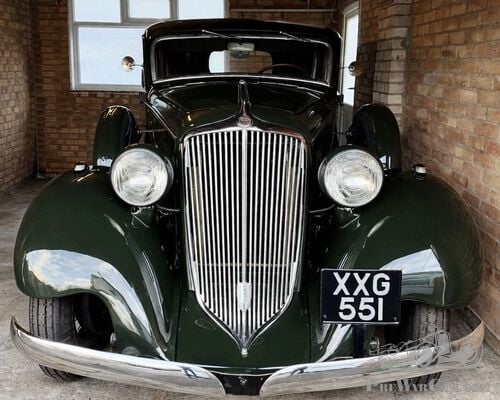
Graham Model 64 Standard Eight 'Blue Streak'
‘The most imitated car on the road’ One of the most significant pre-war American cars ever built. One of 23 known to exist glob..