The global magazine and marketplace for classic car enthusiasts, by enthusiasts.


Filter
Classic Paige for sale - Paige cars for sale
-

Rolls-Royce Phantom II Coupé de Ville
One of the most elegant Phantom II ever made. Ordered new by Armand Esders just after he bought his Bugatti Royale Roadster and also without headlights ( “as one does not drive by night”). A car of pure and minimalist elegance, but fitted with very exclusive luxurious fittings. A piece of art on wheels which has never been shown at any Concours .. -
1932 - Graham " Lucenti " Indianapolis
Original participant of the 1932, 1934 and 1935 Indy 500. Best result: finishing 10th overall in the 1934 Indy 500 with driver “Herb” Ardinger.• Genuine Indy 500 racer.• Graham Blue Streak 8 cylinder based chassis and engine.• 1 owner between 1953 to 2006.• Road legal 2-seater car with Dutch registration.• FIA .. -
1930 Rolls-Royce 20/25 Barker Sedanca de Ville GSR40
An early, vintage example, stylish and in fine condition. The car was originally exhibited at the London Olympia Motor Show, finished in Ulster Blue, with blue grey cloth to the rear, silver plated fittings and blue leather to the front. Some of this, including silver plated door furniture, remains to this day, and blue is still the theme. Appea.. -
Lincoln 1930 Tonneau Cowl Sport Pheaton 176-B
This beautifull shaped Lincoln 1930 Tonneau Cowl Sport Pheaton 176-B which was sold for 4.400,- USD in 1930 and weighed 4.900 Pounds, a total of 90 where built in 1930 For more information please contact me FRANK KENNIS phone: 00.31.622.420.766 or mail me: info@KennisCars.NL Frank Kennis Phone: 00.31.622.420.766 or mail me: info@KennisCars.NL www.. -
BMW 327/328 Sports Cabriolet
From a real barn find in an old hall with classics, somewhere in the Netherlands, to a totally restored BMW 327 Sports Convertible with the original and fast 328 engine. The restoration of this BMW 327, commissioned by a true enthusiast, was carried out by some well-known and renowned specialists in the Netherlands. Documentation of the restaurati.. -
Stanley Steamer 1919 touring
Very original . Runs good and has new boiler , with pressure test.Use it from day one. Has Danish registration document .Price : please ask ! -
Riley 12/4 Sports Special
The 1937 Riley 12/4 Sports Special sits at the intersection of two important British motoring traditions: Riley's sophisticated pre-war engineering and the long-standing culture of building "specials" from older chassis.The Riley 12/4: An Advanced Sporting CarThe underlying Riley 12/4 was introduced in 1935 as Ri.. -
1930 Packard 740 Custom Eight Roadster
A new arrival at Oldtimer Australia is this very impressive, opulent 1930 Packard 740 Custom Eight Roadster (7th Series).Ask the Man Who Owns One was Packards famous advertising slogan. It was a simple but powerful line, suggesting that the best endorsement of a Packard car came from its owners themselves - reinforcing the brands reputati.. -
1936 Lagonda LG45 Drop head Coupe
1936 Lagonda LG45 Drop head Coupe Chassis number: 12104 Registration number: HXV183 (Previous) Fully Nut & bolt restored some years ago; this car has seen very sparing dry weather only use ever since & has also been the winner of some Lagonda club awards. Unusually the c..


Paige (-Detroit)
US, 1908 – 1927
Paige-Detroit Motor Car Co, Detroit, Mich.
The first model of the Paige Detroit car company was a two-seater roadster powered by a 2-stroke, 3-cylinder engine of 2.2-litres. In 1910, the power unit of this Paige Detroit car was changed to a 4-stroke, 4-cylinder engine, and the following year the Paige Detroit car’s name was changed to Paige. For 1914, a 6-cylinder Paige car model with a rating of 36hp was added. In 1916 two sixes Paige cars were built with capacities of 3.7 and 4.9 litres (1915 was the last year in which 4-cylinder engines were used). The larger model, the Paige Six-46 was made as a seven-seater touring car and in three closed types Paige cars. The smallest six was offered only as a five-seater tourer Paige car.
The 1919 models were known as Paige-Linwood (Duesenberg engine) and Paige-Larchmont (Continental engine).
The most notable Paige car was the Paige Daytona roadster, first produced in 1922. This Paige car was a sporty three-seater with a 6-cylinder, 6-litre engine. The third seat on the Paige car was a drawer-like affair on the right side which pulled out over the running-board. This Paige car had wire wheels and was named to commemorate the 1921 record of 102mph by a stripped version of this model. The Paige Daytona was continued until 1926.
From 1921 on, the radiator shell of the Paige car was remarkably similar to that of the more familiar and later Bentleys. For the last model year of 1927, the Paige car was offered with three chassis using 6-cylinder engines, and one with a straight-8 engine.
A cheaper Paige car from 1923 to 1926 was the Jewett. In 1928, the Paige car became the Graham-Paige car.
Source: Georgano, encyclopedia of motorcar; GMN
The information is written with the greatest of care. However, if you have any suggested amendments please contact us at office@prewarcar.com


Featured
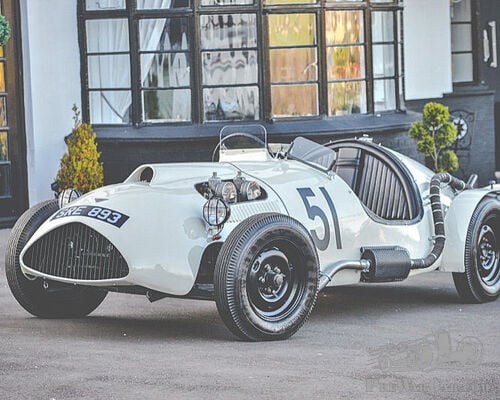
1933 Alvis 3.0 Special - One-Off Alloy Body | Period Competition Car | Featured in “Alvis – A Century of Drivers”
1933 Alvis 3. 0 Special - One-Off Alloy-Body | Period Competition Car | Featured in “Alvis – A Century of Drivers”

Daimler Flat six 15 Saloon - Fluid Flywheel / pre-selector
The E20 was manufactured between 1935 and 1939. It offered the choice of a coachbuilt saloon, Sports Saloon, Fixedhead Coupé and Drophead Coupé bod..
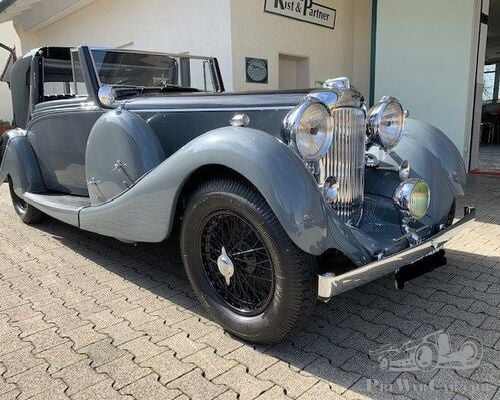
Lagonda LG 45 Coupe de Ville Sedanca by Mayfair
The successor to the M45, the LG45 was built around the same highly capable, competition-proven 4.5-litre Meadows inline-six engine, but featured r..