The global magazine and marketplace for classic car enthusiasts, by enthusiasts.


Filter
Classic Star, Peugeot for sale - Star, Peugeot cars for sale
-

Peugeot Type 91 Electric 1907
A unique Peugeot, electric driven by a power unit from an electric commercial car.Lovely four seater torpedo body.4 speed chain-driveEasy to drive , normal use of the gearbox and clutch.Ideal car for show , to drive without exhaust smoke .Original 4 cylinder engine (with frost damage) is included in the sale


Star
GB, 1898 – 1932
Star/ Starling/ Stuart
(1) Star Motor Co, Wolverhampton, Staffs., 1898 – 1902
(2) Star Engineering Co, Wolverhampton, Staffs., 1902 – 1909
(3) Star Cycle Co, Wolverhampton, Staffs., 1905 – 1909
(4) Star Engineering Co Ltd, Wolverhampton, Staffs., 1909 – 1928
(5) Star Motor Co Ltd, Wolverhampton, Staffs., 1928 – 1932
Edward Lisle Sr’s Star Motor Co, an offshoot of the Star Cycle Co, produced its first Star car in 1898, and offered the Star car for sale in the following year. The Star car was a Benz-based machine, with a single-cylinder, water-cooled 3½hp engine, belt primary drive and chain final drive. It was an improvement in that water circulation on the Star car was assisted by a pump. In 1900 there followed a 2-cylinder Star car with 3 forward speeds, still on Benz lines. 1901 brougth De Dion-engined single-cylinder Star cars, and 1902 an 8hp twin of Panhard type in addition. Other, larger Star cars of Panhard ancestry joined the 8hp, up to a 20hp four Star car. By 1904, although a De Dion-powered single and Panhard-type twin were still there, the bigger machines were of Mercédès pattern, these Star cars came with honeycomb radiators, mechanically-operated inlet valves and pressed-steel frames. All veteran Star cars up to 1914 were extremely well-made, well-furnished, conventional, rather expensive cars lacking in technical originality, showing a line of development appearance in the 1907 range. The best-known Star car of the veteran period was the excellent 15hp Star car of 1909, a shaft-driven 2.8-litre four which had become the 3-litre 15.9hp by 1914. A great variety of other Star cars, basically similar models were turned out, not only by Star but also by the Star Cycle Co. The latter, run by Edward Lisle Jr, had made motor tricycles and bicycles, and produced the Starling car in 1905. It had 2 forward speeds and a De Dion single-cylinder engine, but was otherwise of Panhard type, with armoured wood frame and chain drive. One year later the Star car company supplemented it with the more modern Stuart car, which had 2-cylinders, 3-speeds and shaft drive. This name was dropped in 1908, all models being called Starlings, but these too, disappeared in 1909 when Star cars cheaper line was entrusted to the new Brion Motor Co, a more indepented concern that was still run by Edward Lisle Jr. So popular was the Star car that its makers were among the six largest in the country before 1914.
The 15.9hp Star car was continued after World War 1, together with another sv four Star car of pre-war origin, the 20hp Star car of 3.8-litres. A modern light Star car of fashionable type, the 11.9hp, arrived in 1921. This Star car used a 1.795cc sv engine with a detachable head, made in unit with a 3-speed gearbox which had central change. By 1924, the 11.9 Star car had grown up into the 2-litre 12/25hp Star car. It shared cylinder dimensions with the 18hp Star car, which was a new 3-litre six. The 12/25 Star car could be had as a very fine fast touring car with overhead valves and 54bhp, in which form the Star car was called 12/40hp. Thereafter, the Star car range reverted to its pre-war complexity. By 1927, there were three sv Star car models and two additional and more up-to-date Star cars with overhead valves. The 14/40hp Star car, new in 1926, was a solid 2-litre, ohv machine which in spite of having only 4-cylinders and 3 forward speeds, this Star car was a notably smooth and flexible car, thanks to a 5-bearing crankshaft. The ohv 20/60hp Star car, a 2½-litre six with the same bore and stroke as the 14/40 and a 7-bearing crankshaft, was the most luxurious Star car. A light six, the popular ohv 18/50hp, joined the Star car range in 1928, the year of the Star car company’s acquisition by Guy, and replaced the 14/40 Star car for 1929. By this time, the sv Star cars had gone, leaving the two sixes. As the 18hp Star Comet and the 21hp Star Planet, these Star cars were revised with handsome bodies and very full, luxurious equipment, including one-shot chassis lubrication, thermostatically-controlled radiator shutters and a built-in jacking system. Two other engines, of 14hp (2-litres) and 24hp (3.6-litres) were also obtainable in Star cars for 1932, as alternative Comet and Planet power units. These Star car were the last new Star cars, for they were too expensive to make, and the times favoured the mass-produced economy car. Production of Star cars ended in March 1932, but the unsold stock was sold by McKenzie and Denley of Birmingham, and the Star car was quoted in the Buyer’s Guide lists until 1935.
US, 1903 – 1904
(1) Star Automobile Co, Cleveland, Ohio
(2) H.S. Moore, Cleveland, Ohio
This Star car was driven by a single-cylinder, watercooled engine of 1.9-litres, mounted beneath the front seat, with false bonnet and coil radiator in front. A champion planetary transmission and double chain drive was used on this Star car. Both two- and five-seater Star cars were made, the latter with rear entrance.
US, 1908
Star Automobile Co, Chicago, Ill.
Star runabouts were offered in three models, selling for $500, $600 and $700 respectively. The smallest Star car was an open two-seater, and shaft drive was employed on all Star cars.
US, 1908
Model Automobile Co, Peru, Ind.
The short-lived Star car from Peru was offered in conventional 2- and 4-cylinder forms. The twin was chain-driven, while the big, expensive four Star car ($4.000) had shaft drive.
US, 1922 – 1928
Durant Motor Co of New Jersey, Elizabeth, N.J.; Lansing, Mich; Oakland, Calif.
William Crapo Durant’s Star Four was one of the most serious attempts to take away some of the Model T Ford’s market, for the cheapest practical car. Unlike the Ford, the Star car was an assembled machine.The Star car had a 2.2-litre, 4-cylinder engine by Continental, and was conventional in design in every way except the gearbox, which was separate; a feature common to all the vehicles in Durant’s empire, but very unusual in American mass-produced cars by the early 1920s. The touring Star car cost only $443 in 1923, which helped Star to be the seventh biggest seller in America that year. The Star car was sold outside the United States as the Rugby. In 1926, a 2.8-litre six Star car was introduced. Front wheel brakes appeared in 1927 but a year later the Star car make disappeared in the collapse of the Durant interests. By this time, 250 Star cars a day were being turned out. Only the Four was still called the Star car for the 1928 model year, as the Six was now known as the Durant Model 55.
Source: Georgano, encyclopedia of motorcar; TRN, GMN, MJWW, TRN
The information is written with the greatest of care. However, if you have any suggested amendments please contact us at office@prewarcar.com
Peugeot
France, 1889 to date
(1) Les Fils de Peugeot Frères, Beaulieu-Valtentigney, 1889 – 1897
(2) SA des Automobiles Peugeot, Audincourt, 1897 – 1910
(3) SA des Automobiles et Cycles Peugeot, Lille, 1902 – 1928; Audincourt, 1910 – 1926; Sochaux, 1910 – 1926
(4) SA des Automobiles Peugeot, Sochaux, 1928 to date
The Peugeot family, had a long and successful career as manufacturing ironmongers – their products included tools, coffee mills, umbrella spikes and corsetry – before the first of the companies connected with the motor car was founded in 1876. Cycle manufacture was undertaken bij Peugeot in 1885, and four years later a 3-wheeler steam Peugeot car was built in association with Léon Serpollet. The Peugeot car had a tubular frame and a flash boiler, and in 1890 the Peugeot car was successfully driven from Paris to Lyons, the object of the journey being a visit to the Chantiers de la Buire, a firm later associated both with Serpollet steamers and with petrol cars of their own design. Steam was soon dropped by Peugeot cars, however, in favour of Daimler-engined cars introduced at Emile Levassor’s instigation: these had rear-mounted V-twin power units, cycle-type wire wheels, and handlebar-steering, and the cooling water circulated through the tubular frames.
In 1891 a Peugeot car made the first long-distance cross-country journey undertaken by a petrol Peugeot car from Beaulieu-Valentigney to Paris, then on to Brest in company with a cycle race, and back by the same route. The Peugeot car firm also claims to have deliverd the first petrol-driven car to a private customer in France. Sales rose steadily: 5 Peugeot cars in 1891, 29 in 1892, 72 in 1895 and 300 in 1899. Sir David Salomon imported a 4hp Peugeot car into Britain in 1895, and another early customer was the Hon. C.S. Rolls of Rolls-Royce fame. In 1894, when a whip for chasing away dogs was a recognized extra, Lemaitre finished 2nd in the Paris-Rouen with a Peugeot car and in the following year Peugeot car company was the technical, if not the moral, victor of the Paris-Bordeaux; more significant in the latter event was André Michelin’s entry of a similar machine with pneumatic tyres. 2.7-litre vertical-twin engines were used on Peugeot cars in 1895, replaced in 1896 by a Rigoulot-designed unit of Peugeot manufactur. This Peugeot car had horizontal parallel cylinders with their heads pointing rearward and a transverse countershaft, and this basic type Peugeot car was still offered in commercial and town-broughham foms as late as 1905 – though in 1902 phaetons on this Peugeot car chassis were being sold off in England at £385.
A separate company took over Peugeot car manufacture at Audincourt in 1897. The Peugeot cars grew bigger: 3.3-litres in 1898, and a gigantic 5.8-litre credited a Peugeot car with 30bhp in 1900. At the other end of the scale there was a 3hp light Peugeot carriage weighing only 784lb in 1899. That year electric ignition was also available on Peugeot cars, though the older Peugeot cars retained tube ignition up to 1902. Wheel steering made its appearance on Peugeot cars in 1900 and a 3.3-litre front vertical engine was used on a participating Peugeot car in the Paris-Berlin Race of 1900. Also in this year the original ‘Peugeot Baby’ was introduced, with a 785cc front-mounted aiv single-cylinder engine, a tubular frame and a 3-speed gearbox. The Peugeot car also had rack-and-pinion steering at an early date, and sold in England (where it was marketed by Friswells) in 1903 for £195.
In 1902 the Lille factory for Peugeot cars was opened and a complicated range Peugeot cars included everything from a Peugeot motor-quad at £110 up to 2- and 4-cylinder Peugeot cars on Mercedes lines with pressed-steel frames, moiv T-head engines, low-tension magneto ignition and honeycomb radiators with rectangular header tanks of distinctive appearance. These Peugeot cars were built under licence in England by Siddeley. All Peugeot cars save the Baby had moiv in 1903, when a Peugeot car with a 9hp T-headed twin could be bought for £325. Also in 1903 Robert Peugeot started to build motorcycles in the old Beaulieu-Valentigney factory, branching out into Peugeot cars in 1906 under the name of Lion-Peugeot. 1904 brought some experiments with naptha as fuel in an old-type 2-cylinder Peugeot car and a year later the singles acquired mechanically-operated valves. A wide range of Peugeot cars included 4-cylinder short-stroke cars with engines of 1.9-litres, 3.6-litres, 5-litres, 5.4-litres and 7.1-litres. Oversquare engines (which the Peugeot car company had tried in the Paris-Vienna race of 1902) were seen in 1906, as was a footbrake working on the rear wheels – this was to become a regular feature of the Peugeot car marque.
All but the smallest Peugeot cars had gate change in 1907 and in 1908 came Liegard’s experimental desert Peugeot cars (which anticipated the Citroën-Kegresse of the 1920s) and also the first six-cylinder Peugeot car, a 10.4-litre of 60hp. Pedal-operated rear wheel brakes and high-tension magneto ignition were regular practice in 1909 Peugeot cars (though low-tension ignition was retained on a big sporting 50hp Peugeot car at £890) and the 10hp twin and a small 2.2-litre 4-cylinder Peugeot car had shaft drive as standard; the 3-litre Peugeot 16, the 4.6-litre Peugeot 22, and a new small six rated at 20hp could be had with shaft or chains. L-head Monobloc engines made a belated appearance on a 2-litre 4-speed Peugeot car in 1910, when the unnecessary rivalry between the two Peugeot car companies came to an end with the creation of the SA des Automobiles et Cycles Peugeot. At the same time the Sochaux works, where Peugeot car production was later to be concentrated in 1928, were opened.
The trend of Peugeot cars was now towards single-camshaft engines and 4-speed gearboxes, but 1912 saw two new departures, the re-entry into racing with Henry-designed Peugeot cars and the introduction of the new Peugeot Bébé. The racing Peugeot cars were 16-valve double ohc 4-cylinder shaft-driven affairs of advanced design, made in 7.6-litre Peugeot Grand Prix and 3-litre Peugeot car Coupe de l’Auto forms. Sunbeam’s sv cars vanquished the smaller Peugeot cars, but in the Grand Prix Boillot successfully defeated the giant FIATs with a Peugeot car and ushered in a new era of racing cars. IIn 1913 Goux won the Indianapolis 500 Mile Race on a 5.6-litre Peugeot car with gear-driven camshafts and dry-sump lubrication, as well as taking the World Hour Record at 106.22mph, and the 3-litre model Peugeot car won the Coupe de l’Auto. 1914 brought less success, since 4½-litre Peugeot cars with streamlined tails and front wheel braking were defeated by Mercedes at Lyons, and the 2½-litre Coupe de l’Auto Peugeot car versions did not appear until André Boillot’s Targa Florio victory in 1919.
During World War 1, Peugeot cars did magnificently in the USA, winning the Grand Prize and the Vanderbilt Cup in 1915, as well did a Peugeot car take 2nd place at Indianapolis, where the Peugeot car marque was victorious in 1916. Howard Wilcox won for Peugeot again in 1920, and the significance of the Henry-designed Peugeot cars is to be seen in the twin ohc engines produced by Harry Miller in the 1920s and 1930s. After an abortive attempt at Indianapolis in 1920 with a weird triple ohc 3-litre 4-cylinder Peugeot car with five valves per cylinder, Peugeot cars abandoned the grandes épreuves for good.
In the touring-car field, the 856cc Peugeot Bébé of 1912 was an Ettore Bugatti design with a 10bhp T-head Monobloc engine and a peculiar transmission consisting of twin concentric propeller shafts meshing with two rows of teeth on the crown wheel. 1914 Peugeot cars had three forward speeds, and sold for £160. In 1913 there was a new 4-speed Peugeot 14/18 with worm drive and full-pressure lubrication, as well as a big longstroke 40/50hp Peugeot car with combined piston and slide valves, which had given way within twelve months to a more conventional poppet-valve 7.5-litre Peugeot car, said to develop 92bhp. Bigger Peugeot cars had bevel drive, the smaller ones worm; just before the war came the 2.6-litre Peugeot Type 153 with worm drive. The 12hp Peugeot V4 (a legacy of the old Lion-Peugeot company) was made up to the outbreak of war.
The Type 153 Peugeot car survived World War 1, leading to a series of 3-litre 4-cylinder Peugeot cars with sv, and later ohv engines. One of these Peugeot cars was tried in 1923 with the Peugeot-Tartrais 2-stroke diesel engine, but a 37mph top speed and no great improvement in fuel consumption put an end to this line of development for Peugeot cars. A 1.4-litre 10hp Peugeot car had side valves, worm drive, central change and left-hand drive, and was this Peugeot car was developed on the same lines until the later 1920s, while for the luxury market there was a twin-carburettor 6-litre cuff-valve 6-cylinder Peugeot car, selling for £1.200 as a chassis in 1922. This Peugeot car was still being made in 1924. Most important was a successor for the Peugeot Bébé, the 668cc Peugeot Quadrilette, an elleged ancestor of the Austin Seven, though all the two cars had in common were L-head engines and the same suspension arrangements: transverse at the front and quarter-elliptic at the rear. The Peugeot car had a fixed cylinder head, a 3-speed gearbox mounted in unit with the differential-less worm-drive back axle, a punt-type frame, and hand and foot brakes working on separate rear wheels of the Peugeot car. A rear track of only 2ft 6in necessitated staggered or tandem seating, lighting was by acetylene, and in its original form at £298 the Peugeot car had no starter.
This model Peugeot car was continued until 1930, acquiring a conventional chassis in 1923, a 719cc engine in 1926 and front-wheel brakes came in 1929 on the Peugeot car, by which time the added weight of five-seater bodywork resulted in the adoption of a 7,25:1 top gear. A 950cc development for the Peugeot car, still with quadrant change and rear-axle gearbox, but with the refinements of front-wheel brakes and detachable head, this Peugeot car was offered for £185 in 1927.
Peugeot also produced some fine sleeve-valve sports Peugeot cars, starting with the Peugeot Type 174 of 1922, which Peugeot car had a 5-bearing crankshaft, twin-pump lubrication and the bevel drive of Sochaux’ bigger Peugeot cars. In later, dry-sump form the Peugeot car was capable of 140bhp and the victories of this Peugeot car included the 1924 and 1925 Touring-Car Grands Prix, as well as 2nd and 3rd places in the 1925 Targa Florio. The streamlined fabric saloons Peugeot cars raced in 1925 had headlamps which retracted into the scuttle sides. Some smaller sleeve-valve touring Peugeot cars were made for competition in 1923 and 1927, André Boillot winning the Touring GP in the latter year on one of these Peugeot cars, while there was also a 3.8-litre 6-cylinder touring Peugeot car of similar type in 1928. All Peugeot cars save the little 7/12hp had front wheel brakes by 1924.
In 1927 the Peugeot car company acquired the factories of Bellanger and De Dion Bouton. 1928 produced the first of a new line of Peugeot car models with the 2-litre 6-cylinder Peugeot Type 183, which appeared with coil ignition at £380 in 1931. A year before the c Peugeot car ompany had introduced Peugeot 201, a straightforward worm-driven sv 1.100cc family saloon with transverse front suspension and coil ignition. There was also a limited production sports type, the 201X Peugeot car, using the supercharged ohc Bugatti Type 48 engine (half a Type 35), while Audi in Germany offered the regular Peugeot 201 engine in their short-lived 5/30PS model; some compensation, perhaps, for Peugeot’s abortive attempt to built Peugeot cars at Mannheim in 1927. The Peugeot 201 was continued until 1937, acquiring transverse independent front suspension with the C series Peugeot car of 1932 and a synchromesh gearbox in 1934, while in that year the Peugeot car firm catalogued a coupé model Peugeot car with electrically lowered hartop – an anticipation of Ford’s Sunliner of at least twenty years later. The six-seater 1½-litre Peugeot 301 with box-section frame and similar basic specification had come out during 1932 and in 1935 Peugeot introduced their last six, the shortlived Peugeot 601 with a 2.150cc sv engine.
A complete facelift came with the 1936 Peugeot 402, which retained the worm-drive, synchromesh and independent front suspension, but this Peugeot car had an ohv 2.1-litre 4-cylinder engine developing 55bhp, dashboard change and a fully aerodynamic body on which not only the head-lamps but also the battery were housed between the grille and the radiator proper. The Fleischel automatic gearbox originally announced as an option on this Peugeot car never saw production, but a 4-speed box of Cotal type was an optional extra. A sports two-seater Peugeot car version capable of 95mph ran at Le Mans in 1937, this Peugeot car was being offered in England for £495 in 1939. These sports models were known as Peugeot-Darl’Mats, being specially prepared by Emile Darl’ Mat. These Peugeot cars had modified 402 engines in the 302 chassis, and were made in open sports, cabriolet and coupé forms. About 200 Peugeot Darl’Mats were made btween 1936 and 1939. The Peugeot 402 saloon bodywork was used by Berliet on their Dauphine model of 1938/ 1939. In 1938 Peugeot cars adapted the new formula to a cheap 1.100cc saloon Peugeot car, the Peugeot 202 with a 30bhp short-stroke unit, which sold for the equivalent of £117 in France and helped Peugeot cars to take second place (behind Citroën) in home sales during the last complete season before World War 2. 52.796 Peugeot cars were delivered in this period.
During World War 2 the Peugeot carcompany made a number of light electric Peugeot cars. Known as the VLV, these Peugeot cars had two-seater cabriolet bodies, and were capable of 30mph. Unlike some war-time electrics, these Peugeot cars were not adaptations of existing cars, but were of completely fresh design.
After the war the Peugeot car company were quick to reinstate the 202 in production, selling 14.000 Peugeot cars of them in 1946, but a year later they had their first new Peugeot car available, in the shape of the best-selling Peugeot 203. The worm-drive and batteries mounted behind the grille of this Peugeot car reflected 1936 practice, but entirely novel were the 42bhp oversquare 1.3-litre engine with hemispherical head and wet liners that were fitted in the Peugeot car, including all-coil suspension (independent in front), a 4-speed gearbox with geared-up top and peculiar ‘gate’ unitary construction, hydraulic brakes and also the Peugeot car had rack-and-pinion steering. A sliding rood (hitherto seldom found except on British cars) was an optional extra. This indredibly tough family Peugeot car was sold until 1960, and this Peugeot car won the 6.500 Mile Redex Trial in Australia in 1953 and took 2nd place in the 1954 Monte Carlo Rally. From 1949 to 1954 this Peugeot car was the staple Peugeot model. Meanwhile, in 1950, the Peugeot car company had absorbed Chenard-Walcker, keeping that firm’s forward-control light van in production under the Peugeot car name: the Peugeot car company also had a substantial holding in Hotchkiss.
In 1955 came the 1½-litre Peugeot 403 with all-synchromesh gearbox, this Peugeot car was selling for £1.129 in England. The Peugeot car was another best-seller, being available with 2-pedal control in 1958, with the option of an Indénor diesel engine in 1959, and then with the Peugeot 203’s 1.290cc engine when that Peugeot car was finally retired at the end of 1960. The millionth 403 Peugeot car left the works in April 1962. The Peugeot 404 of 1960 saw the introduction of Pininfarina’s angular styling on Peugeot cars (and a marked resemblance to both the BMC A55 and the Fiat 1800/2100). Its 1.6-litre 72bhp engine was inclined, strut-type independent front suspension was now used on Peugeot cars, and there was a reversion to a direct top gear. The later coupé and convertible Peugeot car versions marked the introduction of Kügelfischer fuel injection as an optional extra, while a diesel version Peugeot car was also available.
During 1964 there was a partial pooling of resources by Peugeot cars with Citroën, this involving joint ownership of the Indénor diesel-engine plant and other facilities. The Peugeot 404 was also proving itself as tough as previous Peugeot cars, a victory in the Australian Ampol Trial of 1956 being followed up with a class win in the 1964 East African Safari, and this Peugeot car took 2nd place in general classification in the 1965 events. In 1965 came the very advanced Peugeot 204, a new 1.100cc saloon Peugeot car with a 58bhp transverse ohc engine driving the front wheels, independent rear suspension, and front disc brakes. The Peugeot 403 was dropped at the end of 1966 after 1.200.000 Peugeot cars had been sold, and in 1968 a new variant of the Peugeot 204 appeared with 1.255cc ohc diesel engine. A new big Peugeot car, the Peugeot 504, appeared in 1969; this Peugeot car retained rear-wheel drive and push-rod-operated ohv, and the 1.8-litre 5-bearing unit of the Peugeot car developed 82bhp. The range included automatic transmission, station wagon, coupé and cabriolet versions; fuel injection was standard on the two latter. The new Peugeot car in 1970 was the Peugeot 304, a scaled-up 204 with 1.3-litre engine on which coupés and cabriolets were once again available. A year later fwd Peugeot cars were given alternator ignition, a 1.6-litre unit was standardized for the 404 Peugeot car, and Peugeot 504s came with 2-litre petrol or 2.2-litre diesel engines, though the older 1.8-litre type was still fitted to utility Peugeot car models. In the 1973 Peugeot car range were the 204, 304, 404 and 504, as well as a newcomer, the Peugeot 104. This Peugeot car was a 4-door saloon powered by a 956cc ohc engine driving the front wheels.
Source: Georgano, encyclopedia of motorcar; MCS
The information is written with the greatest of care. However, if you have any suggested amendments please contact us at office@prewarcar.com


Featured
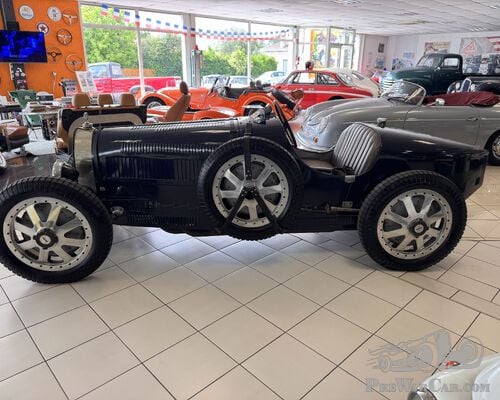
Bugatti 35 B Pur Sang
Bugatti 35 B Pur Sang,importée par un membre délégué de la FFVE il y’a une quinzaine d années.Participation à de nombreux Rallyes Bug..
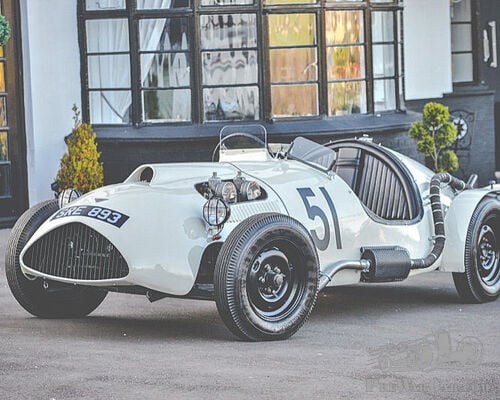
1933 Alvis 3.0 Special - One-Off Alloy Body | Period Competition Car | Featured in “Alvis – A Century of Drivers”
1933 Alvis 3. 0 Special - One-Off Alloy-Body | Period Competition Car | Featured in “Alvis – A Century of Drivers”