The global magazine and marketplace for classic car enthusiasts, by enthusiasts.


Filter
Classic Murray, Pierce Arrow for sale - Murray, Pierce Arrow cars for sale
-

1916 Pierce-Arrow Model 48-B-4 Vestibule Suburban
1916 Pierce-Arrow Model 48-B-4 Vestibule SuburbanPebble Beach Concours d’Elegance “Best in Class” 1977 & 2024An exceptionally grand design; one of the ultimate Pierce-Arrows of its timeOne of just two known survivors on the Model 48-B-4 chassisFormerly of the Delbert Pantel, Imperial Palace collection and Blackhaw.. -
1915 Pierce-Arrow Model 38-C-3 'Vestibule' Brougham | RM Sotheby's | The Hershey Auction
To Be OFFERED AT AUCTION WITHOUT RESERVE at RM Sothebys' The Hershey Auction event, 7 - 8 October 2026. Offered Without Reserve | $100,000 - $125,000 USD Believed to be the only known surviving 38-C-3 in this styleDramatic and imposing styling with Pierce-Arrow’s signature “Vestibule” rooflineFormerly owned by Jim Fille.. -
1929 Pierce-Arrow Model 133 Club Brougham | RM Sotheby's | The Hershey Auction
To Be OFFERED AT AUCTION WITHOUT RESERVE at RM Sothebys' The Hershey Auction event, 7 - 8 October 2026. Sold | $36,960 USD One of 14 known surviving examplesUnusually specified with free-standing “bracket” headlightsAttractively equipped and restored in elegant colorsA CCCA Full Classic Renowned lux..


Murray
US, 1902 – 1903
Church Mfg Co, Adrian, Mich.
The Murray car was a light runabout on similar lines to the Curved Dash Oldsmobile, built by a former Olds engineer. The Murray car had a 6hp single-cylinder water-cooled engine, epicyclic gearbox and single chain drive. About 1.000 Murray cars were produced before the makers turned to a larger car, the Lenawee.
US, 1916 – 1918
Murray Motor Car Co, Pittsburgh, Pa.
The Murray Eight with its V8 motot and Rolls-Royce style of radiator, was a prestige car of the World War 1 period and the Murray car sold at a reasonable price and had an enviable clientele of owners and enthusiasts. The Murray cars featured both an electric clock and a slanted windshield as early as 1917.
Source: Georgano, encyclopedia of motorcar; GNG, KM
The information is written with the greatest of care. However, if you have any suggested amendments please contact us at office@prewarcar.com
Pierce (-Arrow)
US, 1901 – 1938
(1) The George N. Pierce Co, Buffalo, N.Y.
(2) Pierce-Arrow Motor Car Co, Buffalo, N.Y.
Of the many prestige cars built in the United States, probably none enjoyed more favour for a longer period thant the Pierce-Arrow car. This car began humbly enough. The first model, the Pierce Motorette, appeared in 1901. The Pierce Motorette was produced by George N. Pierce, a builder of bicycles and birdcages and this little Pierce car was powered by a 2¾hp De Dion engine. This initial venture proved successful and was followed in 1902 by a similar Pierce car but with the output increased to 3½hp. For 1903, the Arrow name appeared and the Pierce-Arrow car company introduced a 15hp 2-cylinder Pierce Arrow car, with a 6½hp machine as a sideline.
In 1904 the name was changed to Great Arrow and the Pierce Great Arrow cars had power units capable of 28hp. It was such a Pierce-Arrow car which won the Glidden Tour, a reliability test, and from this point onward, the Pierce-Arrow car was one to be reckoned with. Power was gradually increased on the Pierce-Arrow car as was the size of the car through the immediate years and by 1908, the Pierce Great Arrow car boasted 60bhp at 1.000rpm. Up to 1909, steering-column change was used. This was the last year in which the word Great appeared in the Pierce-Arrow car name.
The Pierce-Arrow car was introduced in 1909 and such was the firm’s reputation that production of Pierce-Arrow cars was limited and the supply seldom met the demand of the public. An interesting option on the enclosed-drive limousine Pierce-Arrow car for 1911 and later was a bulge in the roof to allow ladies to enter through the rear doors without crushing the elaborate hats then in fashion against the roof.
In 1913, the first Pierce-Arrow cars appeared with the headlamps attached to the tops of the front mudguards, although this innovation was optional on the Pierce-Arrow car. The greater percentage of Pierce-Arrow cars were to appear with this type of headlamp fitting, but the earlier arrangement was available on the Pierce-Arrow car until the early 1930s.
By 1914, Pierce-Arrow cars were available in three sizes. The Pierce-Arrow 66 (reputedly this Pierce-Arrow car was the largest stock car built in the United States) was powered by a 6-cylinder engine with a 5x7in bore and stroke, giving the Pierce-Arrow car a capacity of 12.7-litres. The wheelbase was 12ft 3½in and the tyres on this Pierce-Arrow car were 37in. A complete line of bodies was offered for the Pierce-Arrow car with prices ranging from $5.850 to $7.300. The 8½-litre Pierce-Arrow 48 was built on a wheelbase of either 11ft 2½in or 11ft 10in with a price rnage of $4.850 to $6.300 and the Pierce-Arrow 38, with a wheelbase and prices of 10ft 7in or 11ft and $4.300 to $5.400, constituted the smallest line Pierce-Arrow car. Transmission of the Pierce-Arrow car was 4-speed with direct drive on top gear.
By 1915, with somewhere between 12.000 and 13.000 Pierce-Arrow cars having been built and of these a good percentage Pierce-Arrow cars still on the road, the Pierce-Arrow car was considered as a top prestige car compared with anything in its price class or even about it. Except for 1928, the name never appeared on the Pierce-Arrow car radiator, as it was felt the Pierce-Arrow cars were easily recognizable without it. In frequent cases, Pierce-Arrow cars of this period were sold with a single chassis and two bodies, one open and one closed, which could be alternated with the seasons. Tyres of the Pierce-Arrow cars were reduced to 35in in size and the Pierce-Arrow car plant was expanded about 1916 to accommodate the increased orders, not only for private Pierce-Arrow cars, but for the commercial vehicles which the Pierce-Arrow car company had been building since 1911. The enormous Pierce-Arrow 66 was discontinued during 1917 and the 38 and 48 were continued at prices ranging from $4.800 for the cheapest Pierce-Arrow 38 to $7.000 for the most expensive Pierce-Arrow car, the 48, exclusive of custom bodies. In 1920, the two cooling vents located above the bonnet of Pierce-Arrow cars were eliminated and the cowl parking lights were removed, all lighting being replaced in the headlamps. The last right-hand-drive Pierce-Arrow cars were built late this year. Pierce-Arrow cars being one of the very last American cars to change over to left-hand steering. A new series Pierce-Arrow cars was introduced for 1921, the line being split in size between the 38 and 48 Pierce-Arrow car models. These retained the 6-cylinder engine. For the first time, bonnet louvres were used on Pierce-Arrow cars.
By 1923, sales of Pierce-Arrow cars were dropping and less than two years later, the Pierce-Arrow car company introduced a smaller companion car, the Pierce-Arrow Model 80. This was the first Pierce-Arrow car to be equipped with 4-wheel brakes. The L-head 6-cylinder engine of this Pierce-Arrow car developed about 70bhp. Prices ranged from $2.895 to about $4.000. The Pierce-Arrow cars sold reasonably well in comparison with the larger Pierce-Arrow 36 but the Pierce-Arrow car company was showing an annual deficit and production of Pierce-Arrow cars was diminishing. In 1928, the stockholders voted to place the Pierce-Arrow car company under the control of the successful Studebaker Corporation because of prevailing business conditions.
A new Pierce-Arrow car was introduced for 1929, the Pierce-Arrow car company adopting a straight-8 engine of over 6 lites in place of the old six. The Pierce-Arrow car was offered on two wheelbases at prices beginning at $2.775, and this was Pierce Arrow’s best year, with 9.700 Pierce-Arrow cars delivered. For 1930, three different 8-cylinder engines were offered the prospective purchaser. Because of the relationship between Pierce-Arrow cars and Studebaker, a number of the Pierce-Arrow cars bore a striking resemblance to the Studebaker President Eight, largest of the Studebaker line. Demand of Pierce-Arrow cars continued to fall, and production with it, in 1931, and for 1932 the Pierce-Arrow car company introduced two 12-cylinder lines in addition to its eight, but even then, only 2.692 Pierce-Arrow cars were built during the year. These twelves came in 140bhp, 5½-litre, and 150bhp 7-litre forms, and these Pierce-Arrow cars were priced from $3.900 up.
For 1933, the Pierce-Arrow carcompany introduced a special show car, the Silver Arrow, of which only five were made but which served as an imitation fof the shape of Pierce-Arrow cars to come. Priced at $10.000, the Silver Arrow Pierce-Arrow car had a 12-cylinder 175bhp engine and no running boards. A tapered back, split rear window and spare wheels concealed in compartments behind the front wheels made this Pierce-Arrow car one of the most talked about cars of the year. The Pierce-Arrow car was displayed at the 1933 Chicago World’s Fair.
In 1933, a group of Buffalo businessmen made the Pierce-Arrow car an entity of its own once more. Ab Jenkins was breaking racing records with Pierce-Arrow cars and although the publicity was excellent, business was not for the Pierce-Arrow car company. After 1934, the basic changes in design were slight. The Pierce-Arrow car company turned out both eights and twelves but by 1935, with less than 1.000 Pierce-Arrow cars produced, it was apparent that the end of the make Pierce-Arrow cars was in sight. Retaining its classic radiator, the Pierce-Arrow car limped through 1936 and 1937, with a handful produced in 1938 when the Pierce-Arrow car company went out of business.
Source: Georgano, encyclopedia of motorcar; KM
The information is written with the greatest of care. However, if you have any suggested amendments please contact us at office@prewarcar.com


Featured
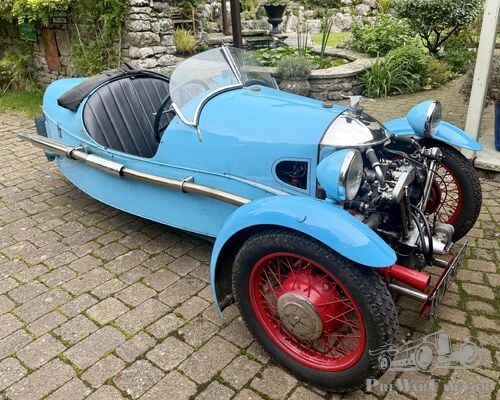
1933 Morgan Three-Wheeler Super Sports, Beetle Back • Show-Specification Car
First registered24 March 1933RegistrationXJ 6336 - original and transferableChassis numberD174Engine numberDTZE 94 H 31..
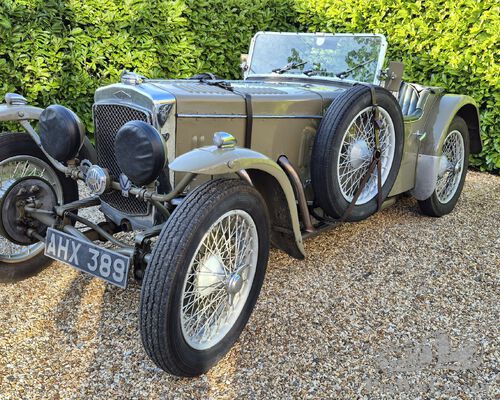
Fraser Nash TT Replica
AHX 389 ( chassis no. 2073, engine no. 10367).An important and correct short-chassis TT Replica with known history from new. Ex. H. P..
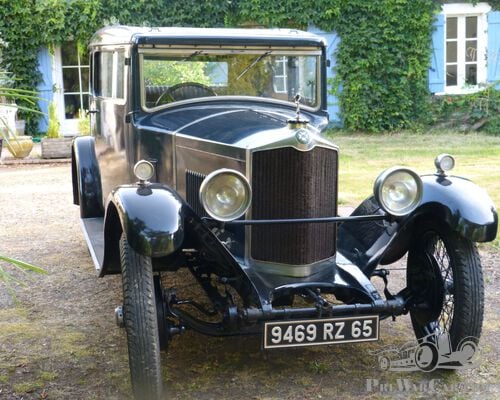
2-door 15.7hp six cylinder saloon
The car is a 6-cylinder 2-door saloon described as the "Sportsman's coach built coupé". Only three of this model are known to have survived. I have..