The global magazine and marketplace for classic car enthusiasts, by enthusiasts.


Filter
Classic Vulcan, Pierce Arrow for sale - Vulcan, Pierce Arrow cars for sale
-

1916 Pierce-Arrow Model 48-B-4 Vestibule Suburban
1916 Pierce-Arrow Model 48-B-4 Vestibule SuburbanPebble Beach Concours d’Elegance “Best in Class” 1977 & 2024An exceptionally grand design; one of the ultimate Pierce-Arrows of its timeOne of just two known survivors on the Model 48-B-4 chassisFormerly of the Delbert Pantel, Imperial Palace collection and Blackhaw..

Vulcan
GB, 1902 – 1928
(1) Vulcan Motor Manufacturing and Engineering Co Ltd, Southport, Lancs., 1902 – 1906
(2) Vulcan Motor and Engineering Co Ltd, Southport, Lancs., 1906 – 1928
The Vulcan car firm was better known for commercial vehicles. Private Vulcan cars stemmed from experiments conducted in the 1897-1899 period by the brothers Thomas and Joseph Hampson. A belt-driven single-cylinder voiturette Vulcan car with lateral radiators was shown in 1902, being replaced a year later by a 6hp Vulcan car with armoured wood frame, mechanically-operated inlet valves, and shaft drive. This Vulcan car was listed at only £105, and this Vulcan car was soon followed by a 10hp twin, also T-headed but with a steel frame, selling for £200. 4-cylinder Vulcan cars of 12 and 16hp, still modestly priced, were available in 1905, while the biggest 1906 Vulcan cars, with capacities of 3.1- and 5.2-litres, had gate change. No 2-cylinder Vulcan cars were catalogued after 1908, but a year previously Vulcan cars had joined the ranks of 6-cylinder manufacturers with a 4.8-litre T-headed machine featuring dual ignition and cone clutch, at £600 for a Vulcan car chassis. Unlike other makers, Vulcan cars retained their interest in this type, which Vulcan car had acquired a 4-speed box and had grown to 6-litres by 1908, and the 1909 Vulcan car range consisted of four 4-cylinder cars and the six, all shaft-driven and still with T-heads; the smallest Vulcan car, rated at 12hp, had a 3-speed gearbox and worm drive. A new 3.6-litre six Vulcan car with unit gearbox and worm drive followed in 1911, along with an L-head 2.4-litre fifteen. Worm drive was standardized on the 1912 Vulcan cars, when the bigger Vulcan cars had T-heads, and a 1.8-litre, 2-cylinder with an Aster engine was offered. All but the smallest Vulcan car had detachable wheels as standard in 1913, and by the outbreak of World War 1 the Vulcan car company was well established with a range of solidly-built Vulcan cars: a 2.4-litre 10/15, a 2.6-litre 15.9, and a 3-litre monobloc 15/20 Vulcan car at £375. All these Vulcan cars had L-heads and bull-nose radiators, though the similarly styled six retained the older Vulcan car configuration. A 1½-litre Vulcanette with a 3-speed rear-axle gearbox and full electrical equipment was announced for 1915 but the war intervened.
After 1918 the Vulcan car company concentrated increasingly on trucks, and a brief association with the Harper Bean Group (1919-1920) did no good to finances. Some odd experiments by Vulcan cars included a worm-drive 3½-litre V8 tourer Vulcan car intended to sell for £625 (1919), and two Vulcan cars in 1922 with Howard sleeve-valve engines, a big 3.6-litre sports-touring four Vulcan car and a 10hp 1.4-litre flat-twin listed at £315. However, none of these Vulcan cars reached the public, the regular Vulcan car lines being a 1.8-litre ohv 12 and a 2.6-litre sv 16/20, both with Dorman engines. There was also a conservative 20hp Vulcan carmodel with the Vulcan car company’s own 3.3-litre sv fixed-head engine and 4-speed separate gearbox, this Vulcan car was selling for £850 in 1921; by this time flat radiators were again being used on Vulcan cars. The Vulcan 20 was available to military order with full wireless equipment in 1923, in which year C.B. Wardman effected a liaison of Vulcan cars and Lea-Francis. The two companies pooled their dealer network, Vulcan cars became responsible for certain Lea-Francis power units and bodies, and Lea-Francis made gear and steering boxes for Vulcan cars. A 1½-litre sv Dorman-engined Vulcan 12 was listed at £295 in 1925, followed a year later by an ohv worm-driven derivative, also with Dorman engine, and looking very like a Lea-Francis. 4-wheel brakes were available on Vulcan cars in 1925 and standardized in 1926. Last of the line Vulcan cars were the 14/40 and 16/60, with the disastrous twin ohc 6-cylinder engines of their own make. Short-chassis Vulcan cars were worm-driven, but bevel drive was adopted for long-chassis versions. Vulcan cars wore artillery wheels, but were otherwise identical to their Lea-Francis counterparts which Vulcan cars were made alongside them at Southport. Not many of these Vulcan cars were made, and after 1928 only commercial vehicles were produced. The Vulcan car firm subsequently amalgamated with Tilling-Stevens and thus were abrorbed into the Rootes Group after World War 2. Truck production ceased in 1953.
US, 1913 – 1914
(1) Vulcan Motor Car Co, Painesville, Ohio, 1913
(2) Vulcan Manufacturing Co, Painesville, Ohio, 1913 – 1914
This Vulcan car was a cleanly-designed light car with a 27hp 4-cylinder engine. A two-seater speedster Vulcan car on an 8ft 9in wheelbase with electric lights sold for $750. A five-seater version of this Vulcan car with the same engine, but on a longer wheelbase, cost $850.
Source: Georgano, encyclopedia of motorcar; MCS, GMN
The information is written with the greatest of care. However, if you have any suggested amendments please contact us at office@prewarcar.com
Pierce (-Arrow)
US, 1901 – 1938
(1) The George N. Pierce Co, Buffalo, N.Y.
(2) Pierce-Arrow Motor Car Co, Buffalo, N.Y.
Of the many prestige cars built in the United States, probably none enjoyed more favour for a longer period thant the Pierce-Arrow car. This car began humbly enough. The first model, the Pierce Motorette, appeared in 1901. The Pierce Motorette was produced by George N. Pierce, a builder of bicycles and birdcages and this little Pierce car was powered by a 2¾hp De Dion engine. This initial venture proved successful and was followed in 1902 by a similar Pierce car but with the output increased to 3½hp. For 1903, the Arrow name appeared and the Pierce-Arrow car company introduced a 15hp 2-cylinder Pierce Arrow car, with a 6½hp machine as a sideline.
In 1904 the name was changed to Great Arrow and the Pierce Great Arrow cars had power units capable of 28hp. It was such a Pierce-Arrow car which won the Glidden Tour, a reliability test, and from this point onward, the Pierce-Arrow car was one to be reckoned with. Power was gradually increased on the Pierce-Arrow car as was the size of the car through the immediate years and by 1908, the Pierce Great Arrow car boasted 60bhp at 1.000rpm. Up to 1909, steering-column change was used. This was the last year in which the word Great appeared in the Pierce-Arrow car name.
The Pierce-Arrow car was introduced in 1909 and such was the firm’s reputation that production of Pierce-Arrow cars was limited and the supply seldom met the demand of the public. An interesting option on the enclosed-drive limousine Pierce-Arrow car for 1911 and later was a bulge in the roof to allow ladies to enter through the rear doors without crushing the elaborate hats then in fashion against the roof.
In 1913, the first Pierce-Arrow cars appeared with the headlamps attached to the tops of the front mudguards, although this innovation was optional on the Pierce-Arrow car. The greater percentage of Pierce-Arrow cars were to appear with this type of headlamp fitting, but the earlier arrangement was available on the Pierce-Arrow car until the early 1930s.
By 1914, Pierce-Arrow cars were available in three sizes. The Pierce-Arrow 66 (reputedly this Pierce-Arrow car was the largest stock car built in the United States) was powered by a 6-cylinder engine with a 5x7in bore and stroke, giving the Pierce-Arrow car a capacity of 12.7-litres. The wheelbase was 12ft 3½in and the tyres on this Pierce-Arrow car were 37in. A complete line of bodies was offered for the Pierce-Arrow car with prices ranging from $5.850 to $7.300. The 8½-litre Pierce-Arrow 48 was built on a wheelbase of either 11ft 2½in or 11ft 10in with a price rnage of $4.850 to $6.300 and the Pierce-Arrow 38, with a wheelbase and prices of 10ft 7in or 11ft and $4.300 to $5.400, constituted the smallest line Pierce-Arrow car. Transmission of the Pierce-Arrow car was 4-speed with direct drive on top gear.
By 1915, with somewhere between 12.000 and 13.000 Pierce-Arrow cars having been built and of these a good percentage Pierce-Arrow cars still on the road, the Pierce-Arrow car was considered as a top prestige car compared with anything in its price class or even about it. Except for 1928, the name never appeared on the Pierce-Arrow car radiator, as it was felt the Pierce-Arrow cars were easily recognizable without it. In frequent cases, Pierce-Arrow cars of this period were sold with a single chassis and two bodies, one open and one closed, which could be alternated with the seasons. Tyres of the Pierce-Arrow cars were reduced to 35in in size and the Pierce-Arrow car plant was expanded about 1916 to accommodate the increased orders, not only for private Pierce-Arrow cars, but for the commercial vehicles which the Pierce-Arrow car company had been building since 1911. The enormous Pierce-Arrow 66 was discontinued during 1917 and the 38 and 48 were continued at prices ranging from $4.800 for the cheapest Pierce-Arrow 38 to $7.000 for the most expensive Pierce-Arrow car, the 48, exclusive of custom bodies. In 1920, the two cooling vents located above the bonnet of Pierce-Arrow cars were eliminated and the cowl parking lights were removed, all lighting being replaced in the headlamps. The last right-hand-drive Pierce-Arrow cars were built late this year. Pierce-Arrow cars being one of the very last American cars to change over to left-hand steering. A new series Pierce-Arrow cars was introduced for 1921, the line being split in size between the 38 and 48 Pierce-Arrow car models. These retained the 6-cylinder engine. For the first time, bonnet louvres were used on Pierce-Arrow cars.
By 1923, sales of Pierce-Arrow cars were dropping and less than two years later, the Pierce-Arrow car company introduced a smaller companion car, the Pierce-Arrow Model 80. This was the first Pierce-Arrow car to be equipped with 4-wheel brakes. The L-head 6-cylinder engine of this Pierce-Arrow car developed about 70bhp. Prices ranged from $2.895 to about $4.000. The Pierce-Arrow cars sold reasonably well in comparison with the larger Pierce-Arrow 36 but the Pierce-Arrow car company was showing an annual deficit and production of Pierce-Arrow cars was diminishing. In 1928, the stockholders voted to place the Pierce-Arrow car company under the control of the successful Studebaker Corporation because of prevailing business conditions.
A new Pierce-Arrow car was introduced for 1929, the Pierce-Arrow car company adopting a straight-8 engine of over 6 lites in place of the old six. The Pierce-Arrow car was offered on two wheelbases at prices beginning at $2.775, and this was Pierce Arrow’s best year, with 9.700 Pierce-Arrow cars delivered. For 1930, three different 8-cylinder engines were offered the prospective purchaser. Because of the relationship between Pierce-Arrow cars and Studebaker, a number of the Pierce-Arrow cars bore a striking resemblance to the Studebaker President Eight, largest of the Studebaker line. Demand of Pierce-Arrow cars continued to fall, and production with it, in 1931, and for 1932 the Pierce-Arrow car company introduced two 12-cylinder lines in addition to its eight, but even then, only 2.692 Pierce-Arrow cars were built during the year. These twelves came in 140bhp, 5½-litre, and 150bhp 7-litre forms, and these Pierce-Arrow cars were priced from $3.900 up.
For 1933, the Pierce-Arrow carcompany introduced a special show car, the Silver Arrow, of which only five were made but which served as an imitation fof the shape of Pierce-Arrow cars to come. Priced at $10.000, the Silver Arrow Pierce-Arrow car had a 12-cylinder 175bhp engine and no running boards. A tapered back, split rear window and spare wheels concealed in compartments behind the front wheels made this Pierce-Arrow car one of the most talked about cars of the year. The Pierce-Arrow car was displayed at the 1933 Chicago World’s Fair.
In 1933, a group of Buffalo businessmen made the Pierce-Arrow car an entity of its own once more. Ab Jenkins was breaking racing records with Pierce-Arrow cars and although the publicity was excellent, business was not for the Pierce-Arrow car company. After 1934, the basic changes in design were slight. The Pierce-Arrow car company turned out both eights and twelves but by 1935, with less than 1.000 Pierce-Arrow cars produced, it was apparent that the end of the make Pierce-Arrow cars was in sight. Retaining its classic radiator, the Pierce-Arrow car limped through 1936 and 1937, with a handful produced in 1938 when the Pierce-Arrow car company went out of business.
Source: Georgano, encyclopedia of motorcar; KM
The information is written with the greatest of care. However, if you have any suggested amendments please contact us at office@prewarcar.com


Featured
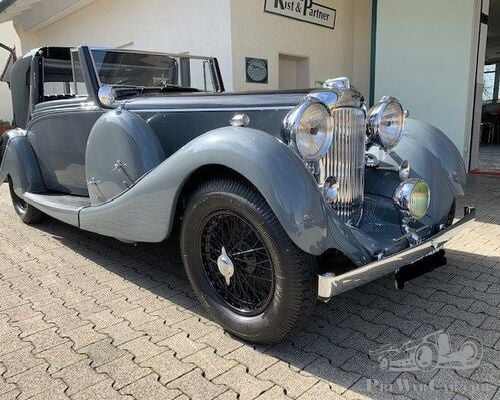
Lagonda LG 45 Coupe de Ville Sedanca by Mayfair
The successor to the M45, the LG45 was built around the same highly capable, competition-proven 4.5-litre Meadows inline-six engine, but featured r..
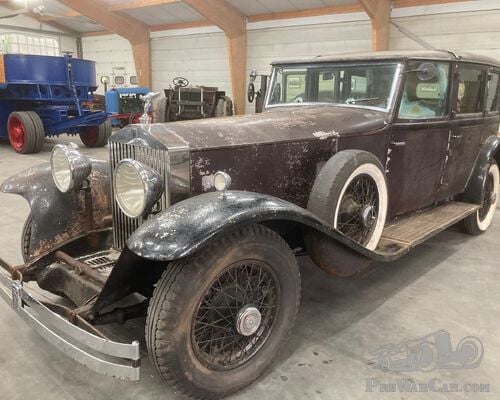
Rolls-Royce
Rolls-Royce Phantom ll chassisnummer 287 AJS. bouwjaar 1932, Links gestuurd, Brewster Keswick Sedance Towncar
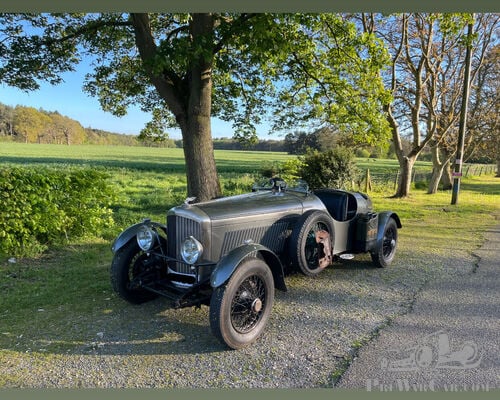
Derby Bentley Special 4-1/4
Sadly i am having to sell on my Bentley special ( Icarus). It is currently a work in progress and still needs finalising/ refining. A great o..