The global magazine and marketplace for classic car enthusiasts, by enthusiasts.


Filter
Classic Pilot for sale - Pilot cars for sale
-

Öldruckmanometer Pilotwagen 1922 selten
Zum Verkauf staht ein Öldruckmanometer für Pilotwagen aus Dresden Bannewitz. Baujahr ca. 1922-1926. Zustand gut. Könnte gereinigt und poliert werden. Oder mit schöner Patina erhalten. Versand Möglich!

Pilot
US, 1909 – 1924
Pilot Motor Car Co, Richmond, Ind.
Throughout its life, the Pilot car was an assembled car, with little evidence of imagination in either engineering or style. The Pilot car started as a two-seater roadster which was soon joined by five-seater touring versions. These early models Pilot cars used a 4-cylinder, 35hp engine. In 1913, a 6-cylinder Pilot car was added and this was also the last year of the 4-cylinder Pilot cars. The 6-cylinder engine of 4.9-litres was built by Teetor and developed 90hp. For 1916, a 4.7-litre V8 was added to the Pilot car range. In this year the purchaser of a Pilot car had an odd choice of either right- or left-hand steering position, with centre controls. Pilot Model 6-45 originated in 1916, with a Teetor six of 3.8-litres. With variations only in the wheelbase, this Pilot car was built until the end in 1924. In 1922, a 6-cylinder Herschell-Spillman engine of 50hp was added as the Pilot Model 6-50 and was continued into 1924. In the last year of production of Pilot cars, three chassis were offered. Two Pilot cars had H-S engines and the smallest, the Pilot 6-45, had a Teetor unit.
GB, 1909 – 1914
(1) Motor Schools Ltd, London, N.W., 1909 – 1911
(2) Pilot Motors & Friction Cars Ltd, London, N.W., 1911 – 1914
The Pilot car was made by a firm who specialized in driving and maintenance instruction, but unlike the Academy this Pilot car was not provided with dual control. The main feature of the Pilot car was friction drive by belt and cone pulley, and a variety of engines were used. The Pilot cars using 16hp White & Poppe or 19.6 Hillman engines were only experimental, but from 1911 onwards two Pilot cars were catalogues, the smaller Pilot car with a single-cylinder 7hp Coventry-Simplex, and the larger Pilot car with a 10hp 4-cylinder Chapuis-Dornier engine. Mainly two-seater bodywork was provided on the Pilot car.
D, 1923 – 1925
Pilotwagen AG, Bannewitz; Werau
A 4-cylinder 6/30PS Pilot car was produced by this firm. After the Sächsische Waggonfabrik had acquired a controlling interest in the Pilot car company in 1924 the bodies were built in Werdau.
Source: Georgano, encyclopedia of motorcar; GMN, GNG, HON
The information is written with the greatest of care. However, if you have any suggested amendments please contact us at office@prewarcar.com


Featured
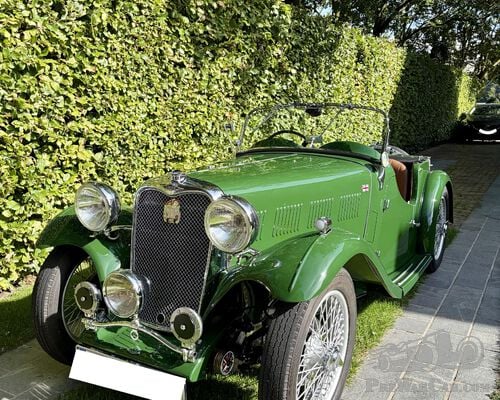
Singer 9 Le Mans Special Speed in British Racing Green, bouwjaar 1935
Prachtige Singer 9 Le Mans Special Speed. (De Singer 9 Le Mans werd uitgebracht na het succes van Singer in de gelijknamige 24u race.) 4 cil..
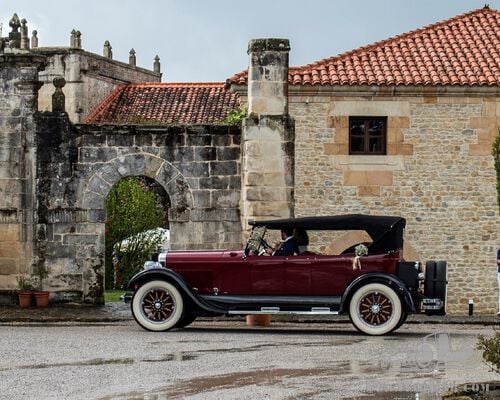
1925 Lincoln Model L Phaeton by Brunn - Excellent provenance
Retaining its original matching-numbers engine and chassis (both numbered 24576), the car benefits from an extensively documented history and..
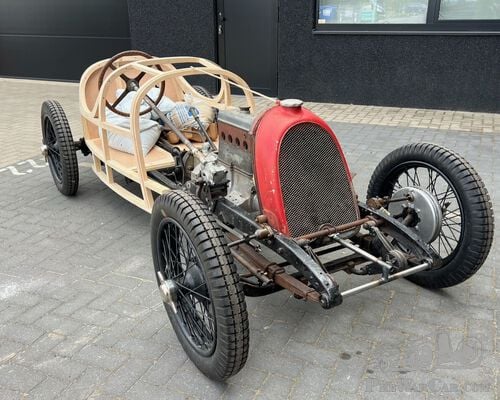
BNC 527 (Scap engine & Cozette blower) —Restoration Project
appealing restoration project based on an original 1927 BNC 527 chassis (No. 270**), retaining its matching-number front and rear axles.Orig..