The global magazine and marketplace for classic car enthusiasts, by enthusiasts.


Filter
Classic Pipe for sale - Pipe cars for sale
-

zu verkaufen Amilcar CGSs original und vollständig restauriert
Zum Verkauf steht ein außergewöhnlicher Amilcar CGss, der in Frankreich in weitgehend originalem, jedoch stark verbrauchtem Zustand aufgefunden wurde. Das Fahrzeug war vollständig und bot damit eine hervorragende Grundlage für eine umfassende und sorgfältige Restaurierung. Aufgrund des über Jahrzehnte entstandenen Verschleißes war eine we.. -
1938 Rolls Royce Phantom 3 Windovers Limousine
1938 Rolls Royce Phantom 3 Windovers LimousineChassis number: 3-CM-33Registration number: DUR255A pleasingly proportioned Rolls Royce Phantom 3 with coachwork by Windovers. The coachwork is rakish & quite streamlined when compared with some of the more ponderous coachwork found on these Phantom 3's. This is a low mileag.. -
Beautiful Lasalle, light project
This is a light project car. Engine has been totally rebuild and needs to be re-assembly. The car is 100% complete and in very good condition. Odometer shows 26,000 miles only and believe to be original. Interior is perfect. Rebuild radiator. Swedish registration and documents in my name. Car is located in the south of Sweden, 100km. from Goth.. -
Chevrolet Fleetmaster 'Woodie' Station Wagon
Chevrolet Fleetmaster 'Woodie' Station Wagon ***in absolute new state***European Car Registration in EU-Netherlands reg.no. DZ-87-00Chassis no. CL8434• The most expensive Chevrolet of its day• Imported from South Africa• Original right-hand drive model• Partially renovated in 2013 Footnote.. -
Delage DE
In meinem Besitz seit 1994. 1996 am Klausen Memorial gefahren. Restauration des Getriebe 1995, 2025 Motor in Stand gesetzt mit neuen Laufbüchsen, Kolben, Kurbelwelle geschliffen und Ausbalanciert, neue Kurbelwellen- und Pleuellager, Dynostarter neu gelagert. -
1931 Rolls-Royce Phantom II Continental DHC
-In excellent condition with recent work by ourselves-Unique Park Ward DHC coachwork-Equipped with overdriveLike all Phantoms, the Continental was built for high-speed touring, offering a breath-taking ability to cover long distances in sublime comfort at high speed.Of the 1400 Phantom IIs produced, only 280 Continent.. -
1939 Daimler E4 Labourdette
1939 Daimler E4 "Light Eight" , body "Labourdette"Not restored, complete.Aluminum body made by "Labourdette"The chassis was commenced in 1938 and completed in March 1939 before being fitted with the body by Labourdette, which was known as a 'Vutotal' design. Very interesting, unique car, ideal for a project "Concourse d'Ele.. -
American La France - Speedster
Ehemalige Feuerwehr wurde 2017 in den USA gekauft und 2018 nach Deutschland überführt und anschließend selbst zum zwei-sitzigen Speedster umgebaut. Sämtliche rote Farbe wurde abgebürstet, die Stahlteile mit Klarlack lackiert. Die Antriebszahnräder wurden durch größere ersetzt, so dass eine Reise-Geschwindigkeit von ca. .100 km/h möglich ist. Am .. -
Amilcar 5CV Type C5 Aerodynamic
Amilcar 5CV Type C5 AerodynamicI am selling it because I no longer drive it. I have two invoices for engine and carburettor servicing costing over €10,000. I also have body parts for an Amilcar 5CV Type C5 to be restored and some mechanical parts to go with the car, such as a gearbox, etc., as well as a chassis with two front wings for a .. -
1930 Chrysler 66 Six-Wheel Equipped Royal Sedan
An exceptionally well restored and highly awarded Chrysler 66 Royal Sedan, with only two owners in nearly 97 years.The present owner acquired the car as a complete and remarkably original example and subsequently carried out a no-expense-spared restoration over many years. The restoration was a total body-off, nut-and-bolt rebuild ..


Pipe
Belgium, 1898 – 1922
Compagnie Belge de Construction Automobile, Brussels
The Pipe car, one of Belgium’s best-built and most expensive cars, is said to have been so named because its manufacturers also made metal pipes. Their first Pipe car was made in 1898, but the earliest of which anything is known was the 2-cylinder 6hp Pipe car of Panhard-Levassor type, with chain drive, offered in 1900. By 1902 there was a similar 4-cylinder Pipe car of 15hp, and in 1904 a range of four Pipe car models all of the same basic design, of which 100 Pipe cars were made that year.
Petrol-electric transmission, in the form of the Jenatzy Magnetic Clutch, was tried on Pipe cars in 1904-1905, but it was only fitted to a few Pipe cars. At the Paris Salon in December 1904, however, a more lasting Pipe car feature appeared: inclined push-rod-operated overhead valves. The 28/32hp Pipe car and 50hp models of 1905 had these, and also Truffault shock abrobers. None of these features was entirely new, but all were symptoms of very advanced design. No fewer than 300 Pipe cars were made in 1907, and one of their racing Pipe cars took 2nd place in the Kaiserpreis race that year, but oddly enough, when they were at the height of their fame, production of Pipe cars seems to have ceased for two years.
When it was resumed, little was left of former distinctiveness. A small side-valve Pipe car was offered in 1910 and 1911, to be succeeded in 1913 by a range Pipe cars of entirely conventional, if still beautifully-made machines with quiet, flexible, very long-stroke side-vale engines, all with four cylinders and live axles. Automatic ignition advance was the only novelty now offered on the Pipe car. The sole survivor of former days was the 11-litre, chain-driven 80hp Pipe car model.
After World War 1, Pipe car production was not resumed immediately as the factory had to be completely rebuilt. At the 1921 Brussels Show Pipe exhibited two 4-cylinder Pipe car, a medium-sized 3-litre car, and a 9-litre giant. Few were made of either Pipecar, but production of lorries continued until 1932.
Source: Georgano, encyclopedia of motorcar; TRN
The information is written with the greatest of care. However, if you have any suggested amendments please contact us at office@prewarcar.com


Featured
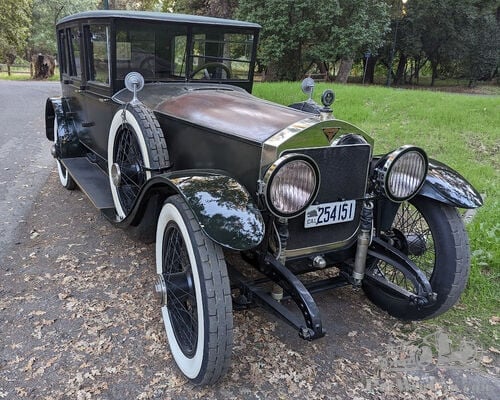
1916 Simplex, Crane model 5
1916 Simplex, Crane MODEL 5CUSTOM MADE HISTORIC PRESERVATION VEHICLE – READY TO TOUR!This Simplex recently completed th..
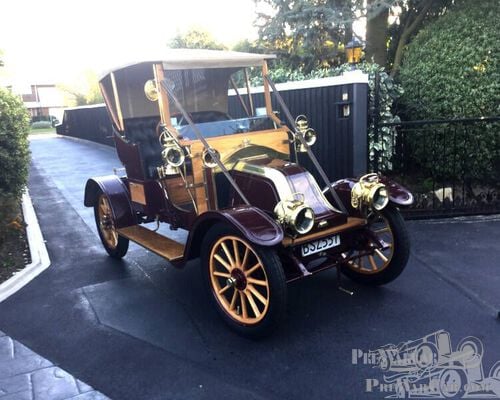
Renault /AX 1913 - named
Purchased fully renovated from New Zealand and imported to the UK. We have owned her for over10 years. Gigi is currently living in France where she..
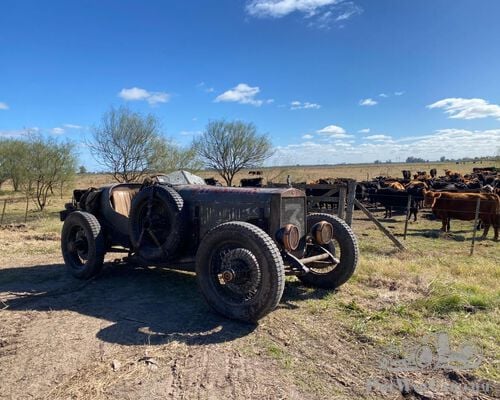
Studebaker 1927 for sale
Authentic race car of the time - Everything is working - All parts of its original mechanics - I have the history of the car - 6 cylinders - Ready ..