The global magazine and marketplace for classic car enthusiasts, by enthusiasts.


Filter
Classic Star, Pontiac for sale - Star, Pontiac cars for sale
-

Pontiac Racing Baquet
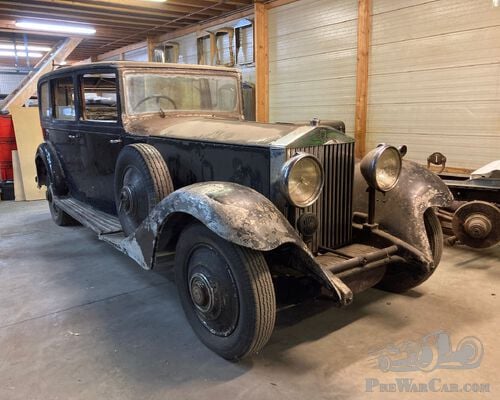
Pontiac Racing Baquet ,1933, 8 cylinders 4100 cc 249 cu with 115 hp, incredible nice car with full aluminium patina and cracked body Incredible car! The engine has been kept mostly original. Only a twin carburetor setup has been fitted on the engine to gain a bit more power. The 3-speed gearbox has been maintained. The electrics h..

Star
GB, 1898 – 1932
Star/ Starling/ Stuart
(1) Star Motor Co, Wolverhampton, Staffs., 1898 – 1902
(2) Star Engineering Co, Wolverhampton, Staffs., 1902 – 1909
(3) Star Cycle Co, Wolverhampton, Staffs., 1905 – 1909
(4) Star Engineering Co Ltd, Wolverhampton, Staffs., 1909 – 1928
(5) Star Motor Co Ltd, Wolverhampton, Staffs., 1928 – 1932
Edward Lisle Sr’s Star Motor Co, an offshoot of the Star Cycle Co, produced its first Star car in 1898, and offered the Star car for sale in the following year. The Star car was a Benz-based machine, with a single-cylinder, water-cooled 3½hp engine, belt primary drive and chain final drive. It was an improvement in that water circulation on the Star car was assisted by a pump. In 1900 there followed a 2-cylinder Star car with 3 forward speeds, still on Benz lines. 1901 brougth De Dion-engined single-cylinder Star cars, and 1902 an 8hp twin of Panhard type in addition. Other, larger Star cars of Panhard ancestry joined the 8hp, up to a 20hp four Star car. By 1904, although a De Dion-powered single and Panhard-type twin were still there, the bigger machines were of Mercédès pattern, these Star cars came with honeycomb radiators, mechanically-operated inlet valves and pressed-steel frames. All veteran Star cars up to 1914 were extremely well-made, well-furnished, conventional, rather expensive cars lacking in technical originality, showing a line of development appearance in the 1907 range. The best-known Star car of the veteran period was the excellent 15hp Star car of 1909, a shaft-driven 2.8-litre four which had become the 3-litre 15.9hp by 1914. A great variety of other Star cars, basically similar models were turned out, not only by Star but also by the Star Cycle Co. The latter, run by Edward Lisle Jr, had made motor tricycles and bicycles, and produced the Starling car in 1905. It had 2 forward speeds and a De Dion single-cylinder engine, but was otherwise of Panhard type, with armoured wood frame and chain drive. One year later the Star car company supplemented it with the more modern Stuart car, which had 2-cylinders, 3-speeds and shaft drive. This name was dropped in 1908, all models being called Starlings, but these too, disappeared in 1909 when Star cars cheaper line was entrusted to the new Brion Motor Co, a more indepented concern that was still run by Edward Lisle Jr. So popular was the Star car that its makers were among the six largest in the country before 1914.
The 15.9hp Star car was continued after World War 1, together with another sv four Star car of pre-war origin, the 20hp Star car of 3.8-litres. A modern light Star car of fashionable type, the 11.9hp, arrived in 1921. This Star car used a 1.795cc sv engine with a detachable head, made in unit with a 3-speed gearbox which had central change. By 1924, the 11.9 Star car had grown up into the 2-litre 12/25hp Star car. It shared cylinder dimensions with the 18hp Star car, which was a new 3-litre six. The 12/25 Star car could be had as a very fine fast touring car with overhead valves and 54bhp, in which form the Star car was called 12/40hp. Thereafter, the Star car range reverted to its pre-war complexity. By 1927, there were three sv Star car models and two additional and more up-to-date Star cars with overhead valves. The 14/40hp Star car, new in 1926, was a solid 2-litre, ohv machine which in spite of having only 4-cylinders and 3 forward speeds, this Star car was a notably smooth and flexible car, thanks to a 5-bearing crankshaft. The ohv 20/60hp Star car, a 2½-litre six with the same bore and stroke as the 14/40 and a 7-bearing crankshaft, was the most luxurious Star car. A light six, the popular ohv 18/50hp, joined the Star car range in 1928, the year of the Star car company’s acquisition by Guy, and replaced the 14/40 Star car for 1929. By this time, the sv Star cars had gone, leaving the two sixes. As the 18hp Star Comet and the 21hp Star Planet, these Star cars were revised with handsome bodies and very full, luxurious equipment, including one-shot chassis lubrication, thermostatically-controlled radiator shutters and a built-in jacking system. Two other engines, of 14hp (2-litres) and 24hp (3.6-litres) were also obtainable in Star cars for 1932, as alternative Comet and Planet power units. These Star car were the last new Star cars, for they were too expensive to make, and the times favoured the mass-produced economy car. Production of Star cars ended in March 1932, but the unsold stock was sold by McKenzie and Denley of Birmingham, and the Star car was quoted in the Buyer’s Guide lists until 1935.
US, 1903 – 1904
(1) Star Automobile Co, Cleveland, Ohio
(2) H.S. Moore, Cleveland, Ohio
This Star car was driven by a single-cylinder, watercooled engine of 1.9-litres, mounted beneath the front seat, with false bonnet and coil radiator in front. A champion planetary transmission and double chain drive was used on this Star car. Both two- and five-seater Star cars were made, the latter with rear entrance.
US, 1908
Star Automobile Co, Chicago, Ill.
Star runabouts were offered in three models, selling for $500, $600 and $700 respectively. The smallest Star car was an open two-seater, and shaft drive was employed on all Star cars.
US, 1908
Model Automobile Co, Peru, Ind.
The short-lived Star car from Peru was offered in conventional 2- and 4-cylinder forms. The twin was chain-driven, while the big, expensive four Star car ($4.000) had shaft drive.
US, 1922 – 1928
Durant Motor Co of New Jersey, Elizabeth, N.J.; Lansing, Mich; Oakland, Calif.
William Crapo Durant’s Star Four was one of the most serious attempts to take away some of the Model T Ford’s market, for the cheapest practical car. Unlike the Ford, the Star car was an assembled machine.The Star car had a 2.2-litre, 4-cylinder engine by Continental, and was conventional in design in every way except the gearbox, which was separate; a feature common to all the vehicles in Durant’s empire, but very unusual in American mass-produced cars by the early 1920s. The touring Star car cost only $443 in 1923, which helped Star to be the seventh biggest seller in America that year. The Star car was sold outside the United States as the Rugby. In 1926, a 2.8-litre six Star car was introduced. Front wheel brakes appeared in 1927 but a year later the Star car make disappeared in the collapse of the Durant interests. By this time, 250 Star cars a day were being turned out. Only the Four was still called the Star car for the 1928 model year, as the Six was now known as the Durant Model 55.
Source: Georgano, encyclopedia of motorcar; TRN, GMN, MJWW, TRN
The information is written with the greatest of care. However, if you have any suggested amendments please contact us at office@prewarcar.com
Pontiac
US, 1907 – 1908
Pontiac Spring and Wagon Works, Pontiac, Mich.
The Pontiac car was a two-seater high-wheeler with right-hand steering by wheel. The Pontiac car was powered by a 2-cylinder, water-cooled engine mounted under the body. The drive of the Pontiac car was through a friction transmission and double chains to the rear wheels. The cost of the Pontiac car was $600.
US, 1915
Pontiac Chassis Co, Pontiac, Mich.
A chassis without body was all that this Pontiac car company marketed. This Pontiac car chassis was furnished with a 4-cylinder engine, by Perkins, rated at 25hp, driving through a 3-speed transmission.
US, 1926 to date
(1) Oakland Motor Car Co, Pontiac, Mich., 1926 – 1932
(2) Pontiac Motor Co, Pontiac, Mich., 1933 to date
Oakland’s Pontiac Six was intended as a lower-priced running mate, and prices of this conventional 3-litre sv six Pontiac cars started at $825. Only closed bodies were offered initially, but a sales of over 140.000 Pontiac cars was an indication of acceptance, especially when followed by an increase to 210.890 Pontiac cars in 1928. The 1930 Pontiac cars closely resembled Buick’s Marquette, and had 3.3-litre engines, the six being joined in 1932 by a V8 which Pontiac car was really a revamped 1931 Oakland.
In 1933 Pontiac car company scored an important success with a 3.7-litre, 77bhp straight-8 Pontiac car selling for less than $600 with General Motors’ new no-draught ventilation, the 6-cylinder Pontiac cars being dropped for the time being. The 1934 Pontiac cars had Dubonnet-type independent front suspension, and ‘turret-top’ all-steel bodies. Fencer’s mask radiator grilles were found on the 1935 Silver Streak line of Pontiac cars. Capacities of the six and the eight were 3.6-litres and 4.1-litres respectively in 1937. In 1939 Pontiac car company’s cheaper cars had body shells very similar to those of the Chevrolet, as befitted a make which ranked next in the GM hierarchy – though in fact only $20 separated the cheapest Pontiac car, the 4-door sedan from the corresponding Oldsmobile model.
Pontiac cars Torpedo Streamliners brought back the fastback style in 1941, and the immediate pre-war Pontiac cars were continued with little alteration until 1949, when the whole group’s products were restyled, and Pontiacs emerged with lower bodies, redesigned X-frames, and the option of Hydramatic transmission. Though maintaining high sales – they beat Plymouth cars into 4th place overall in 1954 – Pontiac cars remained conservative in engine design, and the well-tried 127bhp sv straight-8 Pontiac car was not supplanted until 1955, when all US-produced Pontiac cars received a 4.7-litre ohv V8. The L-head six was retained for some Pontiac cars made for the Canadian market.
Along with some of the other staider American makes, such as Plymouth and Mercury, the Pontiac car company stove to build their reputation on performance in the later 1950s; the 1958 Pontiac Super Tempest attained 330bhp, and in 1959 Pontiac car came out with a wide-track chassis and concentrated on a 6.4-litre V8 available in a variety of powers from 245 to 345hp.
The Pontiac Car Division’s compact, the Pontiac Tempest arrived in 1961, and was an unusual ohv oversquare four of 3.2-litres’ capacity, mounted in a unitary-construction hull, with its 3-speed synchromesh gearbox in the rear axle. Floor change was standardon the Pontiac car: it was listed at $2.240. A small V8 Pontiac car was available as an option in 1963. The big Pontiac cars went over to GM’s perimeter-type frame in 1963, when the V8 engine was available in a variety of guises on the Pontiac car, from a ‘cooking’ 215bhp version burning regular-grade petrol at $2.725 up to the sporting Pontiac Grand Prix coupé with 303bhp and a revolution counter as standard equipment, at $3.489. The Tempest’s 4-cylinder engine was dropped on the Pontiac car in 1965 in favour of a 140bhp six or 5.4-litre eight. Sporting qualities were emphasized in 1966, by which time the Pontiac Tempest had grown from a 9ft 4in wheelbase to 9ft 8in, and the range of Pontiac cars included the Pontiac GTO Grand Prix and 2 plus 2 models, all Pontiac cars disposing of more than 330bhp from engines of 6.4 and 6.9 litres’ capacity. In 1967, 3.8-litre ohc 6-cylinder engines were introduced: in the sporting Pontiac Firebird Sprint this unit developed 215bhp.
By 1970 the more sporting Pontiac cars (GTO, Firebird and Grand Prix) had front disc brakes, and all full-sized Pontiac cars came with automatic transmission as regular equipment. New for 1971 was a compact Pontiac car, the Pontiac Ventura II on a 9ft 3in wheelbase. The 1972 Pontiac car range covered most sectors of the market, from the Pontiac Ventura at $2.394 up to the luxury Pontiac Grand Ville with 220bhp 7.456cc V8 engine at $4.368. For the sporting motorist there were the Pontiac Le Mans Sport, the Pontiac GTO, and a wide selection of Pontiac Firebirds up to the Pontiac Trans Am with 300bhp V8 unit, giving the Pontiac car a top speed of about 120mph. Peculiar to Canada was the Laurentian, a hybrid Chevrolet-Pontiac on a 10ft 3½in wheelbase, available with 110bhp 6-cylinder or 165bhp V8 unit. In the main 1973’s improvements concerned styling, the Pontiac cars being longer and wider, but new Pontiac cars were the Grand Am 2- and 4-door hardtops, with 6½- or 7½-litre V8 engines, power steering, power disc front brakes and 3-speed automatic gearbox.
Source: Georgano, encyclopedia of motorcar; MCS
The information is written with the greatest of care. However, if you have any suggested amendments please contact us at office@prewarcar.com


Featured

Lagonda LC Tourer 1934
The Lagonda story began in 1901 in Staines, a small town in the UK. The company enjoyed its greatest successes around 1935. During this period, the..
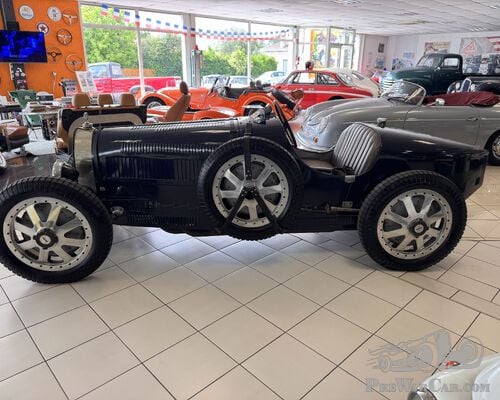
Bugatti 35 B Pur Sang
Bugatti 35 B Pur Sang,importée par un membre délégué de la FFVE il y’a une quinzaine d années.Participation à de nombreux Rallyes Bug..