The global magazine and marketplace for classic car enthusiasts, by enthusiasts.


Filter
Classic Du Pont, Premier for sale - Du Pont, Premier cars for sale
-

1929 Du Pont Model G Two-Passenger Speedster by Merrimac | RM Sotheby's | The Monterey Auction
To Be OFFERED AT AUCTION at RM Sothebys' The Monterey Auction event, 13 - 15 August 2026. $800,000 - $1,200,000 USD One of the most beautiful American automobiles of its generationThe 1929 New York International Automobile Show display carOne of three two-passenger “taper tail” models with an external spareOne .. -
1907 Premier Model 24
Right out of our Titanic Museum display, representing the cars from that era. We chose this car because of it's quality and beauty, it is the type of car that is a pleasure to look at. This 1907 Premier Model 24 Runabout is a prime example from this rarely seen marque that continues to benefit from an older, high-quality concours-level restorati..


Du Pont
US, 1920 – 1932
(1) Du Pont Motors Inc, Wilmington, Del., 1920 – 1923
(2) Du Pont Motors Inc, Moore, Pa., 1923 – 1932
E. Paul du Pont’s company built quality cars in limited numbers, total production being 537 vehicles of all Du Pont types. First of the line was a Du Pont 4.1-litre sv four with their own engine, selling for $2.600, but this gave way to proprietary-engined sixes, initially powered by Herschell-Spillman. The 1925 Du Pont Model D had a 6-cylinder 5-litre Wisconsin engine with overhead valves that developed 75bhp, a constant-mesh gearbox, and Lockheed hydraulic brakes to all four wheels. Its successor, the Du Pont Model E, could be had with a supercharger, but the best-known, and best, Du Pont was the Du Pont Model G speedster introduced in 1928. With its narrow straight wings copied from the Amilcar, Woodlite headlamps and grille concealing the radiator, the last a pioneering feature, the Du Pont Model G was not a good-looking car, but it was a very effective one. Like all the DuPont speedsters it had four forward speeds. The 5.3-litre, sv straight-8 engine, by Continental, gave 114bhp at 3600rpm with catalogued modifications. With the latter, 100mph was guaranteed. In the 1929 Le Mans 24 Hours race the Du Pont Model G proved itself faster than the other American entries, Stutz and Chrysler. Touring bodywork was, of course, available on the Du Pont car, and in 1931 came the long wheelbase (12ft 2 in) Du Pont Model H, built in a Stearns Knight frame. The later Du Pont cars were assembled in the Indian motorcycle factory at Springfield, after E. Paul du Pont had acquired this concern.
Source: Georgano, encyclopedia of motorcar; TRN
The information is written with the greatest of care. However, if you have any suggested amendments please contact us at office@prewarcar.com
Premier
US, 1903 – 1925
(1) Premier Motor Mfg Co, Indianapolis, Ind.
(2) Premier Motor Corp, Indianapolis, Ind.
The Premier car started life as a conventional machine made on modern lines, with a pressed-steel frame, mechanically-operated inlet valves, and shaft drive. A four-cylinder air-cooled Premier car was made in 1905. The designer of the Premier car was G.A. Weidely, who made his name with proprietary engines. A line of conventional water-cooled big fours and six-cylinder Premier cars followed, starting with a 24/28hp Premier car in 1907. From 1913, sixes alone were built, the ‘Premier 48’ at $3.250 having a capacity of over 8 litres. The special racing Premier cars of 1916 had a twin ohc, 4-cylinder, 16-valve engine reminiscent of the Peugeot. The touring Premier car of 1919 – 1920 was notable mainly for its use of the Cutler-Hammer Magnetic Gear Shift, an electric transmission system controlled by a lever mounted on the steering wheel. The ohv 4.8-litre engine of the Premier car was an unusually advanced six, with aluminium block, crankcase and pistons, and iron liners.
GB, 1906 – 1907; 1912 – 1913
Premier Motor Co Ltd, Birmingham
The Premier car company were concessionaires for the Italian Marchand car, and the 1906 4-cylinder Premier car was, in fact, a Marchand. Towards the end of 1906 Premier cars launced a short-lived two-seater of their own design powered by a 10/12hp Aster engine, but no further Premier cars appeared until the cyclecar boom of 1912. This brought two distinct designs of Premier cars: the PMC Motorette 3-wheeler with a rear-mounted 6hp single-cylinder engine driving the rear wheel by chains; and the more conventional Premier car, a 4-wheeler using an 8hp 2-cylinder engine, and chain drive.
D, 1913 – 1914
Justus Christian Braun Premier – Werke AG, Nuremberg
After producing the Kaiser cars this firm offered a new model in 1913 under the name of Premier. This Premier car was a two-seater sports car with a 1.030cc 4/12PS engine. This Premier car was also built in the company’s Austrian factory at Eger and was marketed as the Omega.
Source: Georgano, encyclopedia of motorcar; TRN, GNG, HON
The information is written with the greatest of care. However, if you have any suggested amendments please contact us at office@prewarcar.com


Featured

K3 Replica on KN Chassis
"The K3 Magnette must rank in the history books as the most famous and successful of all the record breaking MGs. With only 33 examples produced durin..
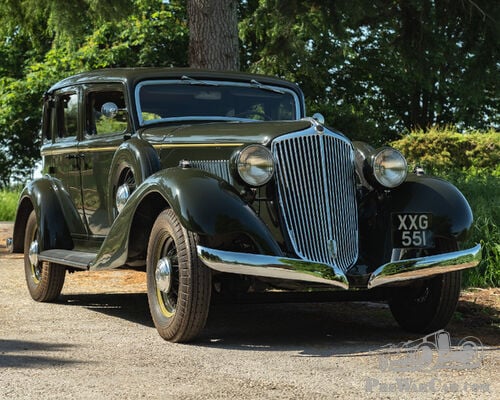
Graham Model 64 Standard Eight 'Blue Streak'
UK Registration No: XXG 551Chassis No: 1801069MOT: ExemptH&H ClassicsKelham Hall | Newark, Nottinghamshire
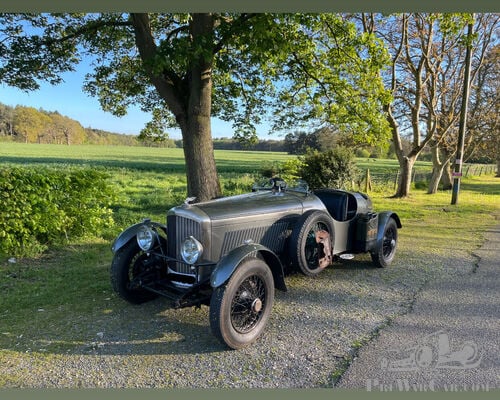
Derby Bentley Special 4-1/4
Sadly i am having to sell on my Bentley special ( Icarus). It is currently a work in progress and still needs finalising/ refining. A great o..