The global magazine and marketplace for classic car enthusiasts, by enthusiasts.


Filter
Classic Albion, Railton for sale - Albion, Railton cars for sale
-

Railton straight 8 sports coupe for rallying REDUCED PRICE run with the bentleys at a fraction of the price
1934 Railton Sports CoupeBuilt for long distance rallyingRebuilt 2017built up at a cost of $160,000AUD, OFFERED FOR SALE AT A FRACTION OF THAT COST Run with the Bentleys at a fraction of the costEngine: 4.2L straight 8 Terraplane engine as standard for RailtonCompletely rebuilt -
1901 Albion A1 Dogcart 8HP Twin Cylinder - VCC Dated
1901 Albion Model A1 8HP Twin Cylinder Dog CartRegistration No. BS8677Chassis No. 45E Established in 1899 in Finnieston Street Glasgow by Dr Thomas Blackwood Murray and Norman Fulton, the Albion Motor Company were once the largest provider of commercial vehicles in the British Empire. Albion were famed for their relia..


Albion
GB, 1900 – 1913
Albion Motor Car Co Ltd, Scotstoun, Glasgow
Still active as a truck manufacturers within the Leyland Group, Albion was founded at the end of 1899 by T. Blackwood Murray and Norman Fulton, late of Arrol-Johnston and their early products were dogcarts with varnished-wood bodywork much in the Arrol-Johnston idiom, with 2-cylinder opposed-piston underfloor engines, low tension magneto ignition, and Murray’s patent governor. Wheel steering replaced the tiller in 1902, and a year later Albion began production of a 16hp vertical-twin which was made for many years, usually with solid tyres, and often with shooting-brake bodywork. ‘Cars for country houses’, especially Scottish ones, were a speciality of the house, though rather less rustic was a side-valve 5.6-litre chain-driven four introduced in 1906. This 24hp model had a seven-year production run. The last Albion passenger car was a 15hp Monobloc four with side valves in a T-head and worm drive, which sold for £475 in 1912. At the end of 1913 Albion elected to concentrade on commercial vehicles, though large shooting brakes using the 15hp engine continues to be made.
Source: Georgano, encyclopedia of motorcar; MCS
The information is written with the greatest of care. However, if you have any suggested amendments please contact us at office@prewarcar.com
Railton
GB, 1933 – 1949
(1) Railton Cars, Cobham, Surrey, 1933 – 1940
(2) Hudson Motors Ltd, London W.4, 1940 – 1949
This was the work of Reid Railton, well-known as the designer of cars for the World Land Speed Record, and the Railton car was assembled in the old Invicta works after the company’s activities had been transferred to Chelsea. The Railton car set the formula for the Anglo-American sports hybrids of the 1930s, and the basis of the Railton car was a 4-litre Terraplane 8 chassis (from mid-1934, a 4.2-litre Hudson 8) lowered and given stiffer suspension. On this was mounted coachwork in the British style, and the rectangular bonnet (with rivets along it) and radiator closely resembled those of the Invicta. The result, which Railton car sold in tourer from for £535 in 1934, was capable of 90mph, and the Railton car could be driven almost anywhere in top gear, and possessed startling acceleration: the Light Sports Railton car of 1935 could reach 60mph in under ten seconds.
Mechanically, the Railton cars followed Hudson evolution with hydraulic brakes added in 1936; the Railton cars also grew heavier and more expensive, with saloons selling for £698 that year. Cheaper versions Railton cars were available in 1938/ 1939 with the 2.7-litre and 3½-litre 6-cylinder Hudson engines, and a 10hp baby Railton car introduced in 1938 at £299 had Standard mechanical components. Rather more than 1.400 Railton cars were made; a handful Railton cars were assembled after World War 2, but the ban on dollar imports and a list price of over £4.000 for a Railton car put a stop to the best of the Anglo-Americans.
Source: Georgano, encyclopedia of motorcar; MCS
The information is written with the greatest of care. However, if you have any suggested amendments please contact us at office@prewarcar.com


Featured
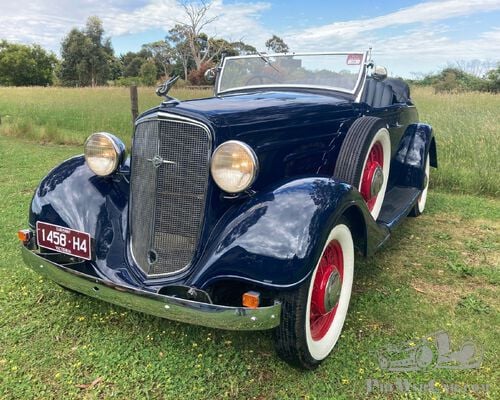
1934 Chevrolet Standard Roadster
1934 Chevrolet Standard Roadster This vehicle was delivered to Australia from Chevrolet and the body was manufactured by Holden Body Works w..
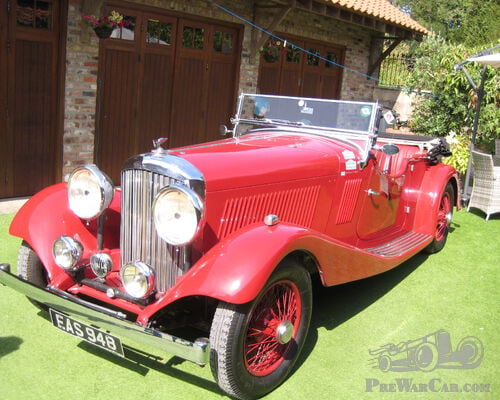
1935 Bentley 3.5 ltr. VDP 4str. Tourer
Chassis B 123 CW was first registered 14th March 1935, and in the late eighties underwent a " body-off" restoration and fitted with VANDEN PLAS
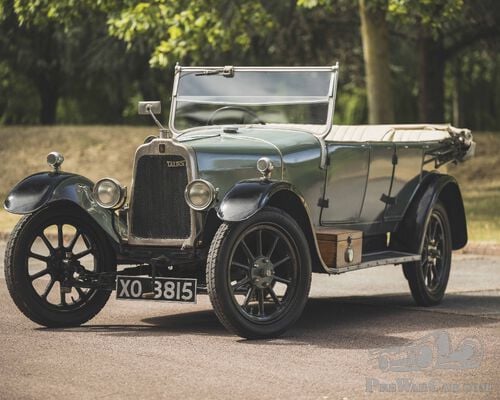
Rare RHD, low miles & great history file
This is an ONLINE-ONLY AUCTION at THE MARKET. The price shown here is the lower estimate. To see all the details, description, 250+ high-res photog..