The global magazine and marketplace for classic car enthusiasts, by enthusiasts.


Filter
Classic Rambler, International for sale - Rambler, International cars for sale
-

1901 International Charette 6HP - VCC Dated
1901 International Charette 6HP Double Phaeton Engine No. 62 Engine Displacement. 823VCC Dated 8 time London to Brighton finisher The International Motor Car Company, of London, England, was not related in any way to the more famous International Harvester Company of the United..

Rambler
US, 1900 – 1903
(1) Rockaway Bicycle Works, Rockaway, N.J.
(2) Rockaway Automobile Co, Rockaway, N.J.
The Rambler car company made a light two-seater runabout powered by a water-cooled single-cylinder engine. Final drive was by single chain. The price of the Rambler car was $650.
US, 1902 – 1913; 1950 – 1970
(1) Thos. B. Jeffery Co, Kenosha, Wic., 1902 – 1913
(2) Nash Motor Co, Kenosha, Wisc., 1950 – 1954
(3) American Motors Corporation, Kenosha, Wisc., 1950 – 1970
Despite the interval of 37 years, these two Rambler car makes are directly connected. The original Rambler car derived its name from the bicycles built by Gormully and Jeffery, who had a branch factory in Coventry in the 1890s. In 1902 form this Rambler car was a light runabout in the American idiom with a single horizontal cylinder, chain drive, cycle-type wire wheels and tiller steering, this Rambler car was selling for $750. In the first season 1.500 Rambler cars were sold, a figure which places the makers in the same category as Oldsmobile, among the world’s first mass producers.
By 1905 the Rambler car had grown into a sizable twin-cylinder machine with front bonnet, and with the introduction of a 4-cylinder Rambler car in 1907 the Rambler car make had moved up into the semi-luxury class; another parallel with Oldsmobile, but one which had less unfortunate financial consequences, for Rambler sold over 3.000 Rambler cars in 1911 and 4.435 in 1913, the last year of production of Rambler cars. The bigger of two fours offered in 1912 had a 7-litre engine with separate cylinders. 1914 Rambler cars went under the name of Jeffery. Advanced features of these late Ramblers were sidelamps faired into the scuttle, and detachable wooden wheels.
Nash Motors, successors to the Jeffery company, revived the name in 1950 for the first of the modern generation of American ‘compacts’. This Rambler car was a 2.8-litre sv six with a wheelbase of 8ft 4in and an overall length of under 15ft, priced at $1.800. It featured unitary construction of chassis and body, and the Rambler car weighed only 2.576lb at a time when a regular Chevrolet sedan turned the scales at around 3.600lb. Nash sales went up by 50.000 as a result of the Rambler car, which was offered as a Nash until 1957, acquiring styling by Pininfarina in 1952, the option of an automatic gearbox in 1953, and an alternative V8 engine in 1957. Some Rambler cars were also sold under the Hudson after the merger which brought American Motors into being in 1954.
From 1958 on, all A.M.C. cars were known as Rambler cars, the former full-sized Nashes continuing as Rambler’s Ambassador model. The Rambler car was the first of the contemporary compacts, and set a fashion imitated later by the Big Three. In the recession year, 1958, George Romney’s criticisms of large Rambler cars were widely quoted. In 1958 the low-priced American model reverted to the 8ft 4in wheelbase, and 1961 saw the introduction on Rambler cars of a die-cast aluminium ohv push-rod six which eventually supplanted the old sv unit. The last vestiges of the 1949 Nash Airflyte styling vanished in 1963, and disc brakes were offered as an option in 1965, in which year a sporting fastback coupé, the Rambler Marlin, was introduced. 1967 Rambler cars were made on three wheelbase lengths – 8ft 10in, 9ft 4in, and 9ft 8in – and with a choice of ohv 3.8-litre 6-cylinder or 4.8- and 5.6-litre V8 engines. From 1968 the name Rambler cars became less prominent in the range, new models such as the Javelin being known under their own names. For the 1970 season the name Rambler was dropped altogether in the USA and Canada, although the Hornet was sold as a Rambler car in export markets. For the 1971 season the name Rambler was no longer used at all.
Source: Georgano, encyclopedia of motorcar; MCS
The information is written with the greatest of care. However, if you have any suggested amendments please contact us at office@prewarcar.com
International
GB, 1898 – 1904
(1) International Motor Car Co, London, 1898 – 1900
(2) International Motor Car Co Ltd, London, 1900 – 1904
Oscar Seyd’s firm never built a car, though some International car offerings were assembled in their Great Portland Street Showrooms and a certain amount of work was also undertaken at the service depot in Kilburn, where International cars had been operating since 1896. The original International-Benz was in fact a French-built Roger, a car which had become hard to sell in France; International added their own improvements to the International car, among them a reverse, a British-built version of the ‘Crypto’ gear and bodywork made to their order. Single- and twin-cylinder variations on the Benz theme were offered until 1901, later International car being German-built after the demise of M. Roger’s company. In 1899 International presented a ‘light two-seater racing car’ with wheel steering, a Benz-based 12hp with wheel steering, pneumatic tyres and double phaeton coachwork on the International car at £800, and a 9hp ‘vibrationless’ flat-twin (not on Benz lines) in addition to their regular range of International car. International cars became a limited liability company in 1900, when two Coventry firms, Payne and Bates (Godiva) and Allard, were approached to make a new design for the International car. The Payne and Bates-built International car(possibly the twin-cylinder Royal with steel frame and wheel steering, offered for £367 10s) proved unsatisfactory, but Allard’s effort, the International Charette, introduced in November 1900, sold in some numbers. This International Charette car was a belt-driven light car with front vertical 823cc engine of De Dion type (designed to run at only 1.000rpm), a coal-shovel shaped bonnet and rack-and-pinion steering. It sold for £165. Early International cars were rated at 5hp (later increased to 6hp) and there were 2-speed and 3-speed variants. All International Charette chassis were delivered to London under their own power. This type International car was not offered after 1903 and apart form the Mountaineer motorcycle, the later cars of the International company were of French origin. The International Armstrong (1902) was a single-cylinder 1.100cc machine with shaft drive on Renault lines and this gave way in 1903 to the Aster-engined Portlands, also shaft-driven and offered in a variety of sizes from a 6hp single at £205 up to a big 24hp 4-cylinder car with a 4-speed gearbox.
The smallest International car, the Portland was still available in 1904, but by this time the International car company was mainly concerned with importing the Diamant car. International were defunct by 1905.
US, 1900
International Motor Carriage Co, Stamford, Conn.
This International car company showed a light car with a 2-stroke engine designed to run on paraffin at the Madison Square Garden show in 1900, but this International car did not go into production.
Source: Georgano, encyclopedia of motorcar; MCS, GNG
The information is written with the greatest of care. However, if you have any suggested amendments please contact us at office@prewarcar.com


Featured
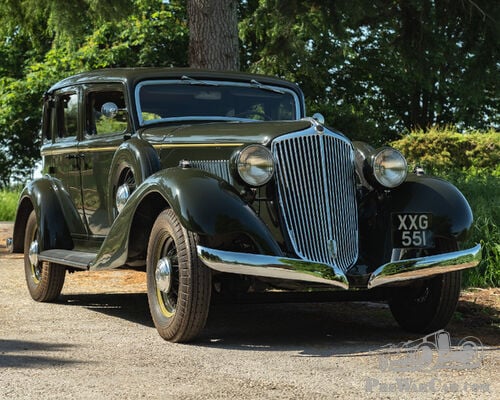
Graham Model 64 Standard Eight 'Blue Streak'
UK Registration No: XXG 551Chassis No: 1801069MOT: ExemptH&H ClassicsKelham Hall | Newark, Nottinghamshire
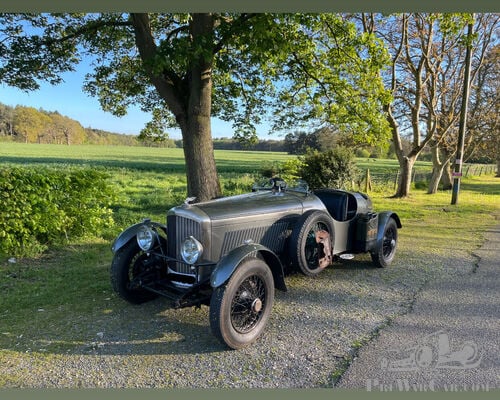
Derby Bentley Special 4-1/4
Sadly i am having to sell on my Bentley special ( Icarus). It is currently a work in progress and still needs finalising/ refining. A great o..
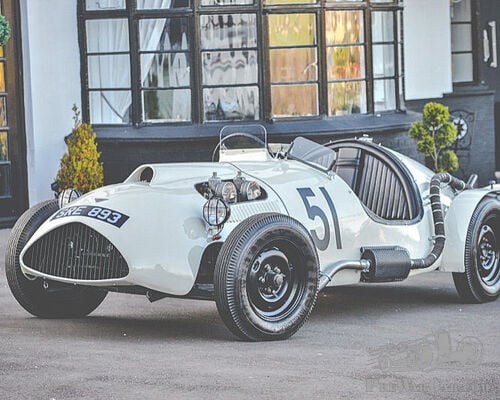
1933 Alvis 3.0 Special - One-Off Alloy Body | Period Competition Car | Featured in “Alvis – A Century of Drivers”
1933 Alvis 3. 0 Special - One-Off Alloy-Body | Period Competition Car | Featured in “Alvis – A Century of Drivers”