The global magazine and marketplace for classic car enthusiasts, by enthusiasts.


Filter
Classic Aster, Rauch & Lang for sale - Aster, Rauch & Lang cars for sale
-

1904 Aster 16/20 HP Four-Cylinder Five-Seat Rear-Entrance Tonneau
Powerful four-cylinder engineFour-speed gearboxChain driveFive seatsMore than €100,000 recently investedVeteran Car Club Dating CertificateEntered for the 2026 London to Brighton Veteran Car RunIn excellent condition and ready for immediate use Following the .. -
1918 Rauch & Lang Model B26 Brougham | RM Sotheby's | The Hershey Auction
To Be OFFERED AT AUCTION at RM Sothebys' The Hershey Auction event, 7 - 8 October 2026. $150,000 - $175,000 USD One of the finest surviving examples of the Rauch & Lang electric carBeautiful show-quality, AACA First Junior-winning restorationKnown history, with only three long-term caretakers since the 1950s


Aster
France, 1900 – 1910
Ateliers de Construction Mécanique l’Aster, Saint-Denis, Seine
It is doubtful if this famous manufacturer of proprietary engines ever marketed a complete Aster car, though Aster made gearboxes and chassis as well as power units, and were undoubtedly equipped to do so. Their engines enjoyed wide currency; among Aster’s better-known customers were Gladiator and Ariès in France, and Argyll, Singer, Swift and Dennis in Britain. From time to time, ‘Aster’ cars appeared at the Shows. The company displayed a 3½hp Aster motor quadricycle with their own Aster engine at the Crystal Palace in 1903; this was, however, credited with a British-made chassis. The ‘Asters’ marketed by the firm’s English offshoot in the 1905 – 1907 period were certainly Aster-engined Ariès. Other vehicles loosely referred to as Asters on the English side of the Channel are likely to have been products of Aster’s obscurer customers such as Whitlock of London or West of Coventry. Even these had vanished by 1910, and it is almost certain that the only cars which can legitimately bear the Aster name are the all-British Asters launched at the 1922 London show.
GB, 1922 – 1930
(1) Aster Engineering Co Ltd, Wembley, Middlesex, 1922 – 1927
(2) Arrol-Johnston Ltd, and Aster Engineering Co Heathall, Dumfries, 1927 – 1930
The first british Aster car was a finely constructed, expensive machine of modern design, made in limited numbers. Rated at 18/50hp, the 2.618cc engine had push-rod overhead valves and coil ignition. Its main attraction was the bodywork, which was notably handsome and comfortable. In 1924 the bore was enlarged, dual ignition became optional, front-wheel brakes were standardized and the new model was named the Aster 20/55. The Duke of York became the firm’s most distinguished customer in 1925, but this did not save Aster from amalgamation with Arrol-Johnston two years later. Enlarged again the car became a 3-litre Aster 21/60hp model for sale in 1926. The 1927 models, the last true Asters, were the Aster 21/60hp and the new 3 ½-litre Aster 24/70hp for sale, with single sleeve valve engine. Designations and engine sizes were unchanged for 1928, but now both cars had Burt-McCollum single sleeve valve engines. The 1930 models were the last.
Source: Georgano, encyclopedia of motorcar; TRN
The information is written with the greatest of care. However, if you have any suggested amendments please contact us at office@prewarcar.com
Rauch & Lang
US, 1905 – 1928
(1) Rauch & Lang Carriage Co, Cleveland, Ohio, 1905 – 1916
(2) Baker, Rauch & Lang Co, Cleveland, Ohio, 1916 – 1922
(3) Rauch & Lang Electric Car Manufacturing Co, Chicopee Falls, Mass., 1922 – 1928
Rauch & Lang were an old-established carriage building firm (founded 1853) when they began to make electric Rauch & Lang cars in 1905. These Rauch & Lang cars followed the usual pattern for such electric vehicles, being mainly closed town cars, although a few open phaeton Rauch & Lang cars were also made. The biggest Rauch & Lang cars were heavier vehicles and included a six-seater limousine with separate outside seat for the chauffeur. Some Rauch & Lang cars had 4-doors, a very unusual feature in electric cars. In 1916 the Rauch & Lang cars became part of the Baker, Rauch & Lane group and production declined. From 1919 onwards the Rauch & Lang cars were sometimes listed as Raulangs, and from 1922 this became the official name of the Rauch & Lang cars.
By this time production of Rauch & Lang cars had been transferred to the Stevens-Duryea factory at Chicopee Falls where the number of private cars made was very small. The factory, which was still turning out a few Stevens-Duryeas, also made petrol and electric taxi-cabs under the name Rauch & Lang cars, and bodies for Stanley Steamers.
Source: Georgano, encyclopedia of motorcar; GNG
The information is written with the greatest of care. However, if you have any suggested amendments please contact us at office@prewarcar.com


Featured
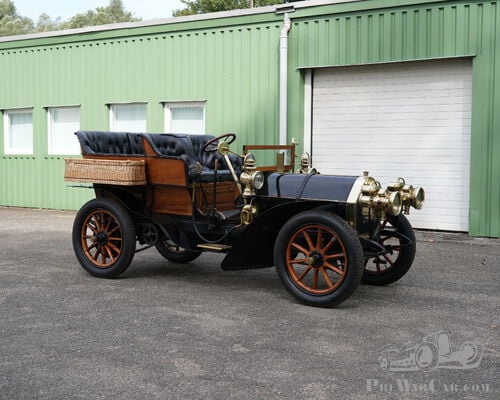
1904 Aster 16/20 HP Four-Cylinder Five-Seat Rear-Entrance Tonneau
Powerful four-cylinder engineFour-speed gearboxChain driveFive seatsMore than €100,000 recently invested
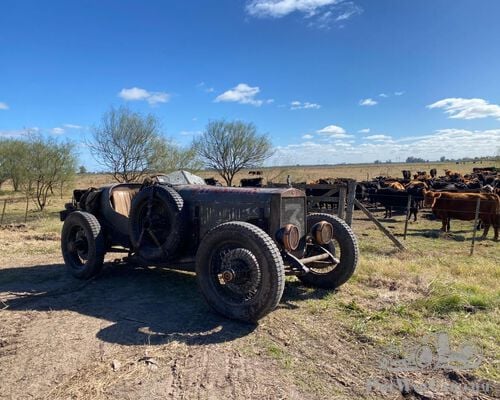
Studebaker 1927 for sale
Authentic race car of the time - Everything is working - All parts of its original mechanics - I have the history of the car - 6 cylinders - Ready ..
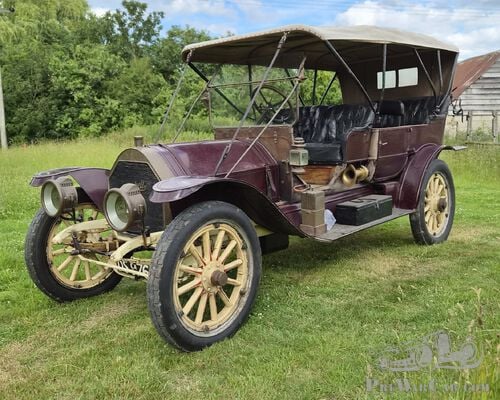
1910 Mitchell Model S - 50HP Six Cylinder
Based in Racine, Wisconsin and being the largest wagon manufacturer in the USA, Mitchell-Lewis produced their first motor car in 1903. Sales grew ..