The global magazine and marketplace for classic car enthusiasts, by enthusiasts.


Filter
Classic DB, Rauch & Lang for sale - DB, Rauch & Lang cars for sale
-

1918 Rauch & Lang Model B26 Brougham | RM Sotheby's | The Hershey Auction
To Be OFFERED AT AUCTION at RM Sothebys' The Hershey Auction event, 7 - 8 October 2026. $150,000 - $175,000 USD One of the finest surviving examples of the Rauch & Lang electric carBeautiful show-quality, AACA First Junior-winning restorationKnown history, with only three long-term caretakers since the 1950s -
D.B. 6 Monoposto; the first genuine single-seater by Deutsch & Bonnet
D.B. 6 Monoposte - Deutsch Bonnet Grand PrixThe very first D.B. monopostoExceptionally well-documented competition historyRaced extensively by René Bonnet (1947–1950)Eligible for events as Monaco Historic Grand Prix This D.B. 6 Monoposto is a unique survivor from the early post-war years..


D.B.
France, 1938 – 1961
Automobiles D.B., Champigny-sur-Marne, Seine
Deutsch and Bonnet were building ‘specials’ based on 11CV traction avant Citroëns in 1938. In 1947 limited production began again, the first DBs being competition machines largely built up from reconditioned components, using 1½-litre and 2-litre engines and 4-speed gearboxes. A new DB car based on the Dyna-Panhard ran at Montlhéry in 1948, while in 1949 the Deutsch and Bonnet (DB) company produced a 500cc single-seater version for Formula III, with the Panhard engine mounted in the nose, and independent swing-axle rear suspension. Some 100mph Citroën-based Deutsch and Bonnet (DB) convertibles were also made, but after 1950 Deutsch and Bonnet (DB) devoted all their energies to Panhard derivatives. Though never a major force in Formula III, the Deutsch and Bonnet (DB) cars gained numerous International Class Records and won the Index of Performance at Le Mans five times (1954, 1956, 1959, 1960 and 1961). Also Laureau’s Deutsch and Bonnet (DB) won the 1954 TT outright. An attempt to contest the 2½-litre GP Formula of 1954 with the alternative permitted size of 750cc supercharged was a fiasco, and little came of the curious Deutsch and Bonnet (DB) Monomills (the same cars with blowers removed) with which Deutsch and Bonnet tried to popularize one-class racing in France. Equally abortive were experiments with twin engines and 4-wheel drive (for sale in 1952) and with rear-mounted Renault engine and 5-speed gearboxes (for sale in 1953). The production Deutsch and Bonnet (DB) sports coupés used regular Panhard mechanical components allied to light alloy bodywork (fiberglass from 1955) and were marketed in various engine capacities from 610cc (30bhp) to 1300cc (65bhp). M.A.G. low-pressure superchargers were listed from 1954, and disc brakes were an option a year later on Deutsch and Bonnet (DB). The standard 1958 Deutsch and Bonnet (DB)model was the Rallye coupé with a 55bhp 850cc engine. Deutsch and Bonnet (DB) remained faithful to Panhard until the partnership was dissolved in 1961. René Bonnet continued the manufacture of cars in the Champigny works under his own name.
Source: Georgano, encyclopedia of motorcar; MCS
The information is written with the greatest of care. However, if you have any suggested amendments please contact us at office@prewarcar.com
Rauch & Lang
US, 1905 – 1928
(1) Rauch & Lang Carriage Co, Cleveland, Ohio, 1905 – 1916
(2) Baker, Rauch & Lang Co, Cleveland, Ohio, 1916 – 1922
(3) Rauch & Lang Electric Car Manufacturing Co, Chicopee Falls, Mass., 1922 – 1928
Rauch & Lang were an old-established carriage building firm (founded 1853) when they began to make electric Rauch & Lang cars in 1905. These Rauch & Lang cars followed the usual pattern for such electric vehicles, being mainly closed town cars, although a few open phaeton Rauch & Lang cars were also made. The biggest Rauch & Lang cars were heavier vehicles and included a six-seater limousine with separate outside seat for the chauffeur. Some Rauch & Lang cars had 4-doors, a very unusual feature in electric cars. In 1916 the Rauch & Lang cars became part of the Baker, Rauch & Lane group and production declined. From 1919 onwards the Rauch & Lang cars were sometimes listed as Raulangs, and from 1922 this became the official name of the Rauch & Lang cars.
By this time production of Rauch & Lang cars had been transferred to the Stevens-Duryea factory at Chicopee Falls where the number of private cars made was very small. The factory, which was still turning out a few Stevens-Duryeas, also made petrol and electric taxi-cabs under the name Rauch & Lang cars, and bodies for Stanley Steamers.
Source: Georgano, encyclopedia of motorcar; GNG
The information is written with the greatest of care. However, if you have any suggested amendments please contact us at office@prewarcar.com


Featured
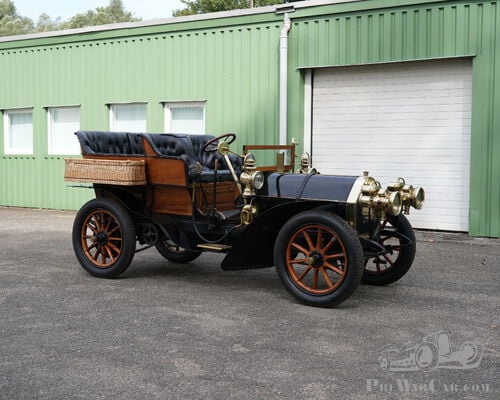
1904 Aster 16/20 HP Four-Cylinder Five-Seat Rear-Entrance Tonneau
Powerful four-cylinder engineFour-speed gearboxChain driveFive seatsMore than €100,000 recently invested
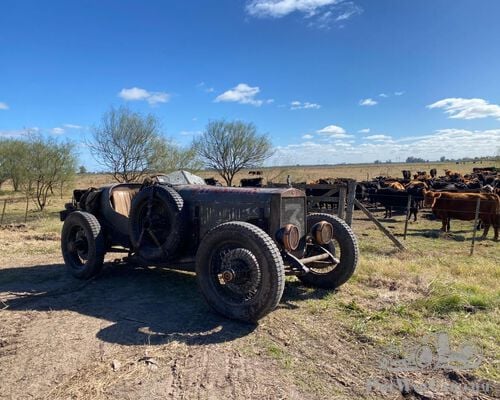
Studebaker 1927 for sale
Authentic race car of the time - Everything is working - All parts of its original mechanics - I have the history of the car - 6 cylinders - Ready ..
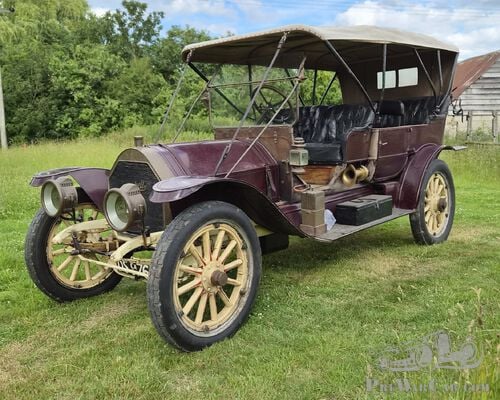
1910 Mitchell Model S - 50HP Six Cylinder
Based in Racine, Wisconsin and being the largest wagon manufacturer in the USA, Mitchell-Lewis produced their first motor car in 1903. Sales grew ..