The global magazine and marketplace for classic car enthusiasts, by enthusiasts.


Filter
Classic Motobloc, Rauch & Lang for sale - Motobloc, Rauch & Lang cars for sale
-

1918 Rauch & Lang Model B26 Brougham | RM Sotheby's | The Hershey Auction
To Be OFFERED AT AUCTION at RM Sothebys' The Hershey Auction event, 7 - 8 October 2026. $150,000 - $175,000 USD One of the finest surviving examples of the Rauch & Lang electric carBeautiful show-quality, AACA First Junior-winning restorationKnown history, with only three long-term caretakers since the 1950s -
Motobloc Model O 1909 wanted
Technical information and contacts with other owners wanted for the Bordeaux-France made Motobloc-cars. We own a 1909 Model O in our museum, body by Audineau. Nous cherchons autres propriétaires des voitures Motobloc fabriquées à Bordeaux France. Nous avons un type O Coupé-Chauffeur-laundaulette par Audineau dans notre museé. Merci.CoridalementH..


Motobloc
France, 1902 – 1930
(1) G. Carde, Fils et Cie, Bordeaux
(2) SA Motobloc, Bordeaux
The Schaudel of 1898, which became the Motobloc car or Schaudel Motobloc car, featured unit construction of engine and gearbox, the earliest known instance of this form of design and the reason for the name Motobloc. Furthermore, the change-speed gears were actually in the crankcase. The power unit of the Schaudel Motobloc car was a transversely-mounted, inclined twin with chain drive. This odd little voiturette survived until 1904, after which it was perpetuated only as a van chassis, and a conventional vertical 4-cylinder engine – still made in unit with the gearbox – was substituted. This was a highly efficient unit that soon acquired overhead inlet valves, and it was also very smooth, thanks to the positioning of the flywheel between the two parts of cylinders. A mid-mounted flywheel was also used in the 6-cylinder engine of 1909 and on all Motobloc car models throughout the 1920s. Only fours were made up to 1927, ranging from 1.327cc to 3-litres in capacity. Independent front suspension was introduced on the Motobloc car in 1928, and the 1929/ 1930 range consisted of a Motobloc 9CV, 1.453cc four, and two sixes, a 10CV (1.683cc) and a 15CV (3.013cc).
Source: Georgano, encyclopedia of motorcar; TRN
The information is written with the greatest of care. However, if you have any suggested amendments please contact us at office@prewarcar.com
Rauch & Lang
US, 1905 – 1928
(1) Rauch & Lang Carriage Co, Cleveland, Ohio, 1905 – 1916
(2) Baker, Rauch & Lang Co, Cleveland, Ohio, 1916 – 1922
(3) Rauch & Lang Electric Car Manufacturing Co, Chicopee Falls, Mass., 1922 – 1928
Rauch & Lang were an old-established carriage building firm (founded 1853) when they began to make electric Rauch & Lang cars in 1905. These Rauch & Lang cars followed the usual pattern for such electric vehicles, being mainly closed town cars, although a few open phaeton Rauch & Lang cars were also made. The biggest Rauch & Lang cars were heavier vehicles and included a six-seater limousine with separate outside seat for the chauffeur. Some Rauch & Lang cars had 4-doors, a very unusual feature in electric cars. In 1916 the Rauch & Lang cars became part of the Baker, Rauch & Lane group and production declined. From 1919 onwards the Rauch & Lang cars were sometimes listed as Raulangs, and from 1922 this became the official name of the Rauch & Lang cars.
By this time production of Rauch & Lang cars had been transferred to the Stevens-Duryea factory at Chicopee Falls where the number of private cars made was very small. The factory, which was still turning out a few Stevens-Duryeas, also made petrol and electric taxi-cabs under the name Rauch & Lang cars, and bodies for Stanley Steamers.
Source: Georgano, encyclopedia of motorcar; GNG
The information is written with the greatest of care. However, if you have any suggested amendments please contact us at office@prewarcar.com


Featured
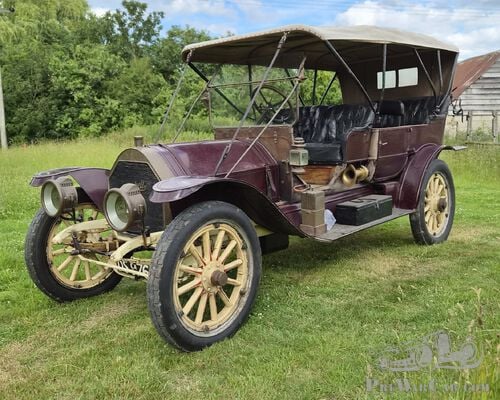
1910 Mitchell Model S - 50HP Six Cylinder
Based in Racine, Wisconsin and being the largest wagon manufacturer in the USA, Mitchell-Lewis produced their first motor car in 1903. Sales grew ..
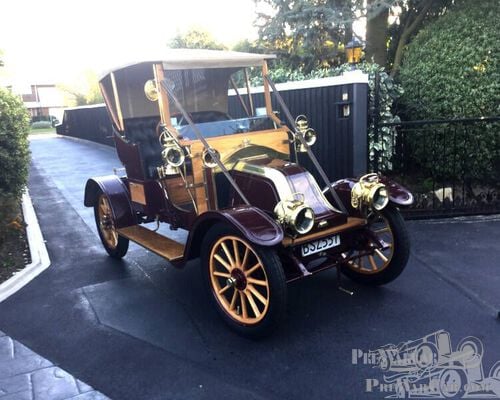
Renault /AX 1913 - named
Purchased fully renovated from New Zealand and imported to the UK. We have owned her for over10 years. Gigi is currently living in France where she..
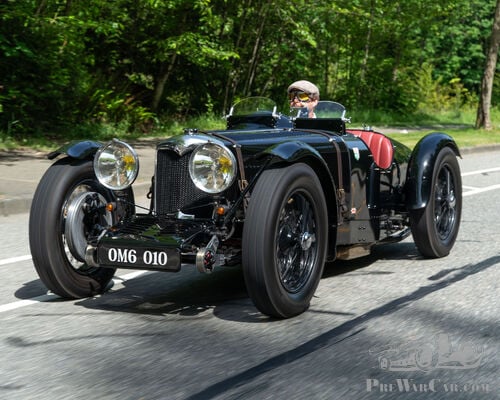
Riley 14/6 Special 1933
The ExperienceStep into the golden age of British motoring. This 1933 Riley 14/6 Special is a masterclass in pre-w..