The global magazine and marketplace for classic car enthusiasts, by enthusiasts.


Filter
Classic Murray, Rauch & Lang for sale - Murray, Rauch & Lang cars for sale
-

1918 Rauch & Lang Model B26 Brougham | RM Sotheby's | The Hershey Auction
To Be OFFERED AT AUCTION at RM Sothebys' The Hershey Auction event, 7 - 8 October 2026. $150,000 - $175,000 USD One of the finest surviving examples of the Rauch & Lang electric carBeautiful show-quality, AACA First Junior-winning restorationKnown history, with only three long-term caretakers since the 1950s -
1902 Murray 5HP Runabout - Fully Restored
????????1902 Murray 5HP Runabout - VCC Dated ???????? Registration No. BS8334Car No. 24Engine No. 162 VCC Dating Cert No. 2407 (2003) ‘One of 2 remaining on the road’ ‘Restored to the highest standard’ The hidden potential of the automobile industry was seen by a num..


Murray
US, 1902 – 1903
Church Mfg Co, Adrian, Mich.
The Murray car was a light runabout on similar lines to the Curved Dash Oldsmobile, built by a former Olds engineer. The Murray car had a 6hp single-cylinder water-cooled engine, epicyclic gearbox and single chain drive. About 1.000 Murray cars were produced before the makers turned to a larger car, the Lenawee.
US, 1916 – 1918
Murray Motor Car Co, Pittsburgh, Pa.
The Murray Eight with its V8 motot and Rolls-Royce style of radiator, was a prestige car of the World War 1 period and the Murray car sold at a reasonable price and had an enviable clientele of owners and enthusiasts. The Murray cars featured both an electric clock and a slanted windshield as early as 1917.
Source: Georgano, encyclopedia of motorcar; GNG, KM
The information is written with the greatest of care. However, if you have any suggested amendments please contact us at office@prewarcar.com
Rauch & Lang
US, 1905 – 1928
(1) Rauch & Lang Carriage Co, Cleveland, Ohio, 1905 – 1916
(2) Baker, Rauch & Lang Co, Cleveland, Ohio, 1916 – 1922
(3) Rauch & Lang Electric Car Manufacturing Co, Chicopee Falls, Mass., 1922 – 1928
Rauch & Lang were an old-established carriage building firm (founded 1853) when they began to make electric Rauch & Lang cars in 1905. These Rauch & Lang cars followed the usual pattern for such electric vehicles, being mainly closed town cars, although a few open phaeton Rauch & Lang cars were also made. The biggest Rauch & Lang cars were heavier vehicles and included a six-seater limousine with separate outside seat for the chauffeur. Some Rauch & Lang cars had 4-doors, a very unusual feature in electric cars. In 1916 the Rauch & Lang cars became part of the Baker, Rauch & Lane group and production declined. From 1919 onwards the Rauch & Lang cars were sometimes listed as Raulangs, and from 1922 this became the official name of the Rauch & Lang cars.
By this time production of Rauch & Lang cars had been transferred to the Stevens-Duryea factory at Chicopee Falls where the number of private cars made was very small. The factory, which was still turning out a few Stevens-Duryeas, also made petrol and electric taxi-cabs under the name Rauch & Lang cars, and bodies for Stanley Steamers.
Source: Georgano, encyclopedia of motorcar; GNG
The information is written with the greatest of care. However, if you have any suggested amendments please contact us at office@prewarcar.com


Featured
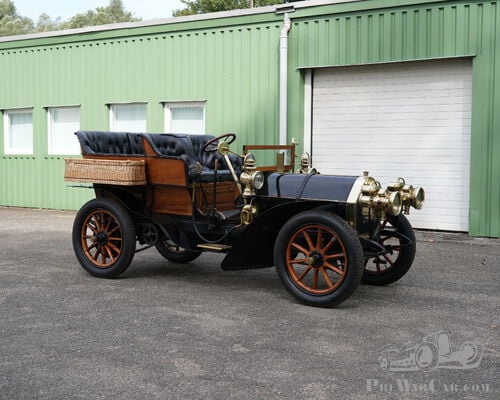
1904 Aster 16/20 HP Four-Cylinder Five-Seat Rear-Entrance Tonneau
Powerful four-cylinder engineFour-speed gearboxChain driveFive seatsMore than €100,000 recently invested
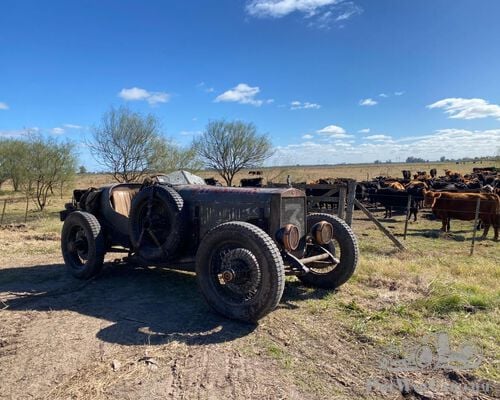
Studebaker 1927 for sale
Authentic race car of the time - Everything is working - All parts of its original mechanics - I have the history of the car - 6 cylinders - Ready ..
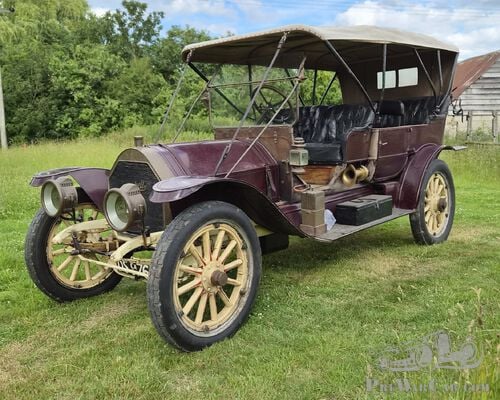
1910 Mitchell Model S - 50HP Six Cylinder
Based in Racine, Wisconsin and being the largest wagon manufacturer in the USA, Mitchell-Lewis produced their first motor car in 1903. Sales grew ..