The global magazine and marketplace for classic car enthusiasts, by enthusiasts.


Filter
Classic Hotchkiss, Renault for sale - Hotchkiss, Renault cars for sale
-

Te koop, Renault NN Torpedo Commercial 1926
Deze Renault betreft een restauratie object voorzien van Franse papieren Carte Grise plus Certificat de Cession D'un Véhicle gedateerd 2003. Tevens een Renault NN rollend chassis voor eventuele onderdelen eveneens met Franse papieren. Te bezichtigen in Bemmel (Nederland). Vraagprijs voor beiden voertuigen € 6000,= dus voor beide auto's die in éé.. -
Renault NN Torpedo Commerciale (1926)
Highlights Complete, coherent, unmodified exampleExcellent base for a full restorationAttractive 1920s torpedo body styleVery accessible entry priceIdeal for workshops or enthusiasts looking for a rewarding project Restoration project – Complete car – Solid base but major work r.. -
Renault 12 HP Coupé de Ville Carrosserie Kellner Type CB – 1911
HighlightsExceptional original conditionRare Kellner coachworkComplete, authentic, coherent exampleOriginal paint and interiorMuseum‑grade preservationIdeal for concours preservation class Kellner Coupé de Ville – Exceptional original condition This.. -
1927 Renault NN1 & Brian James braked trailer
Imported from France in 1997, current owner from 2010, complete engine rebuild, approx 4000 miles, new clutch, dynastart and carburettor restored.Good hood and new tonneau cover. All new inner tubes fitted, spare magneto.Maintenance manual in French and English with other spares available.Includes a Brian James braked traile.. -
1906 Renault AH 4 cylinder
1906 Renault AH 4 cylinder Chassis Number: 6061 Registraton Number: AU210 A very rare survivor of the type with just a few known world wide. This renaul was supplied new to the UK & carries original coachwork by Starey's & Wolleys of Nottingham. -
Hotchkiss AM2 1926 for sale
Original condition 1926 Hotchkiss AM2, mechanically complete and sound. Lively 4 cylinder/13CV overhead valve engine. Four wheel brakes. Original wooden spoke wheels were rebuilt in the 1960s (spokes and felloes). Original Weymann saloon body was dismantled but is still with the car. Nice solid horseshoe Bugatti look-alike radiator in very good ..


Hotchkiss
France, 1903 – 1955
(1) Hotchkiss et Cie, St. Denis, Seine, 1903 – 1936
(2) Automobiles Hotchkiss, St. Denis, Seine, 1936 – 1955
The American Benjamin Berkeley Hotchkiss set up his ordnance Horchkiss car factory at St. Denis in 1867; the Hotchkiss cars were the result of an arm slump. The work of Terrasse, these first Hotchkiss cars were T-headed fours with pair-cast cylinders, 5-ball-bearing crankshafts, low-tension magneto ignition, round honeycomb radiators, 4-speed gearboxes, and the famous Hotchkiss drive by live axle and open propeller shaft. Initially cylinder capacities of Hotchkiss cars were 4.6-litres and 7.4-litres, but the Hotchkiss car company’s first racers of 1904 were 17.8-litre monsters notable for their aiv and chain drive. Though their 1905 successors conformed once more to touring-car practice, they were even bigger Hotchkiss cars, with 18.815cc and an alleged 130bhp. Hotchkiss’s last racing season was 1906 with their Grand Prix Hotchkiss cars had 16.3-litre L-head units and quick-detachable wire wheels. Though these Hotchkiss cars were unsuccessful, Hotchkiss sold 167 cars that year, with gate change standardized, and a choice of five Hotchkiss car models: a short-lived 4.2-litre petrol brougham, fours of 18, 30 and 42hp, and their first six. The last-mentioned Hotckiss car was the large V-type that evolved into a 9½-litre machine and was still being offered in 1912 as a Hotckiss car. Chassis price was £1.000 and it was capable of 60mph.
The slump following the Agadir crisis led to the abandonment of ball-bearing crankshafts on Hotchkiss cars; at the same time there was a move towards smaller Hotchkiss cars with the 3.1-litre T-type, with side valves in an L-head and high-tension magneto ignition. Two years later came something even smaller and more modern, the 12/16hp Hotchkiss X-type with 2-bearing crankshaft and three forward speeds at £390. Soon monobloc engines spread up the range to the 3.7-litre Hotckiss AB of 1912. From 1911 there were some smaller L-head sixes, the 4.678cc Hotchkiss X6 and the 5½-litre Hotchkiss AC6; 1912 sales were a record 598 Hotchkiss cars. Electric lighting was available from 1913, and all the 1914 Hotchkiss car models – the 2.6-litre Hotchkiss AG, the 4-litre Hotchkiss AF, the 5.7-litre Hotchkiss AC, and the 6-cylinder Hotchkiss AC6 – had semi-elliptic suspension all round.
The wartime demand for Hotchkiss machine guns led to the establishment of a branch factory under the Englishman Harry Ainsworth, this subsequently making engines for W.R. Morris until it was absorbed by him in 1923. At home Hotchkiss sold off their surplus works capacity at Lyons and concentrated on a revised Hotchkiss car again, the AF with full electrics and a horseshoe-shaped radiator in place of the traditional round one. Its successor, the Hotchkiss AH of 1921, had cantilever rear springs and torque tube drive, and a year later came the Hotchkiss AL with ohv, and a detachable head; front-wheel brakes were added for 1923. There was also a prototype luxury Hotchkiss car at the 1921 Paris Salon; this Hotchkiss AK had a 6.6-litre 6-cylinder ohc engine, dual ignition, 4-speed unit gearbox, servo-assisted 4-wheel brakes, and a cruciform-braced frame, but it never went into production.
The return of Ainsworth to St. Denis in 1923, coincided with the construction of a new Hotchkiss car factory and a more realistic type of car, the 2.4-litre 12CV Hotchkiss AM, with 4-cylinder sv engine, 4-speed unit box, four-wheel brakes, wire hwwls, and Hotchkiss drive once more. Between 1924 and 1928 it was the Hotchkiss car company’s staple product, selling at the rate of over a thousand a year and offering a 70mph performance at a modest outlay. It persisted until 1932, acquiring ohv in 1926 and rod-operated brakes in 1928, and its engine was used in some Morris-Léon Bollées. Even better was the Hotchkiss AM80 of 1929, largely the work of Bertarione. This was a short-stroke (80x100mm), 7-bearing ohv 3-litre six that owed a good deal to the AM2, though early cars featured torque tube drive; it was to be the basis from which all subsequent Hotchkisses were evolved. A silent 3rd gearbox featured on 1931 Hotchkiss car models, Hotchkiss drive reappeared in 1932, and 1933 improvements included Bendix brakes, cruciform-braked frames, down-draught carburetors and mechanical fuel pumps. Hotchkiss AM80 engines were also fitted to Sizaire Frères and Tracta cars.
The 1933 Hotchkiss car range was expanded both up and down, with new Hotchkiss 12CV (2-litre) and 13CV (1.3-litre) fours for the economy market, and an 85mph fast tourer, the 100bhp 3½-litre Hotckiss AM80S, for the enthusiast. This Hotchkiss car was based on the car with which Vasselle won the 1932 Monte Carlo Rally. Hotchkiss cars repeated this success in 1933 and 1934: in the latter year the Hotchkiss cars collected two Glazier Cups in the Alpine Trial. There were further wins in the Monte Carlo in 1938 and 1939; on the latter occasion a Grand Sport Hotchkiss car tied with a 3½-litre Delahaye. Radiators were moved forward on the 1934 Hotchkiss cars, and the 3-litre gave way to a 2.650cc 15CV that was not a success and lasted only one season. The 1935 Hotchkiss cars had synchromesh and integral boots, and at the top of the 3½-litre 20CV range was the twin-carburettor Hotckiss Paris-Nice, a 115bhp sports car capable of 95mph. Hydraulic brakes appeared in 1936 on Hotchkiss cars (to be quietly dropped halfway through 1937). The sports 20CV engine was now giving 125-130bhp and when allied to a short 9ft 2in wheelbase resulted in the Hotchkiss Grand Sport, a true 100mph saloon.
By 1938 the horseshoe radiator on the Hotchkiss car was now a wire-mesh grille, but despite the exigencies of French rearmament programmes the Hotchkiss car company managed to deliver 2.751 Hotchkiss cars that year, made up of the two fours, the reinstated 3-litre Hotchkiss 680, and the 3½-litre Hotchkiss 686 in various forms, including seven-seater limousines with the single-carburettor 100bhp engine. Hotchkiss also came to the rescue of the ailing Amilcar concern, helping to make the Grégoire-inspired 1.185cc Compound, a small fwd saloon with unitary construction in Alpax; this was sold in England, though not in France, as a Hotchkiss car. A 1.3-litre ohv development, the Hotchkiss B67, was ready for production when France collapsed in the summer of 1940.
Hotchkiss never really recovered from World War 2, though Peugeot were briefly interested in the Hotchkiss car company and Hotchkiss 686 cars won the first two post-war Monte Carlo Rallies of 1949 and 1950. The Hotchkiss 12CV and Hotchkiss 20CV were back in production, unchanged, by 1946, but the first year’s output was a miserable 117 Hotchkiss cars. Hydraulic brakes and independent front suspension did not appear until 1949 on Hotchkiss cars (though Hotchkiss had experimented with the latter in 1937), and a Cotal electric gearbox became a factory option. The 1951 Hotchkiss car models were ‘facelifted’ with V-screens, recessed headlamps and auxiliary coil rear suspension, but in the meantime there had been an expensive mistake: the acquisition by Hotchkiss of the rights to the Grégoire flat-4. This ingenious device was a development of the 1938 Amilcar theme featuring all-round independent suspension and a 4-speed overdrive gearbox, as well as front wheel drive. Production Hotchkiss car models with 2.2-litre engines were said to achieve 95mph and 30mpg, but the teething troubles were endless, and Hotchkiss only managed to make 250 Hotchkiss cars in the end. There was a shutdown in 1952 and the price of recovery was a merger with Delahaye that led inevitably to concentration on commercial vehicles. The old Hotchkiss cars 13CV and 20CV received another facelift in time for the 1954 Paris Salon, but his was their swansong, though medium-powered trucks continued to be made until 1970, along with a version of the American Jeep built under licence.
GB, 1920
Hotchkiss et Cie, Coventry, Warwickshire
Hotchkiss of Coventry, a British offshoot of the famous French Hotchkiss car firm, was set up during World War 1 to make engines in Britain. Their units became best known as the motive power for Morris and BSA light cars, but before they were taken over by William Morris, Hotchkiss experimented with a small car of their own. The Hotchkiss car consisted of their 1.080cc air-cooled V-twin ohv engine installed with a 3-speed gearbox in a pre-war Morris Oxford chassis. It never went into production.
Source: Georgano, encyclopedia of motorcar; MCS, TRN
The information is written with the greatest of care. However, if you have any suggested amendments please contact us at office@prewarcar.com
Renault
France, 1898 to date
(1) Renault Frères Billancourt, 1898 – 1909
(2) SA des Usines Renault, Billancourt, 1909 – 1945
(3) Régie Nationale des Usines Renault, Billancourt, 1945 to date
(4) Régie Nationale des Usines Renault, Flins, 1952 to date
(5) Régie Nationale des Usines Renault, Havre-Sandouville, 1963 to date
Louis Renault’s first prototype Renault car of 1898 had a 1¾hp 273cc air-cooled De Dion engine mounted under a ‘meat-safe’ bonnet at the front of a tubular chassis with shaft drive and differential back axle. The 3-speed-and-reverse gearbox on the Renault car, incorporated a direct top gear patented by its designer. This Renault car was wheel-steered, but early production Renault cars had tiller steering. The small Renault car company founded by Louis and his brothers Marcel and Fernand delivered 60 Renault cars in the first six months. In 1899 Louis and and Marcel took 1st and 2nd places in the Paris-Trouville Race with a Renault car, and Louis followed this up with a win in the voiturette class of the Paris-Ostend Race. 1900 Renault car models had water-cooled 500cc De Dion engines and lateral radiators, and were sold in England as MCC Triumphs. That year 179 Renault cars were sold, and both Corre in France and Argyll in Scotland were close imitations of the Renault car. Wheel-steered Renault cars racers won their classes in the Paris-Bordeaux and Paris-Toulouse-Paris (1900) and the Paris-Berlin (1901) Races.
In 1902 single and 2-cylinder De Dion and Aster engines were still being used in touring models Renault cars, but the Renault car with which Marcel Renault finished 2nd in the Paris-Vienna Race (as well as winning the light-car class) was a sample of things to come with its 3.8-litre Viet-designed and Renault-built 4-cylinder unit. Mechanically-operated side valves in a L-head made their appearance on the 6.3-litre light racer Renault cars evolved for the 1903 Paris-Madrid Race (in which Marcel Renault met his death), and by 1904 the design of the Renault cars had crystallized into a form that was to be followed on Renault cars until 1928, and to have many imitators. Engines were of L-head type, their cylinders initially cast in pairs. Ignition of the Renault car was by high-tension magneto, while colling was by thermos-syphon, the hallmark of the Renault cars being the huge dashboard radiator. The sliding-type gearbox had quadrant change, and the bevel drive with its direct top gear inherited from 1898.
There was a brief reversion ot pump cooling in 1905 on some Renault cars built for the Gordon Bennett Eliminating Trials, but this year also brought the first of the 1.100cc 2-cylinder Renault cars (Renault type AX and AG), the Renault car company’s pre-1914 bestsellers and the ancestors of the celebrated ‘Renault Taxis de la Marne’. A short-chassis Renault AX two-seater could be bought for 5.000fr or £250 in 1908. Szisz’s 13-litre Renault car won the first French Grand Prix of 1906, but though the Renault car marque tried again the following year, they dropped out of racing with Renault cars thereafter. In the 1906 to 1908 period compressed-air starters were available on the bigger Renault cars. King Edward VII bought a 3-litre 4-cylinder Renault 14/20 in 1906, in which year fours of 2.1-litres, 4.4-litres, and 7.4-litres were also listed. Over 3.000 Renault cars were sold in 1907, but there were major changes on Renault cars up to 1914. Direct copies of the Renault car were made in England by Dodson and in the USA by Croxton and (in the case of one town-car model) Palmer-Singe. After Fernand Renault’s death in 1908, the Renault car company was renamed: 1908 also saw the first 6-cylinder in a Renault car, a 9.5-litre 50/60, followed two years later by a smaller 18/25hp Renault car. Later improvements on Renault cars included pressure lubrication in 1911, and by 1913 the Renault car company were fitting detachable wood wheels of their own design and manufacture on all but the 2-cylinder Renault cars. A labour force of 5.200 made more than 10.000 Renault cars – one-fifth of all French private-car production, and the first monobloc fours were appearing.
Renault, like Fiat, still declined to make bodywork, though they listed standardized open styles on the smaller and cheaper Renault car chassis. The 1914 Renault car range embraced the twin in two wheelbase lengths, 4-cylinder Renault cars with capacities of 2.1-litres, 2.6-litres, 3.6-litres, 5.1-litres, and 8.5-litres, and two sixes with 5.1-litre and 7.5-litre engines. Bigger Renault cars used a transverse helper spring in conjunction with semi-elliptics at the rear, all the big Renault cars came with electric lighting as standard equipment, and the de luxe 15.8hp Renault car had an electric starter as well.
1919 Renault cars were very similar to the pre-war 1 article, but the quadrant change had gone, and the entire range of Renault cars (three fours and a six) had full electrical equipment. All the 4-cylinder Renault cars had monobloc engines, but the Renault FI-type 6 had its cylinders cast in threes. In 1921 this Renault car grew up into the elephantine 9.1-litre Renault 45, a 90mph Edwardian survival which was listed until 1928/ 1929, and this Renault car had fixed cylinder heads, wood wheels and a choice of two wheelbase lengths (12ft 6in and 13ft 1in). The radiator capcity was 12 gallons, and in 1926 a lightweight streamline saloon version of this Renault car became the first car to average more than 100mph over 24 hours. The bigger Renault cars acquired front-wheel brakes in 1922: at the same time the dashboard radiator which was typical of Renault cars was merged with the bonnet line.
From 1923 came an economy Renault car to challenge the rising star of Citroën and to fill the gap left by the twins, the 951cc Renault KJ-type with 3-speed gearbox and the transverse rear suspension that was to be a feature of the Renault car make up to 1940. Also offered that year were two medium-sized four Renault cars, the ‘Renault 45’, and the 4.8-litre Renault Type-JY 6-cylinder, which was nearly as big as the 45, but not nearly as fast. Some 6-wheeler trans-Sahara Renault cars were evolved in 1924 using the 13.9hp 4-cylinder engine. In 1925 a Renault car won the Monte Carlo Rally for the first time (other victories were in 1935 and 1959). All 1925 Renault cars had front-wheel brakes, detachable heads followed in 1927 on the 14/45hp Renault car and on a new 3.2-litre light six which also had coil ignition, and from 1928 there was a 1½-litre six Renault car with coil ignition, and transverse rear springing: this Renault car was slow and undergeared, but persisted until 1931. Only the smaller fours now had cone clutches.
1929 brought real deviation in Renault cars – the 7.1-litre Renault Reinastella, the first straight-8 in a Renault car, with frontal radiator, pump cooling, and servo brakes, listing at £1.550 for a chassis. By 1931 frontal radiators, coil ignition, disc wheels, unit gearboxes, and transverse rear suspension were universal on the Renault cars. Smallest and cheapest model Renault car was the little Renault Monasix at £199: there were also a 2.1-litre four Renault car, a 3.2-litre six, and two eights, the Reinastella and cheaper Renault Nerva model at around the £400 mark. There was a reversion to thermosiphon cooling on Renault cars in 1932, and 1933 brought the introduction of synchromesh and downdraught carburettors on the sixes and eights; synchromesh had spread to 4-cylinder Renault cars in 1934, and at the same time the smaller Renault cars discarded gravity feed.
Renaultcar design in the middle and later 1930s was solid and uninspired, deriving largely from American practice: features on Renault cars were 3-speed gearboxes with dashboard change, umbrella-handle handbrakes, recessed rear number plates, mechanical brakes, and full-width bodywork justifying the slogan ‘There’s More Room in a Renault’. The 1936 Renault car range included what was a very big four by the standards of the day, an sv 2.4-litre which sold very well until 1940, and was used in some light-commercial and station-wagon Renault cars as late as 1951. A 1-litre 8.3hp Renault car selling for £140 from 1938 on had unitary construction. The rest of the pre-war Renault car range consisted of two medium-sized fours, a 4.1-litre six, and a 5.4-litre straight-8.
After Louis Renault’s death in prison in 1944 (he had been accused of collaboration with the Nazis), Renault cars was nationalized, and under Government control two private Renault car models were made: a revised 4-door 1-litre Renault Juvaquatre, now with hydraulic brakes, and the 760cc Renault 4CV developed secretly during the war years. This very advanced little Renault car had a rear-mounted 4-cylinder ohv engine developing 19bhp, 3-forward speeds, all-round independent suspension, hydraulic brakes, and spider-type wheels with detachable rims. Top speed of the Renault car was 60mph, and assembly was undertaken in London for the British market (the Renault works at Acton assembled Renault cars from the late 1920s until 1961), while Hino of Japan built the Renault car under licence, and their subsequent designs showed traces of Renault ancestry. Production of the Renault 4CV reached 100.000 Renault cars in 1950, half a million had been made in 1954, and over a million found customers before the Renault car model was withdrawn in 1961. Sporting versions Renault cars were made to give as much as 38bhp, and from 1951 onward capacity was reduced to 750cc.
The rear-engines theme was the backbone of Renault private-car development until the early 1960s, but in 1951 Renault car came out with the Renault Frégate, last of the conventionally-planned Renault cars; this Renault car was a short-stroke 2-litre four with all-round independent suspension, hypoid final drive (never found on the rear-engined Renault cars) and a 4-speed all-indirect gearbox. Though later versions Renault cars had bigger 2.1-litre engines and the Transfluide semi-automatic transmission, this Renault car was never a bestseller. In 1955 the option of the Ferlec automatic clutch was introduced on the Renault 4CV, and a year later came a new rear-engined light car, the 845cc Renault Dauphine with a 30bhp long-stroke engine, this Renault car was selling for £796 in England. Despite controversial handling, the Renault car became the first French model to sell more than two million examples, and this Renault car was made under licence in Italy by Alfa-Romeo, and in Brazil by Willys-Overland. Also in 1956 Renault took gas-turbine records with the experimental Etoile Filante.
Further Renault Dauphine developments resulted from Amédée Gordini’s association with the Renault car company: the 1957 Renault Dauphine Gordini had a 4-speed gearbox and 38bhp, and this Renault car was followed in 1959 by the Renault Floride sports coupé. This Renault car acquired a 956cc engine in 1962, in which year Renault cars challenged Citroën’s 2CV with a front wheel drive utility car, the 747cc Renault 4 (R4) with 4 wheels independently sprung, and hypoid final drive. Sales in 1963 amounted to 668.867 Renault cars, the Renault car plant at Le Havre was opened to supplement the automated factory at Flins which had been operating since 1952, and once again there was a big Renault car product – the American Rambler made under licnece. Supplementing the Renault Dauphine was a new and roomier rear-engined saloon, the 956cc Renault 8 (R8) at £671, with its radiator mounted behind the engine, and all-round disc brakes (standardized on all rear-engined Renault cars the following season). Gordini and automatic versions Renault cars were also listed, followed by the 1.100cc R8 Major Renault car, and by 1966 it was possible to buy a Gordini-tuned R8 variant capable of over 100mph in England for £984. The Renault 4 (now enlarged to 845cc), the Renault Gordini-Dauphine, the Renault 8 family, and the Renault Caravelle (as the Floride Renault car had been renamed) made up the 1967 Renault car line, along with the ingenious Renault 16, introduced in 1965. This Renault car was a front wheel drive 1½-litre 63bhp saloon with front disc brakes and station-wagon styling.
The Renault Dauphine and the Rambler-Renault were dropped in 1968, and Renault car competition activities became increasingly the province of Renault cars associate, Alpine: works-entered Renault cars were not seen in rallies after 1969. New for 1968 were Renault 4s with 4-speed gearboxes, and a 1.565cc Renault 16TS with crossflow head. This higher-capacity engine was standardized in the Renault 16 range by 1971. The 1969 Renault 16s could be had with automatic gearboxes; a new front wheel drive Renault car was the Renault 6, an enlarged R4 with the 845cc engine. The move towards front-wheel drive by Renault cars took a further step in 1970 with the Renault 12, a 1.300cc saloon on which the 4-cylinder engine lay in front of the gearbox. Other features on this Renault car were front disc brakes and rear suspension by rigid axle and coils; a Gordini version of the Renault car used a 1.565cc engine. Price of the basic Renault car model on the home market was 9.980 francs. The Renault car gradually supplanted the rear-engined R8 and R10, which had virtually disappeared by the end of 1971.
By 1972 the R4, R6, R12 and R16 had been joined by the Renault Rodeo, a jeep-type Renault car based on the 4, as well as the 15/17 range of sports coupés. The most potent of these Renault cars was the Renault 17TS with hemi-head fuel-injection engine developing 120bhp, all-disc brakes, and an electric sunrood. Early in the year came Renault cars answer to the Fiat 127, the compact front wheel drive 4-cylinder Renault 5. This Renault car featured a 43bhp, 956cc 5-bearing engine (an economy 782cc version Renault car was available for the home market), all-independent suspension, a 4-speed all-synchromesh gearbox with dashboard change, alternator ignition, disc front brakes and a lift-up tailgate.
Since World War 2 Renault mechanical components have featured in several specialist makes of car, among them Alpine, Autobleu, Réné Bonnet, Brissonneau, Matra, Méan and (since the introduction of the Europa in 1967) Lotus. In 1972 Renault cars were being assembled or manufactured in 27 foreign countries, including Bulgaria, Rumania and Yugoslavia.
Source: Georgano, encyclopedia of motorcar; MCS
The information is written with the greatest of care. However, if you have any suggested amendments please contact us at office@prewarcar.com


Featured
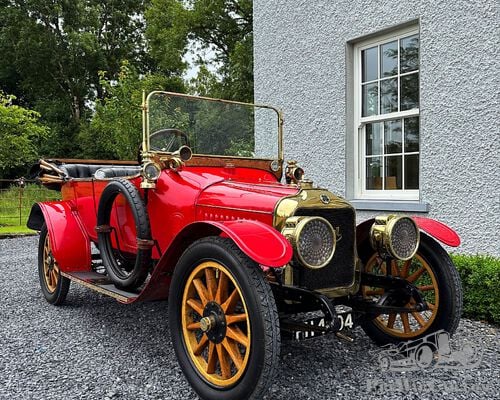
1914 Brasier
1914 Brasier Tourer 9ABrasier were a French manufacturer who were in business from 1901 until 1930, when the company became victim of the gr..
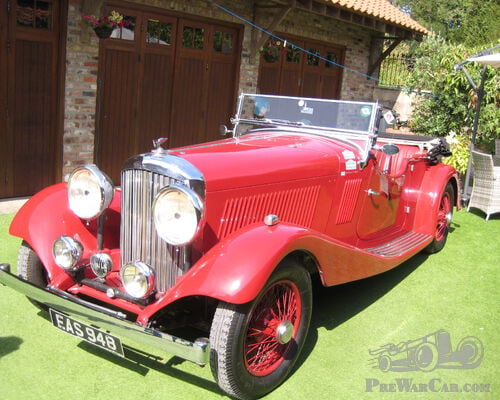
1935 Bentley 3.5 ltr. VDP 4str. Tourer
Chassis B 123 CW was first registered 14th March 1935, and in the late eighties underwent a " body-off" restoration and fitted with VANDEN PLAS
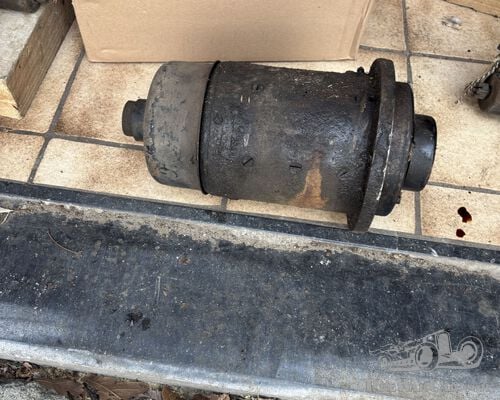
1929 Talbot K74 Limousine – Very comprehensive restoration project
For sale – 1929 Talbot K74 Limousine – Very comprehensive restoration projectAsking price: €19,950 A very rare 1929 Talbot K74..