The global magazine and marketplace for classic car enthusiasts, by enthusiasts.


Filter
Classic REO for sale - REO cars for sale
-

1931 Chevrolet 4 door special sedan
Model: Independence, AE series, 4-door special sedan Colour: Bordeaux red body with black trim and black mudguardsInterior: grey fabricEngine: 6 cylinder line, 194 cubic inches, 3.2 litres, 50 hpTransmission: 3-speed manual transmissionCondition: restoredPrice € : 29,500,- Description:This .. -
1930 Buick 4 door sedan
Model: 30-57, series 50 Colour: medium blue with black trim and black mudguardsInterior: blue fabricEngine: 6 cylinder inline,Transmission: manual, 3-speedCondition: restoredPrice € : 29,500,- Description:Nice and tight car, neat and tight sheet metal, good paint and nicely painted. Starts .. -
1913 Buick touring
Model: 3-door touring, model 25Colour: dark green with black trim, green pinstripe and black mudguardsInterior: black leatherEngine: 4 cylinder, 165 cubic inch, 2.7 litre, 22.5 hpTransmission: 3-speed manual transmissionCondition: restoredPrice € : 45,000,- Description:Very neat car with pa.. -
1929 Ford Model A sedan
Model: 2-door sedan Colour: blue body with black mudguardsInterior: grey marbled fabricEngine: 4 cylinder, 200.5 cubic inch, 3.3 litre, 40 hpTransmission: 3-speed manual transmissionCondition: completely body off restoredPrice € : Description:Fully restored A-Ford 2 door sedan with .. -
1919 Studebaker Chummy Roadster
Model: chummy roadsterColour: soft yellow body with black mudguardsInterior: dark brown leatherEngine: in-line 6 cylinderTransmission: 3-speed manual transmissionCondition: body off restoredPrice € : 49,500,- Description:Beautifully restored car. Very special model because of its tou.. -
1914 T-Ford runabout roadster
Model: runabout roadsterColour: black body with black mudguardsInterior: black leatherEngine: 4 cylinder, 176.7 cubic inches, 2.9 litres, 22.5 hpTransmission: planetary transmission, semi automatic, 2 speedCondition: body off restoredPrice € : 38,500,- Description:.. -
Chrysler Roadster Special
Chrysler Roadster Special, 1930, 3200cc, 6 cylinders, full aluminum, recently fully restored, FIA regularity passport present, cycle wings present, very powerful car. Contact us for more information. -
1924 Bentley 3-4 1/2 litre Lemans tourer.
1924 Bentley 3-4 1/2 litre Lemans tourer. Chassis number: 487Registration Number: XR3400 Under long term ownership for the past decade, this car was purchased from the late Stanley Mann who eloquently summed the car up in his usual ubiquitous style: "This Bentley is the most desirable spec for the old Ben.. -
1933 Rolls Royce Phantom 2 Continental.
1933 Rolls Royce Phantom 2 Continental.Chassis number: 7MWRegistration number: VV2142First time to market in decades; This Phantom 2 Continental has been in the current ownership for a very very long time sharing garage space with an assortment of Pre War Silver ghosts & a coach built Bentley amongst other cars.Th.. -
1931 Marmon Sedan 88
MARMON - SEDAN 88 Year 1931GasolineHistorical, 8 cylinders, very good condition.


REO
US, 1904 – 1936
(1) R.E. Olds Co, Lansing, Mich., 1904
(2) Reo Car Co, Lansing, Mich., 1904
(3) Reo Motor Car Co, Lansing Mich., 1904 – 1936
The REO car name derives from the ititials of Ransom E. Olds, who left Oldsmobile to form a new company. The first REO cars were single-cylinder 8hp runabouts with under-floor engines, dummy bonnets, planetary transmissions, and chain drive; the REO car sold for $685, reduced to $500 by 1909. A companion 16hp twin REO car at $1.250 had a capacity of 3.4-litres and a carburetor for each cylinder. These represented the REO car company’s main effort up to 1909, though a short-lived four REO car had been marketed in 1906. 1911/ 1912 brought the REO car the REO Fifth, another 4-cylinder REO car with 3.7-litre ioe engine, which offered central change and left-hand drive for $1.055.
REO cars were steady sellers right up to the Depression of 1929-1931, and the REO car company did very well with their subsequent ioe fours and sixes which REO cars were made with V-radiators during the World War 1 period. In 1918, 4-cylinder REO cars sold for $1.225, $1.550 being asked for the 5-litre 6-cylinder version. Only a four REO car was made in 1919, but for 1920 REO cars standardized a six, their famous ioe REO Model T with ‘back-to-front’ gear change, and two foot-operated brakes with no hand lever; 2-wheel brakes were deemed sufficient for the REO car right up to the end of production in 1926. 1927 saw a switch on REO cars to side valves and hydraulic four-wheel brakes, and in 1928 the REO car company offered the REO Wolverine, a cheaper REO car with a Continental engine which sold for $1.195, as against the $1.685 asked for the REO Flying Cloud with REO’s own engine. This REO car was the company’s best year, with 29.000 REO cars sold. The REO Wolverine was dropped in 1929, and REO car production centred on two versions of the REO Flying Cloud with 3½-litre and 4.4-litre engines. An 8-cylinder REO Flying Cloud followed in 1931, along with a bid by REO cars for the luxury marked with the 5.9-litre straight-8 REO Custom Royale, styled by Alexis de Sakhnoffsky. This REO car had automatic chassis lubrication, and could be obtained in three wheelbase lengths, the longest REO car being 12ft 8in.
The REO 4-speed automatic gearbox was available on all REO cars from 1933 onwards, as an alternative to synchromesh, but though the 4.4-litre REO Flying Cloud with Graham-like sedan bodywork could still be bought for $845 in 1936, that was the end of REO’s private cars. Trucks and buses continued to be made, from 1957 as a division of White. In 1967 amalgamation of design with Diamond T led to a new brand name, Diamond-REO cars, and in 1971 this was sold by White to become an independent make.
Source: Georgano, encyclopedia of motorcar; MCS
The information is written with the greatest of care. However, if you have any suggested amendments please contact us at office@prewarcar.com


Featured
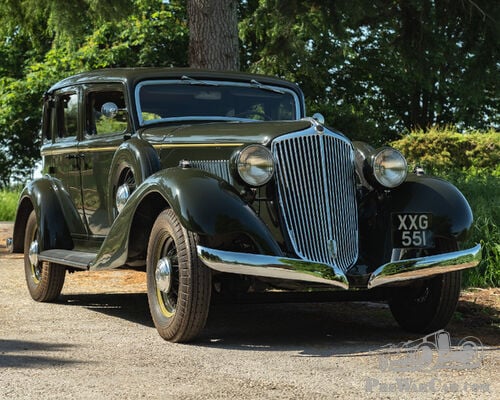
Graham Model 64 Standard Eight 'Blue Streak'
UK Registration No: XXG 551Chassis No: 1801069MOT: ExemptH&H ClassicsKelham Hall | Newark, Nottinghamshire
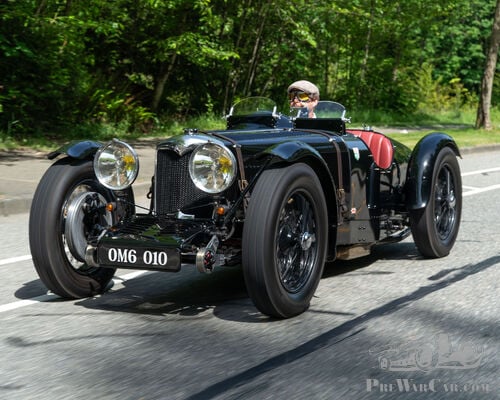
Riley 14/6 Special 1933
The ExperienceStep into the golden age of British motoring. This 1933 Riley 14/6 Special is a masterclass in pre-w..
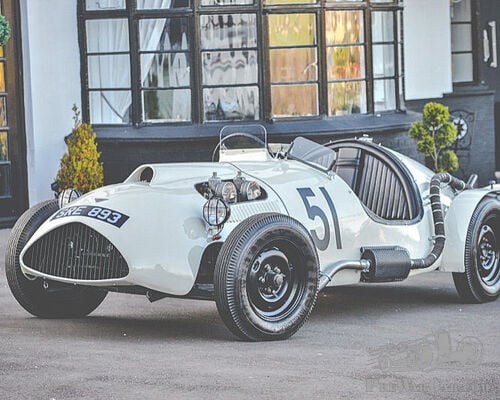
1933 Alvis 3.0 Special - One-Off Alloy Body | Period Competition Car | Featured in “Alvis – A Century of Drivers”
1933 Alvis 3. 0 Special - One-Off Alloy-Body | Period Competition Car | Featured in “Alvis – A Century of Drivers”