The global magazine and marketplace for classic car enthusiasts, by enthusiasts.


Filter
Classic REO, Rauch & Lang for sale - REO, Rauch & Lang cars for sale
-

1934 REO Flying Cloud DeLuxe Coupe | RM Sotheby's | The Hershey Auction
To Be OFFERED AT AUCTION WITHOUT RESERVE at RM Sothebys' The Hershey Auction event, 7 - 8 October 2026. Offered Without Reserve | $50,000 - $70,000 USD One of just 4,460 REOs produced for 1934Desirable DeLuxe Coupe from the third-to-last year of REO passenger car productionPowered by a 268-cid inline six-cylinder engine.. -
REO Model R Speedster 1910
For sale is this nice Reo Model R Speedster. It was built in 1910 and converted to a speedster years ago even before the previous owner bought it. It has the original 4 cylinder engine coupled to a 3 forward 1 reverse gearbox. It spent a good part of its life in sunny Kansas where it was restored by the previous owner who enjoyed it for many yea.. -
1918 Rauch & Lang Model B26 Brougham | RM Sotheby's | The Hershey Auction
To Be OFFERED AT AUCTION at RM Sothebys' The Hershey Auction event, 7 - 8 October 2026. $150,000 - $175,000 USD One of the finest surviving examples of the Rauch & Lang electric carBeautiful show-quality, AACA First Junior-winning restorationKnown history, with only three long-term caretakers since the 1950s


REO
US, 1904 – 1936
(1) R.E. Olds Co, Lansing, Mich., 1904
(2) Reo Car Co, Lansing, Mich., 1904
(3) Reo Motor Car Co, Lansing Mich., 1904 – 1936
The REO car name derives from the ititials of Ransom E. Olds, who left Oldsmobile to form a new company. The first REO cars were single-cylinder 8hp runabouts with under-floor engines, dummy bonnets, planetary transmissions, and chain drive; the REO car sold for $685, reduced to $500 by 1909. A companion 16hp twin REO car at $1.250 had a capacity of 3.4-litres and a carburetor for each cylinder. These represented the REO car company’s main effort up to 1909, though a short-lived four REO car had been marketed in 1906. 1911/ 1912 brought the REO car the REO Fifth, another 4-cylinder REO car with 3.7-litre ioe engine, which offered central change and left-hand drive for $1.055.
REO cars were steady sellers right up to the Depression of 1929-1931, and the REO car company did very well with their subsequent ioe fours and sixes which REO cars were made with V-radiators during the World War 1 period. In 1918, 4-cylinder REO cars sold for $1.225, $1.550 being asked for the 5-litre 6-cylinder version. Only a four REO car was made in 1919, but for 1920 REO cars standardized a six, their famous ioe REO Model T with ‘back-to-front’ gear change, and two foot-operated brakes with no hand lever; 2-wheel brakes were deemed sufficient for the REO car right up to the end of production in 1926. 1927 saw a switch on REO cars to side valves and hydraulic four-wheel brakes, and in 1928 the REO car company offered the REO Wolverine, a cheaper REO car with a Continental engine which sold for $1.195, as against the $1.685 asked for the REO Flying Cloud with REO’s own engine. This REO car was the company’s best year, with 29.000 REO cars sold. The REO Wolverine was dropped in 1929, and REO car production centred on two versions of the REO Flying Cloud with 3½-litre and 4.4-litre engines. An 8-cylinder REO Flying Cloud followed in 1931, along with a bid by REO cars for the luxury marked with the 5.9-litre straight-8 REO Custom Royale, styled by Alexis de Sakhnoffsky. This REO car had automatic chassis lubrication, and could be obtained in three wheelbase lengths, the longest REO car being 12ft 8in.
The REO 4-speed automatic gearbox was available on all REO cars from 1933 onwards, as an alternative to synchromesh, but though the 4.4-litre REO Flying Cloud with Graham-like sedan bodywork could still be bought for $845 in 1936, that was the end of REO’s private cars. Trucks and buses continued to be made, from 1957 as a division of White. In 1967 amalgamation of design with Diamond T led to a new brand name, Diamond-REO cars, and in 1971 this was sold by White to become an independent make.
Source: Georgano, encyclopedia of motorcar; MCS
The information is written with the greatest of care. However, if you have any suggested amendments please contact us at office@prewarcar.com
Rauch & Lang
US, 1905 – 1928
(1) Rauch & Lang Carriage Co, Cleveland, Ohio, 1905 – 1916
(2) Baker, Rauch & Lang Co, Cleveland, Ohio, 1916 – 1922
(3) Rauch & Lang Electric Car Manufacturing Co, Chicopee Falls, Mass., 1922 – 1928
Rauch & Lang were an old-established carriage building firm (founded 1853) when they began to make electric Rauch & Lang cars in 1905. These Rauch & Lang cars followed the usual pattern for such electric vehicles, being mainly closed town cars, although a few open phaeton Rauch & Lang cars were also made. The biggest Rauch & Lang cars were heavier vehicles and included a six-seater limousine with separate outside seat for the chauffeur. Some Rauch & Lang cars had 4-doors, a very unusual feature in electric cars. In 1916 the Rauch & Lang cars became part of the Baker, Rauch & Lane group and production declined. From 1919 onwards the Rauch & Lang cars were sometimes listed as Raulangs, and from 1922 this became the official name of the Rauch & Lang cars.
By this time production of Rauch & Lang cars had been transferred to the Stevens-Duryea factory at Chicopee Falls where the number of private cars made was very small. The factory, which was still turning out a few Stevens-Duryeas, also made petrol and electric taxi-cabs under the name Rauch & Lang cars, and bodies for Stanley Steamers.
Source: Georgano, encyclopedia of motorcar; GNG
The information is written with the greatest of care. However, if you have any suggested amendments please contact us at office@prewarcar.com


Featured
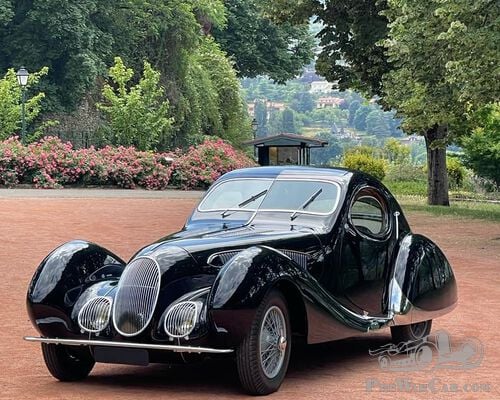
1939 Talbot-Lago T150C “Goutte d’Eau” — Iconic French Coachbuilt Masterpiece
Talbot-Lago T150C ‘Teardrop’ — An Icon of French Automotive Art There are motor cars that define an era. And then there are those tha..
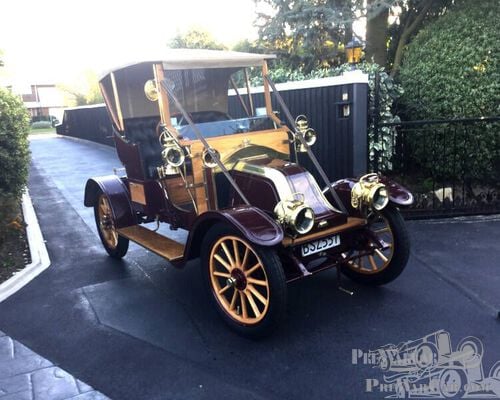
Renault /AX 1913 - named
Purchased fully renovated from New Zealand and imported to the UK. We have owned her for over10 years. Gigi is currently living in France where she..
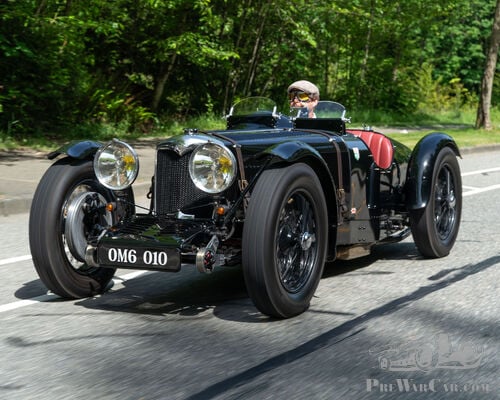
Riley 14/6 Special 1933
The ExperienceStep into the golden age of British motoring. This 1933 Riley 14/6 Special is a masterclass in pre-w..