The global magazine and marketplace for classic car enthusiasts, by enthusiasts.


Filter
Classic Rolland-Pilain, REO for sale - Rolland-Pilain, REO cars for sale
-

Rolland Pilain
I am selling a 1913 Rolland Pilain RP 10HP in very good condition. It has a standard registration document in my name, and the MOT will be carried out prior to the sale. -
1931 Reo Royale 8-35 Victoria | RM Sotheby's | The Hershey Auction
To Be OFFERED AT AUCTION WITHOUT RESERVE at RM Sothebys' The Hershey Auction event, 7 - 8 October 2026. Offered Without Reserve | $75,000 - $90,000 USD One of only about five known surviving Royale 8-35 VictoriasAmong the great unsung American ClassicsExceptional specifications, including nine-bearing crank, hydraulic b.. -
1934 REO Flying Cloud DeLuxe Coupe | RM Sotheby's | The Hershey Auction
To Be OFFERED AT AUCTION WITHOUT RESERVE at RM Sothebys' The Hershey Auction event, 7 - 8 October 2026. Offered Without Reserve | $50,000 - $70,000 USD One of just 4,460 REOs produced for 1934Desirable DeLuxe Coupe from the third-to-last year of REO passenger car productionPowered by a 268-cid inline six-cylinder engine.. -
REO Model R Speedster 1910
For sale is this nice Reo Model R Speedster. It was built in 1910 and converted to a speedster years ago even before the previous owner bought it. It has the original 4 cylinder engine coupled to a 3 forward 1 reverse gearbox. It spent a good part of its life in sunny Kansas where it was restored by the previous owner who enjoyed it for many yea..


Rolland-Pilain
France, 1906 – 1931
SA des Etablissements Rolland-Pilain, Tours
Unusual among French marques of its period, Rolland Pilain cars made their greatest impact after World War 1. Their first product was a 20hp 4-cylinder model Rolland Pilain cars with a monobloc engine, though smaller 2.2-litre shaft-driven Rolland Pilain cars were available in 1909 and a 3-speed 1½-litre Rolland Pilain 8/10CV in 1910, in which year the Rolland Pilain car company was also experimenting with ‘valveless’ engines and 4-wheel brakes. Though racing was in the doldrums, the Rolland Pilain car company went to the trouble of building a big chain-driven Rolland Pilain car for the 1911 Grand Prix de France, and a complex 1912 range started with a Rolland Pilain 9CV of 1.7-litres and went up to a chain-driven 4-cylinder 60 Rolland Pilain car of 130x270mm. The 6-cylinder Rolland Pilain 18CV had a ‘valveless’ engine, and even in 1913 chain drive was still optional on the biggest fours of 20CV and 24CV Rolland Pilain cars. Only 1.9-litre and 4-litre 4-cylinder Rolland Pilain cars with sv monobloc engines and unit gearboxes were listed in 1914.
These basic types of Rolland Pilain cars, still with pedal-operated transmission brakes, were available again after World War 1, but far more advanced was the 2.2-litre Rolland Pilain 14/16 of 1921, which boasted not only overhead valves and a detachable head, but also front-wheel brakes (hydraulic at the front and mechanical at the rear). This Rolland Pilain car was still catalogued in 1926. Even more ambitious was the 2-litre twin ohc straight-8 GP Rolland Pilain car of 1922, with desmodromic valves, ball-bearing crankshafts and 4-wheel hydraulic brakes. A victory of a Rolland Pilain car at San Sebastian in 1923 was the limit of the success of Rolland Pilain cars on the circuits, but the type found its way into the catalogue as the Type A22 Rolland Pilain car at 90.000fr, and one of the racers also ran with a 2-litre, 6-cylinder cuff-valve Schmid engine. In 1925 came a 2-litre ohv 4-cylinder Rolland Pilain car with 4-wheel mechanical brakes, selling for £725 in England, while a 1½-litre development, the Rolland Pilain D26, was introduced for 1927. In 1929 Rolland-Pilain car, along with several other French firms, tried a Franco-American theme by introducing a range of big luxury chassis with sv Continental engines. Both the 6-cylinder, 3-litre, and the 4-litre straight-8 Rolland Pilain cars had centralized chassis lubrication, though the elegant bodywork of the Rolland Pilain car was marred by the use of artillery wheels. At the 1930 Paris Salon the Rolland Pilain car company shared a stand with the BNC (also going through a Franco-American phase), but this was the end, though the Rolland Pilain car firm’s Paris depot was still advertising spare parts for Bignan as well as Rolland Pilain cars in 1934.
Source: Georgano, encyclopedia of motorcar; MCS
The information is written with the greatest of care. However, if you have any suggested amendments please contact us at office@prewarcar.com
REO
US, 1904 – 1936
(1) R.E. Olds Co, Lansing, Mich., 1904
(2) Reo Car Co, Lansing, Mich., 1904
(3) Reo Motor Car Co, Lansing Mich., 1904 – 1936
The REO car name derives from the ititials of Ransom E. Olds, who left Oldsmobile to form a new company. The first REO cars were single-cylinder 8hp runabouts with under-floor engines, dummy bonnets, planetary transmissions, and chain drive; the REO car sold for $685, reduced to $500 by 1909. A companion 16hp twin REO car at $1.250 had a capacity of 3.4-litres and a carburetor for each cylinder. These represented the REO car company’s main effort up to 1909, though a short-lived four REO car had been marketed in 1906. 1911/ 1912 brought the REO car the REO Fifth, another 4-cylinder REO car with 3.7-litre ioe engine, which offered central change and left-hand drive for $1.055.
REO cars were steady sellers right up to the Depression of 1929-1931, and the REO car company did very well with their subsequent ioe fours and sixes which REO cars were made with V-radiators during the World War 1 period. In 1918, 4-cylinder REO cars sold for $1.225, $1.550 being asked for the 5-litre 6-cylinder version. Only a four REO car was made in 1919, but for 1920 REO cars standardized a six, their famous ioe REO Model T with ‘back-to-front’ gear change, and two foot-operated brakes with no hand lever; 2-wheel brakes were deemed sufficient for the REO car right up to the end of production in 1926. 1927 saw a switch on REO cars to side valves and hydraulic four-wheel brakes, and in 1928 the REO car company offered the REO Wolverine, a cheaper REO car with a Continental engine which sold for $1.195, as against the $1.685 asked for the REO Flying Cloud with REO’s own engine. This REO car was the company’s best year, with 29.000 REO cars sold. The REO Wolverine was dropped in 1929, and REO car production centred on two versions of the REO Flying Cloud with 3½-litre and 4.4-litre engines. An 8-cylinder REO Flying Cloud followed in 1931, along with a bid by REO cars for the luxury marked with the 5.9-litre straight-8 REO Custom Royale, styled by Alexis de Sakhnoffsky. This REO car had automatic chassis lubrication, and could be obtained in three wheelbase lengths, the longest REO car being 12ft 8in.
The REO 4-speed automatic gearbox was available on all REO cars from 1933 onwards, as an alternative to synchromesh, but though the 4.4-litre REO Flying Cloud with Graham-like sedan bodywork could still be bought for $845 in 1936, that was the end of REO’s private cars. Trucks and buses continued to be made, from 1957 as a division of White. In 1967 amalgamation of design with Diamond T led to a new brand name, Diamond-REO cars, and in 1971 this was sold by White to become an independent make.
Source: Georgano, encyclopedia of motorcar; MCS
The information is written with the greatest of care. However, if you have any suggested amendments please contact us at office@prewarcar.com


Featured
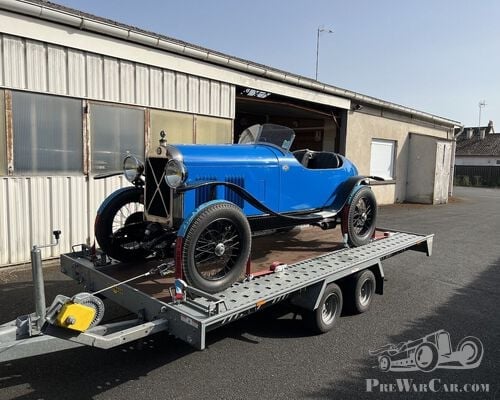
Salmson VAL 3 Séries 7
1927 Salmson VAL3 Series 7. Completely restored a few years ago, in very good overall condition, both bodywork and mechanics. Bordino-style bodywor..
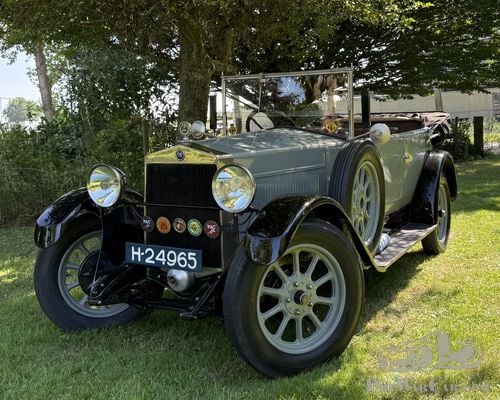
Fiat 509 Torpedo / Spider – Exceptionally Original and Complete
A Rare and Highly Original Example with Long-Term Dutch HistoryOffered for sale is an exceptionally original and remarkably complete Fiat 50..
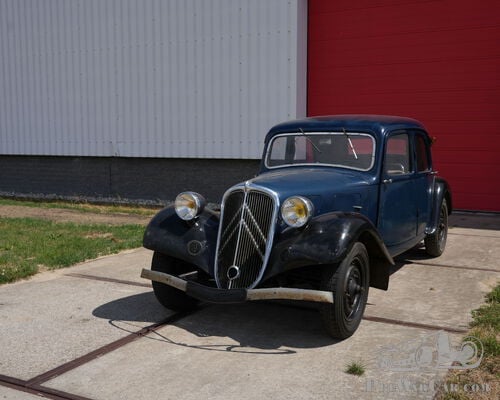
1935 Citroën Traction Avant
Early-production Traction AvantExceptionally original, unrestored conditionRecently part of a major museum collection