The global magazine and marketplace for classic car enthusiasts, by enthusiasts.


Filter
Classic Hotchkiss, Riley for sale - Hotchkiss, Riley cars for sale
-

Riley 12/4 special Project
Zu verkaufen steht ein Riley Special Projekt. Das Fahrzeug wurde schon mit einer neuen Karosse versehen. Dazu wurden, wie für alle Rileys üblich der Kühler und Motor nach hinten versetzt und der hintere Teil des Rahmens abgeändert. Alle Änderungen sind so, wie in den meisten bekannten Riley Büchern beschrieben, durchgeführt worden.( dies.. -
Riley Biarritz 1929
Present owner since 2019, nice original condition. Regular light use and campaigned on Welsh LC&ES Rallies, driving there and back from Wiltshire. (VSCC Light Car eligible. photo (c) Peter McFadyen).Reconditioned Magneto, refurbished petrol tank, electric fan, five new tyres, new battery. Fabric body. Being sold due to loss of.. -
1935 Riley MPH 14/6
1935 Riley MPH 14/6 for saleOne of only c16 genuine MPH cars to be builtUnique Bertelli coachworkExtensively researched by marque expert Robin Cameron Riley achieved immense competition success during the inter-war years and, with its rakish styling and six-cylinder engine, the MPH model was, i.. -
Riley 12/4 Special Project
Due to many Projects, we are selling our long term 1935 Adelphi based Special. Engine is 12/4 with preselector gearbox.The Body was inspired by an Alfa Romeo Race Car. ( see photos ).All Original Adelphi parts are included and in need of refurbished and re assembly. Original old registration book and V5 Finished it will be.. -
Riley 14/6 MPH Rep. 1936
This beautiful MPH Replica was accurately recreated by Riley Specialist Barrie Gillies circa 2002.Every detail is beautifully crafted, just like the original. This includes the interior and the storage compartments for the racing windows.Fast 6 cylinder engine that makes an impressive sound.Ideal car for rallies and events. -
RILEY 12/4 Sport komplette Technik überholt
Riley 12/4 SportCompletely ooverhauled technique and rebuilt by a specialist companyEngine tuned for increased performancePreselector tested on a dynamometerAxles, steeringNew rims and tiresBuilt to a high standardSoft top and cockpit coverRuns very well.German registration (H) -
Riley 14/6 Special 1933
The ExperienceStep into the golden age of British motoring. This 1933 Riley 14/6 Special is a masterclass in pre-war engineering. It creates a rare sensation where the world slows down, leaving only the roar and rush of a true vintage racer. Meticulously built to pair breathtaking aesthetics with the power of the.. -
The famous white Riley 12/4 from 1936 with Race History ex New Zealand
The famous white Riley of racing driver Mrs. Ivy Stephenson , Riley 12/4 Kestrel Special from 1936A car which was built as a race car and still can be successfully raced today!- A known car with racing history in New Zealand -Restored in excellent state and condition-Comprehensively files and documentation .. -
Riley 12/4 Sports Special
The 1937 Riley 12/4 Sports Special sits at the intersection of two important British motoring traditions: Riley's sophisticated pre-war engineering and the long-standing culture of building "specials" from older chassis.The Riley 12/4: An Advanced Sporting CarThe underlying Riley 12/4 was introduced in 1935 as Ri.. -
1936 Riley Special
This beautiful 1936 Riley, started life as a 12/ 4 model whilst the running gear is all from the lauded nine, with a desirable preselector box. In super condition throughout and continuously maintained , this might be the ideal European tourer, with its sprightly performance and full weather equipment to include hood and side screens.Runn..


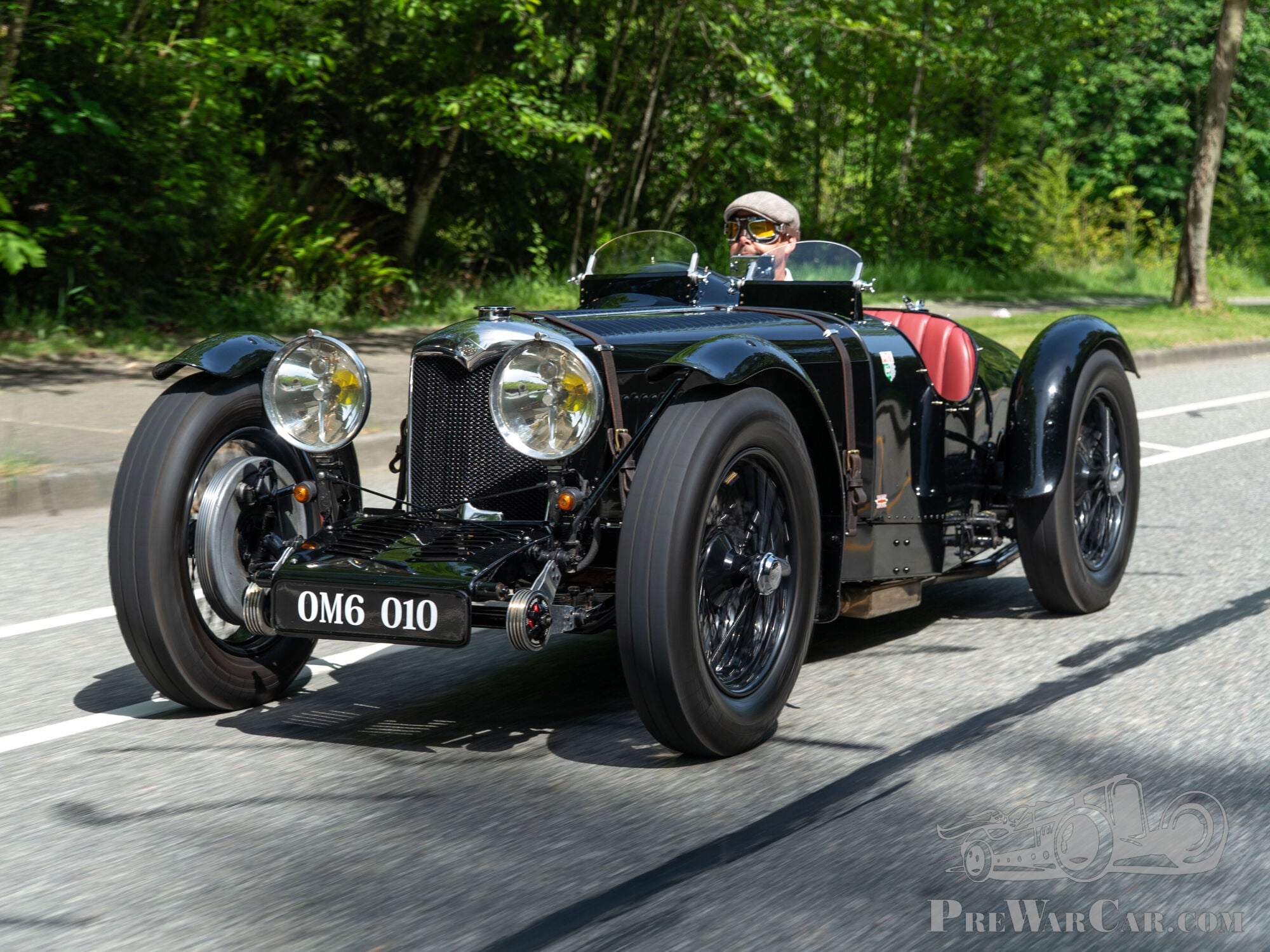


Hotchkiss
France, 1903 – 1955
(1) Hotchkiss et Cie, St. Denis, Seine, 1903 – 1936
(2) Automobiles Hotchkiss, St. Denis, Seine, 1936 – 1955
The American Benjamin Berkeley Hotchkiss set up his ordnance Horchkiss car factory at St. Denis in 1867; the Hotchkiss cars were the result of an arm slump. The work of Terrasse, these first Hotchkiss cars were T-headed fours with pair-cast cylinders, 5-ball-bearing crankshafts, low-tension magneto ignition, round honeycomb radiators, 4-speed gearboxes, and the famous Hotchkiss drive by live axle and open propeller shaft. Initially cylinder capacities of Hotchkiss cars were 4.6-litres and 7.4-litres, but the Hotchkiss car company’s first racers of 1904 were 17.8-litre monsters notable for their aiv and chain drive. Though their 1905 successors conformed once more to touring-car practice, they were even bigger Hotchkiss cars, with 18.815cc and an alleged 130bhp. Hotchkiss’s last racing season was 1906 with their Grand Prix Hotchkiss cars had 16.3-litre L-head units and quick-detachable wire wheels. Though these Hotchkiss cars were unsuccessful, Hotchkiss sold 167 cars that year, with gate change standardized, and a choice of five Hotchkiss car models: a short-lived 4.2-litre petrol brougham, fours of 18, 30 and 42hp, and their first six. The last-mentioned Hotckiss car was the large V-type that evolved into a 9½-litre machine and was still being offered in 1912 as a Hotckiss car. Chassis price was £1.000 and it was capable of 60mph.
The slump following the Agadir crisis led to the abandonment of ball-bearing crankshafts on Hotchkiss cars; at the same time there was a move towards smaller Hotchkiss cars with the 3.1-litre T-type, with side valves in an L-head and high-tension magneto ignition. Two years later came something even smaller and more modern, the 12/16hp Hotchkiss X-type with 2-bearing crankshaft and three forward speeds at £390. Soon monobloc engines spread up the range to the 3.7-litre Hotckiss AB of 1912. From 1911 there were some smaller L-head sixes, the 4.678cc Hotchkiss X6 and the 5½-litre Hotchkiss AC6; 1912 sales were a record 598 Hotchkiss cars. Electric lighting was available from 1913, and all the 1914 Hotchkiss car models – the 2.6-litre Hotchkiss AG, the 4-litre Hotchkiss AF, the 5.7-litre Hotchkiss AC, and the 6-cylinder Hotchkiss AC6 – had semi-elliptic suspension all round.
The wartime demand for Hotchkiss machine guns led to the establishment of a branch factory under the Englishman Harry Ainsworth, this subsequently making engines for W.R. Morris until it was absorbed by him in 1923. At home Hotchkiss sold off their surplus works capacity at Lyons and concentrated on a revised Hotchkiss car again, the AF with full electrics and a horseshoe-shaped radiator in place of the traditional round one. Its successor, the Hotchkiss AH of 1921, had cantilever rear springs and torque tube drive, and a year later came the Hotchkiss AL with ohv, and a detachable head; front-wheel brakes were added for 1923. There was also a prototype luxury Hotchkiss car at the 1921 Paris Salon; this Hotchkiss AK had a 6.6-litre 6-cylinder ohc engine, dual ignition, 4-speed unit gearbox, servo-assisted 4-wheel brakes, and a cruciform-braced frame, but it never went into production.
The return of Ainsworth to St. Denis in 1923, coincided with the construction of a new Hotchkiss car factory and a more realistic type of car, the 2.4-litre 12CV Hotchkiss AM, with 4-cylinder sv engine, 4-speed unit box, four-wheel brakes, wire hwwls, and Hotchkiss drive once more. Between 1924 and 1928 it was the Hotchkiss car company’s staple product, selling at the rate of over a thousand a year and offering a 70mph performance at a modest outlay. It persisted until 1932, acquiring ohv in 1926 and rod-operated brakes in 1928, and its engine was used in some Morris-Léon Bollées. Even better was the Hotchkiss AM80 of 1929, largely the work of Bertarione. This was a short-stroke (80x100mm), 7-bearing ohv 3-litre six that owed a good deal to the AM2, though early cars featured torque tube drive; it was to be the basis from which all subsequent Hotchkisses were evolved. A silent 3rd gearbox featured on 1931 Hotchkiss car models, Hotchkiss drive reappeared in 1932, and 1933 improvements included Bendix brakes, cruciform-braked frames, down-draught carburetors and mechanical fuel pumps. Hotchkiss AM80 engines were also fitted to Sizaire Frères and Tracta cars.
The 1933 Hotchkiss car range was expanded both up and down, with new Hotchkiss 12CV (2-litre) and 13CV (1.3-litre) fours for the economy market, and an 85mph fast tourer, the 100bhp 3½-litre Hotckiss AM80S, for the enthusiast. This Hotchkiss car was based on the car with which Vasselle won the 1932 Monte Carlo Rally. Hotchkiss cars repeated this success in 1933 and 1934: in the latter year the Hotchkiss cars collected two Glazier Cups in the Alpine Trial. There were further wins in the Monte Carlo in 1938 and 1939; on the latter occasion a Grand Sport Hotchkiss car tied with a 3½-litre Delahaye. Radiators were moved forward on the 1934 Hotchkiss cars, and the 3-litre gave way to a 2.650cc 15CV that was not a success and lasted only one season. The 1935 Hotchkiss cars had synchromesh and integral boots, and at the top of the 3½-litre 20CV range was the twin-carburettor Hotckiss Paris-Nice, a 115bhp sports car capable of 95mph. Hydraulic brakes appeared in 1936 on Hotchkiss cars (to be quietly dropped halfway through 1937). The sports 20CV engine was now giving 125-130bhp and when allied to a short 9ft 2in wheelbase resulted in the Hotchkiss Grand Sport, a true 100mph saloon.
By 1938 the horseshoe radiator on the Hotchkiss car was now a wire-mesh grille, but despite the exigencies of French rearmament programmes the Hotchkiss car company managed to deliver 2.751 Hotchkiss cars that year, made up of the two fours, the reinstated 3-litre Hotchkiss 680, and the 3½-litre Hotchkiss 686 in various forms, including seven-seater limousines with the single-carburettor 100bhp engine. Hotchkiss also came to the rescue of the ailing Amilcar concern, helping to make the Grégoire-inspired 1.185cc Compound, a small fwd saloon with unitary construction in Alpax; this was sold in England, though not in France, as a Hotchkiss car. A 1.3-litre ohv development, the Hotchkiss B67, was ready for production when France collapsed in the summer of 1940.
Hotchkiss never really recovered from World War 2, though Peugeot were briefly interested in the Hotchkiss car company and Hotchkiss 686 cars won the first two post-war Monte Carlo Rallies of 1949 and 1950. The Hotchkiss 12CV and Hotchkiss 20CV were back in production, unchanged, by 1946, but the first year’s output was a miserable 117 Hotchkiss cars. Hydraulic brakes and independent front suspension did not appear until 1949 on Hotchkiss cars (though Hotchkiss had experimented with the latter in 1937), and a Cotal electric gearbox became a factory option. The 1951 Hotchkiss car models were ‘facelifted’ with V-screens, recessed headlamps and auxiliary coil rear suspension, but in the meantime there had been an expensive mistake: the acquisition by Hotchkiss of the rights to the Grégoire flat-4. This ingenious device was a development of the 1938 Amilcar theme featuring all-round independent suspension and a 4-speed overdrive gearbox, as well as front wheel drive. Production Hotchkiss car models with 2.2-litre engines were said to achieve 95mph and 30mpg, but the teething troubles were endless, and Hotchkiss only managed to make 250 Hotchkiss cars in the end. There was a shutdown in 1952 and the price of recovery was a merger with Delahaye that led inevitably to concentration on commercial vehicles. The old Hotchkiss cars 13CV and 20CV received another facelift in time for the 1954 Paris Salon, but his was their swansong, though medium-powered trucks continued to be made until 1970, along with a version of the American Jeep built under licence.
GB, 1920
Hotchkiss et Cie, Coventry, Warwickshire
Hotchkiss of Coventry, a British offshoot of the famous French Hotchkiss car firm, was set up during World War 1 to make engines in Britain. Their units became best known as the motive power for Morris and BSA light cars, but before they were taken over by William Morris, Hotchkiss experimented with a small car of their own. The Hotchkiss car consisted of their 1.080cc air-cooled V-twin ohv engine installed with a 3-speed gearbox in a pre-war Morris Oxford chassis. It never went into production.
Source: Georgano, encyclopedia of motorcar; MCS, TRN
The information is written with the greatest of care. However, if you have any suggested amendments please contact us at office@prewarcar.com
Riley
GB, 1898 – 1969
(1) Riley Cycle Co Ltd, Coventry, Warwickshire, 1898 – 1912
(2) Riley (Coventry) Ltd, Coventry, Warwickshire, 1912 – 1948
(3) Riley Motors Ltd, Abingdon, Berks., 1948 – 1969
The first Riley car was a small single-cylinder belt-driven voiturette which Riley car did not go into production. Motor Riley tricycles followed n 1900, and a handlebar-steered Riley tricar with 2 forward speeds, and a 517cc engine with mechanically-operated inlet valves in 1903. Riley Tricars were made until 1907, later examples of these threewheeled Riley cars being twins with driver’s seats in place of saddles, water cooling and wheel steering. The 1.034cc V-twin engine was also fitted to the Riley car company’s first 4-wheelers, which Riley car had amidships-mounted power unit with their gearboxes alongside and chain drive, and the Riley car sold for £168. Bigger V-twins of 2-litres’ capacity, more conventional layout and round radiators were made from 1908 onwards. These Riley car incorporated pressure lubrication, shaft drive, constant-mesh 3-speed gearboxes, and Riley’s own patent detachable wheels, the demand for which brought Riley car production almost to a standstill and was responsible for the formation of the new Riley car company in 1912. In 1914 the 2-cylinder Riley cars were still being made, but there was also a new 2.9-litre sv monobloc four Riley car with worm drive, which was offered again after World War 1 by the Riley engine Co, though this Riley car soon disappeared from the market.
The first post-war 1 Riley cars were the Riley Elevens with sv 1½-litre 35bhp engines, alloy pistons and full electrical equipment which Riley cars were selling £550 in 1920, acquiring spiral bevel final drive in 1921. The Redwinger sports version of the Riley car, with wire wheels and polished-aluminium coachwork appeared in 1923, offering 70mph for £450, and the sv Riley cars were continued until 1928, with a 1.645cc engine and the option of front-wheel brakes in 1925. One of these Riley Twelves was used to prospect Kenya’s road system in 1926, and in 1927 there was even a supercharged development Riley car of the Redwinger available, though this Riley car was overshadowed by Percy Riley’s advanded new Riley Nine, with a 1.987cc 32bhp 4-cylinder engine, twin camshafts and high push-rods, a unit which was to form the basis of all Riley car designs made up to 1957.
In 1928 came the handsome Riley Monaco fabric sports saloon version at £298, a best-seller Riley car from the start, and the lowered and tuned Riley Brooklands sports, inspired by the late J.G. Parry Thomas, which Riley car weighed 1.120lb, had a twin-carburettor 50bhp engine, and was capable of 80mph, all for £395. A twin carburettor variant of the touring Riley Nine followed in 1929, along with a new 1.6-litre 6-cylinder Riley Fourteen of similar styling at £495.
Riley cars had a distinguished competition record in the following years: class wins with a Riley car in the 1929, 1930, and 1931 Tourist Trophies were followed by Whitcroft’s outright victory in 1932, while two more wins were recorded by F.W. Dixon on the later 1½-litre 4-cylinder Riley car in 1935 and 1936. A 4th place at Le Mans in 1933 led to 2nd, 3rd, 5th, 6th, 12th and 13th places in 1934, not to mention three successive wins – 1934, 1935, and 1936 – in the BRDC 500 Mile Race at Brooklands. Leverett won the light-car class of the 1931 Monte Carlo Rally on a Riley Nine, while the 6-cylinder racing Riley cars of 1933-1934 formed the genesis of the ERA, and nearly twenty years later the late Mike Hawthorn was to make his name in Club Racing on sports Riley Nines and 1½-litres. Both the Riley Nine and the Riley 14/6 were progressively developed, the former Riley car acquiring vacuum feed in 1931, a lowered chassis and semi-panelled bodywork in 1932, and an optional (later standard) preselector gearbox in 1934. A super-sports 6-cylinder 1½-litre Riley car with water-cooled centre main bearing appeared in 1932, being followed in 1933 by the touring Riley Mentone version at £348. 1933 also brought two advanced body styles of Riley cars, the fastback Riley Kestrel saloon (listed up to the end of the old Riley car company in 1938) and the more-conservatively styled Riley Falcon on which the doors opened into the roof. A Salerni automatic transmission was offered on the 14/6 Riley car, but did not go into regular production.
Two handsome sports two-seater variants Riley cars were listed in 1934/ 1935, the Riley 9hp Imp on a 7ft 6in wheelbase and the 1.654cc 6-cylinder Riley MPH which gave over 90mph for £550, while a newcomer in 1935 was the classic 1½-litre Four Riley car with Wilson gearbox, rod-operated Girling brakes and centralized chassis lubrication, a best-seller in its class at £335, and available in single- and twin-carburettor versions: subsequent developments were the 85mph Riley Sprite two-seater and the Riley Kestrel-Sprite and Riley Lynx-sprite saloon and tourer which offered more room but the same highly-tuned engine for £398. A cheaper Riley Nine, the Riley Merlin with pressed-steel bodywork, came on the market in 1936, along with the 1½-litre, a 6-cylinder 15/6 Riley car, and a 2.2-litre V8 Riley car, of which very few were made, the engine of the V8 Riley car made up of two 9hp blocks. 1937 Riley Nines came with new 6-light Riley Monaco bodies and twin-carburettor 42bhp engines as standard, while other new models of Riley cars were an abortive 3-litre luxury V8 made by a subsidiary company, Autovia Cars, and a more successful long-stroke 2.4-litre Big Four Riley car on classic lines, with an 85bhp engine and Borg-Warner 3-speed synchromesh gearbox incorporating an overdrive at £385. Overdrive was optional on 1938 1½-litres Riley cars.
Finances, however, were insecure and the Riley car company were acquired by the Nuffield Organization later in that year. Under the new management only the 1½-litre and the Big Four Riley cars were continued, with disc wheels, conventional synchromesh gearboxes and Wolseley-like bodywork. The post-World War 2 successors Riley cars used the same engines, but were altogether more handsome Riley cars with independent torsion-bar front suspension and fabric tops, the bigger engine’s output being boosted first to 90bhp and then to 100bhp: this Riley car unit was also used by Healey in the 1946 – 1954 period, while some open three-seater versions with column change were made by Riley cars for export. Hypoid back axles and full hydraulic brakes were incorporated in 1952 Riley cars.
After the Nuffield-Austin amalgamation the 1½-litre Riley car was continued into 1955 with relatively little change, but the 1954 2½-litre Riley Pathfinder shared its bodywork with Wolseley’s 6-90, the new chassis being a BMC design with coil rear suspension and cam-type steering. Even this disappeared after 1957 in favour of a version with a 2.6-litre 6-cylinder ohv BMC engine, and subsequent Riley cars were merely luxury versions of BMC themes, starting with the Riley One-Point-Five (basically a Wolseley 1500), and working through variations of the Farina-styled 1½-litre and 1.6-litre saloon Riley cars, the Mini, and, from 1966, the 1100/1300 family with Hydrolastic suspension, known in Riley cars guise as the Kestrel. Riley’s Mini, the Riley Elf, had a built-out boot and (from 1963) a 998cc engine in place of the standard 848cc Austin/ Morris type. This meaningeless badge-engineering was stopped by British Leyland in 1969.
Source: Georgano, encyclopedia of motorcar; MCS
The information is written with the greatest of care. However, if you have any suggested amendments please contact us at office@prewarcar.com


Featured
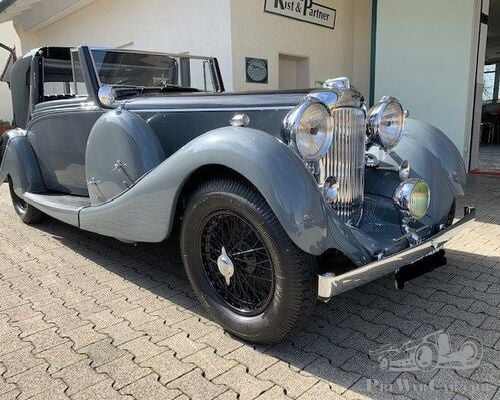
Lagonda LG 45 Coupe de Ville Sedanca by Mayfair
The successor to the M45, the LG45 was built around the same highly capable, competition-proven 4.5-litre Meadows inline-six engine, but featured r..
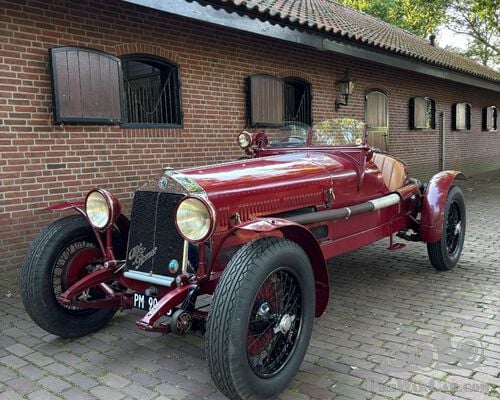
1930 Alfa Romeo 6C 1750 Spider
1930 Alfa Romeo 6C 1750 Spider with complete history from delivery to first owner in 1930 in Firenze till today with copy Libretto/license plate.
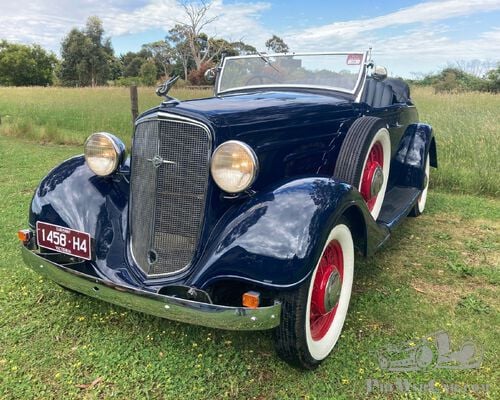
1934 Chevrolet Standard Roadster
1934 Chevrolet Standard Roadster This vehicle was delivered to Australia from Chevrolet and the body was manufactured by Holden Body Works w..