The global magazine and marketplace for classic car enthusiasts, by enthusiasts.


Filter
Classic Plymouth, Riley for sale - Plymouth, Riley cars for sale
-

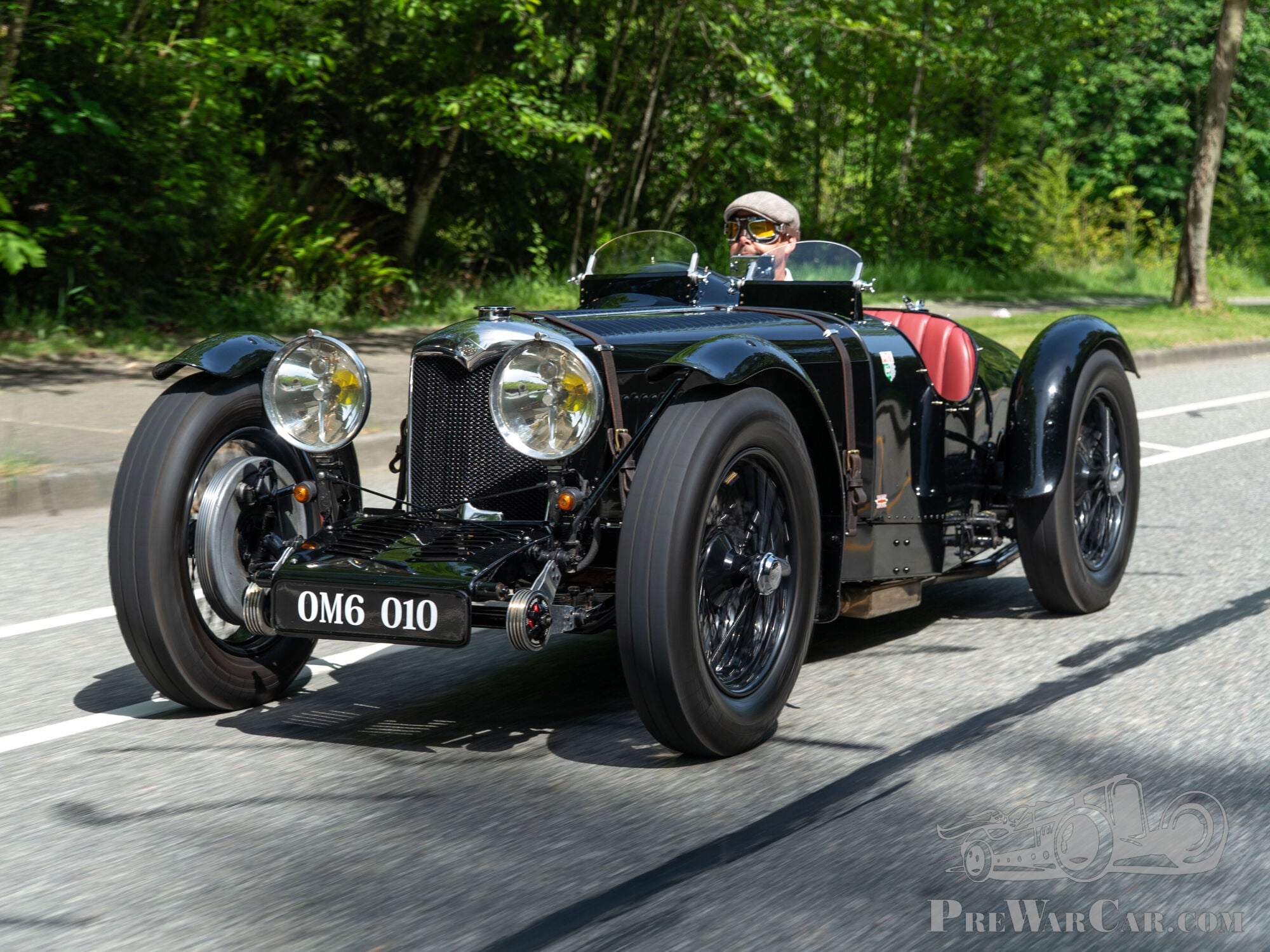
1935 Riley TT Sprite Recreation
The Riley TT SpritePercy Riley’s proven twin-camshaft layout was retained for the new Hugh Rose-designed 1½-litre four-cylinder engine, the 12/4, introduced in September 1934. The Falcon saloon debuted on the new 12hp chassis, which was also available with the familiar Kestrel saloon and Lynx tourer coachwork. In 1935, the range wa.. -
Riley 12/4 Sports Special
The 1937 Riley 12/4 Sports Special sits at the intersection of two important British motoring traditions: Riley's sophisticated pre-war engineering and the long-standing culture of building "specials" from older chassis.The Riley 12/4: An Advanced Sporting CarThe underlying Riley 12/4 was introduced in 1935 as Ri.. -
1936 Riley Special
This beautiful 1936 Riley, started life as a 12/ 4 model whilst the running gear is all from the lauded nine, with a desirable preselector box. In super condition throughout and continuously maintained , this might be the ideal European tourer, with its sprightly performance and full weather equipment to include hood and side screens.Runn.. -
Riley 14/6 MPH Rep. 1936
This beautiful MPH Replica was accurately recreated by Riley Specialist Barrie Gillies circa 2002.Every detail is beautifully crafted, just like the original. This includes the interior and the storage compartments for the racing windows.Fast 6 cylinder engine that makes an impressive sound.Ideal car for rallies and events. -
Riley 12/4 special
Riley 12/4 Special1935Armstrong preselective gearbox-Completely new electrical system-New tyres-New fuel tank-New ignition-New radiator-All gauges are new and therefore functional (Smiths and Jaeger) The bodywork is made entirely of aluminium. The preselective g.. -
Riley special - 1937 Big Four Monoposto project with aluminium hand built body in Switzerland
An interesting Riley Special project offered for completion, based on a bare 1937 chassis and supplied with various associated parts, together with a 2.5-litre “Big Four” engine and the correct 4-speed gearbox. The complete aluminium bodywork was handcrafted in Switzerland at a cost of approximately CHF 150,000. It has previously b.. -
Riley 12/4 special Project
Zu verkaufen steht ein Riley Special Projekt. Das Fahrzeug wurde schon mit einer neuen Karosse versehen. Dazu wurden, wie für alle Rileys üblich der Kühler und Motor nach hinten versetzt und der hintere Teil des Rahmens abgeändert. Alle Änderungen sind so, wie in den meisten bekannten Riley Büchern beschrieben, durchgeführt worden.( dies.. -
1940 Plymouth P10 Deluxe Convertible Coupe | RM Sotheby's | The Hershey Auction
Sold | $43,680 USD One of 6,986 Deluxe Convertible Coupes produced for 1940Benefits from an excellent rotisserie restoration under previous ownershipL-head inline six-cylinder engine; three-speed manual with overdriveWonderfully presented in Boatswain Blue over red leather Richly appointed with a remark.. -
1939 Riley Special
Riley Special, based upon Riley 12hp - 1939, with matching nos 1½ litre engine. Stunning car, built by reknown Dutch coachbuilder. Completed in 2022, with very little use afterwards. Well proportioned alu body on new ash frame. Technically overhauled wherever necessary, i.e. axles/brakes, twin SU-carbs and cyl.head, freeflow.. -
Riley 14/6 Special 1933
The ExperienceStep into the golden age of British motoring. This 1933 Riley 14/6 Special is a masterclass in pre-war engineering. It creates a rare sensation where the world slows down, leaving only the roar and rush of a true vintage racer. Meticulously built to pair breathtaking aesthetics with the power of the..


Plymouth
US, 1928 to date
Chrysler Corporation, Detroit, Mich.
The 4-cylinder 21hp Plymouth car appeared in 1928 at a list price of $725 for a sedan. This Plymouth car replaced the earlier 4-cylinder Chryslers and represented a serious challenge for Ford and Chevrolet in their lowest price class. The Plymouth car had side valves, internal-expanding hydraulic brakes and ribbon-type radiator and gave the Plymouth car a close resemblance to the 1928 Chryslers and De Sotos, and Plymouth cars sold over 100.000 in its first year, even improving its sales position in the bleak economic climate of 1932. Plymouth cars adhered to four cylinders until 1933, when the Plymouth PD-series 6-cylinder was listed at less than $600. 1934 de luxe models of Plymouth cars had independent front suspension, but this was dropped after a year and did not reappear for some time on Plymouth cars. The standard engine in the later 1930 Plymouth cars had a capacity of 3.3-litres, rather smaller than that used in comparable Chevrolets and Fords: a small-bore 2.8-litre version Plymouth car was made for export up to 1939, but the name Plymouth was not usually found on Plymouth cars sold in England, which were nominally Chrysler Kew and Wimbledon sixes. After World War 2 evolution followed that of other Chrysler Corporation cars closely, the old-fashioned styling losing the Plymouth car division its long-held third place in American sales to Buick. Further, Plymouth cars retained the L-head six as its staple power unit right up to 1955, when Flight Sweep versions were introduced with over-square ohv V8 engines on accepted American lines in a variety of powers from 157 to 177bhp. The capacity of these Plymouth cars had 4.3-litres, while the six, now of 3.8-litres, remained available. These 1955 Plymouth cars were lower and longer than their predecessors and could be obtained with synchromesh, overdrive or automatic gearboxes.
The Plymouth Fury models of the ensuing decade represented a breakaway from the traditional Plymouth stolid family car, while the Plymouth Car Division was also responsible for Chrysler’s contribution to the compacts, the Plymouth Valiant launched for 1960. This Plymouth car had rather more European styling than its competitors, with a dummy spare-wheel moulding on the tail; interesting items of specification were the unitary construction of the Plymouth car, alternator ignition, and inclined in-line 2.8-litre ohv 6-cylinder engine. The influence of the Plymouth GT car on America resulted in the Plymouth Barracuda of 1965, a fastback coupé using the Valiant’s 8ft 10in wheelbase and a 4½-litre V8 power unit. Plymouth cars, like Ford and Chevrolet, was aiming at comprehensive coverage of the low and medium price market in 1966, with the compact Plymouth Valiant, the sports-compact Plymouth Barracuda, the medium-sized Plymouth Belvedere, the full-size Plymouth Fury, and the luxurious ‘VIP’ 4-door hardtop Plymouth car, offered only with a 5.2-litre V8 engine and selling for $2.930. An increasing emphasis on sporting Plymouth cars was detectable by 1968, when in addition to the established Barracuda there were two other sports coupés Plymouth car, the Plymouth GTX and the Plymouth Road Runner. All three Plymouth cars were available with 4-speed manual gearboxes and the 6.981cc 425bhp hemi-head V8 also used by Dodge. In 1970, when Valiant prices started at a low $2.172, there was also a Valiant sports coupé, the Plymouth Duster.
In 1971 Plymouth car company added a sub-compact to their Plymouth car range when they offered the 1½-litre Hillman Avenger as the Plymouth Cricket. The 1972 range of Plymouth cars embraced the Valiant on a 9ft wheelbase, the Barracudas and Satellites, and the full-size Furys with V8 engines and automatic transmission as standard. Engines in the Plymouth cars ranged from the Valiant’s 3.2-litre and 3.7-litre sixes up to the largest Chrysler unit, a V8 of 7.210cc. Electronic ignition was offered on the costliest Barracuda model. Casualties of new Federal regulations were the hemi-head engine and convertibles, and the same range Plymouth cars with minor improvements, among them manually-operated sun roofs, was offerd in 1973.
Source: Georgano, encyclopedia of motorcar; MCS
The information is written with the greatest of care. However, if you have any suggested amendments please contact us at office@prewarcar.com
Riley
GB, 1898 – 1969
(1) Riley Cycle Co Ltd, Coventry, Warwickshire, 1898 – 1912
(2) Riley (Coventry) Ltd, Coventry, Warwickshire, 1912 – 1948
(3) Riley Motors Ltd, Abingdon, Berks., 1948 – 1969
The first Riley car was a small single-cylinder belt-driven voiturette which Riley car did not go into production. Motor Riley tricycles followed n 1900, and a handlebar-steered Riley tricar with 2 forward speeds, and a 517cc engine with mechanically-operated inlet valves in 1903. Riley Tricars were made until 1907, later examples of these threewheeled Riley cars being twins with driver’s seats in place of saddles, water cooling and wheel steering. The 1.034cc V-twin engine was also fitted to the Riley car company’s first 4-wheelers, which Riley car had amidships-mounted power unit with their gearboxes alongside and chain drive, and the Riley car sold for £168. Bigger V-twins of 2-litres’ capacity, more conventional layout and round radiators were made from 1908 onwards. These Riley car incorporated pressure lubrication, shaft drive, constant-mesh 3-speed gearboxes, and Riley’s own patent detachable wheels, the demand for which brought Riley car production almost to a standstill and was responsible for the formation of the new Riley car company in 1912. In 1914 the 2-cylinder Riley cars were still being made, but there was also a new 2.9-litre sv monobloc four Riley car with worm drive, which was offered again after World War 1 by the Riley engine Co, though this Riley car soon disappeared from the market.
The first post-war 1 Riley cars were the Riley Elevens with sv 1½-litre 35bhp engines, alloy pistons and full electrical equipment which Riley cars were selling £550 in 1920, acquiring spiral bevel final drive in 1921. The Redwinger sports version of the Riley car, with wire wheels and polished-aluminium coachwork appeared in 1923, offering 70mph for £450, and the sv Riley cars were continued until 1928, with a 1.645cc engine and the option of front-wheel brakes in 1925. One of these Riley Twelves was used to prospect Kenya’s road system in 1926, and in 1927 there was even a supercharged development Riley car of the Redwinger available, though this Riley car was overshadowed by Percy Riley’s advanded new Riley Nine, with a 1.987cc 32bhp 4-cylinder engine, twin camshafts and high push-rods, a unit which was to form the basis of all Riley car designs made up to 1957.
In 1928 came the handsome Riley Monaco fabric sports saloon version at £298, a best-seller Riley car from the start, and the lowered and tuned Riley Brooklands sports, inspired by the late J.G. Parry Thomas, which Riley car weighed 1.120lb, had a twin-carburettor 50bhp engine, and was capable of 80mph, all for £395. A twin carburettor variant of the touring Riley Nine followed in 1929, along with a new 1.6-litre 6-cylinder Riley Fourteen of similar styling at £495.
Riley cars had a distinguished competition record in the following years: class wins with a Riley car in the 1929, 1930, and 1931 Tourist Trophies were followed by Whitcroft’s outright victory in 1932, while two more wins were recorded by F.W. Dixon on the later 1½-litre 4-cylinder Riley car in 1935 and 1936. A 4th place at Le Mans in 1933 led to 2nd, 3rd, 5th, 6th, 12th and 13th places in 1934, not to mention three successive wins – 1934, 1935, and 1936 – in the BRDC 500 Mile Race at Brooklands. Leverett won the light-car class of the 1931 Monte Carlo Rally on a Riley Nine, while the 6-cylinder racing Riley cars of 1933-1934 formed the genesis of the ERA, and nearly twenty years later the late Mike Hawthorn was to make his name in Club Racing on sports Riley Nines and 1½-litres. Both the Riley Nine and the Riley 14/6 were progressively developed, the former Riley car acquiring vacuum feed in 1931, a lowered chassis and semi-panelled bodywork in 1932, and an optional (later standard) preselector gearbox in 1934. A super-sports 6-cylinder 1½-litre Riley car with water-cooled centre main bearing appeared in 1932, being followed in 1933 by the touring Riley Mentone version at £348. 1933 also brought two advanced body styles of Riley cars, the fastback Riley Kestrel saloon (listed up to the end of the old Riley car company in 1938) and the more-conservatively styled Riley Falcon on which the doors opened into the roof. A Salerni automatic transmission was offered on the 14/6 Riley car, but did not go into regular production.
Two handsome sports two-seater variants Riley cars were listed in 1934/ 1935, the Riley 9hp Imp on a 7ft 6in wheelbase and the 1.654cc 6-cylinder Riley MPH which gave over 90mph for £550, while a newcomer in 1935 was the classic 1½-litre Four Riley car with Wilson gearbox, rod-operated Girling brakes and centralized chassis lubrication, a best-seller in its class at £335, and available in single- and twin-carburettor versions: subsequent developments were the 85mph Riley Sprite two-seater and the Riley Kestrel-Sprite and Riley Lynx-sprite saloon and tourer which offered more room but the same highly-tuned engine for £398. A cheaper Riley Nine, the Riley Merlin with pressed-steel bodywork, came on the market in 1936, along with the 1½-litre, a 6-cylinder 15/6 Riley car, and a 2.2-litre V8 Riley car, of which very few were made, the engine of the V8 Riley car made up of two 9hp blocks. 1937 Riley Nines came with new 6-light Riley Monaco bodies and twin-carburettor 42bhp engines as standard, while other new models of Riley cars were an abortive 3-litre luxury V8 made by a subsidiary company, Autovia Cars, and a more successful long-stroke 2.4-litre Big Four Riley car on classic lines, with an 85bhp engine and Borg-Warner 3-speed synchromesh gearbox incorporating an overdrive at £385. Overdrive was optional on 1938 1½-litres Riley cars.
Finances, however, were insecure and the Riley car company were acquired by the Nuffield Organization later in that year. Under the new management only the 1½-litre and the Big Four Riley cars were continued, with disc wheels, conventional synchromesh gearboxes and Wolseley-like bodywork. The post-World War 2 successors Riley cars used the same engines, but were altogether more handsome Riley cars with independent torsion-bar front suspension and fabric tops, the bigger engine’s output being boosted first to 90bhp and then to 100bhp: this Riley car unit was also used by Healey in the 1946 – 1954 period, while some open three-seater versions with column change were made by Riley cars for export. Hypoid back axles and full hydraulic brakes were incorporated in 1952 Riley cars.
After the Nuffield-Austin amalgamation the 1½-litre Riley car was continued into 1955 with relatively little change, but the 1954 2½-litre Riley Pathfinder shared its bodywork with Wolseley’s 6-90, the new chassis being a BMC design with coil rear suspension and cam-type steering. Even this disappeared after 1957 in favour of a version with a 2.6-litre 6-cylinder ohv BMC engine, and subsequent Riley cars were merely luxury versions of BMC themes, starting with the Riley One-Point-Five (basically a Wolseley 1500), and working through variations of the Farina-styled 1½-litre and 1.6-litre saloon Riley cars, the Mini, and, from 1966, the 1100/1300 family with Hydrolastic suspension, known in Riley cars guise as the Kestrel. Riley’s Mini, the Riley Elf, had a built-out boot and (from 1963) a 998cc engine in place of the standard 848cc Austin/ Morris type. This meaningeless badge-engineering was stopped by British Leyland in 1969.
Source: Georgano, encyclopedia of motorcar; MCS
The information is written with the greatest of care. However, if you have any suggested amendments please contact us at office@prewarcar.com



Featured
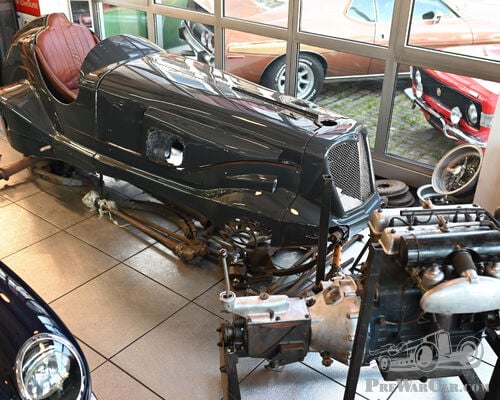
Riley special - 1937 Big Four Monoposto project with aluminium hand built body in Switzerland
An interesting Riley Special project offered for completion, based on a bare 1937 chassis and supplied with various associated parts, together with..
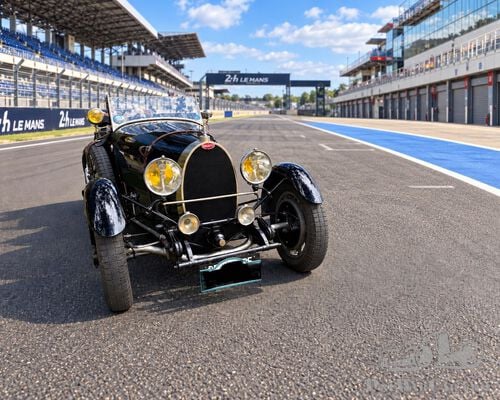
BUGATTI 43 GRAND SPORT
Bugatti Type 43 Grand Sport — Une histoire à poursuivre au volant Certaines automobiles se contemplent avec admiration. D’autres susc..
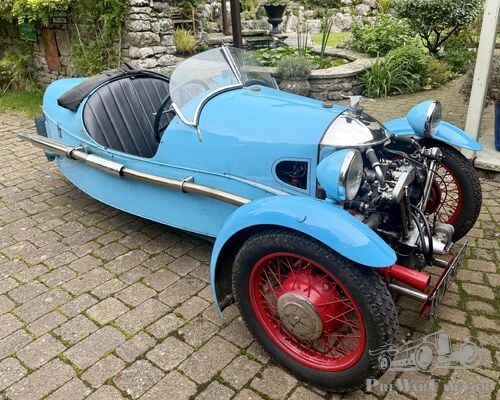
1933 Morgan Three-Wheeler Super Sports, Beetle Back • Show-Specification Car
First registered24 March 1933RegistrationXJ 6336 - original and transferableChassis numberD174Engine numberDTZE 94 H 31..