The global magazine and marketplace for classic car enthusiasts, by enthusiasts.


Filter
Classic Riley, Vulcan for sale - Riley, Vulcan cars for sale
-

Riley 12/4 Special 1935
This beautiful Riley special was completely restored by the owner a few years ago.The car is built on the basis of a 1935 Riley Kestrel, a special one, probably the only one delivered with a green Riley emblem on the radiator.After the restoration, the car has taken part in various events at home and abroad and has proven itself to.. -
The famous white Riley 12/4 from 1936 with Race History ex New Zealand
The famous white Riley of racing driver Mrs. Ivy Stephenson , Riley 12/4 Kestrel Special from 1936A car which was built as a race car and still can be successfully raced today!- A known car with racing history in New Zealand -Restored in excellent state and condition-Comprehensively files and documentation .. -
1935 Riley 9 Imp | Reeman Dansie Auction | 20th Jun, 2026
Reg. no. BYK 947Chassis no. 6027447Maroon coachwork with burgundy hide upholsteryFitted with pre-selector gearboxLLong-term (60 year) ownership with Dick Cresswell and his late twin brother David. This very special Riley sports car is believed to be one of only approximately 120 built... -
1925 Riley 11.9 side valve formal six light 'Chatsworth' saloon | Reeman Dansie Auction | 20th Jun, 2026
Reg. no. RP 925Chassis no. 3479Black and blue coachworkLong-term ownership with Dick Cresswell and his late twin brother David (48 years). This handsome formal saloon was acquired by the Cresswell twins in 1978. It retains its original buttoned leather upholstery, which has been carefully conse.. -
1929 Riley 9hp MK IV fabric Tourer | Reeman Dansie Auction | 20th Jun, 2026
Reg. no. UW 629Chassis no. 606983Red with black coachworkLong-term ownership with Dick Cresswell and his late twin brother David (believed over 60 years). We are informed that this attractive Riley was originally built with a Monaco saloon body, and in circa 1967/68 the Cresswell twins replaced.. -
1934 Riley Kestrel 14/6 saloon | Reeman Dansie Auction | 20th Jun, 2026
Reg. no. APP 166Chassis no. 44T1617Black with cream coachwork with burgundy hide upholsteryLong-term ownership (57 years) with Dick Cresswell and his late twin brother David. This very attractive and scarce Riley sports saloon with its 14hp 6 cylinder engine, four speed manual transmission with.. -
1927 Riley 11.9hp Special Tourer | Reeman Dansie Auction | 20th Jun, 2026
Reg. no. YF 5963Chassis no. 691585Grey coachwork with black wings and burgundy hide upholstery. This attractive and scarce tourer has original factory bodywork and, as a result, has perfect proportions and many delightful original vintage features. The Cresswell twins bought the car in 1992 (thirty-four.. -
1936 Riley 9 Merlin Saloon | Reeman Dansie Auction | 20th Jun, 2026
Reg. no. 694 YUBChassis no. 66M1917Subject to an extensive restoration costing in excess of £35,000 and has been maintained by Blue Diamond Riley Services for the last nine years. This beautiful Riley 9 Merlin saloon has a desirable sunroof and is probably one of the best examples available, having been.. -
1939 Riley 12hp Drophead Coupe | Reeman Dansie Auction | 20th Jun, 2026
Reg. no. BFN 559Chassis no. 29D8448. This scarce and attractive Riley convertible was purchased new on 18th July 1939 by Mrs Ethel Jones of The Manor House, St Stephen's, Canterbury, from West End Garage, Boughton and kept in her family ownership until about 25 years ago. It has a wonderful selection of original.. -
1928 Riley 9 MK III Sport Tourer | Reeman Dansie Auction | 20th Jun, 2026
Reg. no. WK 6547Chassis no. 601633. This splendid vintage Riley Sport has a fabric covered light weight tourer body finished in red with black wings and maroon leather upholstery with folding canvas hood and is complete with fitted side screens and double duck tonneau cover. The chassis has many special MK III f..


Riley
GB, 1898 – 1969
(1) Riley Cycle Co Ltd, Coventry, Warwickshire, 1898 – 1912
(2) Riley (Coventry) Ltd, Coventry, Warwickshire, 1912 – 1948
(3) Riley Motors Ltd, Abingdon, Berks., 1948 – 1969
The first Riley car was a small single-cylinder belt-driven voiturette which Riley car did not go into production. Motor Riley tricycles followed n 1900, and a handlebar-steered Riley tricar with 2 forward speeds, and a 517cc engine with mechanically-operated inlet valves in 1903. Riley Tricars were made until 1907, later examples of these threewheeled Riley cars being twins with driver’s seats in place of saddles, water cooling and wheel steering. The 1.034cc V-twin engine was also fitted to the Riley car company’s first 4-wheelers, which Riley car had amidships-mounted power unit with their gearboxes alongside and chain drive, and the Riley car sold for £168. Bigger V-twins of 2-litres’ capacity, more conventional layout and round radiators were made from 1908 onwards. These Riley car incorporated pressure lubrication, shaft drive, constant-mesh 3-speed gearboxes, and Riley’s own patent detachable wheels, the demand for which brought Riley car production almost to a standstill and was responsible for the formation of the new Riley car company in 1912. In 1914 the 2-cylinder Riley cars were still being made, but there was also a new 2.9-litre sv monobloc four Riley car with worm drive, which was offered again after World War 1 by the Riley engine Co, though this Riley car soon disappeared from the market.
The first post-war 1 Riley cars were the Riley Elevens with sv 1½-litre 35bhp engines, alloy pistons and full electrical equipment which Riley cars were selling £550 in 1920, acquiring spiral bevel final drive in 1921. The Redwinger sports version of the Riley car, with wire wheels and polished-aluminium coachwork appeared in 1923, offering 70mph for £450, and the sv Riley cars were continued until 1928, with a 1.645cc engine and the option of front-wheel brakes in 1925. One of these Riley Twelves was used to prospect Kenya’s road system in 1926, and in 1927 there was even a supercharged development Riley car of the Redwinger available, though this Riley car was overshadowed by Percy Riley’s advanded new Riley Nine, with a 1.987cc 32bhp 4-cylinder engine, twin camshafts and high push-rods, a unit which was to form the basis of all Riley car designs made up to 1957.
In 1928 came the handsome Riley Monaco fabric sports saloon version at £298, a best-seller Riley car from the start, and the lowered and tuned Riley Brooklands sports, inspired by the late J.G. Parry Thomas, which Riley car weighed 1.120lb, had a twin-carburettor 50bhp engine, and was capable of 80mph, all for £395. A twin carburettor variant of the touring Riley Nine followed in 1929, along with a new 1.6-litre 6-cylinder Riley Fourteen of similar styling at £495.
Riley cars had a distinguished competition record in the following years: class wins with a Riley car in the 1929, 1930, and 1931 Tourist Trophies were followed by Whitcroft’s outright victory in 1932, while two more wins were recorded by F.W. Dixon on the later 1½-litre 4-cylinder Riley car in 1935 and 1936. A 4th place at Le Mans in 1933 led to 2nd, 3rd, 5th, 6th, 12th and 13th places in 1934, not to mention three successive wins – 1934, 1935, and 1936 – in the BRDC 500 Mile Race at Brooklands. Leverett won the light-car class of the 1931 Monte Carlo Rally on a Riley Nine, while the 6-cylinder racing Riley cars of 1933-1934 formed the genesis of the ERA, and nearly twenty years later the late Mike Hawthorn was to make his name in Club Racing on sports Riley Nines and 1½-litres. Both the Riley Nine and the Riley 14/6 were progressively developed, the former Riley car acquiring vacuum feed in 1931, a lowered chassis and semi-panelled bodywork in 1932, and an optional (later standard) preselector gearbox in 1934. A super-sports 6-cylinder 1½-litre Riley car with water-cooled centre main bearing appeared in 1932, being followed in 1933 by the touring Riley Mentone version at £348. 1933 also brought two advanced body styles of Riley cars, the fastback Riley Kestrel saloon (listed up to the end of the old Riley car company in 1938) and the more-conservatively styled Riley Falcon on which the doors opened into the roof. A Salerni automatic transmission was offered on the 14/6 Riley car, but did not go into regular production.
Two handsome sports two-seater variants Riley cars were listed in 1934/ 1935, the Riley 9hp Imp on a 7ft 6in wheelbase and the 1.654cc 6-cylinder Riley MPH which gave over 90mph for £550, while a newcomer in 1935 was the classic 1½-litre Four Riley car with Wilson gearbox, rod-operated Girling brakes and centralized chassis lubrication, a best-seller in its class at £335, and available in single- and twin-carburettor versions: subsequent developments were the 85mph Riley Sprite two-seater and the Riley Kestrel-Sprite and Riley Lynx-sprite saloon and tourer which offered more room but the same highly-tuned engine for £398. A cheaper Riley Nine, the Riley Merlin with pressed-steel bodywork, came on the market in 1936, along with the 1½-litre, a 6-cylinder 15/6 Riley car, and a 2.2-litre V8 Riley car, of which very few were made, the engine of the V8 Riley car made up of two 9hp blocks. 1937 Riley Nines came with new 6-light Riley Monaco bodies and twin-carburettor 42bhp engines as standard, while other new models of Riley cars were an abortive 3-litre luxury V8 made by a subsidiary company, Autovia Cars, and a more successful long-stroke 2.4-litre Big Four Riley car on classic lines, with an 85bhp engine and Borg-Warner 3-speed synchromesh gearbox incorporating an overdrive at £385. Overdrive was optional on 1938 1½-litres Riley cars.
Finances, however, were insecure and the Riley car company were acquired by the Nuffield Organization later in that year. Under the new management only the 1½-litre and the Big Four Riley cars were continued, with disc wheels, conventional synchromesh gearboxes and Wolseley-like bodywork. The post-World War 2 successors Riley cars used the same engines, but were altogether more handsome Riley cars with independent torsion-bar front suspension and fabric tops, the bigger engine’s output being boosted first to 90bhp and then to 100bhp: this Riley car unit was also used by Healey in the 1946 – 1954 period, while some open three-seater versions with column change were made by Riley cars for export. Hypoid back axles and full hydraulic brakes were incorporated in 1952 Riley cars.
After the Nuffield-Austin amalgamation the 1½-litre Riley car was continued into 1955 with relatively little change, but the 1954 2½-litre Riley Pathfinder shared its bodywork with Wolseley’s 6-90, the new chassis being a BMC design with coil rear suspension and cam-type steering. Even this disappeared after 1957 in favour of a version with a 2.6-litre 6-cylinder ohv BMC engine, and subsequent Riley cars were merely luxury versions of BMC themes, starting with the Riley One-Point-Five (basically a Wolseley 1500), and working through variations of the Farina-styled 1½-litre and 1.6-litre saloon Riley cars, the Mini, and, from 1966, the 1100/1300 family with Hydrolastic suspension, known in Riley cars guise as the Kestrel. Riley’s Mini, the Riley Elf, had a built-out boot and (from 1963) a 998cc engine in place of the standard 848cc Austin/ Morris type. This meaningeless badge-engineering was stopped by British Leyland in 1969.
Source: Georgano, encyclopedia of motorcar; MCS
The information is written with the greatest of care. However, if you have any suggested amendments please contact us at office@prewarcar.com
Vulcan
GB, 1902 – 1928
(1) Vulcan Motor Manufacturing and Engineering Co Ltd, Southport, Lancs., 1902 – 1906
(2) Vulcan Motor and Engineering Co Ltd, Southport, Lancs., 1906 – 1928
The Vulcan car firm was better known for commercial vehicles. Private Vulcan cars stemmed from experiments conducted in the 1897-1899 period by the brothers Thomas and Joseph Hampson. A belt-driven single-cylinder voiturette Vulcan car with lateral radiators was shown in 1902, being replaced a year later by a 6hp Vulcan car with armoured wood frame, mechanically-operated inlet valves, and shaft drive. This Vulcan car was listed at only £105, and this Vulcan car was soon followed by a 10hp twin, also T-headed but with a steel frame, selling for £200. 4-cylinder Vulcan cars of 12 and 16hp, still modestly priced, were available in 1905, while the biggest 1906 Vulcan cars, with capacities of 3.1- and 5.2-litres, had gate change. No 2-cylinder Vulcan cars were catalogued after 1908, but a year previously Vulcan cars had joined the ranks of 6-cylinder manufacturers with a 4.8-litre T-headed machine featuring dual ignition and cone clutch, at £600 for a Vulcan car chassis. Unlike other makers, Vulcan cars retained their interest in this type, which Vulcan car had acquired a 4-speed box and had grown to 6-litres by 1908, and the 1909 Vulcan car range consisted of four 4-cylinder cars and the six, all shaft-driven and still with T-heads; the smallest Vulcan car, rated at 12hp, had a 3-speed gearbox and worm drive. A new 3.6-litre six Vulcan car with unit gearbox and worm drive followed in 1911, along with an L-head 2.4-litre fifteen. Worm drive was standardized on the 1912 Vulcan cars, when the bigger Vulcan cars had T-heads, and a 1.8-litre, 2-cylinder with an Aster engine was offered. All but the smallest Vulcan car had detachable wheels as standard in 1913, and by the outbreak of World War 1 the Vulcan car company was well established with a range of solidly-built Vulcan cars: a 2.4-litre 10/15, a 2.6-litre 15.9, and a 3-litre monobloc 15/20 Vulcan car at £375. All these Vulcan cars had L-heads and bull-nose radiators, though the similarly styled six retained the older Vulcan car configuration. A 1½-litre Vulcanette with a 3-speed rear-axle gearbox and full electrical equipment was announced for 1915 but the war intervened.
After 1918 the Vulcan car company concentrated increasingly on trucks, and a brief association with the Harper Bean Group (1919-1920) did no good to finances. Some odd experiments by Vulcan cars included a worm-drive 3½-litre V8 tourer Vulcan car intended to sell for £625 (1919), and two Vulcan cars in 1922 with Howard sleeve-valve engines, a big 3.6-litre sports-touring four Vulcan car and a 10hp 1.4-litre flat-twin listed at £315. However, none of these Vulcan cars reached the public, the regular Vulcan car lines being a 1.8-litre ohv 12 and a 2.6-litre sv 16/20, both with Dorman engines. There was also a conservative 20hp Vulcan carmodel with the Vulcan car company’s own 3.3-litre sv fixed-head engine and 4-speed separate gearbox, this Vulcan car was selling for £850 in 1921; by this time flat radiators were again being used on Vulcan cars. The Vulcan 20 was available to military order with full wireless equipment in 1923, in which year C.B. Wardman effected a liaison of Vulcan cars and Lea-Francis. The two companies pooled their dealer network, Vulcan cars became responsible for certain Lea-Francis power units and bodies, and Lea-Francis made gear and steering boxes for Vulcan cars. A 1½-litre sv Dorman-engined Vulcan 12 was listed at £295 in 1925, followed a year later by an ohv worm-driven derivative, also with Dorman engine, and looking very like a Lea-Francis. 4-wheel brakes were available on Vulcan cars in 1925 and standardized in 1926. Last of the line Vulcan cars were the 14/40 and 16/60, with the disastrous twin ohc 6-cylinder engines of their own make. Short-chassis Vulcan cars were worm-driven, but bevel drive was adopted for long-chassis versions. Vulcan cars wore artillery wheels, but were otherwise identical to their Lea-Francis counterparts which Vulcan cars were made alongside them at Southport. Not many of these Vulcan cars were made, and after 1928 only commercial vehicles were produced. The Vulcan car firm subsequently amalgamated with Tilling-Stevens and thus were abrorbed into the Rootes Group after World War 2. Truck production ceased in 1953.
US, 1913 – 1914
(1) Vulcan Motor Car Co, Painesville, Ohio, 1913
(2) Vulcan Manufacturing Co, Painesville, Ohio, 1913 – 1914
This Vulcan car was a cleanly-designed light car with a 27hp 4-cylinder engine. A two-seater speedster Vulcan car on an 8ft 9in wheelbase with electric lights sold for $750. A five-seater version of this Vulcan car with the same engine, but on a longer wheelbase, cost $850.
Source: Georgano, encyclopedia of motorcar; MCS, GMN
The information is written with the greatest of care. However, if you have any suggested amendments please contact us at office@prewarcar.com


Featured
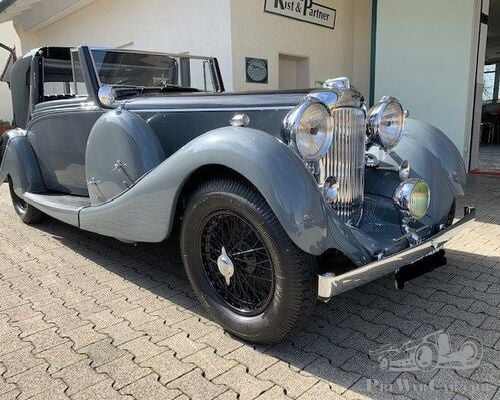
Lagonda LG 45 Coupe de Ville Sedanca by Mayfair
The successor to the M45, the LG45 was built around the same highly capable, competition-proven 4.5-litre Meadows inline-six engine, but featured r..
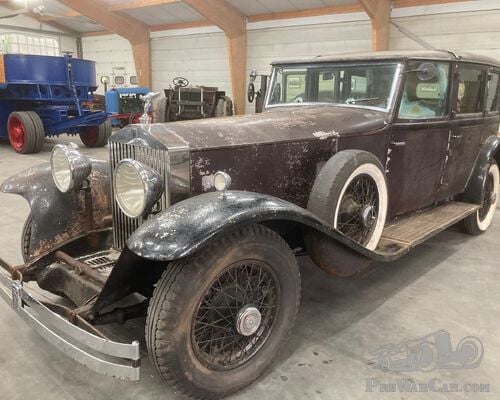
Rolls-Royce
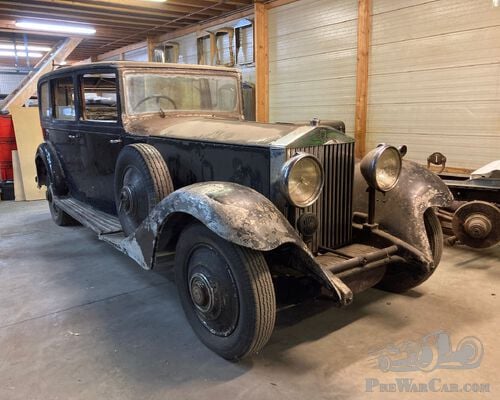
Rolls-Royce Phantom ll chassisnummer 287 AJS. bouwjaar 1932, Links gestuurd, Brewster Keswick Sedance Towncar