The global magazine and marketplace for classic car enthusiasts, by enthusiasts.


Filter
Classic Rochet-Schneider for sale - Rochet-Schneider cars for sale
-

1931 Bugatti Type 46 'Superprofilée' Coupe
1931 Bugatti Type 46 'Superprofilée' Coupe Chassis no. 46491 Engine no. 345 One of two chassis purchased from Roland Bugatti by Richard Baudens in the 1950s & wearing its first coachwork ever fitted to the car. 5,359cc SOHC Inline 8-Cylinder Eng.. -
1931 Nash 4 door special sedan
Model: series 870, model 877-1560, 4-door special saloon Colour: dark blueInterior: beige fabricEngine: 8-cylinder in-line, 227.5 cubic inches, 78 hpTransmission: manual, 3 gearsCondition: unrestoredPrice: € 25,000 Description:Incredibly beautiful unrestored car in superb condition. .. -
zu verkaufen Amilcar CGSs original und vollständig restauriert
Zum Verkauf steht ein außergewöhnlicher Amilcar CGss, der in Frankreich in weitgehend originalem, jedoch stark verbrauchtem Zustand aufgefunden wurde. Das Fahrzeug war vollständig und bot damit eine hervorragende Grundlage für eine umfassende und sorgfältige Restaurierung. Aufgrund des über Jahrzehnte entstandenen Verschleißes war eine we.. -
1938 Rolls Royce Phantom 3 Windovers Limousine
1938 Rolls Royce Phantom 3 Windovers LimousineChassis number: 3-CM-33Registration number: DUR255A pleasingly proportioned Rolls Royce Phantom 3 with coachwork by Windovers. The coachwork is rakish & quite streamlined when compared with some of the more ponderous coachwork found on these Phantom 3's. This is a low mileag.. -
Beautiful Lasalle, light project
This is a light project car. Engine has been totally rebuild and needs to be re-assembly. The car is 100% complete and in very good condition. Odometer shows 26,000 miles only and believe to be original. Interior is perfect. Rebuild radiator. Swedish registration and documents in my name. Car is located in the south of Sweden, 100km. from Goth.. -
Chevrolet Fleetmaster 'Woodie' Station Wagon
Chevrolet Fleetmaster 'Woodie' Station Wagon ***in absolute new state***European Car Registration in EU-Netherlands reg.no. DZ-87-00Chassis no. CL8434• The most expensive Chevrolet of its day• Imported from South Africa• Original right-hand drive model• Partially renovated in 2013 Footnote.. -
Delage DE
In meinem Besitz seit 1994. 1996 am Klausen Memorial gefahren. Restauration des Getriebe 1995, 2025 Motor in Stand gesetzt mit neuen Laufbüchsen, Kolben, Kurbelwelle geschliffen und Ausbalanciert, neue Kurbelwellen- und Pleuellager, Dynostarter neu gelagert. -
1931 Rolls-Royce Phantom II Continental DHC
-In excellent condition with recent work by ourselves-Unique Park Ward DHC coachwork-Equipped with overdriveLike all Phantoms, the Continental was built for high-speed touring, offering a breath-taking ability to cover long distances in sublime comfort at high speed.Of the 1400 Phantom IIs produced, only 280 Continent.. -
1939 Daimler E4 Labourdette
1939 Daimler E4 "Light Eight" , body "Labourdette"Not restored, complete.Aluminum body made by "Labourdette"The chassis was commenced in 1938 and completed in March 1939 before being fitted with the body by Labourdette, which was known as a 'Vutotal' design. Very interesting, unique car, ideal for a project "Concourse d'Ele.. -
American La France - Speedster
Ehemalige Feuerwehr wurde 2017 in den USA gekauft und 2018 nach Deutschland überführt und anschließend selbst zum zwei-sitzigen Speedster umgebaut. Sämtliche rote Farbe wurde abgebürstet, die Stahlteile mit Klarlack lackiert. Die Antriebszahnräder wurden durch größere ersetzt, so dass eine Reise-Geschwindigkeit von ca. .100 km/h möglich ist. Am ..


Rochet-Schneider
France, 1894 – 1932
SA des Etablissements Rochet-Schneider, Lyons
In its early years, the Rochet Schneider car copied successful designs as they came out. The Rochet Schneider car started life as a derivation of the Benz, with a horizontal single-cylinder engine and belt drive, but the appearance of the Rochet Schneider car was more like that of the contemporary Peugeot. At the 1901 Paris Salon, two Rochet Schneider cars of Panhard type were revealed: a 2-cylinder 8hp and a 12hp 4-cylinder. However, the most advanced type of car was now the Mercedes, so for 1903 the existing Rochet Schneider car models were redesigned to follow Cannstatt practice, except for their armoured wood frames. What they lacked in originality, Rochet Schneider cars gained in power, good construction, and long life. From 1903, when the new 20/22hp Rochet Schneider car was offered, the Rochet Schneider car grew in reputation as strong, fast cars of conventional pattern.
A 4.4-litre live-axle 18hp joined the bigger chain-driven Rochet Schneider cars in 1906, and high-tension magneto ignition made its appearance in 1907, when the Rochet Schneider car range was headed by a 10.9-litre chain-driven six with pair-cast cylinders. A year later the smaller Rochet Schneider cars had L-head monobloc power units. By 1911 this trend had spread to the bigger Rochet-Schneider cars, among them a 4.8-litre 4-cylinder and a 5.5-litre six.
Six types o Rochet Schneider cars were offered in 1914, with 4- and 6-cylinder monobloc engines of between 15 and 50hp. All these Rochet Schneider cars had side valves. Commercial vehicles were also made by the Rochet Schneider car Company. A range of equally stolid, but sturdy machines was offered after World War 1, in 12, 18 and 30hp forms. All Rochet Schneider cars were basically pre-war 1 vehicles. From 1923, ohv engines were available on some models. By 1929, four 4-cylinder Rochet Schneider cars and a six were listed, the 14hp and 20hp with overhead valves.
The last new model of Rochet Schneider car was the 26CV, a 4½-litre ohv six with dual ignition and servo brakes. With wire wheels and elegant coachwork, this Rochet Schneider car was a very handsome vehicle, and with a smaller, 21CV six lasted until Rochet-Schneider abandoned private car production. Commercial vehicles were made until 1951, when the Rochet Schneider car company was taken over by Berliet. The Rochet Schneider car was made under licence in its early days by four firms: Nagant and FN in Belgium, Florentia in Italy and Martini in Switzerland.
Source: Georgano, encyclopedia of motorcar; TRN
The information is written with the greatest of care. However, if you have any suggested amendments please contact us at office@prewarcar.com


Featured
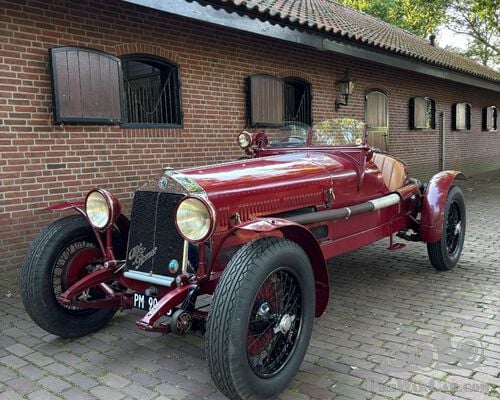
1930 Alfa Romeo 6C 1750 Spider
1930 Alfa Romeo 6C 1750 Spider with complete history from delivery to first owner in 1930 in Firenze till today with copy Libretto/license plate.
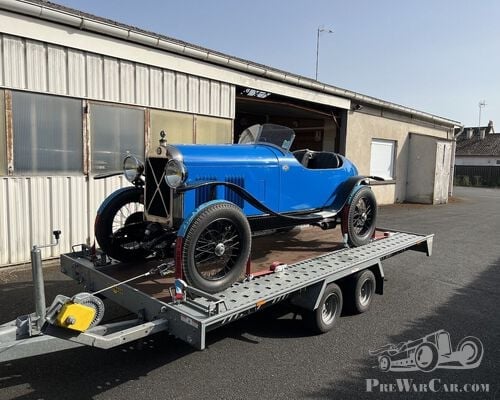
Salmson VAL 3 Séries 7
1927 Salmson VAL3 Series 7. Completely restored a few years ago, in very good overall condition, both bodywork and mechanics. Bordino-style bodywor..
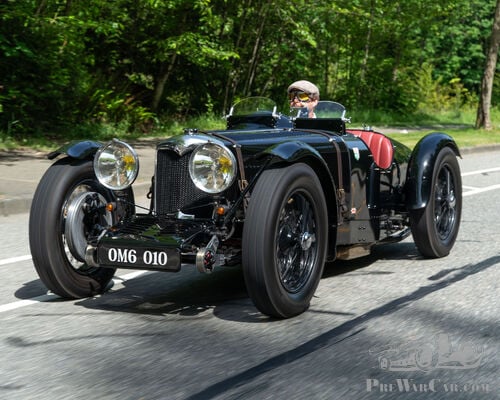
Riley 14/6 Special 1933
The ExperienceStep into the golden age of British motoring. This 1933 Riley 14/6 Special is a masterclass in pre-w..