The global magazine and marketplace for classic car enthusiasts, by enthusiasts.


Filter
Classic Rolland-Pilain, Haynes for sale - Rolland-Pilain, Haynes cars for sale
-

Rolland Pilain
I am selling a 1913 Rolland Pilain RP 10HP in very good condition. It has a standard registration document in my name, and the MOT will be carried out prior to the sale. -
HAYNES 1916 touringcar
Starts and run powerfull with the 6 cyl. Engine , 50 hp . Original upholstery , repaint 70 years ago. No rust ever . 4 new tyres and tubes . Old top .Some plaques from Ralley in the fifties mounted on dashboard, American title and import document for eu. Price : Please ask


Rolland-Pilain
France, 1906 – 1931
SA des Etablissements Rolland-Pilain, Tours
Unusual among French marques of its period, Rolland Pilain cars made their greatest impact after World War 1. Their first product was a 20hp 4-cylinder model Rolland Pilain cars with a monobloc engine, though smaller 2.2-litre shaft-driven Rolland Pilain cars were available in 1909 and a 3-speed 1½-litre Rolland Pilain 8/10CV in 1910, in which year the Rolland Pilain car company was also experimenting with ‘valveless’ engines and 4-wheel brakes. Though racing was in the doldrums, the Rolland Pilain car company went to the trouble of building a big chain-driven Rolland Pilain car for the 1911 Grand Prix de France, and a complex 1912 range started with a Rolland Pilain 9CV of 1.7-litres and went up to a chain-driven 4-cylinder 60 Rolland Pilain car of 130x270mm. The 6-cylinder Rolland Pilain 18CV had a ‘valveless’ engine, and even in 1913 chain drive was still optional on the biggest fours of 20CV and 24CV Rolland Pilain cars. Only 1.9-litre and 4-litre 4-cylinder Rolland Pilain cars with sv monobloc engines and unit gearboxes were listed in 1914.
These basic types of Rolland Pilain cars, still with pedal-operated transmission brakes, were available again after World War 1, but far more advanced was the 2.2-litre Rolland Pilain 14/16 of 1921, which boasted not only overhead valves and a detachable head, but also front-wheel brakes (hydraulic at the front and mechanical at the rear). This Rolland Pilain car was still catalogued in 1926. Even more ambitious was the 2-litre twin ohc straight-8 GP Rolland Pilain car of 1922, with desmodromic valves, ball-bearing crankshafts and 4-wheel hydraulic brakes. A victory of a Rolland Pilain car at San Sebastian in 1923 was the limit of the success of Rolland Pilain cars on the circuits, but the type found its way into the catalogue as the Type A22 Rolland Pilain car at 90.000fr, and one of the racers also ran with a 2-litre, 6-cylinder cuff-valve Schmid engine. In 1925 came a 2-litre ohv 4-cylinder Rolland Pilain car with 4-wheel mechanical brakes, selling for £725 in England, while a 1½-litre development, the Rolland Pilain D26, was introduced for 1927. In 1929 Rolland-Pilain car, along with several other French firms, tried a Franco-American theme by introducing a range of big luxury chassis with sv Continental engines. Both the 6-cylinder, 3-litre, and the 4-litre straight-8 Rolland Pilain cars had centralized chassis lubrication, though the elegant bodywork of the Rolland Pilain car was marred by the use of artillery wheels. At the 1930 Paris Salon the Rolland Pilain car company shared a stand with the BNC (also going through a Franco-American phase), but this was the end, though the Rolland Pilain car firm’s Paris depot was still advertising spare parts for Bignan as well as Rolland Pilain cars in 1934.
Source: Georgano, encyclopedia of motorcar; MCS
The information is written with the greatest of care. However, if you have any suggested amendments please contact us at office@prewarcar.com
Haynes
US, 1904 – 1925
(1) The Haynex-Apperson Co, Kokomo, Ind., 1904 – 1905
(2) Haynes Automobile Co, Kokomo, Ind., 1905 – 1925
Elwood Haynes built his original single-cylinder Haynes car of buggy type in 1894. In 1898, with the Apperson brothers, he formed the Haynes-Apperson Automobile Co. In 1902, the Appersons and Haynes separated, although both companies remained in Kokomo. From June 1904 the cars were called either Haynes-Apperson or Haynes, while the company name was still Haynes-Apperson. This was officialy changed to Haynes Automobile Company in September 1905.
The first production models of the Haynes car (in 1904) were powered by 2- and 4-cylinder engines, sliding-gear transmissions and shaft drive. Only 4-cylinder engines were used in the years 1905 – 1913. In 1912, three chassis were built, with a total of eight body types. In 1914, Haynes Model 26 was fitted with a 6-cylinder engine, and in 1915 an electric gear change was standard on the larger chassis. For 1916, Haynes car advanced to a 12-cylinder engine of 5.8-litres. This large engine was made by Haynes and continued to be manufactured through 1922, with no changes in bore or stroke. The chassis varied in wheelbase during the post-World War 1 period from 10 to 11ft. The prices for the various Haynes car models dropped from $4.200 for a seven-seater limousine in 1920, to $3.200 in 1925 for a five-seater sedan. Body styles in the Haynes car range were conservative, although one close-couples four-seater coupé with distinctive lines was made in 1923, and a special Haynes Speedster, a two-seater roadster with wire wheels and attractive styling was introduced in 1921.
Source: Georgano, encyclopedia of motorcar; GMN
The information is written with the greatest of care. However, if you have any suggested amendments please contact us at office@prewarcar.com


Featured
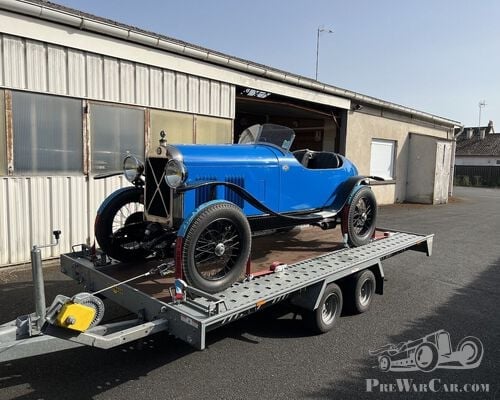
Salmson VAL 3 Séries 7
1927 Salmson VAL3 Series 7. Completely restored a few years ago, in very good overall condition, both bodywork and mechanics. Bordino-style bodywor..
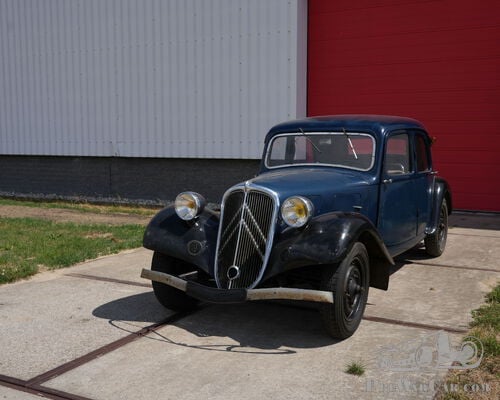
1935 Citroën Traction Avant
Early-production Traction AvantExceptionally original, unrestored conditionRecently part of a major museum collection
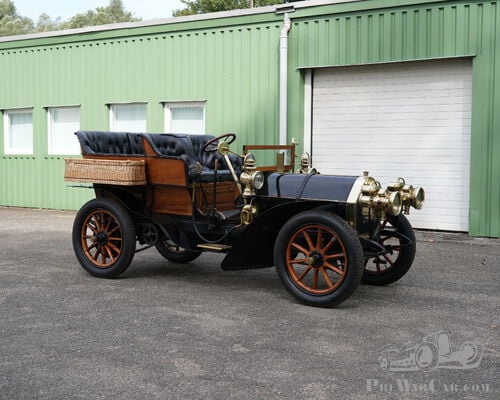
1904 Aster 16/20 HP Four-Cylinder Five-Seat Rear-Entrance Tonneau
Powerful four-cylinder engineFour-speed gearboxChain driveFive seatsMore than €100,000 recently invested