The global magazine and marketplace for classic car enthusiasts, by enthusiasts.


Filter
Classic Rolland-Pilain, Regal for sale - Rolland-Pilain, Regal cars for sale
-

Rolland Pilain
I am selling a 1913 Rolland Pilain RP 10HP in very good condition. It has a standard registration document in my name, and the MOT will be carried out prior to the sale. -
Regal Underslung Model T 1913
The Regal Motor Company was founded in 1908 in Detroit, USA, and became known for its conventional chassis concept, the “Underslung,” an extra-low concept with the axles mounted above the chassis. This resulted in a lower top dead center and greater stability; advertisements also stated that the car could not tip over.This Regal Model T w..


Rolland-Pilain
France, 1906 – 1931
SA des Etablissements Rolland-Pilain, Tours
Unusual among French marques of its period, Rolland Pilain cars made their greatest impact after World War 1. Their first product was a 20hp 4-cylinder model Rolland Pilain cars with a monobloc engine, though smaller 2.2-litre shaft-driven Rolland Pilain cars were available in 1909 and a 3-speed 1½-litre Rolland Pilain 8/10CV in 1910, in which year the Rolland Pilain car company was also experimenting with ‘valveless’ engines and 4-wheel brakes. Though racing was in the doldrums, the Rolland Pilain car company went to the trouble of building a big chain-driven Rolland Pilain car for the 1911 Grand Prix de France, and a complex 1912 range started with a Rolland Pilain 9CV of 1.7-litres and went up to a chain-driven 4-cylinder 60 Rolland Pilain car of 130x270mm. The 6-cylinder Rolland Pilain 18CV had a ‘valveless’ engine, and even in 1913 chain drive was still optional on the biggest fours of 20CV and 24CV Rolland Pilain cars. Only 1.9-litre and 4-litre 4-cylinder Rolland Pilain cars with sv monobloc engines and unit gearboxes were listed in 1914.
These basic types of Rolland Pilain cars, still with pedal-operated transmission brakes, were available again after World War 1, but far more advanced was the 2.2-litre Rolland Pilain 14/16 of 1921, which boasted not only overhead valves and a detachable head, but also front-wheel brakes (hydraulic at the front and mechanical at the rear). This Rolland Pilain car was still catalogued in 1926. Even more ambitious was the 2-litre twin ohc straight-8 GP Rolland Pilain car of 1922, with desmodromic valves, ball-bearing crankshafts and 4-wheel hydraulic brakes. A victory of a Rolland Pilain car at San Sebastian in 1923 was the limit of the success of Rolland Pilain cars on the circuits, but the type found its way into the catalogue as the Type A22 Rolland Pilain car at 90.000fr, and one of the racers also ran with a 2-litre, 6-cylinder cuff-valve Schmid engine. In 1925 came a 2-litre ohv 4-cylinder Rolland Pilain car with 4-wheel mechanical brakes, selling for £725 in England, while a 1½-litre development, the Rolland Pilain D26, was introduced for 1927. In 1929 Rolland-Pilain car, along with several other French firms, tried a Franco-American theme by introducing a range of big luxury chassis with sv Continental engines. Both the 6-cylinder, 3-litre, and the 4-litre straight-8 Rolland Pilain cars had centralized chassis lubrication, though the elegant bodywork of the Rolland Pilain car was marred by the use of artillery wheels. At the 1930 Paris Salon the Rolland Pilain car company shared a stand with the BNC (also going through a Franco-American phase), but this was the end, though the Rolland Pilain car firm’s Paris depot was still advertising spare parts for Bignan as well as Rolland Pilain cars in 1934.
Source: Georgano, encyclopedia of motorcar; MCS
The information is written with the greatest of care. However, if you have any suggested amendments please contact us at office@prewarcar.com
Regal
France, 1903
O.C. Selbach, Paris
Regal cars was one of the names under which Lacoste et Battmann cars were sold. Originally the Regal car was a light two-seater with a 6hp De Dion engine, later Régal cars were powered by 2- and 4-cylinder engines by Aster and Mutel.
US, 1907 – 1920
Regal Motor Car Co, Detroit, Mich.
In 1907 Regal made 50 of their 20hp 4-cylinder Regal cars, but the following year the Regal car company took them all back, and gave the owners a new 1908 model Regal cars free. Apparently this generosity by the Regal car company was not repeated in following years, and they settled down to making a range of conventional 4-cylinder Regal cars. The best-known Regal car was the 3.2-litre 18/20hp ‘underslung’ model, which, like the American Underslung, had frame members which passed underneath the axles. The Underslung Regal car was made in open two-seater, and closed coupé form. Other Regal car models were the 20/30hp and 40hp which had normal chassis design. Regal cars were imported into England by Seabrook of Great Eastern Street, and from 1911 to 1915 the Regal cars sold in England were known as RMCs or Seabrook-RMCs. In 1915 a 10/15hp four of 2.1-litres with unit construction of engine and gearbox was introduced on a Regal car, together with a short-lived V8. At the 1919 Olympia Show Seabrooks showed a large RMC tourer powered by a 3.8-litre 6-cylinder engine, but shortly afterwards American production of Regal cars ceased, and Seabrooks began to make their own light cars.
CDN, 1910
This Regal car was a 30hp car made as a touring car or runabout at Walkerville, Ont. The Regal car had no connection with the better known Regal cars.
CDN, 1914 – 1917
Canadian Regal Motor Car Co, Berlin, Ont.
The Regal car was a light-weight touring car which resembled the Detroit model Regal car bearing the same name. The Regal car was available with a Lycoming 4-cylinder engine at $875 or a V8 at $1.350, it had a radiator filler concealed under the bonnet. The Regal car company was under the direction of Henry Nyberg, who had built the US Nyberg car before going to Canada. In 1917 the Regal car company moved to a new plant and started producing Dominion trucks. About 200 Canadian Regal cars were built.
Source: Georgano, encyclopedia of motorcar; GNG, GB
The information is written with the greatest of care. However, if you have any suggested amendments please contact us at office@prewarcar.com


Featured
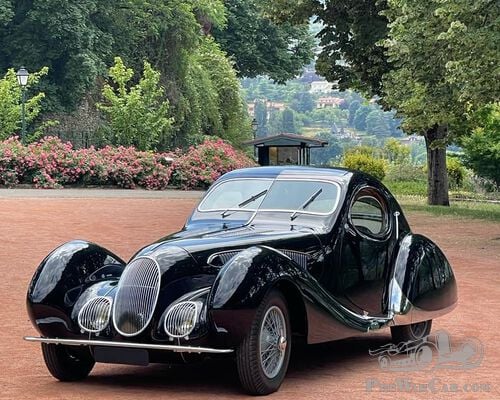
1939 Talbot-Lago T150C “Goutte d’Eau” — Iconic French Coachbuilt Masterpiece
Talbot-Lago T150C ‘Teardrop’ — An Icon of French Automotive Art There are motor cars that define an era. And then there are those tha..
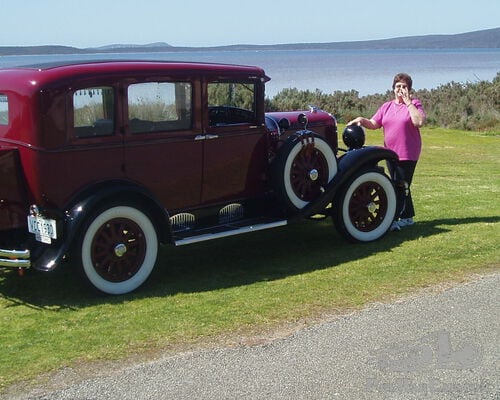
1930 Chrysler 66 Six-Wheel Equipped Royal Sedan
An exceptionally well restored and highly awarded Chrysler 66 Royal Sedan, with only two owners in nearly 97 years.The present owner ..
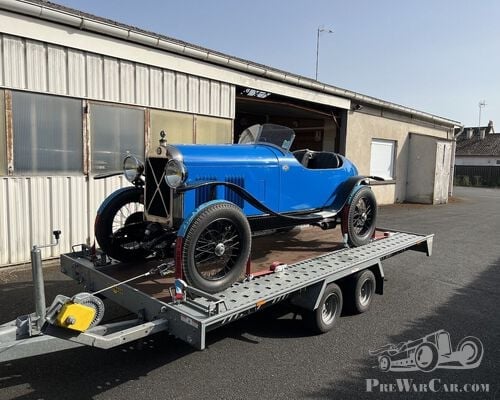
Salmson VAL 3 Séries 7
1927 Salmson VAL3 Series 7. Completely restored a few years ago, in very good overall condition, both bodywork and mechanics. Bordino-style bodywor..