The global magazine and marketplace for classic car enthusiasts, by enthusiasts.


Filter
Classic Chrysler, Rolls-Royce for sale - Chrysler, Rolls-Royce cars for sale
-

1933 Rolls-Royce 20/25 Sports Saloon by Thrupp & Maberly | The Summer Serenade Auction | 18th July
• Offered from long-term ownership • Low ownership • Fabulous Thrupp & Maberly coachwork Rolls-Royce’s 20/25 was one of its most important pre-war models and became its best-selling inter-war car. Remarkably, of the near 4,000 produced, more than 70% survive; a testament to the marque’s high-quality craftsmanship and engineering. Introduced.. -
1937 Rolls-Royce 25/30 Saloon by Mann Egerton | The Summer Serenade Auction | 18th July
• Matching numbers • Part of a private collection The Rolls-Royce 25/30 was produced between 1936 and 1938, succeeding the 20/25 and preceding the Wraith. The updated model featured a larger engine to provide more power to compensate for the larger bodywork. The in-line six-cylinder, overhead valve, engine is like that used in the 20/25 but wi.. -
1934 Rolls Royce Phantom II Sports Saloon
1934 Rolls Royce Phantom II Sports Saloon Chassis number: 135RYRegistration: Swedish (EU) registration number EXZ751 (old English registration number YSY 819)Location: The car is located in Gothenburg, Sweden for inspectionA really beautiful Sports Saloon with division by J. Gurney Nutting. The first owner was the fa.. -
1913 Rolls Royce Silver Ghost Open Drive Landaulette by Barker.
1913 Rolls Royce Silver Ghost Open Drive Landaulette by Barker.Chassis number: 2297Registration Number: R1130Engine number: 104UThe Epitome of an Edwardian Rolls Royce with spectacular original open drive Landaulette coachwork by Barker. The Ghost's first owner was the Hon Lady Miller, who lived at 45 Grosvenor Squar.. -
1923 Rolls Royce Silver Ghost Alpine Eagle
1923 Rolls Royce Silver Ghost Alpine Eagle. Chassis Number: 44SG Registration Number: Spanish Registered. An extraordinary car with an extraordinary story: This Silver Ghost was bricked up in a Spanish nobleman's mansion in 1936. It slumbered there .. -
1921 Rolls Royce 20hp Experimental tourer
1921 Rolls Royce 20hp Experimental tourer. Chassis number: 4G2 Registration Number: CH2892 Sir Henry Royces' personal car used for development of the 20HP chassis. He is pictured in it both at his French house; La Villa Mimosa in Le Canadel & also near his UK home "Elmsted" .. -
1932 Rolls Royce 20/25 H/J/ Mulliner Sports Saloon (Woolf Barnato.)
1932 Rolls Royce 20/25 H/J/ Mulliner Sports Saloon (Woolf Barnato.) Chassis number: GBT37 Registration Number: GX41 Ordered new for Captain Woolf Barnato whom was residing at 50 Grosvenor Square at the date of order. The car was carefully specified by him to include a number of .. -
1932 Rolls-Royce Phantom II Continental Drophead Coupe by Carlton
Vintage and Prestige are proud to offer this 1932 Rolls-Royce Phantom II Continental Drophead Coupe by Carlton For Sale. Previous UK Registration: 544 YUS Chassis no: 32MS Engine no: HD 55 Mileage shown: 22,480 32MS was first ordered by the Duke of Sutherland; Sir G.. -
1935 Rolls Royce Phantom 2 Brewster dual cowl tourer
1935 Rolls Royce Phantom 2 Brewster dual cowl tourer Chassis Number: 111TA Regitration Number: BXR2 Off test in March of 1935. This Phantom originally wore a sports Saloon body by Hooper. After being shipped to the USA the current Brewster dual cowl body was installed upon the car which it has now worn f.. -
1940 Chrysler New Yorker 'Highlander' Convertible | RM Sotheby's | The Hershey Auction
To Be OFFERED AT AUCTION WITHOUT RESERVE at RM Sothebys' The Hershey Auction event, 7 - 8 October 2026. Offered Without Reserve | $60,000 - $80,000 USD Please check back soon as our dedicated cataloguing team is preparing the description for this lot. To view this car and others currently consigned to this auction, please visit the RM website a..


Chrysler
US, 1923 to date
Chrysler Corporation, Detroit, Mich.
Walter P. Chrysler, formerly of Buick and Willys, acquired Maxwell-Chalmers in 1923, and the first car to bear his name, the 6-cylinder ‘Chrysler 70’ of 1924, was something of a sensation with its 4-wheel contracting hydraulic brakes and 70mph performance. At $1645 for a Chrysler sedan, 43.000 were sold in 1925. The 1926 Chrysler range was widened to include a 3-litre 4-cylinder ‘Chrysler 58’ to replace the Maxwell and the expensive 4.7-litre 6-cylinder Chrysler Imperial, selling for $3095. The 6-cylinder roadsters offered an excellent road performance for a modest price, as was shown by their 3rd and 4th places at Le Mans in 1928, behind a Bentley and a Stutz. The 1929 Chrysler models had internal-expanding brakes and their body styling and ribbon-type radiator shells were widely imitated in Europe over the next few years.
Meanwhile Chrysler had laid the foundations for a motor empire to rival General Motors and Ford by taking over Dodge and launchin two new makes, the Plymouth Four in the lowest price sector, and the De Soto Six in a slightly higher bracket – all this in 1928. Chrysler sold 98.000 cars in 1929. The 1931 Chrysler cars featured the long, low look inspired by the Cord of 1929; 4-speed gearboxes were offered for a short while and for the first time a brace of straight-8s featured in the Chrysler range – the medium-priced Chrysler CD, and the 6.3-litre Chrysler CG-type Imperial for the carriage trade, often with bodies by Le Baron. 1932 saw fully flexible rubber engine mountings (‘Floating Power’), automatic clutches and free wheels. Synchromesh followed a year later. Automatic overdrive was available in 1934 on Chrysler, and regular equipment by 1936. The Chrysler line for 1934 was spearheaded by the revolutionary CD-type 8-cylinder Chrysler Airflow, with welded unitary construction of chassis and body, all seats within the wheelbase, headlamps mounted flush in the wings, a full aerodynamic shape and concealed luggage accommodation. At $1345 it was a commercial failure, though it was continued till 1937. Chrysler hurriedly brought out the more conventionally styled Chrysler Airstream line in 1935, and for the next twenty years the Chrysler company’s styling policy was cautious, though technical progress is represented by the adoption of independent front suspension and hypoid rear axles (for sale in 1937), steering-column gear-change (for sale in 1939) and optional fluid drive from 1939 onward.
The 1942 Chrysler cars for sale, generally competitive with GM’s Buick, embraced two 4.1-litre sixes and three 5.3-litre eights, all side-valve, with prices from $1295 for the Chrysler Windsor to $3965 for the Chrysler Crown Imperial limousine on the 12ft 1½in wheelbase.
Early post-war design followed the 1942 Chrysler models closely, apart from some interesting ‘Town and Country’ bodies, basically standard sedans and convertibles with wooden exterior trim in station-wagon style. In 1951, however, Chrysler broke new ground with a 5.4-litre overhead valve oversquare V8 with hemispherical heads, a fully automatic transmission and the option of hydraulic power-assisted steering. This was at the time America’s most powerful car and Chrysler engines were fitted and raced by Allard and Cunningham. Caliper disc brakes were optional, but were dropped after a few years, while another individual feature of Chrysler Corporation products was the push-button layout of controls for the automatic transmission, found on Chrysler cars made between 1956 and 1965. Chrysler’s lag in styling was painfully apparent in 1954, when the Chrysler group lay a bad third behind GM and Ford, and 1955 not only saw the retirement of the old side-valve six in favour of a 4.9-litre 188bhp V8, but also new, lower ‘Flight Sweep’ lines which put the Chrysler cars well back in the running. A new range of ‘Chrysler 300’ coupés and convertibles gave Chrysler a ‘personal car’ competitive with Ford’s Thunderbird and the 6¼-litre V8s used in the 1957 Chrysler cars developed more bhp than any of their rivals. Alternator ignition and unitary construction of chassis and body were adopted in 1960, while Chrysler, who had had a gas-turbine car running experimentally in 1954, built a series of fifty vehicles using Plymouth running gear in 1964 which were supplied to selected customers for evaluation.
The 1960s also saw the corporation extend its motor-car interests into Europe by the acquisition of majority interests in Simca of France and the Rootes Group of Great Britain. Another overseas venture was Chrysler Australia Ltd of Adelaide. Chrysler’s V8 engine was also used by Facel Vega in France, and by Bristol and Jensen in Britain. Chyrsler’s 1968 cars were all V8s in the $3300 - $4600 price class, with 6.3-litre or 7.2-litre engines. Automatic transmission was standard on the more expensive Chrysler New Yorkers and the 350bhp Chrysler 300 coupé. There were no major changes in subsequent years, though the general derating of American power units was reflected by the standardization of 5.9-litre, 6.6-litre and 7.2-litre V8 in 1972 and 1973, with outputs ranging from 175bhp to 245bhp. Between 1955 and 1967 a handful of special-bodied Chryslers, Dodges and Plymouths with Ghia coachwork were sold under the Dual-Ghia name.
Source: Georgano, encyclopedia of motorcar; MCS
The information is written with the greatest of care. However, if you have any suggested amendments please contact us at office@prewarcar.com
Rolls-Royce
GB, 1904 to date
(1) Royce Ltd, Manchester, 1904 – 1906
(2) Rolls-Royce Ltd, Manchester, 1906 – 1908
(3) Rolls-Royce Ltd, Derby, 1908 – 1945
(4) Rolls-Royce Ltd, Crewe, Cheshire, 1946 – 1971
(5) Rolls-Royce Motors (1971) Ltd, Crewe, Cheshire, 1971 to date
The Rolls-Royce car was the result of a meeting between Henry Royce, a manufacturer of electric cranes in Manchester, and the Hon. C.S. Rolls, a pioneer motorist then selling Panhards in London, who wanted a quality car to boost falling sales. The first Rolls-Royce cars were based on the 1.8-litre (later enlarged to 2-litre) vertical-twin 10hp ioe Royce with shaft drive, but the range of Rolls-Royce cars was expanded to embrace a 3-litre, 3-cylinder, ‘light’ and ‘heavy’ versions of a 4-cylinder Rolls-Royce Twenty, and a 6-litre pair-cast six retailing at £900. A Light Twenty Rolls-Royce car with geared-up top, driven by Rolls, won the 1906 Tourist Trophy, and also broke the Monte Carlo-London record.
An abortive 3½-litre V8 petrol brougham Rolls-Royce car with square cylinder dimensions was shown in 1905, but 1906 was the start of a one-model policy based on the 40/50hp 6-cylinder Rolls-Royce car, later to win immortality as the Rolls-Royce Silver Ghost, which Rolls-Royce car made its début at Olympia that year. This Rolls-Royce car had a conventional 7-litre sv engine with pressure lubrication and dual ignition, as well as the 4-speed overdrive gearbox. Output of the Rolls-Royce Silver Ghost was a modest 48bhp, but the Rolls-Royce car’s reputation was assured after a successful 15.000 mile RAC-observed trial in 1907, from which the Rolls-Royce Silver Ghost emerged with flying colours. 6.173 Rolls-Royce Silver Ghost cars were made: the first ones at Manchester, and from 1908 on the Rolls-Royce cars were made at Derby. At £985 for a chassis the Rolls-Royce car was backed by a unique inspecition scheme, and in mid-1909 it was revised with a longer-stroke 7.4-litre engine and conventional 3-speed box. The Rolls-Royce Silver Ghosts reverted to 4 speeds in 1913, when cantilever rear suspension was adopted; later modifications were full electrics (1919) and Hispano-Suiza-type mechanical servo 4-wheel brakes (1924). The ‘Best Car in the World’ – a reputation which was well established by Rolls-Royce cars by 1914 – was not normally entered in competitions but in 1911 a Rolls-Royce Silver Ghost was successfully driven from London to Edingburgh and back on top gear for a fuel consumption of 24.32mpg, and a works team Rolls-Royce car swept the board in the 1913 Austrian Alpine Trials. Armoured-car versions of the Rolls-Royce Silver Ghost gave yeoman service both during and after World War 1.
Production of Rolls-Royce cars was resumed after the Amistice, the chassis price being inflated to £2.100. In 1920 an American Rolls-Royce car actory was opened, this making the Rolls-Royce car until 1931. Post-war 1 inflation led Rolls-Royce to abandon their one-model Rolls-Royce car policy in 1922 and to introduce a 3.1-litre ohv 6-cylinder Rolls-Royce Twenty with a 3-speed unit gearbox and central change at £1.100 for a chassis. This Rolls-Royce car was regarded by Rolls-Royce enthusiasts as heresy, but the Rolls-Royce Twenty was an excellent if sluggish car which last none of the traditional quality; nearly 3.000 Rolls-Royce cars were made up to 1929. In 1925 the Rolls-Royce car acquired a 4-speed box, right-hand change, and the servo 4-wheel brakes of the Rolls-Royce Silver Ghost, which was retired that year in favour of a 7.7-litre Rolls-Royce Phantom I with overhead valves and vertical radiator shutters. An improved Phantom II Rolls-Royce car with hypoid back axle and redesigned combustion chambers was listed from 1930, while the Rolls-Royce Twenty emerged as the more powerful Rolls-Royce 20/25 with a 3.7-litre engine. A Continental version of the bigger Rolls-Royce car gave a genuine 90mph with closed coachwork. Refinements of the early 1930s on Rolls-Royce cars included synchromesh (on the 20/25 in 1932, and on the Phantom a year later), and centralized chassis lubrication (1933).
In 1931 the Rolls-Royce car company bought Bentley Motors, after Napier had made an unsuccessful bid. The Bentley emerged two years later, as a Rolls-Royce-based 3½-litre: it was not to lose its identity until the 1950s. Sir Henry Royce died in 1933, and the entwined ‘R’s of the radiator emblem of the Rolls-Royce car was changed from red to black, supposedly in mourning. The smaller Rolls-Royce cars acquired hypoid final drive in 1936, in which year an alternative power unit of 4¼-litres’ capacity was offered, first as an option on the Rolls-Royce car, and then as standard: thus the 20/25 Rolls-Royce car grew up into the 25/30. In this year Rolls-Royce cars stopped making their own carburetors, though electrical equipment was not bought out until after World War 2. Aero-engine influence (the Rolls-Royce car company had been making these units since 1914 and had been responsible both for the Schneider Trophy R engine of 1931 and the Merlin of 1935) was reflected in the 12-cylinder Phantom III Rolls-Royce car first shown in 1935. The capacity of this Rolls-Royce car was 7.3-litres, and it was the first Rolls-Royce car to have independent front suspension. Later examples Rolls-Royce cars had overdrive gearboxes. It offered 90-95mph for £2.600 and up. This Rolls-Royce car model was still being made in 1939, along with a development of the 25/30, with independent front suspension, the Rolls-Royce Wraith, which Rolls-Royce car could be bought for around £1.600 complete.
Post-war 2 production Rolls-Royce cars was transferred from Derby to Crewe and the first new Rolls-Royce car model was the Rolls-Royce Silver Wraith, with a 4¼-litre engine, overhead inlet valves and hydraulic actuation for the front brakes, this Rolls-Royce car costing around £4.300 in 1947. The Rolls-Royce Phantom III was not revived, but sixteen ioe 5.7-litre straight-8 Phantom IV Rolls-Royce cars were made for heads of state from 1949 onwards. Among the customers of the Rolls-Royce car was HRH Pincess Elizabeth, who was to become the first reigning British monarch to use Rolls-Royce cars officially. The 6-cylinder Rolls-Royce cars continued up to 1959. 1949 brought the first Rolls-Royce car factory-bodied model, the export only Rolls-Royce Silver Dawn, using the standard Bentley saloon body, left-hand drive, and steering column change. In 1952 capacity of the Rolls-Royce car went up to 4.6-litres and a long-chassis version was listed with an 11ft 1in wheelbase. The General Motors Hydramatic transmission became an option in 1953, and the famous manual box with right-hand control was finally dropped two years later with the advent of a 4.9-litre Rolls-Royce Silver Cloud, a restyled saloon with 15in wheels, which Rolls-Royce car could be bought with power-assisted steering and full air-conditioning. 1960 Rolls-Royce cars were identical in outward appearance, but were powered by entirely new oversquare alloy 6.2-litre V8 engines. Power assisted steering was now standard on the Rolls-Royce car, though the hydro-mechanical servo brakes were retained. The standard saloon Rolls-Royce car cost £6.093, and a limousine version on a 12ft wheelbase, the Rolls-Royce Phantom V, was some £3.000 dearer. A four-headlamp layout was introduced on the Rolls-Royce car in 1963, and a year later Rolls-Royce cars started to supply a 4-litre version of their ioe 6-cylinder engine to BMC for installation in the Vanden Plas Princess.
At the 1965 Shows Rolls-Royce cars introduced an entirely up-to-date design, the Rolls-Royce Silver Shadow. This Rolls-Royce car boasted unitary construction, self-levelling, all-round independent suspension, and servo-assisted disc-brakes with three separate circuits. It retained the 1960 V8 engine, also the (now dummy) traditional radiator. The Phantom V Rolls-Royce car with its separate chassis was kept on, a ceremonial limousine for head of state being listed at £10.695. A Silver Shadow convertible was available in 1968 for £10.449; 1969 brought both a long-wheelbase version of the Rolls-Royce car model and the enlargement of the engine to 6.745cc. In 1970 a new 3-speed automatic gearbox (already used on left hand drive export models since late 1965) replaced the earlier 4-speed type on the Rolls-Royce car, and the Phantom VI replaced the Phantom V; production of these state Rolls-Royce carriages ran at about 50 Rolls-Royce cars a year. Similar modifications were applied to the parallel Bentley cars. The sensational bankruptcy of February 1971 found the Rolls-Royce Car Division still profitable; indeed, within a month the Rolls-Royce car company had announced their high-performance Rolls-Royce Corniche 2-door saloon and convertible with coachwork by H.J. Mulliner-Park Ward, at prices from £12.829 upward, and that December the 10.000th Silver Shadow Rolls-Royce car left Crewe. By late 1972 prices of the more expensive Rolls-Royce cars had risen to £14.399 for the Rolls-Royce Corniche and £15.559 for the Rolls-Royce Phantom Limousine.
US, 1921 – 1931
Rolls-Royce of America Inc, Springfield, Mass.
The American Rolls-Royce car company was formed in November 1919 to build the famous British Rolls-Royce cars in an American factory and so avoid high import duties. The Rolls-Royce car plant was bought from the American Wire Wheel Co, and the Rolls-Royce Silver Ghost went into production there in 1921. This Rolls-Royce car had a 6-cylinder 7.4-litre sv engine developing 80bhp, and came in two wheelbases, 12ft and 12ft 6½in. Right-hand drive was used until 1923. Unlike the British Rolls-Royce car company, Rolls-Royce of America always advertised coachwork and supplied complete Rolls-Royce cars if customers wished. Most bodies of the American Rolls-Royce cars were by Brewster, and in 1926 this firm was taken over by Rolls-Royce car company. In 1926 came the New Phantom, or Rolls-Royce Phantom I as it was later called. This Rolls-Royce car had a 6-cylinder 7.7-litre engine with overhead valves, and again came in two wheelbases, 11ft 11½in and 12ft 2½in. The Depression badly hit sales of the American Rolls-Royce car, and production of Rolls-Royce cars at Springfield came to an end in 1931, although a few British Rolls-Royce cars were assembled there later. A total of 2.944 American Rolls-Royce cars was made, of which 1.703 were Rolls-Royce Silver Ghosts and 1.241 were Rolls-Royce Phantom Is.
Source: Georgano, encyclopedia of motorcar; MCS, GNG
The information is written with the greatest of care. However, if you have any suggested amendments please contact us at office@prewarcar.com


Featured

1915 Rolls-Royce Silver Ghost Barker Tourer
⁃ An exceptionally rare original bodied pre-war Silver Ghost⁃ Desirable Barker tourer in exciting barn find condition⁃ ..
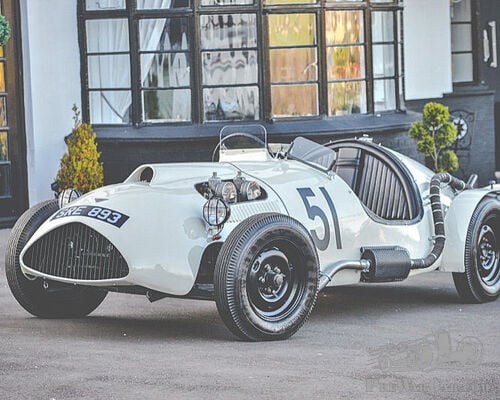
1933 Alvis 3.0 Special - One-Off Alloy Body | Period Competition Car | Featured in “Alvis – A Century of Drivers”
1933 Alvis 3. 0 Special - One-Off Alloy-Body | Period Competition Car | Featured in “Alvis – A Century of Drivers”

HORCH 930 V
For SaleHorch 930 VManufacturer: HorchModel and Variant: 930 VBody Type: 4-door sedanChassis Number: ..