The global magazine and marketplace for classic car enthusiasts, by enthusiasts.


Filter
Classic Du Pont, Rolls-Royce for sale - Du Pont, Rolls-Royce cars for sale
-

Rolls-Royce Phantom II Coupé de Ville
One of the most elegant Phantom II ever made. Ordered new by Armand Esders just after he bought his Bugatti Royale Roadster and also without headlights ( “as one does not drive by night”). A car of pure and minimalist elegance, but fitted with very exclusive luxurious fittings. A piece of art on wheels which has never been shown at any Concours .. -
1930 Rolls-Royce 20/25 Barker Sedanca de Ville GSR40
An early, vintage example, stylish and in fine condition. The car was originally exhibited at the London Olympia Motor Show, finished in Ulster Blue, with blue grey cloth to the rear, silver plated fittings and blue leather to the front. Some of this, including silver plated door furniture, remains to this day, and blue is still the theme. Appea.. -
1929 Du Pont Model G Two-Passenger Speedster by Merrimac | RM Sotheby's | The Monterey Auction
To Be OFFERED AT AUCTION at RM Sothebys' The Monterey Auction event, 13 - 15 August 2026. $800,000 - $1,200,000 USD One of the most beautiful American automobiles of its generationThe 1929 New York International Automobile Show display carOne of three two-passenger “taper tail” models with an external spareOne .. -
1914 Rolls-Royce 40/50 HP Silver Ghost Colonial London-to-Edinburgh Skiff by Schapiro-Schebera | RM Sotheby's | The Monterey Auction
To Be OFFERED AT AUCTION at RM Sothebys' The Monterey Auction event, 13 - 15 August 2026. $1,500,000 - $2,000,000 USD Among the most famous and recognizable “parallel bonnet” Silver GhostsFormerly owned by noted collectors Bob Barrymore and Joseph and Margie CassiniOne of the cars featured in Melbourne Brindle’s Twen.. -
1929 Rolls Royce Phantom II Saloon by Mulliner
Manufactured at the Rolls-Royce factory in DerbySaloon body by H.J. MullinerOriginal steel sliding roofPart of a Swiss private collection for over 40 years and previously also based in Switzerland with a 1972 vehicle registration documentLargely preserved in its original conditionContinuously dri.. -
1928 ROLLS ROYCE 20HP WEYMANN SALOON.
1928 Rolls Royce 20hp Weymann Saloon.Chassis number: GYL49Registration Number: IJ8851Probably the Best driving 20hp I have ever had the pleasure of taking down the road. GLY79 has been in the custody of a retired railway engineer for decades. During this time he has exhaustively gone though the car rebuilding each & ev.. -
1937 Rolls Royce 25/30 Airline style Saloon by Park Ward
1937 Rolls Royce 25/30 Airline style Saloon by Park Ward Chassis Number: GRP4 Registration Number: ELH113 Under long term ownership for several decades; this 25/30 has one of the most exhaustive & massive history files I have ever seen with some £135,000 pounds having been s.. -
1909 ROLLS-ROYCE 40/50hp SILVER GHOST 7.4 LITRE 4 SPEED BALLOON CAR
1909 ROLLS-ROYCE 40/50hp SILVER GHOST 7.4 LITRE 4 SPEED H.J. MULLINER STYLE BALLOON CAR Chassis 1009 UK Registration Number: AH834 On 30th March 1907 an advert appeared in The Autocar headed 'The Best Six-Cylinder Car in the World'. The advertiser was Rolls-Royce Ltd. and the pr.. -
1934 Rolls-Royce 20/25 James Young Saloon GUB77
A smart, clean and handsome example, very nicely finished in silver, with wings and waistline moulding in a lovely shade of blue. The interior consists of excellent leather to the front, cloth to the rear & the headlining all in deep blue, with light blue carpets & particularly attractive wood veneers – all work together to create a very un.. -
1937 Rolls Royce Phantom 3 Barker Landaulette
1937 Rolls Royce Phantom 3 Barker Landaulette. Chassis number: 3BU174 Registration Number: DYK490 A stunning car in concours condition. This car has been the recent recipient of a concurs restoration culminating in a best in class win at the 2025 Schloss Schwetzingen concours D'..


Du Pont
US, 1920 – 1932
(1) Du Pont Motors Inc, Wilmington, Del., 1920 – 1923
(2) Du Pont Motors Inc, Moore, Pa., 1923 – 1932
E. Paul du Pont’s company built quality cars in limited numbers, total production being 537 vehicles of all Du Pont types. First of the line was a Du Pont 4.1-litre sv four with their own engine, selling for $2.600, but this gave way to proprietary-engined sixes, initially powered by Herschell-Spillman. The 1925 Du Pont Model D had a 6-cylinder 5-litre Wisconsin engine with overhead valves that developed 75bhp, a constant-mesh gearbox, and Lockheed hydraulic brakes to all four wheels. Its successor, the Du Pont Model E, could be had with a supercharger, but the best-known, and best, Du Pont was the Du Pont Model G speedster introduced in 1928. With its narrow straight wings copied from the Amilcar, Woodlite headlamps and grille concealing the radiator, the last a pioneering feature, the Du Pont Model G was not a good-looking car, but it was a very effective one. Like all the DuPont speedsters it had four forward speeds. The 5.3-litre, sv straight-8 engine, by Continental, gave 114bhp at 3600rpm with catalogued modifications. With the latter, 100mph was guaranteed. In the 1929 Le Mans 24 Hours race the Du Pont Model G proved itself faster than the other American entries, Stutz and Chrysler. Touring bodywork was, of course, available on the Du Pont car, and in 1931 came the long wheelbase (12ft 2 in) Du Pont Model H, built in a Stearns Knight frame. The later Du Pont cars were assembled in the Indian motorcycle factory at Springfield, after E. Paul du Pont had acquired this concern.
Source: Georgano, encyclopedia of motorcar; TRN
The information is written with the greatest of care. However, if you have any suggested amendments please contact us at office@prewarcar.com
Rolls-Royce
GB, 1904 to date
(1) Royce Ltd, Manchester, 1904 – 1906
(2) Rolls-Royce Ltd, Manchester, 1906 – 1908
(3) Rolls-Royce Ltd, Derby, 1908 – 1945
(4) Rolls-Royce Ltd, Crewe, Cheshire, 1946 – 1971
(5) Rolls-Royce Motors (1971) Ltd, Crewe, Cheshire, 1971 to date
The Rolls-Royce car was the result of a meeting between Henry Royce, a manufacturer of electric cranes in Manchester, and the Hon. C.S. Rolls, a pioneer motorist then selling Panhards in London, who wanted a quality car to boost falling sales. The first Rolls-Royce cars were based on the 1.8-litre (later enlarged to 2-litre) vertical-twin 10hp ioe Royce with shaft drive, but the range of Rolls-Royce cars was expanded to embrace a 3-litre, 3-cylinder, ‘light’ and ‘heavy’ versions of a 4-cylinder Rolls-Royce Twenty, and a 6-litre pair-cast six retailing at £900. A Light Twenty Rolls-Royce car with geared-up top, driven by Rolls, won the 1906 Tourist Trophy, and also broke the Monte Carlo-London record.
An abortive 3½-litre V8 petrol brougham Rolls-Royce car with square cylinder dimensions was shown in 1905, but 1906 was the start of a one-model policy based on the 40/50hp 6-cylinder Rolls-Royce car, later to win immortality as the Rolls-Royce Silver Ghost, which Rolls-Royce car made its début at Olympia that year. This Rolls-Royce car had a conventional 7-litre sv engine with pressure lubrication and dual ignition, as well as the 4-speed overdrive gearbox. Output of the Rolls-Royce Silver Ghost was a modest 48bhp, but the Rolls-Royce car’s reputation was assured after a successful 15.000 mile RAC-observed trial in 1907, from which the Rolls-Royce Silver Ghost emerged with flying colours. 6.173 Rolls-Royce Silver Ghost cars were made: the first ones at Manchester, and from 1908 on the Rolls-Royce cars were made at Derby. At £985 for a chassis the Rolls-Royce car was backed by a unique inspecition scheme, and in mid-1909 it was revised with a longer-stroke 7.4-litre engine and conventional 3-speed box. The Rolls-Royce Silver Ghosts reverted to 4 speeds in 1913, when cantilever rear suspension was adopted; later modifications were full electrics (1919) and Hispano-Suiza-type mechanical servo 4-wheel brakes (1924). The ‘Best Car in the World’ – a reputation which was well established by Rolls-Royce cars by 1914 – was not normally entered in competitions but in 1911 a Rolls-Royce Silver Ghost was successfully driven from London to Edingburgh and back on top gear for a fuel consumption of 24.32mpg, and a works team Rolls-Royce car swept the board in the 1913 Austrian Alpine Trials. Armoured-car versions of the Rolls-Royce Silver Ghost gave yeoman service both during and after World War 1.
Production of Rolls-Royce cars was resumed after the Amistice, the chassis price being inflated to £2.100. In 1920 an American Rolls-Royce car actory was opened, this making the Rolls-Royce car until 1931. Post-war 1 inflation led Rolls-Royce to abandon their one-model Rolls-Royce car policy in 1922 and to introduce a 3.1-litre ohv 6-cylinder Rolls-Royce Twenty with a 3-speed unit gearbox and central change at £1.100 for a chassis. This Rolls-Royce car was regarded by Rolls-Royce enthusiasts as heresy, but the Rolls-Royce Twenty was an excellent if sluggish car which last none of the traditional quality; nearly 3.000 Rolls-Royce cars were made up to 1929. In 1925 the Rolls-Royce car acquired a 4-speed box, right-hand change, and the servo 4-wheel brakes of the Rolls-Royce Silver Ghost, which was retired that year in favour of a 7.7-litre Rolls-Royce Phantom I with overhead valves and vertical radiator shutters. An improved Phantom II Rolls-Royce car with hypoid back axle and redesigned combustion chambers was listed from 1930, while the Rolls-Royce Twenty emerged as the more powerful Rolls-Royce 20/25 with a 3.7-litre engine. A Continental version of the bigger Rolls-Royce car gave a genuine 90mph with closed coachwork. Refinements of the early 1930s on Rolls-Royce cars included synchromesh (on the 20/25 in 1932, and on the Phantom a year later), and centralized chassis lubrication (1933).
In 1931 the Rolls-Royce car company bought Bentley Motors, after Napier had made an unsuccessful bid. The Bentley emerged two years later, as a Rolls-Royce-based 3½-litre: it was not to lose its identity until the 1950s. Sir Henry Royce died in 1933, and the entwined ‘R’s of the radiator emblem of the Rolls-Royce car was changed from red to black, supposedly in mourning. The smaller Rolls-Royce cars acquired hypoid final drive in 1936, in which year an alternative power unit of 4¼-litres’ capacity was offered, first as an option on the Rolls-Royce car, and then as standard: thus the 20/25 Rolls-Royce car grew up into the 25/30. In this year Rolls-Royce cars stopped making their own carburetors, though electrical equipment was not bought out until after World War 2. Aero-engine influence (the Rolls-Royce car company had been making these units since 1914 and had been responsible both for the Schneider Trophy R engine of 1931 and the Merlin of 1935) was reflected in the 12-cylinder Phantom III Rolls-Royce car first shown in 1935. The capacity of this Rolls-Royce car was 7.3-litres, and it was the first Rolls-Royce car to have independent front suspension. Later examples Rolls-Royce cars had overdrive gearboxes. It offered 90-95mph for £2.600 and up. This Rolls-Royce car model was still being made in 1939, along with a development of the 25/30, with independent front suspension, the Rolls-Royce Wraith, which Rolls-Royce car could be bought for around £1.600 complete.
Post-war 2 production Rolls-Royce cars was transferred from Derby to Crewe and the first new Rolls-Royce car model was the Rolls-Royce Silver Wraith, with a 4¼-litre engine, overhead inlet valves and hydraulic actuation for the front brakes, this Rolls-Royce car costing around £4.300 in 1947. The Rolls-Royce Phantom III was not revived, but sixteen ioe 5.7-litre straight-8 Phantom IV Rolls-Royce cars were made for heads of state from 1949 onwards. Among the customers of the Rolls-Royce car was HRH Pincess Elizabeth, who was to become the first reigning British monarch to use Rolls-Royce cars officially. The 6-cylinder Rolls-Royce cars continued up to 1959. 1949 brought the first Rolls-Royce car factory-bodied model, the export only Rolls-Royce Silver Dawn, using the standard Bentley saloon body, left-hand drive, and steering column change. In 1952 capacity of the Rolls-Royce car went up to 4.6-litres and a long-chassis version was listed with an 11ft 1in wheelbase. The General Motors Hydramatic transmission became an option in 1953, and the famous manual box with right-hand control was finally dropped two years later with the advent of a 4.9-litre Rolls-Royce Silver Cloud, a restyled saloon with 15in wheels, which Rolls-Royce car could be bought with power-assisted steering and full air-conditioning. 1960 Rolls-Royce cars were identical in outward appearance, but were powered by entirely new oversquare alloy 6.2-litre V8 engines. Power assisted steering was now standard on the Rolls-Royce car, though the hydro-mechanical servo brakes were retained. The standard saloon Rolls-Royce car cost £6.093, and a limousine version on a 12ft wheelbase, the Rolls-Royce Phantom V, was some £3.000 dearer. A four-headlamp layout was introduced on the Rolls-Royce car in 1963, and a year later Rolls-Royce cars started to supply a 4-litre version of their ioe 6-cylinder engine to BMC for installation in the Vanden Plas Princess.
At the 1965 Shows Rolls-Royce cars introduced an entirely up-to-date design, the Rolls-Royce Silver Shadow. This Rolls-Royce car boasted unitary construction, self-levelling, all-round independent suspension, and servo-assisted disc-brakes with three separate circuits. It retained the 1960 V8 engine, also the (now dummy) traditional radiator. The Phantom V Rolls-Royce car with its separate chassis was kept on, a ceremonial limousine for head of state being listed at £10.695. A Silver Shadow convertible was available in 1968 for £10.449; 1969 brought both a long-wheelbase version of the Rolls-Royce car model and the enlargement of the engine to 6.745cc. In 1970 a new 3-speed automatic gearbox (already used on left hand drive export models since late 1965) replaced the earlier 4-speed type on the Rolls-Royce car, and the Phantom VI replaced the Phantom V; production of these state Rolls-Royce carriages ran at about 50 Rolls-Royce cars a year. Similar modifications were applied to the parallel Bentley cars. The sensational bankruptcy of February 1971 found the Rolls-Royce Car Division still profitable; indeed, within a month the Rolls-Royce car company had announced their high-performance Rolls-Royce Corniche 2-door saloon and convertible with coachwork by H.J. Mulliner-Park Ward, at prices from £12.829 upward, and that December the 10.000th Silver Shadow Rolls-Royce car left Crewe. By late 1972 prices of the more expensive Rolls-Royce cars had risen to £14.399 for the Rolls-Royce Corniche and £15.559 for the Rolls-Royce Phantom Limousine.
US, 1921 – 1931
Rolls-Royce of America Inc, Springfield, Mass.
The American Rolls-Royce car company was formed in November 1919 to build the famous British Rolls-Royce cars in an American factory and so avoid high import duties. The Rolls-Royce car plant was bought from the American Wire Wheel Co, and the Rolls-Royce Silver Ghost went into production there in 1921. This Rolls-Royce car had a 6-cylinder 7.4-litre sv engine developing 80bhp, and came in two wheelbases, 12ft and 12ft 6½in. Right-hand drive was used until 1923. Unlike the British Rolls-Royce car company, Rolls-Royce of America always advertised coachwork and supplied complete Rolls-Royce cars if customers wished. Most bodies of the American Rolls-Royce cars were by Brewster, and in 1926 this firm was taken over by Rolls-Royce car company. In 1926 came the New Phantom, or Rolls-Royce Phantom I as it was later called. This Rolls-Royce car had a 6-cylinder 7.7-litre engine with overhead valves, and again came in two wheelbases, 11ft 11½in and 12ft 2½in. The Depression badly hit sales of the American Rolls-Royce car, and production of Rolls-Royce cars at Springfield came to an end in 1931, although a few British Rolls-Royce cars were assembled there later. A total of 2.944 American Rolls-Royce cars was made, of which 1.703 were Rolls-Royce Silver Ghosts and 1.241 were Rolls-Royce Phantom Is.
Source: Georgano, encyclopedia of motorcar; MCS, GNG
The information is written with the greatest of care. However, if you have any suggested amendments please contact us at office@prewarcar.com


Featured
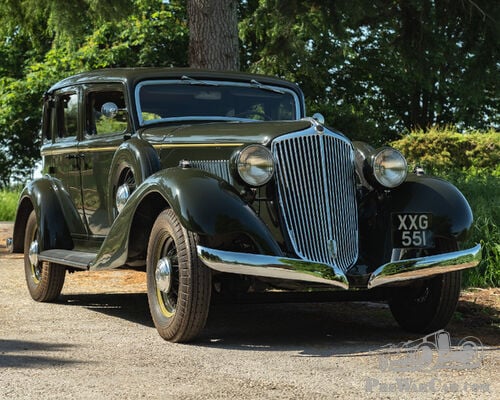
Graham Model 64 Standard Eight 'Blue Streak'
UK Registration No: XXG 551Chassis No: 1801069MOT: ExemptH&H ClassicsKelham Hall | Newark, Nottinghamshire
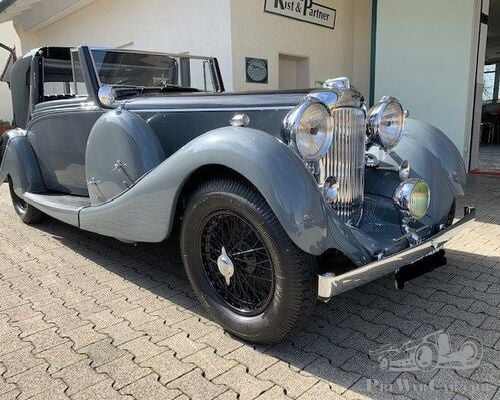
Lagonda LG 45 Coupe de Ville Sedanca by Mayfair
The successor to the M45, the LG45 was built around the same highly capable, competition-proven 4.5-litre Meadows inline-six engine, but featured r..

Daimler Flat six 15 Saloon - Fluid Flywheel / pre-selector
The E20 was manufactured between 1935 and 1939. It offered the choice of a coachbuilt saloon, Sports Saloon, Fixedhead Coupé and Drophead Coupé bod..