The global magazine and marketplace for classic car enthusiasts, by enthusiasts.


Filter
Classic Ford, Rolls-Royce for sale - Ford, Rolls-Royce cars for sale
-

1926 Rolls-Royce 20hp Hooper Style Tourer CN7876
1926 Rolls-Royce 20hp Hooper Style Tourer CN7876 Chassis Number: GMJ44 Registration Number: CN7876 The car was originally fitted with a 3/4 (Doctor's) coupé body by Maythorns of Biggleswade to the order of a Dr. Soutar of Queen Anne Street, London W1. Unfortunately, the record o.. -
1929 Rolls Royce Phantom 1 Park Ward Indian Hunting car
1929 Rolls Royce Phantom 1 Park Ward Indian Hunting car Chassis number: 76OR Registration Number: UV7914 Coming on the market for the first time in 40 years. This car was exported from India after the war & was based in Switzerland prior to being acquired by the current owne.. -
1927 Rolls-Royce 20hp Doctor's Coupé with Dickey Coachwork by Howes & Sons
1927 Rolls-Royce 20hp Doctor's Coupé with Dickey Coachwork by Howes & Sons of Norwich. Coming soon. Chassis Number: GAJ31 Registration Number: TO6226 UK. Also French Registered EEC Taxes Paid. The Twenty was purchased by its prev.. -
1929 Rolls Royce 20hp Doctors Coupe by Hooper
1929 Rolls Royce 20hp Doctors Coupe by Hooper Chassis Number: GFN39Registration number: GE4310 Concours prize winning condition; This car is impeccable order having been the subject of a massive restoration. It is always a pleasure to receive a car in this condition needing absolutely nothing. This is a very late 20h.. -
Ford A Speedster Vorkriegs-Rennwagen / Pre-War-Racecar 1929
Vorkriegs-Rennwagen / PreWar-Racer La Mimosa IIBasis Ford A Baujahr 1929 (EZ 1.7.1929)- handgefertigte Aluminium-Karosserie- mechan. Overdrive- H-Kennzeichen- FIA "Historic Regularity Car Pass"- Classic Data Gutachten EUR 63.000- Diamond-Block-Motor- Persenning- verbesserte Br.. -
1925 Rolls Royce Phantom 1 Torpedo by Jarvis
1925 Rolls Royce Phantom 1 Torpedo by Jarvis Chassis number: 58RC Registration Number: SV9902 This Rolls Royce Phantom 1 started life as a Park Ward enclosed drive Landaulette. It was rebodied as a torpedo tourer by Jarvis as part of a 20 year ongoing restoration that was comple.. -
1927 Rolls Royce 20hp Park Ward Saloon
1927 Rolls Royce 20hp Park Ward Saloon. Chassis number: GHJ17Registration number: FG2766 A wonderfully original car that has resided its entire life in Scotland. We took the car from a small estate inland from Aberdeen. The previous owner acquired the car in 2010. Prior to that it last changed hands in 1945. The car .. -
1934 Rolls Royce Phantom 2 Windovers Limousine
1934 Rolls Royce Phantom 2 Windovers Limousine Chassis number: 54Sk Registration Number: Spanish registration. A really fine Phantom 2 that has stayed for many years in a southern Spanish colletion near Sevlle where it currently resides. Coachwork i.. -
1929 Rolls Royce Phantom 2 Barrel sided tourer
1929 Rolls Royce Phantom 2 Barrel sided tourer. This car, chassis number 110WJ, came off test at the factory on the 14th October 1929 and was bought by Major Colin Cooper. It was originally fitted with an HJ Mulliner Weymann Saloon body. 110WJ was fitted with its current coachwork in the 90's by marqu.. -
Ford Model A Beach Racer 1930
An ideal car for events such as the Beach Races at Romo (Denmark), Pendine (England), and Normandy (France).Completely overhauled chassis.Converted to 12 Volt, starts very easily.A car for lots of fun and certainly an eye-catcher at any moment.Thanks to the large 21-inch wheels with 6.00 x 21 Blockley tires, the car n..


Ford
US, 1903 to date
Ford Motor Co, Detroit, Mich.
Henry Ford built his first experimental car in a workshop behind his home in Bagley Avenue, Detroit in 1896. The Ford had a twin-cylinder engine with chain-cum-belt drive, and attained 20mph. A second Ford car was made and tested in 1898. In 1899 he left his employment with Edison to help organize the Detroit Automobile Co. He was replaced there by H.M. Leland and Ford’s third experimental machine had certain similarities with Leland’s Cadillac, notably the basic layout, wheel steering, and planetary transmission. The first production Ford for sale, the Ford Model A of 1903, had a flat-twin underfloor-mounted engine, central chain drive, and rear-entrance tonneau bodywork, and sold for $850, or $100 more than the Cadillac, 1.708 Ford Model A cars were sold in the first season, and from the beginning Ford elected to fight both Selden’s alleged master patent and the Association of Licensed Automobile Manufacturers set up by those makers who were willing to recognize the patent’s validity. Ford and the other rebels were not finally vindicated until 1911. During these early years Ford built a number of experimental racing machines, of which the most famous was the Ford 999, a vast 4-cylinder affair without clutch or gears, in which Henry Ford himself recorded 91.4mph on the frozen Lake St.Clair in 1904. That year the company offered Ford Model C, a development of the original Ford Model A with the now-mandatory dummby bonnet, and the first of their fours, the Ford Model B at $2.000. Both these Ford models had the 2-speed planetary transmission, and this was applied in 1905 to a 6-litre six, the Ford Model K, selling at $2.500. The transmission proved the big car’s achilles’ heel, and no more 6-cylinder cars were marketed until 1941. In 1906 Ford undercut Oldsmobile with the 4-cylinder Ford Model N runabout at $500, and this led logically to the immortal Ford Model T announced for the 1909 season.
The Tin Lizzie put the world on wheels during its 18-year production run; for its day the Ford Model T was very advanced, with a 2.9-litre monobloc sv 4-cylinder engine, detachable head, a top speed of 40-45mph, and a fuel consumption of 25-30mpg. Original list price for the Ford Model T was $850, but this was progressively cut until a roadster could be bought for as little as $260 in 1925. The car retained Ford’s pedal-controlled transmission with 2 forward speeds, and some American states were, as a result to issue two categories of driving licence – one for ordinary cars, and others for planetary types, i.e. the Ford. More than 15 million T-Ford cars were made between October 1908, and May 1927. It formed the basis for a farm tractor (for sale in 1916) and a one-ton truck (for sale in 1917), and in 1919 41 per cent of all motor vehicles registered in Great Britain were Ford. Production figures soared: more than 100.000 Fords were made in 1913, the 300.000 mark was passed in 1914, and more than half a million left the Ford works in 1916. The first ‘million year’ was 1922, and the Ford Model T reached its production peak a year later, with more than two million Ford cars delivered. A British Ford factory was opened in Manchester in 1911, and subsequently French and German plants were to produce their own individual species of Ford. Black was the only colour offered on Ford cars from 1914 to 1925, and a painted black radiator shell replaced the original brass Fprd type in 1917; 4-wheel brakes were never available, but electric starters were, from 1920, though it was possible too buy an open car with hand starting only and magneto-driven headlamps as late as 1925.
With the demise of the Ford Model T in 1927, the Ford factory was idle for six months pending the changeover of the Ford Model A in 1927, which turned out to be a conventional 3.3-litre 4-cylinder sv machine with 3-speed sliding-type gearbox, 4-wheel brakes, and pleasing lines inspired by the Lincoln which had been under Ford control since 1922. The price for the Ford Model A was $450, and four-and-a-half million were sold in four seasons despite the Depression, Ford outselling Chevrolet two-to-one in the peak year, 1930. The Ford Model A was also sold in stationwagon versions from 1929, the first large-scale production of a type of body that is now a sine qua non in an American manufacturer’s range. In 1932 Ford again broke new ground with a mass-produced 3.6-litre Ford V8 offering 70bhp for $460. It used the 4-cylinder chassis, and as in roadster form this Ford weighed only one ton, the performance was exciting and sometimes lethal. A revised four, the Ford Model B, was made for a short while, but was dropped once V8 production got into its stride. Inherited from both the T-Ford and the A-Ford was the all-round transverse-leaf suspension of the B-Ford and all Ford V8s up to 1948. The V8s first million year was 1935. The Rumanians Zamfirescu and Cristea won the 1936 Monte Carlo Rally for Ford, a success repeated by the Dutchman Bakker Schut in 1938. A smaller companion V8, the 2.2-litre Ford Model 60, came out in 1936, but it was not a great success, and disappeared after 1940. V8s acquired hydraulic brakes in 1939, and column change in 1940, and a companion 3.7-litre Ford six was listed for sale in 1941.
After World War 2 the 1942 Fords were continued for three seasons with little change, but the 1949 line, though it used the same power units, was entirely new, with a longer and lower silhouette, and coil-spring independent front suspension. Automatic transmission became available on Ford cars during 1950, and in 1952 a ‘square’ 3½-litre ohv six was introduced. Two years later the old sv Ford V8 at long last gave way to a new 130bhp ohv engine in the modern idiom, while another unusual departure was the sporting two-seater Ford Thunderbird, described by its makers as a ‘personal car’. Engine options were 4.8 or 5.1 litres, the latter giving a speed of 113mph, but by 1958 it had grown up into a bulky Ford five-seater convertible with unitary construction. Ford cars were further restyled in 1955, and from 1957 to 1959 there was a fully-convertible hardtop, the Ford Skyliner. In 1958 the most powerful V8 engines developed 300bhp from 5.8-litres. The 50 millionth Ford was delivered in 1959 and along with GM and Chrysler, the Ford company had a compact ready for the 1960 season, in the shape of the ohv 6-cylinder 2.3-litre Ford Falcon. A step towards the semi-compact was achieved in 1962, when the big Ford Fairlane models were listed with two modest-sized engines, a 2.8-litre six and a short-strokeeight of 3622cc, the exact capacity of the original 1932 V8.
Since 1962 there has been an increasing emphasis on competition; the big Ford Galaxies with 7-litre engines finally ousted the Jaguars from their comination of British saloon-car racing, while the adoption of the V8 engine by A.C. Cars Ltd for their Cobra model brought Ford back into the sports car field as well. A team of Ford Falcon Sprints was entered in the 1963 Monte Carlo Rally and dominated the big-car class. 1964 brought the Ford Mustang, a compact semi-GT with close-coupled four-seater bodywork, sold for $2.480 with a 4.7-litre V8 engine giving a top speed of over 110mph; a cheaper model used a 120bhp six. This Ford car achieved a sensational success, with half a million sold in less than eighteen months, and the 1½ millionth Ford Mustang delivered in June 1967. Even in 1970, when the effects of new American legislation were already being felt, the USA alone registered 165.415 new Mustangs. Ford Works support for racing ceased at the end of 1967. For 1968 Ford offered their contribution to the popular intermediate class, the Ford Torino on a 9ft 8in wheelbase. A 115bhp 3.3-litre six was standard, but V8 options with outputs of up to 390bhp were also catalogued.
The first of a new generation of compacts, the Ford Maverick, appeared in 1969. This had a 7ft 7in wheelbase and at 15ft overall was shorter than the original 1960 Ford Falcon. Engines were 2.8-litre and 3.3-litre 6-cylinder. Other features were a platform frame and semi-elliptic rear springing. Initially it was sold only as a fastback coupé, but by 1971 a 4-door sedan on a longer chassis had joined the Ford range, and the old Falcon had been discontinued, except by Ford of Australia. At the other end of the Ford spectrum were the high-performance Ford Torino Cobra hardtop with 5.7-litre 285bhp V8 engine and 4-speed manual gearbox, and the costly Ford Thunderbird, with a 7-litre unit and front disc brakes as standard, and a price of $5295.
More important, however, was 1971’s novelty, the Ford Pinto sub-compact introduced towards the end of 1970, when it helped Ford beat Chevrolet in the sales race. This had a sizeable European content. The German Ford factory made the 3-speed gearboxes and buyers had a choice of two 4-cylinder engines, the British 1.600cc Ford Cortina or the 86bhp 2-litre ohc model from Cologne. Drum brakes were standard. The expected swing away from manual transmissions and the sporting image came in 1972: Cobra units were derated to 266bhp, and Ford’s biggest engine, the 7½-litre V8 available as an option in the Ford Thunderbird, gave only 212bhp. Front disc brakes were standardized on the Ford Torino series, and halfway through the season came a station wagon version of the Ford Pinto. The main 1973 improvements concerned safety (energy-absorbing bumpers). However, the big Ford cars (Custom, Galaxie and LTD) on the 10ft 1in chassi were restyled, at the same time receiving front disc brakes as regular equipment. Six-cylinder and manual transmission options were discontinued on this series, as were all American Ford convertibles with the exception of the Mustang. In addition to the full-sized Fords and the intermediate Torino family, the range embraced the Pinto, Maverick, Mustang and Thunderbird. Like Chevrolet, Ford also offered several types on the borderline between private car and truck. These include campers; the 4x4 Ford Bronco; the forward-control Ford Econoline station wagon powered by a commercial-model 4.8-litre 6-cylinder engine; and the Ford Ranchero, a coupé-utility on the car chassis which came with a 4.1-litre six as standard equipment.
GB, 1911 to date
(1) Ford Motor Co Ltd, Trafford Park, Manchester, 1911 – 1931
(2) Ford Motor Co Ltd, Dagenham, Essex, 1932 to date
(3) Ford Advanced Vehicles Ltd, Slough, Bucks., 1964 – 1966
Until 1932, Ford of England made only rhd versions of the American Ford, Models T and A: the only exception was a small-bore (14.9 RAC rating) version of the latter model known as the Ford AF, deisgned to beat the British horsepower tax. The opening of the new Dagenham Ford factory in 1932 produced the first true British Ford, the 8hp 933cc Ford Model Y with side-valve engine and transverse springing at £120 (it was also made by Ford in Cologne). This was joined by the Ford Model C Ten of 1.172cc in 1935, a car which was to supplant the Austin Seven as the favourite basis for British road-going and trials ‘specials’. In October 1935 the price of the 2-door saloon Ford Eight was reduced to £100, making it the first full-sized closed car sold at this figure in the UK. The Ford Eight and the Ford Ten had developed into the Ford Anglia for sale and the Ford Prefect for sale with more modern bodywork and pressed-steel wheels by 1939. British-made and assembled Ford V8s during this period were identical to their American counterparts with one exception: the 1937 – 1939 version of the ‘Ford 60’ model rated at 22hp selling for £220. This was very similar to the French Matford.
After World War 2 the small Dagenham Fords continued with little alteration until 1953, a companion V8, known as the Ford Pilot, being offered in the 1947 – 1950 period with the pre-war 22hp styling, the 3.6-litre side-valve engine and column gear change. In 1951 came the Ford Consul an Ford Zephyr (a 1½-litre four and 2.3-litre six respectively) which featured independent front suspension, oversquare ohv power units, 12-volt electrics and slab-sided styling. Both cost less than £650. In 1954 a wide range was available, with convertible versions of the bigger Ford models, a de luxe variant of the Ford Zephyr known as the Ford Zodiac, and new small cars (the Ford 100E versions of the Anglia and Prefect) with the same basic chassis specification as the Ford Consul and Ford Zephyr, but retaining long-stroke side-valve power units and of course 3-speed gearboxes. At the bottom of the Ford range, listed at only £391, was the Ford Popular, a simplified version of the old Ford Anglia with 1172cc engine; this indestructible period piece was still being made in 1959, complete with 1935 side-valve engine, beam front axle and mechanical brakes. Restyled Ford Consuls, Ford Zephyrs and Ford Zodiacs appeared in 1956, and a year later they were available with the now generally accepted options of overdrive and automatic transmission. A step towards greater efficiency came in 1960, when the Ford 105E Anglia was introduced. Its layout wss conventional, but the roward-sloped rear window gave it a distinctive appearance. A 4-speed gearbox was featured for the first time and an ultra-oversquare 4-cylinder 997cc (80,96x48,4mm) engine introduced the average British motorist to engine speeds of 5.500rpm and higher. The 1954 Ford Anglia was given a few more seasons’ life as the Ford Popular. The 1.3-litre 4-headlight Ford Classic of 1961 and its sports coupé version, the Ford Capri, were less successful, but Ford did much better with an improved line of big cars; 4- and 6-cylinder Ford Zephyrs and a 6-cylinder Ford Zodiac with Dearborn-styled bodies and front disc brakes.
Ford’s answer to the BMC Minis came in 1963. It was a roomy and conventional saloon, the Ford Cortina, powered by developments of the 105E engine in 1.2-litre and 1½-litre forms, giving 48 and 64bhp respectively. The Ford Cortinas were followed shortly afterwards by a 1½-litre Ford GT model with front disc brakes and 83bhp and a supersporitng 1558cc twin ohc Lotus-Cortina developed with the assistance of Colin chapman of Lotus and capable of over 100mph. In 1964 the Cortina range was extended by standard and GT versions of the Ford Corsair, a full six-seater; 1965 versions were available with automatic gearbox and air conditioning. During the 1960s Ford had been doing increasingly well with the 105E engine in competitions, and this unit formed the basis of ‘Ford specials’ in every category from roadgoing GTs with fiberglass bodies up to the rear-engined Formula Junior racers, in which category Ford had a virtual monopolu of success.
In 1967, the British Ford range covered every category except the ultra-small and the super-luxury models. The Ford Anglia was available in 997cc and 1.2-litre forms. The Ford Cortinas, now all wih front disc brakes, ranged from the basic 1.2-litre 2-door saloon at £648 up to the Lotus-Corina at £1010. The bigger Ford cars had gone over to V-engines, starting with the 1.7-litre and 2-litre Ford Corsairs in October 1965, an followed by the Ford Zephyrs and Ford Zodiacs in the spring of 1966. Ford’s Advanced Vehicles Division also evolved a rear-engined Ford GT40 coupé with the American-built V8 engine, intended primarily for competitions; 50 Ford GT40 cars were made of which about 30 were sold privately. This development programme on both sides of the Atlantic resulted in the first American victory at le Mans in 1966, the car being a Ford 7-litre GT Mk 2 driven by McLaren and Amon. Ford repeated this success in 1967. However, the Advanced Vehicle Division at Slough had closed down at the end of 1966, an the 1967 Le Mans cars were made entirely in the USA, mainly by a Ford subsidiary known as Car Craft.
During 1967 the Ford company experimented with the Ford Comuta, a diminutive two-seater electric city car only 80in long and 49,5in high, but this project was shelved in 1971. Of greater interest to the car-buying public were the 1967 versions of the best-selling Ford Cortina (over one million in four years), which was restyled on Corsair lined with the choice of 1.3-litre or 1.5-litre 5-bearing engines; a year later the bigger engine was enlarged to 1.6-litres and crossflow heads were adopted. After a production run of 1.300.000 cars the 105E Anglia gave way in January 1968 to the Ford Escort, featuring a Cologne-designed 4-speed all-synchromesh gearbox, and rack and pinion steering, as well as crossflow 5-bearing engines of 1098cc or 1298cc. Both the GT and the 1558cc twin-cam versions had front disc brakes; the model won Ford the 1968 and 1969 Rally Constructors’ Championships and the 1970 World Cup Rally, successes reflected in the introduction early in 1970 of the Ford RS1600 model with dohc 16-valve engine featuring cogged-belt camshaft drive. This was made in a new Advanced Vehicles plant at Aveley. Ford had also assumed the role of general provider to the racing-car industry, with its 4-cylinder Formula 2 and V8 Formula 1 3-litre engine made to Cosworth designs. A new and successful ‘poor man’s’ Formula (Formula Ford) was built up round the standard 1600cc crossflow engine.
Meanwhile Ford’s European operations were being rationalized. The Ford Escort was made by Cologne as well as by Dagenham, and the same applied to the 2+2 Ford Capri coupé introduced early in 1969 – though in this case British and German versions used different engines. The British version had sold over 800.000 by August 1972, and came initially with a wide choice of engine and trim options, the former ranging from the 1300cc ohv in-line four up to the big 3-litre V6 that developed 136mph. Front suspension was of McPherson strut type and front disc brakes were standard. During 1970 the Ford Corsair range was discontinued. There were victories in 1971 in the Circuit of Ireland and the Scottish Rally, as well as some interesting experiments such as a 4x4 Ford Capri for Rallycross, and a mid-engined sports coupé prototype, the Ford GT70 with 5-speed gearbox, all-independent suspension, and fiberglass bodywork. The engine was a German-built Ford 3-litre V6. In the same year the Ford Cortina series was completely redesigned, emerging as bigger cars with double wishbone independent front suspension, and sohc in-line fours of 1.593cc or 1.992cc as an alternative to the established crossflow units. Irs reached series-production Fords during 1972, when the ageing Ford Zephyr IV family gave way to the Ford Consul/Granada series (also shared with Cologne). V-engines (a 2-litre four or sixes of 2500cc and 3000cc) were used. The most expensive Ford GXL Granada had a vinyl roof, power-assisted steering, and automatic transmission as standard. The Consul, Cortina and Granada were continued into 1973, along with a slightly revised Escort, and some improved Capris, which could be had for the first time with 1600cc sohc engines giving 72bhp or 86bhp.
AUS, 1925 to date
Ford Motor Company of Australia Ltd, Geelong; Broadmeadows, Victoria
Ford cars were first assembled in Australia in 1925 (Ford Model T), and Ford Model A cars had Australian-made bodies on American chassis. Australian Ford V8s made from 1932 to 1960 had small body variations from their American counterparts, such as greater slope on the roof lines of the Ford Tudor sedans of the late 1930s, making them similar to Holden’s coupés on GM chassis such as Chevrolet, Pontiac and Vauxhall. The Broadmeadows Ford plant was opened in 1960 to make the Ford Falcon, with 6-cylinder engine up to 1966, when it was supplemented with a V8, In 1967 the more expensive Ford Fairlane V8 wsa added to the Ford of Australia range, and in 1972 both Falcon and Fairlane were completely restyled so that thye were quite distinct from American Ford models of the same name. The 1973 range comprised three 6-cylinder engines and two V8s.
D, 1931 to date
Ford-Werke AG, Cologne
Ford started assembling the Ford Model T in Berlin in 1925 and Ford Model A in 1927. A new Ford factory was built at Cologne and production began in 1931 with the Ford Model B, later known as the Rheinland, with a 4-cylinder 3.285cc engine using many imported parts. The Ford Köln was built in the new works to American designs, using a 933cc engine, and was almost identical to the English Ford 8, the first Dagenham-built Ford. The Ford V8 was imported at first, but after 1935 it was built entirely at Cologne. A very popular model was the Ford Eifel (1157cc) available as a sedan or a two-seater convertible. In 1939 the Ford Taunus appeared with a 1172cc 34bhp engine and streamlined body, but this type was only produced in small numbers as a result of the outbreak of World War 2. The Ford Taunus was continued after the war in 1948 with the same 1172cc engine. An engine with the same specification was used for the British Ford 10 and Ford Prefect from 1935 for about 20 years. The name Taunus later came to be used for all German Ford cars, and the 12M, 15M and 17M were fitted with 4-cylinder 1.2-, 1.5-, and 1.7-litre engines respectively. The 12M was offered with front drive in 1962 and was available with V4 engines of 1.2 and 1.5-litres’ capacity. The 17M also appeared with a V4 engine in 1964, available in 1.5- and 1.7-litre sizes, but this car was rear-driven. The Taunus 20M was a 2-litre V6 introduced for 1968; known as the 20M RS, it had a 108bhp 2.3-litre engine.
An increasing tendency to rationalize Ford’s European programme became apparent when Dagenham and Cologne offered identical Ford Escort ranges in 1968. In 1969 there were German as well as British Ford Capri coupés, though engine options were different; V4s of 1.3, 1.5 and 1.7 litres, and 2-litre and 2.3-litre V6s, with outputs ranging from 63bhp to 123bhp. With this came an increasing interest in competitions; Glemser won the 1969 German Saloon Car Championship with a Ford Escort, and the 1971 European Touring Car Challenge as well. The Ford Taunus name, dropped in 1967, returned in 1971 on a replacement for the fwd 12M. This marked a reversion to conventional drive as well as new 5-bearing ohc in-line 4-cylinder engines of 1300cc and 1600cc, and coil-and-wishbone independent front suspension in place of Ford’s familiar McPherson struts. The bigger Ford cars retained V-engines, and Ford of Cologne entered 1972 with a range extending from the basic 1098cc Ford Escort up to the 142bhp 26M six with 2548cc engine and all-disc brakes. The most powerful catalogued Ford Capri was the 150bhp RS2600, also with discs all round; a team of 2.9-litre versions took the first three places in the Spa 24-Hour Race that year. During the season the 17M and 26M were replaced by German versions of the British Consul-Granada saloons, with all-independent springing. These came with four different engines: a 1.7-litre V4, a 2-litre ohc in-line four, a German-designed 2.3-litre V6, and the 3-litre British Ford V6.
Source: Georgano, encyclopedia of motorcar; MCS, ELF, HON
The information is written with the greatest of care. However, if you have any suggested amendments please contact us at office@prewarcar.com
Rolls-Royce
GB, 1904 to date
(1) Royce Ltd, Manchester, 1904 – 1906
(2) Rolls-Royce Ltd, Manchester, 1906 – 1908
(3) Rolls-Royce Ltd, Derby, 1908 – 1945
(4) Rolls-Royce Ltd, Crewe, Cheshire, 1946 – 1971
(5) Rolls-Royce Motors (1971) Ltd, Crewe, Cheshire, 1971 to date
The Rolls-Royce car was the result of a meeting between Henry Royce, a manufacturer of electric cranes in Manchester, and the Hon. C.S. Rolls, a pioneer motorist then selling Panhards in London, who wanted a quality car to boost falling sales. The first Rolls-Royce cars were based on the 1.8-litre (later enlarged to 2-litre) vertical-twin 10hp ioe Royce with shaft drive, but the range of Rolls-Royce cars was expanded to embrace a 3-litre, 3-cylinder, ‘light’ and ‘heavy’ versions of a 4-cylinder Rolls-Royce Twenty, and a 6-litre pair-cast six retailing at £900. A Light Twenty Rolls-Royce car with geared-up top, driven by Rolls, won the 1906 Tourist Trophy, and also broke the Monte Carlo-London record.
An abortive 3½-litre V8 petrol brougham Rolls-Royce car with square cylinder dimensions was shown in 1905, but 1906 was the start of a one-model policy based on the 40/50hp 6-cylinder Rolls-Royce car, later to win immortality as the Rolls-Royce Silver Ghost, which Rolls-Royce car made its début at Olympia that year. This Rolls-Royce car had a conventional 7-litre sv engine with pressure lubrication and dual ignition, as well as the 4-speed overdrive gearbox. Output of the Rolls-Royce Silver Ghost was a modest 48bhp, but the Rolls-Royce car’s reputation was assured after a successful 15.000 mile RAC-observed trial in 1907, from which the Rolls-Royce Silver Ghost emerged with flying colours. 6.173 Rolls-Royce Silver Ghost cars were made: the first ones at Manchester, and from 1908 on the Rolls-Royce cars were made at Derby. At £985 for a chassis the Rolls-Royce car was backed by a unique inspecition scheme, and in mid-1909 it was revised with a longer-stroke 7.4-litre engine and conventional 3-speed box. The Rolls-Royce Silver Ghosts reverted to 4 speeds in 1913, when cantilever rear suspension was adopted; later modifications were full electrics (1919) and Hispano-Suiza-type mechanical servo 4-wheel brakes (1924). The ‘Best Car in the World’ – a reputation which was well established by Rolls-Royce cars by 1914 – was not normally entered in competitions but in 1911 a Rolls-Royce Silver Ghost was successfully driven from London to Edingburgh and back on top gear for a fuel consumption of 24.32mpg, and a works team Rolls-Royce car swept the board in the 1913 Austrian Alpine Trials. Armoured-car versions of the Rolls-Royce Silver Ghost gave yeoman service both during and after World War 1.
Production of Rolls-Royce cars was resumed after the Amistice, the chassis price being inflated to £2.100. In 1920 an American Rolls-Royce car actory was opened, this making the Rolls-Royce car until 1931. Post-war 1 inflation led Rolls-Royce to abandon their one-model Rolls-Royce car policy in 1922 and to introduce a 3.1-litre ohv 6-cylinder Rolls-Royce Twenty with a 3-speed unit gearbox and central change at £1.100 for a chassis. This Rolls-Royce car was regarded by Rolls-Royce enthusiasts as heresy, but the Rolls-Royce Twenty was an excellent if sluggish car which last none of the traditional quality; nearly 3.000 Rolls-Royce cars were made up to 1929. In 1925 the Rolls-Royce car acquired a 4-speed box, right-hand change, and the servo 4-wheel brakes of the Rolls-Royce Silver Ghost, which was retired that year in favour of a 7.7-litre Rolls-Royce Phantom I with overhead valves and vertical radiator shutters. An improved Phantom II Rolls-Royce car with hypoid back axle and redesigned combustion chambers was listed from 1930, while the Rolls-Royce Twenty emerged as the more powerful Rolls-Royce 20/25 with a 3.7-litre engine. A Continental version of the bigger Rolls-Royce car gave a genuine 90mph with closed coachwork. Refinements of the early 1930s on Rolls-Royce cars included synchromesh (on the 20/25 in 1932, and on the Phantom a year later), and centralized chassis lubrication (1933).
In 1931 the Rolls-Royce car company bought Bentley Motors, after Napier had made an unsuccessful bid. The Bentley emerged two years later, as a Rolls-Royce-based 3½-litre: it was not to lose its identity until the 1950s. Sir Henry Royce died in 1933, and the entwined ‘R’s of the radiator emblem of the Rolls-Royce car was changed from red to black, supposedly in mourning. The smaller Rolls-Royce cars acquired hypoid final drive in 1936, in which year an alternative power unit of 4¼-litres’ capacity was offered, first as an option on the Rolls-Royce car, and then as standard: thus the 20/25 Rolls-Royce car grew up into the 25/30. In this year Rolls-Royce cars stopped making their own carburetors, though electrical equipment was not bought out until after World War 2. Aero-engine influence (the Rolls-Royce car company had been making these units since 1914 and had been responsible both for the Schneider Trophy R engine of 1931 and the Merlin of 1935) was reflected in the 12-cylinder Phantom III Rolls-Royce car first shown in 1935. The capacity of this Rolls-Royce car was 7.3-litres, and it was the first Rolls-Royce car to have independent front suspension. Later examples Rolls-Royce cars had overdrive gearboxes. It offered 90-95mph for £2.600 and up. This Rolls-Royce car model was still being made in 1939, along with a development of the 25/30, with independent front suspension, the Rolls-Royce Wraith, which Rolls-Royce car could be bought for around £1.600 complete.
Post-war 2 production Rolls-Royce cars was transferred from Derby to Crewe and the first new Rolls-Royce car model was the Rolls-Royce Silver Wraith, with a 4¼-litre engine, overhead inlet valves and hydraulic actuation for the front brakes, this Rolls-Royce car costing around £4.300 in 1947. The Rolls-Royce Phantom III was not revived, but sixteen ioe 5.7-litre straight-8 Phantom IV Rolls-Royce cars were made for heads of state from 1949 onwards. Among the customers of the Rolls-Royce car was HRH Pincess Elizabeth, who was to become the first reigning British monarch to use Rolls-Royce cars officially. The 6-cylinder Rolls-Royce cars continued up to 1959. 1949 brought the first Rolls-Royce car factory-bodied model, the export only Rolls-Royce Silver Dawn, using the standard Bentley saloon body, left-hand drive, and steering column change. In 1952 capacity of the Rolls-Royce car went up to 4.6-litres and a long-chassis version was listed with an 11ft 1in wheelbase. The General Motors Hydramatic transmission became an option in 1953, and the famous manual box with right-hand control was finally dropped two years later with the advent of a 4.9-litre Rolls-Royce Silver Cloud, a restyled saloon with 15in wheels, which Rolls-Royce car could be bought with power-assisted steering and full air-conditioning. 1960 Rolls-Royce cars were identical in outward appearance, but were powered by entirely new oversquare alloy 6.2-litre V8 engines. Power assisted steering was now standard on the Rolls-Royce car, though the hydro-mechanical servo brakes were retained. The standard saloon Rolls-Royce car cost £6.093, and a limousine version on a 12ft wheelbase, the Rolls-Royce Phantom V, was some £3.000 dearer. A four-headlamp layout was introduced on the Rolls-Royce car in 1963, and a year later Rolls-Royce cars started to supply a 4-litre version of their ioe 6-cylinder engine to BMC for installation in the Vanden Plas Princess.
At the 1965 Shows Rolls-Royce cars introduced an entirely up-to-date design, the Rolls-Royce Silver Shadow. This Rolls-Royce car boasted unitary construction, self-levelling, all-round independent suspension, and servo-assisted disc-brakes with three separate circuits. It retained the 1960 V8 engine, also the (now dummy) traditional radiator. The Phantom V Rolls-Royce car with its separate chassis was kept on, a ceremonial limousine for head of state being listed at £10.695. A Silver Shadow convertible was available in 1968 for £10.449; 1969 brought both a long-wheelbase version of the Rolls-Royce car model and the enlargement of the engine to 6.745cc. In 1970 a new 3-speed automatic gearbox (already used on left hand drive export models since late 1965) replaced the earlier 4-speed type on the Rolls-Royce car, and the Phantom VI replaced the Phantom V; production of these state Rolls-Royce carriages ran at about 50 Rolls-Royce cars a year. Similar modifications were applied to the parallel Bentley cars. The sensational bankruptcy of February 1971 found the Rolls-Royce Car Division still profitable; indeed, within a month the Rolls-Royce car company had announced their high-performance Rolls-Royce Corniche 2-door saloon and convertible with coachwork by H.J. Mulliner-Park Ward, at prices from £12.829 upward, and that December the 10.000th Silver Shadow Rolls-Royce car left Crewe. By late 1972 prices of the more expensive Rolls-Royce cars had risen to £14.399 for the Rolls-Royce Corniche and £15.559 for the Rolls-Royce Phantom Limousine.
US, 1921 – 1931
Rolls-Royce of America Inc, Springfield, Mass.
The American Rolls-Royce car company was formed in November 1919 to build the famous British Rolls-Royce cars in an American factory and so avoid high import duties. The Rolls-Royce car plant was bought from the American Wire Wheel Co, and the Rolls-Royce Silver Ghost went into production there in 1921. This Rolls-Royce car had a 6-cylinder 7.4-litre sv engine developing 80bhp, and came in two wheelbases, 12ft and 12ft 6½in. Right-hand drive was used until 1923. Unlike the British Rolls-Royce car company, Rolls-Royce of America always advertised coachwork and supplied complete Rolls-Royce cars if customers wished. Most bodies of the American Rolls-Royce cars were by Brewster, and in 1926 this firm was taken over by Rolls-Royce car company. In 1926 came the New Phantom, or Rolls-Royce Phantom I as it was later called. This Rolls-Royce car had a 6-cylinder 7.7-litre engine with overhead valves, and again came in two wheelbases, 11ft 11½in and 12ft 2½in. The Depression badly hit sales of the American Rolls-Royce car, and production of Rolls-Royce cars at Springfield came to an end in 1931, although a few British Rolls-Royce cars were assembled there later. A total of 2.944 American Rolls-Royce cars was made, of which 1.703 were Rolls-Royce Silver Ghosts and 1.241 were Rolls-Royce Phantom Is.
Source: Georgano, encyclopedia of motorcar; MCS, GNG
The information is written with the greatest of care. However, if you have any suggested amendments please contact us at office@prewarcar.com


Featured
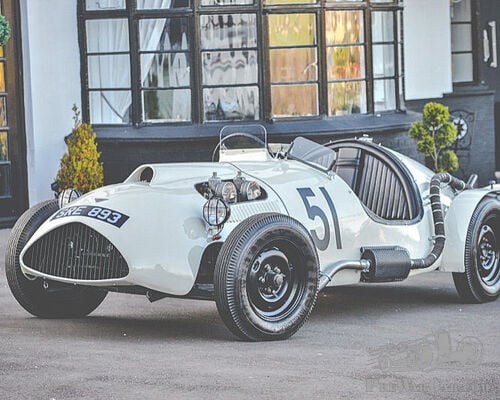
1933 Alvis 3.0 Special - One-Off Alloy Body | Period Competition Car | Featured in “Alvis – A Century of Drivers”
1933 Alvis 3. 0 Special - One-Off Alloy-Body | Period Competition Car | Featured in “Alvis – A Century of Drivers”
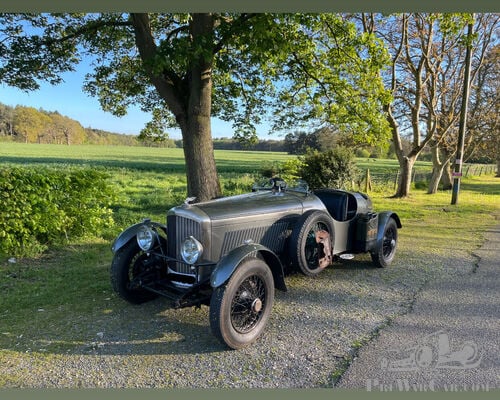
Derby Bentley Special 4-1/4
Sadly i am having to sell on my Bentley special ( Icarus). It is currently a work in progress and still needs finalising/ refining. A great o..
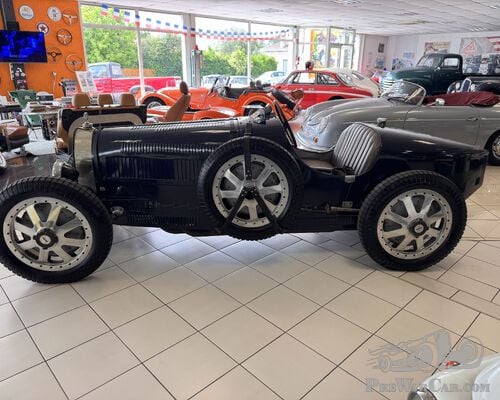
Bugatti 35 B Pur Sang
Bugatti 35 B Pur Sang,importée par un membre délégué de la FFVE il y’a une quinzaine d années.Participation à de nombreux Rallyes Bug..