The global magazine and marketplace for classic car enthusiasts, by enthusiasts.


Filter
Classic Lagonda, Rolls-Royce for sale - Lagonda, Rolls-Royce cars for sale
-

1929 Rolls-Royce 20/25 Estate Car
Extremely unusual well-proportioned estate coachwork from Burbage & SonsThoroughly well sorted benefitting from significant work from ourselvesCharming and practical vehicle accompanied by an interesting early history Coming off test on Christmas Eve 1929, GDP 43 was delivered to coachbuilder Th.. -
1939 Rolls Royce Wraith James Young Razor Edge Saloon
1939 Rolls Royce Wraith James Young Razor Edge Saloon Chassis Number: WEC72 Registration Number: 39D25 (Ireland) £200k spent upon the restoration of this car to make it in effect a brand new Rolls Royce Wraith being delivered 86 years late!!! Simply.. -
1938 Rolls Royce Wraith Gurney Nutting Sedanca Coupe
1938 Rolls Royce Wraith Gurney Nutting Sedanca Coupe Chassis number: WRB2 Registration number: FLH5 This car may be paid for in Bitcoin. Approx 3 BTC Simply the best of the best & a Pebble Beach/Villa D'Este quality car. This wrait.. -
1929 Rolls Royce Phantom 1 Springfield LHD Brewster Lonsdale Landaulette
1929 Rolls Royce Phantom 1 Springfield LHD Brewster Lonsdale Landaulette Chassis Number: S324KP Registration Number: BS9362 Currently undergoing a major service & set up with noted marque expert James Black. At the same time the Autovac is being reinstated to replace the cur.. -
1933 Rolls Royce 20/25 Sedanca by Thrupp & Maberly
1933 Rolls Royce 20/25 Sedanca by Thrupp & Maberly Chassis Number: GRW27 Registration Number: VTK777 Simply the best we have ever seen. This car won prizes in class at the recent RREC national rally at Burghley house. A massive nut & bolt re.. -
1934 Rolls-Royce 20/25 Gurney Nutting Owen 3 position drop head
1934 Rolls-Royce 20/25 Gurney Nutting Owen 3 position drop headChassis number: GLZ75Registration number: ALW565Chassis number GLZ 75 was off test 10th July 1933 for supply to HR Owen as a ‘stock’ car. The chassis was delivered to Gurney Nutting & Co Ltd. on The Kings Road for Owen Sedanca Coupe Coachwork which the car st.. -
Rolls Royce 20/25 James Young Convertible
1935 ROLLS ROYCE 20/25 JAMES YOUNG CONVERTIBLEBeautiful and stylish 20/25 with original James Young convertible bodywork (four door, all weather tourer) is now for sale.Fitted with an overdrive, this car is ready to be enjoyed and has been regularly used during my ownership over the last 7 years. Trips have included .. -
1933 Rolls Royce Phantom 2 Tourer.
1933 Rolls Royce Phantom 2 Tourer. Chassis Number: 152MY Registration Number: 825XUT A simply superb car owned for the last couple of decades by an octogenarian lady who now finds access difficult & has decided to relinquish this wonderful car to the next generation. D.. -
1933 Rolls Royce Phantom 2 Drophead Coupé by Park Ward
1933 Rolls-Royce Phantom II Continental Drophead Coupé Coachwork by Park Ward Registration: BYV 923 Chassis: 55MW Engine: XO25 Vintage & Prestige is proud to offer this spectacular and unusual example of Phantom II DropHead Coupé. Th.. -
1926 Rolls Royce 20hp Barker Barrel Sided Tourer
1926 Rolls Royce 20hp Barker Barrel Sided Tourer Call Richard 07967260673 for full pictures & details. An impeccable fully restored car with massive bills & original Barker Barrel sided body & colonial bonnet. Interesting history.


Lagonda
GB, 1906 – 1963
(1) Lagonda Motor Co Ltd, Staines, Middlesex
(2) Lagonda Ltd, Staines, Middlesex
(3) Lagonda Ltd, Feltham, Middlesex
(4) Aston-Martin-Lagonda Ltd, Newport Pagnell, Bucks.
Wilbur Gunn, the founder of the Lagonda Car Company, hailed over Springfield, Ohio. He came to England in about 1897. In 1898 he built an air-cooled cycle in a greenhouse at Staines. On this site the first vehicle to bear the Lagonda car name was assembled in 1900, an improved version of the air-cooled cycle; and it was here that Lagonda cars were to be built until 1947.
To his new product, the Lagonda car, Gunn gave the French form of the American Indian name for Buck Creek, the stream near his home town. In 1905 the Lagonda car company’s first racing success came when a V-twin cycle won the London-Edingburgh trial. This victory encouraged Gunn to enter the motor car field with a 20hp 4-cylinder Lagonda car. Developed in 1906, this first Lagonda car was brought out the following year as the Lagonda Torpedo. A 6-cylinder version followed; the Lagonda car carried Wilbur Gunn and Bert Hammond to win the Moscow – St Petersburg Reliability Trial in 1910. The big tourer Lagonda car was a result ‘greatly favoured’ by Tsar Nicholas II, and the Lagonda Car Company’s early fortune was made form exporting these Lagonda cars to Russia until war broke out in 1914.
At home a dapper Lagonda 14/4 replaced the earlier Lagonda 12/4 in 1909. This gave way in 1913 to an 11.1hp light Lagonda car of radically advanced design. Among its more striking innovations were a riveted monocoque body of unit construction; an anti-roll bar to assist the suspension; and the Lagonda car had the earliest known fly-off hand brake. The Lagonda car enjoyed a wide market, being subsequently enlarged into a 11.9 in 1920 and a 12/24 in 1924, though later Lagonda cars no longer had monocoque construction.
In 1925 Arthur Davidson designed the 1954cc ohv-engined Lagonda car which marks the beginning of the Lagonda as a sports car. The Lagonda 14/60 engine featured 4-fully-machined hemispherical combustion chambers, the first to be marketed, aspirated by interchangebale valves opposed at 90 degrees. Twin camshafts were carried high in the block of the Lagonda car. A Rubury braking system of prodigious efficiency was fitted. Grouped chassis lubrication nipples were featured, as was a clutch stop. The whole Lagonda car was superbly finished.
The Lagonda 2-litre Speed Model, a modified version of the 14/60 Lagonda car, was developed late in 1927 for the 1928 season. The chief difference between it and the earlier Lagonda car lay in the valve-timing overlap, twin carburetors on a direct manifold, and a raised compression ratio of 6.8:1. These alterations combined to give the Lagonda Speed Model tourer an acceleration from rest to 80mph in 50 seconds, and the new Lagonda car did well in competition. A 2½-litre 6-cylinder Lagonda car with push-rod operated ohv was introduced in 1926, and this was subsequently enlarged to 3-litres on Lagonda cars in 1928. For 1930 the chassis of the Lagonda 2-litre was lowered and during that year a supercharged Lagonda car became available. In 1932 came the last of the 4-cylinder 2-litres Lagonda cars, the Lagonda Continental, which had smaller wheels and a sloping radiator, and this finally gave way to the Lagonda 16/80, a 2-litre six with a push-rod operated ohv engine of Crossley manufacture. This Lagonda car was later fitted with an ENV preselector gearbox. This was an attractive car but, like all the Lagonda 2-litres, it suffered from excessive weight.
In the meantime a version of the 3-litre known as the Lagonda Selector Special appeared. This Lagonda car was fitted with a Maybach gearbox that gave eight forward speeds, four high and four low, by means of an internal reduction gear with semi-automatic control. This Lagonda car was something of a failure, however, and was quietly dropped.
At the 1933 Motor Show two outstanding Lagonda cars were introduced: the 1.104cc Lagonda Rapier, with twin overhead camshafts and the 4½-litre Lagonda M45, having a similar Meadows 6-cylinder ohv engine to that in the now defunct Invicta. At last a Lagonda car had real performance and it is noteworthy that the Lagonda Car Company made their own very attractive coachwork.
For 1935 two additional Lagonda car models made their appearance, the 4½ Lagonda Rapide and the Lagonda 3½-litre, both using the same shortened chassis. It was no doubt this complexity of models which caused the Lagonda car company to get into financial difficulties, and a victory at Le Mans by a Lagonda Rapide came too late to save the day.
When in the summer of 1935 Alan Good saved the Lagonda Car Company from absorption by Rolls-Royce, he appointed W.O. Bentley as chief designer. The Lagonda LG45 model with which Bentley attacked the Luxury market in 1936 had longer road springs and Luvax dampers, but retained the Lagonda M45R engine and chassis. Not until the 1936 Motor Show could Bentley’s influence on the Meadows engine be seen in its definitive form in Lagonda cars. The Sanction III unit featured an improved coss-flow inlet manifold cast integrally into the head, onto which the carburetors were now bolted directly. Various other improvements on the engine of the Lagonda cars including a lightened flywheel allowed the line on the revolution counter to be moved up to 4.000rpm.
The last of the 4½-litre Lagonda cars was the Lagonda LG6 of 1938. This Lagonda car had independent front suspension, hydraulic brakes and outboard rear springs, but still used the Meadows engine. The V12 engine, brought out for the 1937 Lagonda car season, is considered the finest of W.O. Bentley’s designs. This 180bhp unit could raise the Lagonda car’s speed from 7 to 103,45mph on top gear without snatching; and this flexibility could be supplemented by revving freely to 5.000rpm on the indirects. Regrettably the Lagonda car design was never developed fully, for production was stopped in 1940, a few months after Lagonda Rapide versions had been placed third and fourth at Le Mans.
In 1947 the Lagonda car firm was taken over by the David Brown complex. Contrary to spelling the end of the traditional Lagonda car, the new merger enabled Bentley’s last motor-car design to be realized. This was the Lagonda 2.6-litre model which appeared in 1948. Its brilliant but unorthodox layout embraced a true cruciform chassis, independent rear suspension unique amongst British cars, and a twin ohc 6-cylinder engine. A bored-out edition of the 2.6 Lagonda car was offered as the 3-litre in 1951, featuring luxurious styling, rich appointments and a top speed of 110mph. HRH the Duke of Edingburgh had two Lagonda cars for his personal use, and for many years was a honorary member of the Lagonda Club.
The Lagonda Rapide was announced in 1961. Using a DB4 engine of 3.996cc capacity, the Lagonda car was set up on a platform chassis with independent springing all round, servo-assisted disc brakes and a De Dion rear axle. An elegant, aluminium Superleggera body by Touring of Milan contributed greatly to the Lagonda car’s massive acceleration. The Lagonda Rapide’s top speed was a genuine 125mph with comfortable cruising at 120; its sumptuous finish and appointments were in kepping with a price of £5.000. Production of Lagonda cars ceased in 1963, though a 4-door saloon version of the V8 Aston Martin DBS built for Sir David Brown in 1970 bore the Lagonda emblem.
Source: Georgano, encyclopedia of motorcar; HAF
The information is written with the greatest of care. However, if you have any suggested amendments please contact us at office@prewarcar.com
Rolls-Royce
GB, 1904 to date
(1) Royce Ltd, Manchester, 1904 – 1906
(2) Rolls-Royce Ltd, Manchester, 1906 – 1908
(3) Rolls-Royce Ltd, Derby, 1908 – 1945
(4) Rolls-Royce Ltd, Crewe, Cheshire, 1946 – 1971
(5) Rolls-Royce Motors (1971) Ltd, Crewe, Cheshire, 1971 to date
The Rolls-Royce car was the result of a meeting between Henry Royce, a manufacturer of electric cranes in Manchester, and the Hon. C.S. Rolls, a pioneer motorist then selling Panhards in London, who wanted a quality car to boost falling sales. The first Rolls-Royce cars were based on the 1.8-litre (later enlarged to 2-litre) vertical-twin 10hp ioe Royce with shaft drive, but the range of Rolls-Royce cars was expanded to embrace a 3-litre, 3-cylinder, ‘light’ and ‘heavy’ versions of a 4-cylinder Rolls-Royce Twenty, and a 6-litre pair-cast six retailing at £900. A Light Twenty Rolls-Royce car with geared-up top, driven by Rolls, won the 1906 Tourist Trophy, and also broke the Monte Carlo-London record.
An abortive 3½-litre V8 petrol brougham Rolls-Royce car with square cylinder dimensions was shown in 1905, but 1906 was the start of a one-model policy based on the 40/50hp 6-cylinder Rolls-Royce car, later to win immortality as the Rolls-Royce Silver Ghost, which Rolls-Royce car made its début at Olympia that year. This Rolls-Royce car had a conventional 7-litre sv engine with pressure lubrication and dual ignition, as well as the 4-speed overdrive gearbox. Output of the Rolls-Royce Silver Ghost was a modest 48bhp, but the Rolls-Royce car’s reputation was assured after a successful 15.000 mile RAC-observed trial in 1907, from which the Rolls-Royce Silver Ghost emerged with flying colours. 6.173 Rolls-Royce Silver Ghost cars were made: the first ones at Manchester, and from 1908 on the Rolls-Royce cars were made at Derby. At £985 for a chassis the Rolls-Royce car was backed by a unique inspecition scheme, and in mid-1909 it was revised with a longer-stroke 7.4-litre engine and conventional 3-speed box. The Rolls-Royce Silver Ghosts reverted to 4 speeds in 1913, when cantilever rear suspension was adopted; later modifications were full electrics (1919) and Hispano-Suiza-type mechanical servo 4-wheel brakes (1924). The ‘Best Car in the World’ – a reputation which was well established by Rolls-Royce cars by 1914 – was not normally entered in competitions but in 1911 a Rolls-Royce Silver Ghost was successfully driven from London to Edingburgh and back on top gear for a fuel consumption of 24.32mpg, and a works team Rolls-Royce car swept the board in the 1913 Austrian Alpine Trials. Armoured-car versions of the Rolls-Royce Silver Ghost gave yeoman service both during and after World War 1.
Production of Rolls-Royce cars was resumed after the Amistice, the chassis price being inflated to £2.100. In 1920 an American Rolls-Royce car actory was opened, this making the Rolls-Royce car until 1931. Post-war 1 inflation led Rolls-Royce to abandon their one-model Rolls-Royce car policy in 1922 and to introduce a 3.1-litre ohv 6-cylinder Rolls-Royce Twenty with a 3-speed unit gearbox and central change at £1.100 for a chassis. This Rolls-Royce car was regarded by Rolls-Royce enthusiasts as heresy, but the Rolls-Royce Twenty was an excellent if sluggish car which last none of the traditional quality; nearly 3.000 Rolls-Royce cars were made up to 1929. In 1925 the Rolls-Royce car acquired a 4-speed box, right-hand change, and the servo 4-wheel brakes of the Rolls-Royce Silver Ghost, which was retired that year in favour of a 7.7-litre Rolls-Royce Phantom I with overhead valves and vertical radiator shutters. An improved Phantom II Rolls-Royce car with hypoid back axle and redesigned combustion chambers was listed from 1930, while the Rolls-Royce Twenty emerged as the more powerful Rolls-Royce 20/25 with a 3.7-litre engine. A Continental version of the bigger Rolls-Royce car gave a genuine 90mph with closed coachwork. Refinements of the early 1930s on Rolls-Royce cars included synchromesh (on the 20/25 in 1932, and on the Phantom a year later), and centralized chassis lubrication (1933).
In 1931 the Rolls-Royce car company bought Bentley Motors, after Napier had made an unsuccessful bid. The Bentley emerged two years later, as a Rolls-Royce-based 3½-litre: it was not to lose its identity until the 1950s. Sir Henry Royce died in 1933, and the entwined ‘R’s of the radiator emblem of the Rolls-Royce car was changed from red to black, supposedly in mourning. The smaller Rolls-Royce cars acquired hypoid final drive in 1936, in which year an alternative power unit of 4¼-litres’ capacity was offered, first as an option on the Rolls-Royce car, and then as standard: thus the 20/25 Rolls-Royce car grew up into the 25/30. In this year Rolls-Royce cars stopped making their own carburetors, though electrical equipment was not bought out until after World War 2. Aero-engine influence (the Rolls-Royce car company had been making these units since 1914 and had been responsible both for the Schneider Trophy R engine of 1931 and the Merlin of 1935) was reflected in the 12-cylinder Phantom III Rolls-Royce car first shown in 1935. The capacity of this Rolls-Royce car was 7.3-litres, and it was the first Rolls-Royce car to have independent front suspension. Later examples Rolls-Royce cars had overdrive gearboxes. It offered 90-95mph for £2.600 and up. This Rolls-Royce car model was still being made in 1939, along with a development of the 25/30, with independent front suspension, the Rolls-Royce Wraith, which Rolls-Royce car could be bought for around £1.600 complete.
Post-war 2 production Rolls-Royce cars was transferred from Derby to Crewe and the first new Rolls-Royce car model was the Rolls-Royce Silver Wraith, with a 4¼-litre engine, overhead inlet valves and hydraulic actuation for the front brakes, this Rolls-Royce car costing around £4.300 in 1947. The Rolls-Royce Phantom III was not revived, but sixteen ioe 5.7-litre straight-8 Phantom IV Rolls-Royce cars were made for heads of state from 1949 onwards. Among the customers of the Rolls-Royce car was HRH Pincess Elizabeth, who was to become the first reigning British monarch to use Rolls-Royce cars officially. The 6-cylinder Rolls-Royce cars continued up to 1959. 1949 brought the first Rolls-Royce car factory-bodied model, the export only Rolls-Royce Silver Dawn, using the standard Bentley saloon body, left-hand drive, and steering column change. In 1952 capacity of the Rolls-Royce car went up to 4.6-litres and a long-chassis version was listed with an 11ft 1in wheelbase. The General Motors Hydramatic transmission became an option in 1953, and the famous manual box with right-hand control was finally dropped two years later with the advent of a 4.9-litre Rolls-Royce Silver Cloud, a restyled saloon with 15in wheels, which Rolls-Royce car could be bought with power-assisted steering and full air-conditioning. 1960 Rolls-Royce cars were identical in outward appearance, but were powered by entirely new oversquare alloy 6.2-litre V8 engines. Power assisted steering was now standard on the Rolls-Royce car, though the hydro-mechanical servo brakes were retained. The standard saloon Rolls-Royce car cost £6.093, and a limousine version on a 12ft wheelbase, the Rolls-Royce Phantom V, was some £3.000 dearer. A four-headlamp layout was introduced on the Rolls-Royce car in 1963, and a year later Rolls-Royce cars started to supply a 4-litre version of their ioe 6-cylinder engine to BMC for installation in the Vanden Plas Princess.
At the 1965 Shows Rolls-Royce cars introduced an entirely up-to-date design, the Rolls-Royce Silver Shadow. This Rolls-Royce car boasted unitary construction, self-levelling, all-round independent suspension, and servo-assisted disc-brakes with three separate circuits. It retained the 1960 V8 engine, also the (now dummy) traditional radiator. The Phantom V Rolls-Royce car with its separate chassis was kept on, a ceremonial limousine for head of state being listed at £10.695. A Silver Shadow convertible was available in 1968 for £10.449; 1969 brought both a long-wheelbase version of the Rolls-Royce car model and the enlargement of the engine to 6.745cc. In 1970 a new 3-speed automatic gearbox (already used on left hand drive export models since late 1965) replaced the earlier 4-speed type on the Rolls-Royce car, and the Phantom VI replaced the Phantom V; production of these state Rolls-Royce carriages ran at about 50 Rolls-Royce cars a year. Similar modifications were applied to the parallel Bentley cars. The sensational bankruptcy of February 1971 found the Rolls-Royce Car Division still profitable; indeed, within a month the Rolls-Royce car company had announced their high-performance Rolls-Royce Corniche 2-door saloon and convertible with coachwork by H.J. Mulliner-Park Ward, at prices from £12.829 upward, and that December the 10.000th Silver Shadow Rolls-Royce car left Crewe. By late 1972 prices of the more expensive Rolls-Royce cars had risen to £14.399 for the Rolls-Royce Corniche and £15.559 for the Rolls-Royce Phantom Limousine.
US, 1921 – 1931
Rolls-Royce of America Inc, Springfield, Mass.
The American Rolls-Royce car company was formed in November 1919 to build the famous British Rolls-Royce cars in an American factory and so avoid high import duties. The Rolls-Royce car plant was bought from the American Wire Wheel Co, and the Rolls-Royce Silver Ghost went into production there in 1921. This Rolls-Royce car had a 6-cylinder 7.4-litre sv engine developing 80bhp, and came in two wheelbases, 12ft and 12ft 6½in. Right-hand drive was used until 1923. Unlike the British Rolls-Royce car company, Rolls-Royce of America always advertised coachwork and supplied complete Rolls-Royce cars if customers wished. Most bodies of the American Rolls-Royce cars were by Brewster, and in 1926 this firm was taken over by Rolls-Royce car company. In 1926 came the New Phantom, or Rolls-Royce Phantom I as it was later called. This Rolls-Royce car had a 6-cylinder 7.7-litre engine with overhead valves, and again came in two wheelbases, 11ft 11½in and 12ft 2½in. The Depression badly hit sales of the American Rolls-Royce car, and production of Rolls-Royce cars at Springfield came to an end in 1931, although a few British Rolls-Royce cars were assembled there later. A total of 2.944 American Rolls-Royce cars was made, of which 1.703 were Rolls-Royce Silver Ghosts and 1.241 were Rolls-Royce Phantom Is.
Source: Georgano, encyclopedia of motorcar; MCS, GNG
The information is written with the greatest of care. However, if you have any suggested amendments please contact us at office@prewarcar.com


Featured
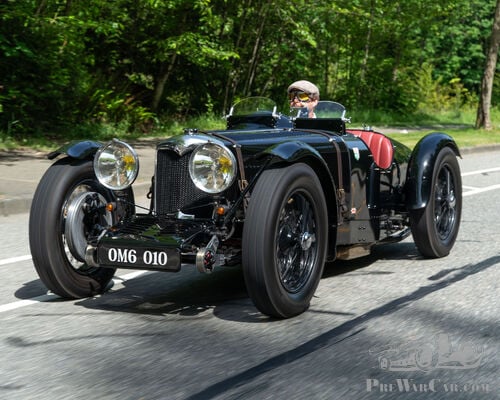
Riley 14/6 Special 1933
The ExperienceStep into the golden age of British motoring. This 1933 Riley 14/6 Special is a masterclass in pre-w..
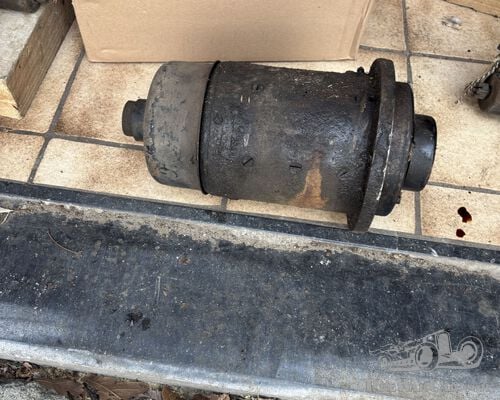
1929 Talbot K74 Limousine – Very comprehensive restoration project
For sale – 1929 Talbot K74 Limousine – Very comprehensive restoration projectAsking price: €19,950 A very rare 1929 Talbot K74..
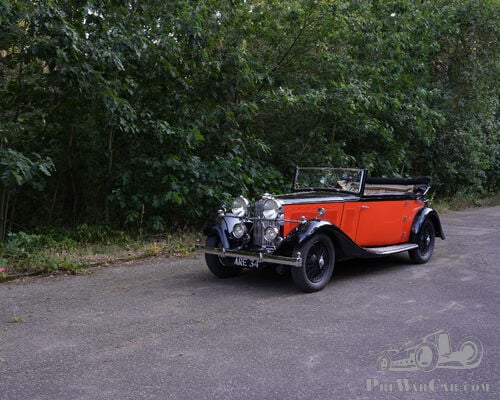
1934 Talbot AV105 Three Position Drophead Coupé
Registration no. ARE 34Chassis no. 35488 Much supporting paperworkRestored exampleVery usa..