The global magazine and marketplace for classic car enthusiasts, by enthusiasts.


Filter
Classic Chalmers, Salmson for sale - Chalmers, Salmson cars for sale
-

1933 Salmson S4C – 1480cc Twin Cam
1933 Salmson S4C – 1480cc Twin Cam AL1100-style coachwork by Ian Pitney Coachworks Salmson’s twin-cam engineering has long attracted those who appreciate clever design wrapped in compact, purposeful machinery. This 1933 S4C is a particularly appealing example — thoughtfully developed over time into a car that captures the spirit of.. -
Salmson S4
For sale is this 1930 Salmson S4. The vehicle is complete and ready for restoration. The engine runs. A second engine, gearbox, and steering gear are available as optional extras. Delivery within Germany is possible after viewing. The price is negotiable. -
Salmson S 4
À vendre : un Salmson S4, transformé en camion utilitaire léger avant 1950. , mécanique tournante , en bon état


Chalmers / Chalmers-Detroit
US, 1908 – 1924
Chalmers Motor Car Co, Detroit, Mich.
The Chalmers was one of the most popular automobiles made in the United States for more than a decade. The Chalmers was the successor to the Thomas-Detroit which was built by a company which had been founded in 1906 by E.R. Thomas (builder of the Thomas car in Buffalo, N.Y.), Roy D. Chapin and Howard Earle Coffin; the two latter had previously served at Oldsmobile. The Thomas-Detroit of which some 500 were sold during the first year of production, was marketed through the parent firm in Buffalo which manufactured a larger line of cars under the Thomas emblem. The Thomas-Detroit was a medium priced four-cylinder car which had been designed by Coffin. In 1907, Hugh Chalmers, vice president of the National Cash Register Co and a noted salesman, entered the firm. Shortly after, he bought a half of E.R. Thomas’ stock and became president of the company which became the Chalmers-Detroit Motor Company. The Thomas-Detroit became the Chalmers-Detroit in 1908 and in 1910, the Chalmers. Open and closed Chalmers models in two lines comprised the Chalmers four-cylinder cars, with self-starters appearing in 1912. Chalmers (as Chalmers-Detroit) had distinguished itself in road races as early as 1908 when W.R. Burns won the Motor Parkway Sweekstakes at Jericho, N.Y., averaging 48.7mph in the six-lap 140.76 mile run.
In 1913, the Chalmers brought out its first 6-cylinder model, as well as the four and apart from small mechanical and design changes, continued both until 1914. The Chalmers four was dropped from the 1915 line, however, and sixes were to be used exclusively in Chalmers until the ending of manufacture. By 1915, some 20.000 Chalmers cars per year were coming off the Chalmers production line and would even exceed that figure before the advent of World War 1. In 1917, an L-head motor replaced the earlier overhead-valve type and on August 4th, Chalmers again headed racing news when Joe Dawson won the 24-hour stock Car Endurance Run at Sheepshead Bay, N.Y. Sales flagged following the end of the war and Hugh Chalmers, always the salesman, and with the realization that a competitor, Maxwell, wasn’t faring well either, arranged to lease his Chalmers plants to Maxwell, using his salesmanship to promote the two concerns and getting the benefit of Maxwell tooling and manufacturing equipment. By the early 1920s, however, many makes of cars were in financial difficulties due to over-expansion and recession, and Walter P. Chrysler was called in to try and reorganize Maxwell. Chrysler was at this time planning his own corporation and in 1922 Chalmers was taken over by Maxwell which had become a Chrysler subsidiary. The last Chalmer cars for sale were equipped with Lockheed hydraulic brakes but 1923 was the last year of Chalmers production with some 9000 units leaving the factories. The Maxwell survived until 1925 when it became the Chrysler Four.
Source: Georgano, encyclopedia of motorcar; KM
The information is written with the greatest of care. However, if you have any suggested amendments please contact us at office@prewarcar.com
Salmson
France, 1921 – 1957
Société des Moteurs Salmson, Billancourt, Seine
Salmson was renowned for their water-cooled (and later air-cooled) radial aero engines, and Salmson entered the car industry by taking out a manufacturing licence for the GN in 1919. 3.000 of these Salmson cars were turned out in two years. The first Salmson cars proper appeared in 1921. These Emile Petit designs had flimsy cyclecar-type chassis with shaft drive and differential-less back axles, with a St. Andrew’s Cross motif on the radiator. The standard engine of the Salmson cars was an odd 1.100cc monobloc four with a single push-rod per cylinder, which also operated the inlet valves as a pull-rod on the Salmson cars. Ignition was by Salmson cars own type of magneto and cooling was by thermos-syphon. This ohv unit worked reasonably well on the Salmson cars at low speeds, gave 45mph and 45mpg, and a two-seater Salmson cars could be bought in England for £265, the price dropping steadily to £158 by 1926. At the same time Petit produced something a far more advanced Salmson cars for the Cyclecar Grand Prix in the shape of a twin-ohc unit of similar capacity with dual magneto ignition and 2-bearing crankshaft: with one of these Salmson cars Lombard won the race, as well as taking 2nd place (behind a GN) in the 200 Mile Race at Brooklands. This was followed by 1st and 2nd places in both these events in 1922 with a Salmson cars, class wins in both the Cyclecar Grand Prix and the first Le Mans 24 Hour Race in 1923, at San Sebastian in 1925, and in both Le Mans and the Targa Florio in 1926. 1927 marked the peak of Salmson cars competition career, with 2nd and 3rd places in general classification at Le Mans (as well as Class and Biennial Cup wins of a Salmson cars), and a 2nd place in the Coupe de la Commission Sportive run under consumption rules.
The Salmson cars firm also built a 750cc engine for the 1923 Cyclecar Grand Prix – the Salmson car won its class but this Salmson car was never produced commercially. Nothing came, either, of Petit’s ingenious 1927 1.100cc twin-blown twin-ohc straight-8 Salmson car with desmodromic valves, said to give 140bhp at 8.000rpm.
Touring Salmson cars progressed to twin overhead camshafts with the advent of the 1.2-litre 10hp in 1922; there was still no differential or front wheel brakes on the Salmson car (though the latter had appeared on the racers), but a starter was standard and quarter-elliptic springs had given way to semi-elliptics. From 1925 onwards the twin-cam 1.100cc sports Salmson cars came into their own, and by 1926 the adoption of a cowled radiator completed the Salmson cars classic outline. There were variations of specification, but all the sports models Salmson cars came with front-wheel brakes, balloon tyres, and differential-less back axles, and ranged from the 3-speed Grand Prix Salmson cars with splash lubrication and 2-bearing crank at £265, giving over 70mph, to the GP Special, which Salmson car had full-pressure lubrication and 4 forward speeds, available in Cozette-blown form at £475. Meanwhile the 10/15 Salmson car had acquired front-wheel brakes, and at the end of 1926 the differential arrived on a bigger 12/24 Salmson car with dynamotor, V-radiator, and a 9ft 4in wheelbase giving room for more commodious coachwork.
The vogue for small French sports cars vanished as quickly as it had come, though Salmson cars once more collected the Biennial Cup at Le Mans in 1928, and the twin-cam sports models Salmson car were still listed in Britain as late as 1931. The arrival of the MG Midget killed what sales there were of the Salmson car, and Salmson, like Amilcar, tried their hand at small luxury machines; a twin-cam 1.6-litre six-cyl Salmson car for 1929 never went into production, but its successor, the Salmson S4, had a longer run. This Salmson car retained the twin-cam engine and 3-bearing crank, magneto ignition, gravity feed, and 3-speed gearbox, but it usually wore saloon bodywork, and the Salmson car was not notably fast for a price of £325. The Salmson car had grown up by 1933 into the 4-speed 1½-litre Salmson S4C with rear tank, which formed the basis for the 12hp British Salmson cars made at Raynes Park from 1934 onward. The 1.6-litre Salmson S4D of 1935 still had a magneto, but featured transverse independent front suspension and a 4-speed Cotal electrically-selected gearbox, and twin-ohc saloon cars in two engine sizes were listed in 1939. The bigger of these Salmson cars beasted 2.3-litres and 70bhp, and had hydraulic brakes. The English price for the Salmson car was £495. The same models Salmson cars reappeared in 1946, when a few 90bhp competition Salmson cars were made with 2.3-litre engine. Over a thousand Salmson cars found customers in 1950, but thereafter the decline was rapid.
A new 2.2-litre Salmson Randonnée model with a light alloy engine and Cotal gearbox came out in 1951, and 1953 produced the Salmson 2300 aerodynamic coupé with half-elliptic instead of cantilever rear springing, wire wheels, and a tuned version of the twin-cam engine giving the Salmson car 105bhp and over 100mph. This Salmson car was made in small numbers until 1957, but a year previously the had been heralded when Renault acquired the factory site. Last of the Salmson cars was a long-wheelbase version of the Salmson 2300 with 4-door saloon bodywork.
Source: Georgano, encyclopedia of motorcar; MCS
The information is written with the greatest of care. However, if you have any suggested amendments please contact us at office@prewarcar.com


Featured
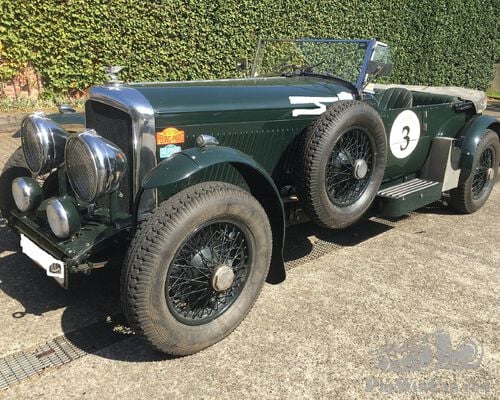
Bentley Derby Special Open Rally Car
This Bentley Derby, manufactured in 1935, has been rebuilt into a short and long-distance rally car. Full rebuilt engine in 2021, Since 2021 low mi..
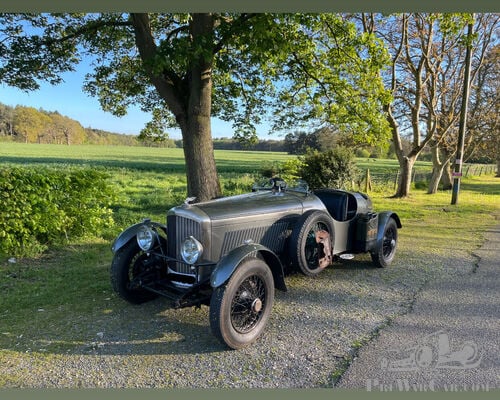
Derby Bentley Special 4-1/4
Sadly i am having to sell on my Bentley special ( Icarus). It is currently a work in progress and still needs finalising/ refining. A great o..
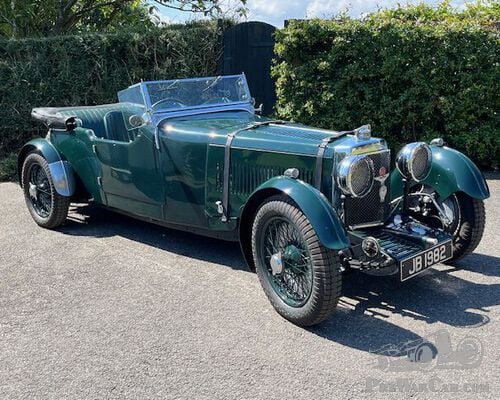
1933 Aston Martin Le Mans
Exceptional 1933 Astron Martin Le MansOriginally bodied as a Standard (Chassis No. L2/222), this unique vehicle was thoughtfully re-bodied i..