The global magazine and marketplace for classic car enthusiasts, by enthusiasts.


Filter
Classic Schaudel Motobloc for sale - Schaudel Motobloc cars for sale
-

Talbot 110 / 105 Special
1937 TALBOT 110 / 105 SPECIAL Registration: DYE 64First registered in May 1937 as a Talbot 110 Saloon, bought in 2004 by current owner as a “rolling Chassis”. Subsequently rebuilt over a period of several years as a Sporting Talbot 2 seat special.The original 110 chassis was shortened to 9 foot and a completely new 2-seater body bu.. -
1924 Rolls Royce Silver Ghost Barrel sided tourer.
1924 Rolls Royce Silver Ghost Barrel sided tourer. Chassis Number: 100RM Registration Number: HC4713 100RM started life with a Cockshoot body but was subsequently rebodied as a barrel sided tourer as we find it today. This has for some years been the personal car of noted .. -
1937 Wolseley 18/80 Salon De Ville
1937 Wolseley 18/80 Salon De Ville Chassis Number: 218/2658 RegistrationNumber: TFF693 A Star of the Dad's Amry film with Catherine Zeta Jones at the wheel; This Delightful Woleseley has had a major body off restoration. This is a car capable of running easily at modern tr.. -
1937 Lagonda LG 45 Special
Lagonda LG 45 Sport Special, year 1937. Chassis number 12158G10, engine number 12153, original UK registration number BKU999. Colours: Dark blue bodywork, silver wire wheels combined with a dark brown leather interior finished with dark blue carpet. Black cloth hood and hood cover. This fantastic Lagonda LG45 .. -
1928 Bentley 6.5 Litre Uprated to full Speed Six specification
1928 Bentley 6.5 Litre Chassis No: TW 2705 Engine No: BR 2359 UK Registration No: YU 9651 Uprated to full Speed Six Specification in 1978/84 with a VDP style tourer body by Roger Cook. Extensive history in recent years with records of considerable mechanical work, a full engine overhaul with Phoenix con-rods. Fitted with an 8 Litre block and ove.. -
1940 Derby Bentley 4.25 Litre Park Ward overdrive MX saloon.
1940 Derby Bentley 4.25 Litre Park Ward overdrive MX saloon. A very late production car being the 12th from last example produced before production ceased. Unusually it was registered on the extra day of a leap year in 1940. This car has been in the current ownership for the last 20 years with a titled Lord whom's c.. -
Rolls-Royce Phantom III 1937 Sports Saloon by Gurney Nutting
Sable with Sand sides and Tan Ostrich hide upholstery. Unique and exceptionally elegant coachwork to design 216. One family owner since the late 1960’s and fully restored with little use since. Originally owned by the founder of the Music Corporation of America. Fitted with a sunroof. Chassis number 3BT35. -
Rolls-Royce Phantom II Continental 1932 Sports Saloon by Park Ward
Black with Beige hide upholstery. Very elegant and sporting coachwork. Current ownership since 1998. Restored to a high standard and completed in 2007. Recent mechanical work carried out by P & A Wood. Excellent condition and ready to be used and enjoyed. The car has a full set of original tools and many spare parts. Chassis number 98MS. -
Bentley 4 1/4 litre 1937 3 seat All Weather Tourer by James Young
Black and Grey with Black hood and Dark Blue hide upholstery. Unique original coachwork designed to be more in the vintage Bentley style. Made as a 3-seater with the rear compartment used for either a sideways seat or luggage. The original owner, Mr Hal Hill, kept the car until the early 1960’s and the owner from 1964 kept it until 2013 when .. -
Wolseley Hornet - 1935
This beautiful Wolseley Hornet began life as a closed saloon. in 2009, the car was extensively restored in Germany by a marque specialist. During the restoration, the saloon body was replaced by an old ‘Daytona’ body fromt Eustace Watkins (London, UK), which was also fully restored. The Hornet is powered by the original (rebuilt) and very smooth..


Schaudel-Motobloc
France, 1902 – 1930
(1) G. Carde, Fils et Cie, Bordeaux
(2) SA Motobloc, Bordeaux
The Schaudel of 1898, which became the Schaudel-Motobloc car, featured unit construction of engine and gearbox, the earliest known instance of this form of design and the reason for the name Motobloc. Furthermore, the change-speed gears of the Schaudel-Motobloc car were actually in the crankcase. The power unit of the Schaudel-Motobloc car was a transversely-mounted, inclined twin with chain drive. This odd little voiturette Schaudel-Motobloc car survived until 1904, after which the Schaudel-Motobloc car was perpetuated only as a van chassis, and a conventional vertical 4-cylinder engine – still made in unit with the gearbox – was substituted. This was a highly efficient unit for the Schaudel-Motobloc car that soon acquired overhead inlet valves, and it was also very smooth, thanks to the positioning of the flywheel between the two parts of cylinders. A mid-mounted flywheel was also used in the 6-cylinder engine of 1909 and on all Schaudel-Motobloc car models throughout the 1920s. Only fours Schaudel-Motobloc cars were made up to 1927, ranging from 1.327cc to 3-litres in capacity. Independent front suspension was introduced on the Schaudel-Motobloc car in 1928, and the 1929/ 1930 Schaudel-Motobloc car range consisted of a 9CV, 1.453cc four, and two sixes, a 10CV (1.683cc) and a 15CV (3.013cc).
Source: Georgano, encyclopedia of motorcar; TRN
The information is written with the greatest of care. However, if you have any suggested amendments please contact us at office@prewarcar.com



Featured
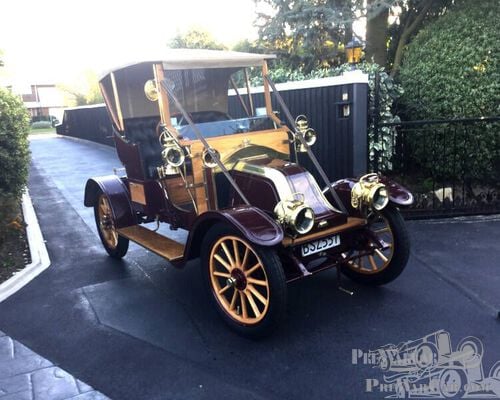
Renault /AX 1913 - named Gigi
Purchased fully renovated from New Zealand and imported to the UK. We have owned her for over10 years. Gigi is currently living in France where she..
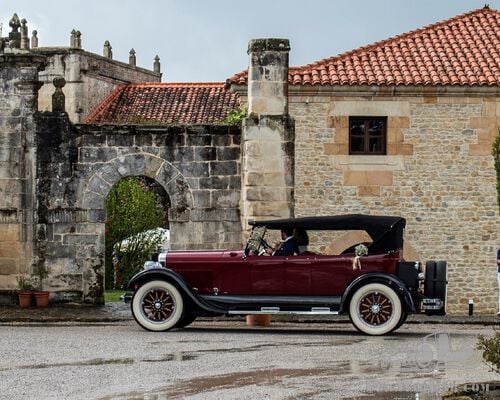
1925 Lincoln Model L Phaeton by Brunn - Excellent provenance
Retaining its original matching-numbers engine and chassis (both numbered 24576), the car benefits from an extensively documented history and..
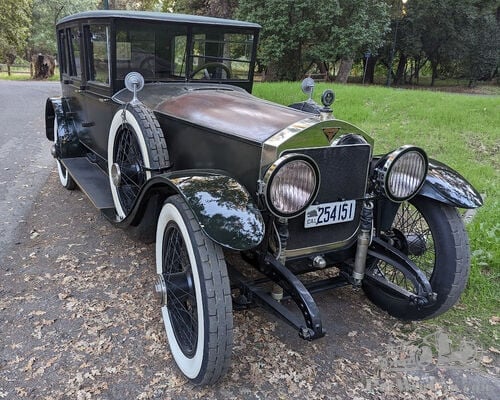
1916 Simplex, Crane model 5
1916 Simplex, Crane MODEL 5CUSTOM MADE HISTORIC PRESERVATION VEHICLE – READY TO TOUR!This Simplex recently completed th..