The global magazine and marketplace for classic car enthusiasts, by enthusiasts.


Filter
Classic Plymouth, Singer for sale - Plymouth, Singer cars for sale
-

SINGER JUNIOR SPECIALE
Entièrement restaurée - Moteur 972 cm3 - Arbre à came en tête - Chaîne de distribution - Boîte 4 - Batterie 6 volts - Bon état général - Carte grise collection. + lot de pièces détachées trés importantes (roues, moteurs...) -
Singer 12 HP DHC Drop Head Convertible
Singer 1938 Twelve Drop Head Convertible sold new for 279 GPB in 1938 This Singer DHC was the Singer company top line model. Technical specifications 11.4 HP 1525 cc four cylinder OHC engine with four speed gearbox and semi elliptic leaf springs front and rear. with a wheelbase from 8 feet and 7 inch. This Singer has been owned by the last.. -
1934 Singer Nine Popular Saloon
1934 SINGER Nine Popular Saloon This car was mechanically fully restored by the previous New Zealand owner The entire chassis, suspension, steering, axles, brakes and wheels have all been done. Also the 948cc engine and gearbox have been worked on. The body is straight and basically in good condition but would benefit from a repaint in the.. -
1939 Singer Nine Tourer
1939 Singer Nine Tourer Chassis Number: J26357 Registration Number: RN7457 A very early example of the Singer Nine Tourer. Beneficiary of a near £4,000 engine refresh in 2021. Finished in light blue over grey with a navy blue reupholstered interior. -
1940 Plymouth P10 Deluxe Convertible Coupe | RM Sotheby's | The Hershey Auction
Sold | $43,680 USD One of 6,986 Deluxe Convertible Coupes produced for 1940Benefits from an excellent rotisserie restoration under previous ownershipL-head inline six-cylinder engine; three-speed manual with overdriveWonderfully presented in Boatswain Blue over red leather Richly appointed with a remark.. -
1932 Plymouth Model PB Sport Roadster | RM Sotheby's | The Hershey Auction
Sold | $22,400 USD One of just 2,163 Sport Roadsters produced for 1932Final year for Plymouth's original Silver Dome four-cylinder engineEquipped with dual side-mounted spares, rumble seat, and folding rear luggage rackOne of Plymouth's most attractive and desirable pre-war open body styles By 1932, ..


Plymouth
US, 1928 to date
Chrysler Corporation, Detroit, Mich.
The 4-cylinder 21hp Plymouth car appeared in 1928 at a list price of $725 for a sedan. This Plymouth car replaced the earlier 4-cylinder Chryslers and represented a serious challenge for Ford and Chevrolet in their lowest price class. The Plymouth car had side valves, internal-expanding hydraulic brakes and ribbon-type radiator and gave the Plymouth car a close resemblance to the 1928 Chryslers and De Sotos, and Plymouth cars sold over 100.000 in its first year, even improving its sales position in the bleak economic climate of 1932. Plymouth cars adhered to four cylinders until 1933, when the Plymouth PD-series 6-cylinder was listed at less than $600. 1934 de luxe models of Plymouth cars had independent front suspension, but this was dropped after a year and did not reappear for some time on Plymouth cars. The standard engine in the later 1930 Plymouth cars had a capacity of 3.3-litres, rather smaller than that used in comparable Chevrolets and Fords: a small-bore 2.8-litre version Plymouth car was made for export up to 1939, but the name Plymouth was not usually found on Plymouth cars sold in England, which were nominally Chrysler Kew and Wimbledon sixes. After World War 2 evolution followed that of other Chrysler Corporation cars closely, the old-fashioned styling losing the Plymouth car division its long-held third place in American sales to Buick. Further, Plymouth cars retained the L-head six as its staple power unit right up to 1955, when Flight Sweep versions were introduced with over-square ohv V8 engines on accepted American lines in a variety of powers from 157 to 177bhp. The capacity of these Plymouth cars had 4.3-litres, while the six, now of 3.8-litres, remained available. These 1955 Plymouth cars were lower and longer than their predecessors and could be obtained with synchromesh, overdrive or automatic gearboxes.
The Plymouth Fury models of the ensuing decade represented a breakaway from the traditional Plymouth stolid family car, while the Plymouth Car Division was also responsible for Chrysler’s contribution to the compacts, the Plymouth Valiant launched for 1960. This Plymouth car had rather more European styling than its competitors, with a dummy spare-wheel moulding on the tail; interesting items of specification were the unitary construction of the Plymouth car, alternator ignition, and inclined in-line 2.8-litre ohv 6-cylinder engine. The influence of the Plymouth GT car on America resulted in the Plymouth Barracuda of 1965, a fastback coupé using the Valiant’s 8ft 10in wheelbase and a 4½-litre V8 power unit. Plymouth cars, like Ford and Chevrolet, was aiming at comprehensive coverage of the low and medium price market in 1966, with the compact Plymouth Valiant, the sports-compact Plymouth Barracuda, the medium-sized Plymouth Belvedere, the full-size Plymouth Fury, and the luxurious ‘VIP’ 4-door hardtop Plymouth car, offered only with a 5.2-litre V8 engine and selling for $2.930. An increasing emphasis on sporting Plymouth cars was detectable by 1968, when in addition to the established Barracuda there were two other sports coupés Plymouth car, the Plymouth GTX and the Plymouth Road Runner. All three Plymouth cars were available with 4-speed manual gearboxes and the 6.981cc 425bhp hemi-head V8 also used by Dodge. In 1970, when Valiant prices started at a low $2.172, there was also a Valiant sports coupé, the Plymouth Duster.
In 1971 Plymouth car company added a sub-compact to their Plymouth car range when they offered the 1½-litre Hillman Avenger as the Plymouth Cricket. The 1972 range of Plymouth cars embraced the Valiant on a 9ft wheelbase, the Barracudas and Satellites, and the full-size Furys with V8 engines and automatic transmission as standard. Engines in the Plymouth cars ranged from the Valiant’s 3.2-litre and 3.7-litre sixes up to the largest Chrysler unit, a V8 of 7.210cc. Electronic ignition was offered on the costliest Barracuda model. Casualties of new Federal regulations were the hemi-head engine and convertibles, and the same range Plymouth cars with minor improvements, among them manually-operated sun roofs, was offerd in 1973.
Source: Georgano, encyclopedia of motorcar; MCS
The information is written with the greatest of care. However, if you have any suggested amendments please contact us at office@prewarcar.com
Singer
GB, 1905 – 1970
(1) Singer & Co Ltd, Coventry, Warwickshire, 1905 – 1936; Birmingham, 1927 – 1936
(2) Singer Motors Ltd, Coventry, Warwickshire, 1936 – 1956; Birmingham, 1936 – 1956
(3) Singer Motors Ltd, Ryton-on-Dunsmore, Warwickshire, 1956 – 1970
The Singer cycle firm acquired the manufacturing rights of the Perks and Birch motor wheel in 1901, and made front-wheel drive Singer tricycles as well as motor bicycles. These gave way to a line of conventional Singer tricars, which were still available as late as 1907 with water-cooling, wheel-steering and 6hp and 9hp engines. Car production started in 1905 with a 15hp 3-cylinder Singer car designed by Alex Craig, and made under licence from Lea-Francis. This Singer car had horizontal cylinders with overhead camshafts and 30in connecting-rods, and final drive was by chain. 2-cylinder versions Singer cars were also made, but the beginning of a new line Singer cars came with a conventional 2.4-litre 4-cylinder in 1906: an experimental 6-cylinder engine was exhibited in a Singer car, but not offered for sale. Only orthodox Singer cars with front vertical engines were listed in 1907, the smaller ones (a short-stroke 900cc twin Singer car, a 1.4-litre 3-cylinder, and a 1.8-litre 4-cylinder) having T-head White and Poppe power units, the larger fours Singer cars of 2.4-litres and 3.7-litres using Aster engines. Thereafter White and Poppe engines were standardized in Singer cars, and in 1909, when the Singer car company was reorganized, there was a 2.5-litre Singer sixteen with 3-speed gearbox and all brakes on the rear wheels, this Singer car selling for £380. L-head fours of 2.6-litres and 3.3-litres were introduced on Singer cars for 1911, in which year the biggest Singer car had worm drive, Sankey steel detachable wheels were featured, and the circular motif in the radiator core was discarded. The White and Poppe-powered Singer cars had quite a brisk performance, G.O. Herbert’s ‘Bunny Junior’ being capable of 3.000rpm, and wresting the Brooklands 16hp class records from Coatalen’s Sunbeam, while a modified 15hp Singer car with lengthened stroke and overhead inlet valves ran in the 1912 Coupe de l’Auto. This year saw the introduction of Singer cars first best-seller, the 1.100cc L-head Singer Ten with pair-cast cylinders and 3-speed gearbox in unit with the back axle. Though qualifying as a cyclecar in terms of weight, the Singer car was in fact one of the first modern baby cars, and sold for £185: Haywood’s tuned Singer car put 72 miles into the hour at Brooklands, and the fortunes of the Rootes brothers’ motor business were founded on the sale of this Singer car. The following year Singer cars own engines spread up the range with a new monobloc 2.4-litre fourteen, this Singer car was available with electric lighting, and fitted with Singer-made shock absorbers. By the outbreak of World War 1 only the big 20hp Singer cars retained the White and Poppe unit, and very few of these Singer cars were made. Singer motorcycle manufacture ceased in 1915, and the few Singer Tens being made to civilian account had a new rounded radiator and electric lighting. Singer Tens were also supplied to the Armed Forces during the war.
The first post-war 1 years saw for Singer cars a concentration on the 10hp model, now with full electrics, but otherwise little changed. A 60mph sports version Singer car cost £500 in 1920, and 33bhp was claimed from a racing Singer car which ran in the 1921 200 Mile Race. In 1922 the gearbox was placed amidships, and by 1923 the Singer car had been completely redesigned with an ohv monobloc engine and unit box. For one reason only (1923) a cheapened Singer car was offered under the Coventry-Premier name, this being a motorcycle and cyclecar concern which the Singer car company had acquired in 1921.
It was in 1921 that a trend towards a complicated Singer car range began which was to bring about the Singer car firm’s subsequent financial difficulties, though in 1928 Singer cars ranked third behind Morris and Austin among all-British private-car manufacturers. Their first production six Singer car was available in 1922, this Singer car being a long-stroke 2-litre with side valves, thermos-syphon cooling, magneto ignition, 3-forward speeds, spiral bevel final drive, and disc wheels, selling for £675. 4-wheel brakes were optional on this Singer car model in 1924, and had spread to the Singer Ten two years later, and a smaller 1.8-litre ohv power unit was introduced in a Singer car in 1927. Also in 1924 fabric bodies were listed for Singer cars, though curiously enough Singer cars avoided these during the late 1920s when fabric was fashionable. By 1927 also the Singer Ten had grown up into a 1.3-litre Subger Senior with plate clutch, and a new and very successful baby Singer car had come on the scene in the shape of the 848cc ohc Singer Junior, initially this Singer car was with 3-speed gearbox and brakes on the rear wheels only. The Singer car was a roomy four-seater with 4 doors, a 7ft 6in wheelbase, and a price of only £418.10s., and this Singer car was made until 1932, as well as being the ancestor of all Singer car models up to the Rootes takeover in 1956. 1928 brought the abandonement of cone clutches in Singer cars, the provision of 4-wheel brakes on the Singer Junior, and the introduction of an improved 42bhp 1.9-litre ohv six with a 7-bearing crankshaft. There was also a short vogue for fully convertible saloon Singer cars with wind-down roofs. 1930 Singer cars had wire wheels and coil ignition, but things became impossibly complicated for Singer cars in the 1931-1933 period, when the Singer car marque went in for ribbon radiator shells, not to mention the ‘Kaye Don’ six with waterfall-style radiator grille and twin carburetors, selling for £480. Eight models Singer cars were listed in 1932: the Singer Junior with 4 speeds and rear tank, a 972cc Singer Junior Special version destined to grow up into the Singer Nine, both Singer cars with overhead camshafts, a sv 1.3-litre 4-cylinder Singer Ten, and four 6-cylinder Singer cars ranging from a short-lived 1½-litre sv 12/6 at £235 up to the big ohv push-rod Singer Kaye Don. Hydraulic brakes were standardized on all Singer cars but the biggest six in 1933, when the first 972cc sports Singer Nine was introduced; these Singer cars challenged MG and did very well in reliability trials, which suited their rather low gearing. In standard form the Singer car offered 70mph and 5.300rpm for £185, though even the 4th place (and best-placed British car) by a Singer car in the 1937 TT failed to make up for the catastrophe of the 1935 race, when the whole Singer car team was eliminated by spectacular steering failures. This unfortunate affair also sounded the death-knell of an excellent 4-bearing 1½-litre sporting six Singer car introduced during 1933.
The permutations went on. Singer cars own ‘perm-mesh’ clutchless change came in 1934, in which year there was also a 1½-litre ohc Singer Eleven with independent front suspension and fluiddrive transmission at £245. This Singer car could be bought with a fullwidth aerodynamic saloon body known as the Airstream. All 1935 Singer cars had ohc engines, fluidrive and independent front suspension being applied also to the de luxe 9hp saloon Singer car and the 2-litre 6-cylinder Singer car model at the top of the range. In 1936 there were six modelsof Singer cars, cheapest of which was the 9hp Bantam Singer car with 3-speed gearbox, electric pump feed and 12-volt electrics, looking very like the Morris 8, and competitively priced at £120 for open models. Enevitably another reorganization of the Singer car company followed, and more models. A 42bhp Singer Twelve with an engine of just over 1½-litres’ capacity sold for £225, this Singer car had an X-frame, and market a reversion to the beam front axle, but a similarly-powered sports model Singer car was almost stillborn, and after 1937 there were no more true sports Singer cars or 6-cylinder models. Instead, a 1.2-litre Singer Ten with the option 3 or 4 forward speeds was listed for 1938 at prices from £168.10s. up, and the Singer car company’s confidence in its ohc power units was reflected in the issue of a bore guarantee with the 1939 Singer cars. The Singer Nine (now of 1.074cc) reverted to mechanical brakes, and a semi-sports roadster style was offered as an alternative to the saloon Singer car on this chassis. 1.100cc and 1½-litre engines were supplied to HRG, who continued to use Singer car power units for the rest of their series-production career.
After World War 2 Singer car production was concentrated at the Birmingham works (opened in 1927), and Singer re-introduced their pre-war types. In 1948, however, the saloon Singer cars were replaced by a full-width, slab-sided 1½-litre model, the Singer SM 1500. This Singer car retained a separate chassis, and featured column change, hypoid final drive, and coil-spring independent front suspension. At £799 the Singer car was more expensive than its rivals, and sales of Singer cars slumped once the era of the seller’s market came to an end. Neither this nor the improved 1951 1½-litre roadster Singer car, also with independent front suspension, could compete against the big manufacturers. None of the Singer car company’s subsequent innovations – the option of twin-carburettor power units in 1953, experiments with a fiberglass-bodied roadster in 1954, or the Singer Hunter saloon of 1955 with conventional radiator grille, fiberglass bonnet to and (on paper, at any rate) a rather expensive twin-ohc engine as an alternative – could save the day for Singer cars. Early in 1956 Rootes Motors purchased Singer car company, and by the end of the year the Hunter had been replaced by a Hillman Minx-based Gazelle retaining Singer’s 52bhp ohc engine. Even this last vestige of the old days had been phased out of production by the end of 1958, and since then the name of Singer cars had been carried by de luxe variants of the basic Hillman types, acquiring such Hillman improvements as optional automatic transmission in 1960 and hypoid final drive in 1961.
At the beginning of 1970 the Singer car range consisted of the rear-engined ohc Chamois (Imp), and the 1.469cc Gazelle and 1.725cc Vogue, both members of the Arrow family corresponding to Hillman’s Minx and Hunter. All these disappeared soon afterwards as part of the rationalization the Chrysler Corporation imposed on the old Rootes Group.
US, 1915 – 1920
Singer Motor Co Inc, Mount Vernon, N. Y.
The Singer car was the successor to the Palmer-Singer car, which had been produced since 1906, and was one of the finest and most expensive luxury cars manufactured in America in its few years of existence. Distinguished by a sharply pointed radiator and a wide choice of custom bodies from leading coachbuilders, the Singer cars produced between 1915 and 1919 were powered by a Herschell-Spillman 6-cylinder engine. In 1920, the series HEH20 line of Singer cars was introduced. This series Singer cars, which proved to be the last, had a 12-cylinder Weidely engine. Prices on the last Singer cars were as high as $9.000. Wire wheel were standard on Singer cars.
Source: Georgano, encyclopedia of motorcar; MCS, KM
The information is written with the greatest of care. However, if you have any suggested amendments please contact us at office@prewarcar.com



Featured
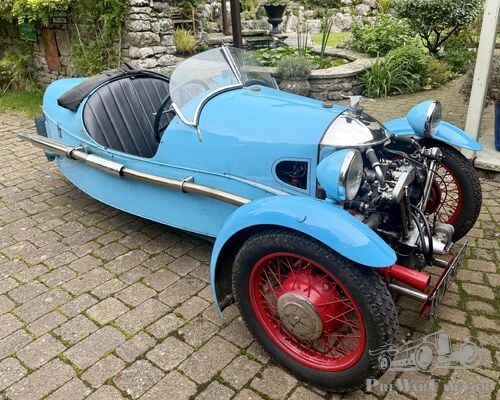
1933 Morgan Three-Wheeler Super Sports, Beetle Back • Show-Specification Car
First registered24 March 1933RegistrationXJ 6336 - original and transferableChassis numberD174Engine numberDTZE 94 H 31..
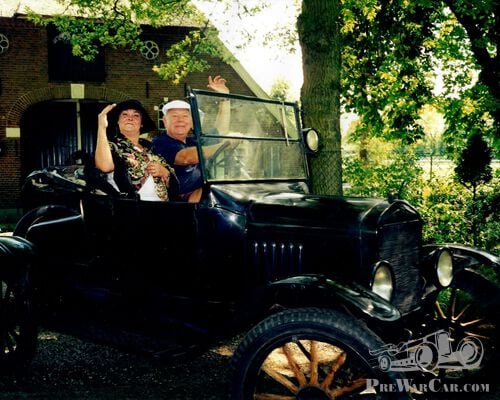
Zeer originele Ford Model T runabout
2 zits cabrio, motor is los, niet gerestaureerd, volledig orgineel, ingevoerd uit california in 1998, van de 2e eigenaar (m'n Oom) die hem van zn b..
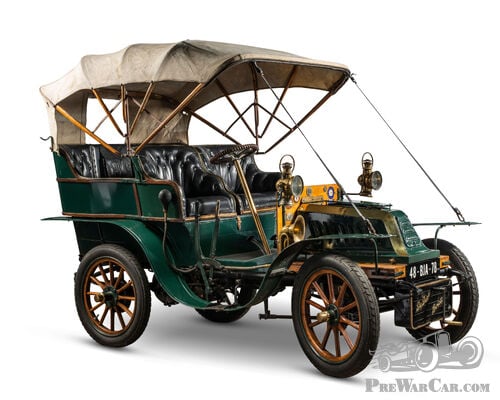
De Dion Bouton Type z in good running condition
De Dion Bouton Type Z from 1905. The car is in good condition, works and runs well. Serie number 36. Engine number 18190. French Carte grise.