The global magazine and marketplace for classic car enthusiasts, by enthusiasts.


Filter
Classic Murray, Stevens Duryea for sale - Murray, Stevens Duryea cars for sale
-

1910 Stevens-Duryea Model XXX Runabout Roadster | RM Sotheby's | The Hershey Auction
Price Upon Request One of only three known surviving examplesPowered by a 318-cid L-head inline four-cylinder engine with three-speed sliding-gear transmission on a sporting 109-in. wheelbaseOutfitted with an electric starter for smoother operationOutstanding provenance, formerly part of the collections of Willi..

Murray
US, 1902 – 1903
Church Mfg Co, Adrian, Mich.
The Murray car was a light runabout on similar lines to the Curved Dash Oldsmobile, built by a former Olds engineer. The Murray car had a 6hp single-cylinder water-cooled engine, epicyclic gearbox and single chain drive. About 1.000 Murray cars were produced before the makers turned to a larger car, the Lenawee.
US, 1916 – 1918
Murray Motor Car Co, Pittsburgh, Pa.
The Murray Eight with its V8 motot and Rolls-Royce style of radiator, was a prestige car of the World War 1 period and the Murray car sold at a reasonable price and had an enviable clientele of owners and enthusiasts. The Murray cars featured both an electric clock and a slanted windshield as early as 1917.
Source: Georgano, encyclopedia of motorcar; GNG, KM
The information is written with the greatest of care. However, if you have any suggested amendments please contact us at office@prewarcar.com
Stevens-Duryea
US, 1902 – 1927
(1) J. Stevens Arms & Tool Co, Chicopee Falls, Mass., 1902 – 1906
(2) The Stevens-Duryea Co, Chicopee Falls, Mass., 1906 – 1923
(3) Stevens-Duryea Motors Inc, Chicopee Falls, Mass., 1923 – 1927
In 1900 J. Frank Duryea, one of the famous Duryea brothers, organized the Hampden Automobile & Launch Co at Springfield, Mass., to build a car called the Hampden. It is unlikely that it was ever built under this name, but late in 1901 Stevens-Duryea joined the Stevens company, a well-known armaments firm, and the Stevens-Duryea car was built by them in the former Overman plant at Chicopee Falls. The Stevens-Duryea car had a 6hp 2-cylinder horizontal engine, tubular frame and two-seater Stanhope body. Starting was from the driver’s seat, and the price of the Stevens-Duryea car was $1.200. A 4-cylinder Stevens-Duryea car was introduced in 1905, and the Stevens-Duryea car company’s first six in 1906. This Stevens-Duryea car was an enormous machine, with a capacity of 9.6-litres. The Stevens-Duryea car had shaft drive and 3-point engine support, and cost $5.000. From 1907 only 6-cylinder Stevens-Duryea cars were made; large, high quality conservative machines whose design changed little over the years. These Stevens-Duryea car were mostly touring and town cars, although a few two-seater roadster Stevens-Duryea cars were made around 1914. The last basically new model Stevens-Duryea car was the Model D of 1915, a 47.2hp six of 7.740cc which developed 80bhp at 1.800rpm. This Stevens-Duryea car was continued as the Model E in 1920, by which time inflation had brought the price for a Stevens-Duryea car as high as $9.500 for a limousine. Production of Stevens-Duryea cars continued until 1924 at about 100 Stevens-Duryea cars per year, and a few Stevens-Duryea cars were still being sold off as late as 1926 or 1927. In its final years the Stevens-Duryea car company was also manufacturing Raulang electric cars and taxicabs.
Source: Georgano, encyclopedia of motorcar; GNG
The information is written with the greatest of care. However, if you have any suggested amendments please contact us at office@prewarcar.com



Featured
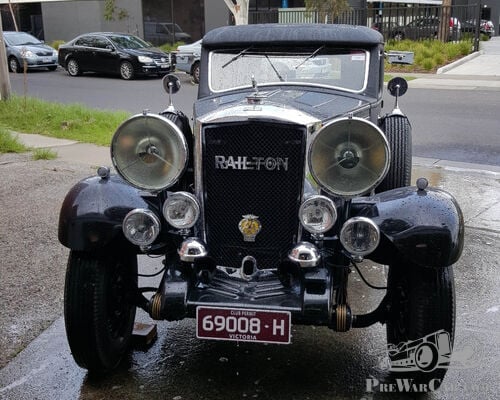
Railton straight 8 sports coupe for rallying REDUCED PRICE run with the bentleys at a fraction of the price
1934 Railton Sports CoupeBuilt for long distance rallyingRebuilt 2017built up at a cost of $160,000AUD, OFFERED FOR SALE AT A ..
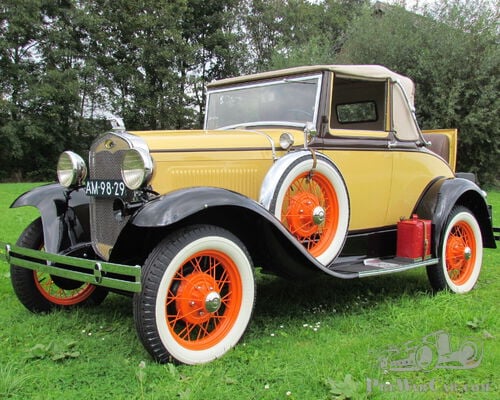
A Ford 68C Cabriolet
A fully restored Ford Model A, finished in its original factory colours and in very good condition. The car recently completed a 2,500-kilometre to..
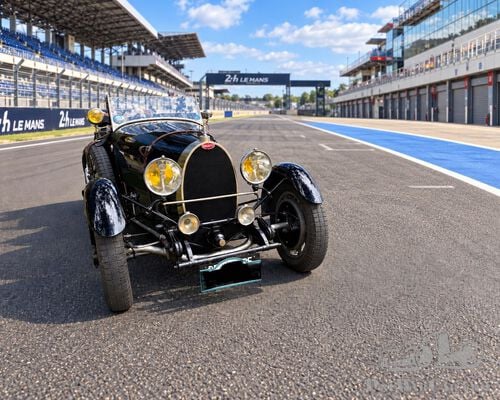
BUGATTI 43 GRAND SPORT
Bugatti Type 43 Grand Sport — Une histoire à poursuivre au volant Certaines automobiles se contemplent avec admiration. D’autres susc..