The global magazine and marketplace for classic car enthusiasts, by enthusiasts.


Filter
Classic Steyr, Stoewer for sale - Steyr, Stoewer cars for sale
-

1924 Stoewer type D3 roadster
Rare opportunity to buy a vintage 1924 Stoewer type D3 roadster in fully restored condition. More than € 50K were spent in 2018 and 2019 on its restoration . Detailed work invoices come with the car. A video can be sent on request . Price € 64000 ex Eibergen Netherlands imported EEC. -
Steyr 120 Super Sedan (1935)
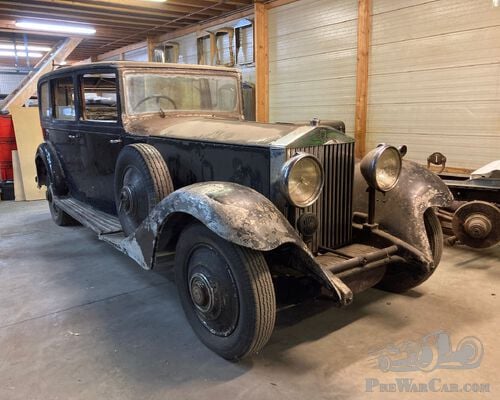
Barn Fine Steyr 120 Super Sedan (1935)This car is in original, never-restored condition.Austrian brand, manufactured by the Austrian company Steyr-Daimler-Puch.It is very complete.Only 120 units were built.The body features a very attractive rear end and two small rear windows.


Steyr
Austria, 1920 – 1940, 1953 to date
(1) Österreichische Waffenfabriks-Gesellschaft AG, Steyr, 1920 – 1926
(2) Steyr-Werke AG, Steyr, 1926 – 1935
(3) Steyr-Daimler-Puch AG, Steyr, 1935 – 1940
(4) Steyr-Daimler-Puch AG, Graz, 1953 to date
As an arms factory Steyr had to look for new employment after World War 1 and put into effect an earlier plan for starting Steyr car production. In 1920 their first Steyr car model appeared under the name of Waffenauto, designed by the famous Hans Ledwinka. This Steyr car had a 6-cylinder 12/40PS ohc engine of 3.325cc capcity. This first model Steyr car laid the foundation fot the excellent reputation of Steyr cars. Ledwinka left the Steyr car company in 1921, but subsequent Steyr car models were based on his designs. The Steyr Type IV was a 4-cylinder 7/23PS 1.814cc. The Type VI Sports was very successful both as a touring and as a sports car; this Steyr car had a 6-cylinder 15/90PS 4.014cc engine, while the VI Klausen sports and racing version Steyr car was powered by a 19/145PS 4.890cc unit. A third place in the 1923 Targa Florio was one of the successes of these Steyr cars. A range of other 6-cylinder models Steyr cars followed, of which the 6/30PS, 1.560cc Type XII Steyr car was notable for its independent rear suspension, though it retained semi-elliptics at the front. In 1929 Ferdinand Porsche, who had returned to Austria after working with Mercedes, was engaged as chief engineer for Steyr cars. His first Steyr car design was the 6-cylinder, 8/40PS, 2.078cc Type XXX. However, Porsche stayed only for one year with the Steyr car company. His last design for Steyr cars was the Steyr Austria, a big 8-cylinder model of 100bhp and 5.3-litres, but this Steyr car only appeared in prototype form. The same bank was giving Steyr cars and Austro-Daimler cars financial backing and they did not want both companies to build large cars. A community of interests was formed between Steyr and Austro-Daimler in 1929, and this led to a merger in 1935. About 500 1.2-litre Opels were made under licence by Steyr cars in 1932, followed by a range of popular models of Steyr car design: the Steyr 100 (4-cylinder, 32bhp, 1.385cc), the Steyr 120 (6-cylinder, 50bhp, 1.990cc), the Steyr 200 (4-cylinder, 35bhp, 1.498cc) and the Steyr 220 (6-cylinder, 55bhp, 2.260cc), now with all wheels independently sprung. In 1936 the Type 50 Steyr car appeared with a 4-cylinder, opposed engine of 22bhp and 984cc. This Steyr car was developed into the 25bhp, 1.158cc Type 55 Steyr car in 1938. These Steyr cars were very popular and economical cars with aerodynamic integral construction, but production of Steyr cars had to cease in 1940 as a result of World War 2, after about 13.000 Steyr cars of the two types had been built.
Production of Steyr cars was not resumed after the war, but from 1949 Fiats were assembled for the Austrian market. In 1953 there was a special version of the 1900 powered by a Steyr-designed 1.997cc engine, available in 65bhp and 85bhp forms, and with a 4-speed gearbox as an alternative to the 5-speed Fiat type. In 1957 the Steyr car company started to make Fiat’s Nuova 500, with revised rear suspension and their own 493cc engine. This evolved into the hotter 650cc 650T and 650TR; the latter Steyr car was good for 85bhp and became amajor force in rallies, gaining the Pole Sobieslaw Zasada the 1966 European Championship. This exciting little Steyr car was not, however, catalogued after 1968, and 1973’s staple offering was the standard Steyr-Puch 500 in 20bhp form.
Source: Georgano, encyclopedia of motorcar; HON
The information is written with the greatest of care. However, if you have any suggested amendments please contact us at office@prewarcar.com
Stoewer
D, 1899 – 1939
(1) Gebrüder Stoewer, Fabrik für Motorfahrzeuge, Stettin, 1899 – 1916
(2) Stoewer-Werke AG vorm. Gebr. Stoewer, Stettin, 1916 – 1939
The Stoewer car factory developed out of the Stoewer ironworks and was among the pioneers of the German car industry. After manufacturing motor cycles, tricycles and quadricycles for two years, Stoewer turned to cars in 1899. The first Stoewer car had a rear-mounted 2-cylinder engine. 4-cylinder Stoewer cars followed in 1901, and electric Stoewer cars were also produced. Best known were the 2-cylinder Type T Stoewer car (2.280cc and 3/12PS), the 4-cylinder Stoewer P4 (3.052cc and 11/22PS), the Stoewer G4 (1.500cc and 6/12PS) and the 6-cylinder Stoewer P6 (8.820cc and 34/60PS), evolved in the 1905-1907 period all Stoewer cars with shaft-drive. The Stoewer B1 of 6/16PS and the Stoewer B6 of 9/22PS which appeared in 1910 were also built by Mathis under licence. The G4 Stoewer car was the basis for the Stoewer B5, which Stoewer car in 1912 became famous by setting up a record at Brooklands with 67.7mph. The new range of Stoewer cars which appeared in 1913 was also based on successful earlier cars. They were the Stoewer C1 (6/18PS), Stoewer C2 (10/28PS) and C3 Stoewer car (6-cylinder and 19/45PS). Shortly before the outbreak of World War 1 the Stoewer car range was headed by the F4 Stoewer car with a 4-cylinder, 8.8-litre 33/100PS ohc engine. After the war an enormous Stoewer car appeared, the Stoewer D7, using a 6-cylinder 11.2-litre 42/120PS aero engine, as well as some conservative sv 4- and 6-cylinder Stoewer cars with rear wheel and transmission brakes. Front wheel brakes appeared on Stoewer cars in 1925. Stoewer introduced 8-cylinder Stoewer cars in 1928. These were the Stoewer Superior, Stoewer Marschall, Stoewer Gigant and Stoewer Repräsentant with engines ranging from 2-litres and 45bhp to 4.9-litres and 100bhp. The Stoewer car firm re-entered the economy class in 1931 with the V5, a front-driven Stoewer car with a V4 1.188cc engine, followed by the front-drive models R140 (1.369cc), R150 (1.488cc) and R180 (1.769cc). Another 8-cylinder was the front wheel drive Greif V8 with a 2.488cc engine, which was replaced by the conventional 6-cylinder 3.609cc Arcona Stoewer car in 1938. In 1934 the 1½-litre 4-cylinder Stoewer car and 2½-litre V8 Stoewer car were shown at the Brussels Salon by Monsieur Dewaet under the name D.S. (Dewaet-Stoewer). The Greif Junior was built under Tatra licence with an opposed 4-cylinder 1.474cc engine. It succeeded the Röhr Junior. In the middle of the range was the Stoewer Sedina with a 4-cylinder engine of 2.4-litres.
Production of private Stoewer cars was given up at the outbreak of World War 2 in 1939. The Stoewer car factory was destroyed during the war and production of Stoewer cars was not resumed.
Source: Georgano, encyclopedia of motorcar; HON
The information is written with the greatest of care. However, if you have any suggested amendments please contact us at office@prewarcar.com


Featured
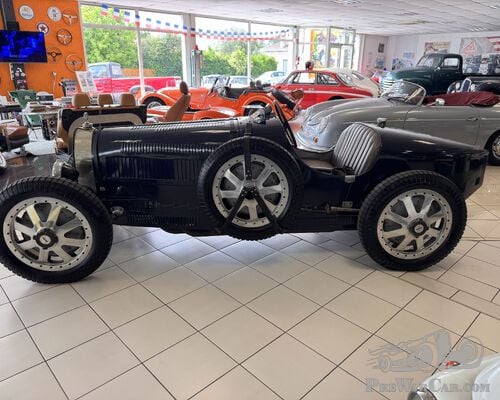
Bugatti 35 B Pur Sang
Bugatti 35 B Pur Sang,importée par un membre délégué de la FFVE il y’a une quinzaine d années.Participation à de nombreux Rallyes Bug..
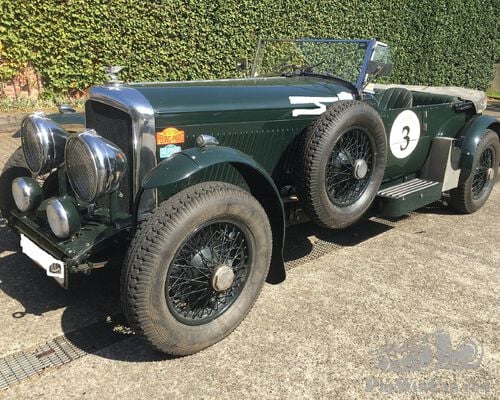
Bentley Derby Special Open Rally Car
This Bentley Derby, manufactured in 1935, has been rebuilt into a short and long-distance rally car. Full rebuilt engine in 2021, Since 2021 low mi..