The global magazine and marketplace for classic car enthusiasts, by enthusiasts.


Filter
Classic Du Pont, Straker-Squire for sale - Du Pont, Straker-Squire cars for sale
-

1929 Du Pont Model G Two-Passenger Speedster by Merrimac | RM Sotheby's | The Monterey Auction
To Be OFFERED AT AUCTION at RM Sothebys' The Monterey Auction event, 13 - 15 August 2026. $800,000 - $1,200,000 USD One of the most beautiful American automobiles of its generationThe 1929 New York International Automobile Show display carOne of three two-passenger “taper tail” models with an external spareOne .. -
1913 Straker-Squire 15 HP 2 seat Tourer | The Ernie Warren Collection Auction | 13th June 2026
Reg No. SD 1726. Car No. 3168.Engine No. 3168.Blue and black with black interior.Beginning in the transport industry making commercial vehicles, Straker Squire produced their first car in 1907. The 15hp was sufficiently merit-worthy to be revived after WWI.It is understood that this example started life as a fo..


Du Pont
US, 1920 – 1932
(1) Du Pont Motors Inc, Wilmington, Del., 1920 – 1923
(2) Du Pont Motors Inc, Moore, Pa., 1923 – 1932
E. Paul du Pont’s company built quality cars in limited numbers, total production being 537 vehicles of all Du Pont types. First of the line was a Du Pont 4.1-litre sv four with their own engine, selling for $2.600, but this gave way to proprietary-engined sixes, initially powered by Herschell-Spillman. The 1925 Du Pont Model D had a 6-cylinder 5-litre Wisconsin engine with overhead valves that developed 75bhp, a constant-mesh gearbox, and Lockheed hydraulic brakes to all four wheels. Its successor, the Du Pont Model E, could be had with a supercharger, but the best-known, and best, Du Pont was the Du Pont Model G speedster introduced in 1928. With its narrow straight wings copied from the Amilcar, Woodlite headlamps and grille concealing the radiator, the last a pioneering feature, the Du Pont Model G was not a good-looking car, but it was a very effective one. Like all the DuPont speedsters it had four forward speeds. The 5.3-litre, sv straight-8 engine, by Continental, gave 114bhp at 3600rpm with catalogued modifications. With the latter, 100mph was guaranteed. In the 1929 Le Mans 24 Hours race the Du Pont Model G proved itself faster than the other American entries, Stutz and Chrysler. Touring bodywork was, of course, available on the Du Pont car, and in 1931 came the long wheelbase (12ft 2 in) Du Pont Model H, built in a Stearns Knight frame. The later Du Pont cars were assembled in the Indian motorcycle factory at Springfield, after E. Paul du Pont had acquired this concern.
Source: Georgano, encyclopedia of motorcar; TRN
The information is written with the greatest of care. However, if you have any suggested amendments please contact us at office@prewarcar.com
Straker-Squire
GB, 1906 – 1926
(1) S. Straker & Squire Ltd, Fishponds, Bristol, 1906 – 1918
(2) Straker-Squire Ltd, Edmonton, London N., 1918 – 1926
The first road vehicles of Sidney straker and L.R.L. Squire were steam wagons, made from 1901, followed by petrol buses. During 1906 Straker acquired the licence to make the Cornilleau-Ste Beuve car from France as the 25hp Straker-Squire- CSB. By mid-1907 a straightforward four Straker Squire car of 16/20hp was being offered under the name of Straker Squire cars. Late that year, a smaller 12/14hp Straker Squire car was added. It was the Straker Squire car company’s first wholly home-grown model, and was at first called a Shamrock, not a Straker-Squire car. The best-known of the pre-World War 1 Straker-Squire cars was certainly the 15hp Straker Squire car of 1910 – 1914, a sporting 3-litre with a 4-cylinder, sv engine and an excellent performance, this Straker Squire car was designed by AHR Fedden. In 1919 a completely new and in some respects very modern Straker Squire car was announced. This Straker Squire car was also a 6-cylinder machine with a capacity of 4-litres, still designated the 20/25hp, but this Straker Squire car had a single overhead camshaft and aluminium pistons, and to ease manufacturing problems, its cylinders were separately cast. The valve gear of the Straker Squire car was exposed. The whole unit of the Straker Squire car resembled the Rolls-Royce Eagle aero engine the Straker Squire car company had made during World War 1. In spite of an old-fashioned appearance, this was a powerful, if noisy engine that gave the Straker Squire car an 80mph performance. Brakes and steering of this Straker Squire car were suitably good. Unfortunately, even when the Straker Squire car went into production in 1921, as the 24/90hp, very few of these Straker Squire cars were made. The pre-war 15hp Straker Squire car was resurrected, and for 1923, a dull little light Straker Squire car with a 1½-litre ohv Dorman engine was added. By 1926 only the 24/90 and the light car remained, both Straker Squire cars came with hydraulic 4-wheel brakes.
Source: Georgano, encyclopedia of motorcar; TRN
The information is written with the greatest of care. However, if you have any suggested amendments please contact us at office@prewarcar.com


Featured
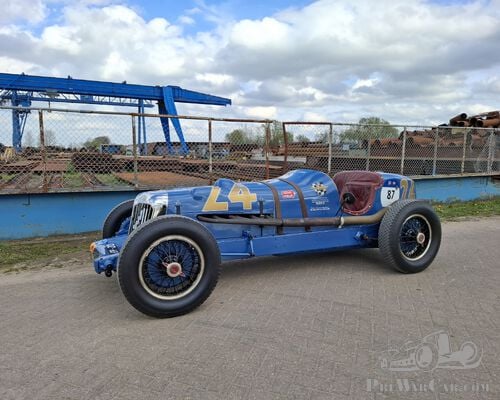
1932 - Graham " Lucenti " Indianapolis
Original participant of the 1932, 1934 and 1935 Indy 500. Best result: finishing 10th overall in the 1934 Indy 500 with driver “Herb” Ardinger...
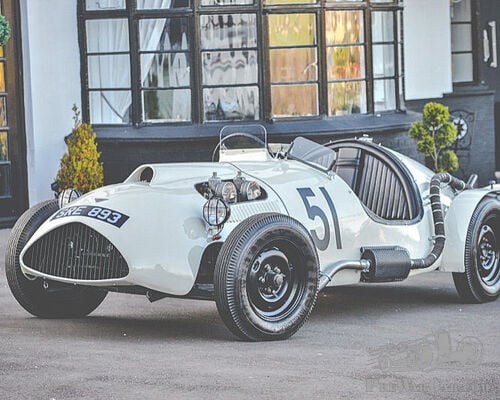
1933 Alvis 3.0 Special - One-Off Alloy Body | Period Competition Car | Featured in “Alvis – A Century of Drivers”
1933 Alvis 3. 0 Special - One-Off Alloy-Body | Period Competition Car | Featured in “Alvis – A Century of Drivers”
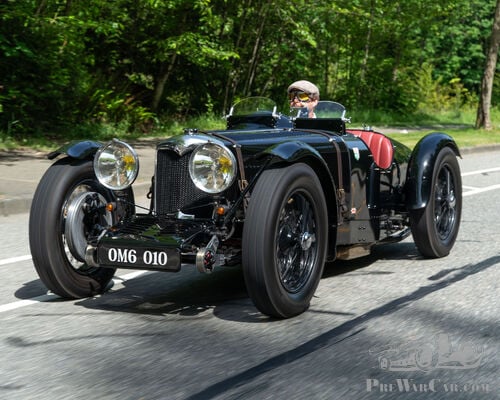
Riley 14/6 Special 1933
The ExperienceStep into the golden age of British motoring. This 1933 Riley 14/6 Special is a masterclass in pre-w..