The global magazine and marketplace for classic car enthusiasts, by enthusiasts.


Filter
Classic Bugatti, Studebaker for sale - Bugatti, Studebaker cars for sale
-

1929 Bugatti Type 37
1929 Bugatti Type 37 Chassis Number: 40579 Registration Number: SL9982 A beautifully built up car with great attention to detail. This car was constructed in the 1970's by a Simon Clopper for european road rallies. It has three original of the 5 important components. This .. -
Bugatti Type 35B - Replica - French registered
Bugatti 35 supercharged version. 35B.Car is a built up Bugatti registered in France. The origin of the main parts are :French : Chassis Frame - Audoly radiator - Firewall and probably Front axle.English : Bodywork obtained from Ivan Dutton. Replica Bosch magneto converted to Electronic but can be revert to original sp.. -
Bugatti Type 40 Coach by Gangloff - 1926 - Original Molsheim Factory
40284 is the 8th 1,5L produced by the Molsheim factory in December 1926. Delivered with engine 318 still in the car today. The car is delivered to Wiederkehr (Gangloff) in June 1927. The car is invoiced to Leon Pierron from Bordeaux together with 38375. He is running the Atlantique Automobile garage and delivers Bugatti in Gironde, Lot.. -
Bugatti 35/51 “Petit Coupé Friderich” - Exceptional Reconstruction - One-of-Model
Specifications:Engine: 8-cylinder, dual-camDog-clutch transmissionFirst registration: January 1, 1927Chassis number: 4775 History:In February 1926, Ernest Friderich, a Bugatti dealer in Nice, had the bold idea of converting a Type 35A into a small closed coupé to enter it in the spring races on th.. -
Studebaker Commander Big Six 1928
A special and very beautiful Studebaker Commander from 1928, also known as the Big Six due to its powerful 5.8-liter 6-cylinder engine.The car was very well restored in the 1970s and subsequently won a senior award at the Hershey car show in 1973. After that, the car was purchased by a collector, well maintained, and used for several rall.. -
1938 Bugatti Type 57 Cabriolet by D'Ieteren | RM Sotheby's | The Monterey Auction
To Be OFFERED AT AUCTION at RM Sothebys' The Monterey Auction event, 13 - 15 August 2026. $900,000 - $1,500,000 USD The only example built in this three-seater, Aravis-inspired design by D’Ieteren of BelgiumBeautifully sculpted and distinctive coachwork with unique featuresRetains many original components, including eng.. -
Bugatti 37 / 35B
Beautiful, well-maintained Bugatti Type 37 / 35B1927 Type 37 chassisType 35B engine retrofitted in 1932.All paperwork and registrations available. Road-legal in Switzerland.TÜV documents and former registration in Germany.Very well maintained and in good mechanical condition.Just get in and drive off...... -
1939 Bugatti Type 57C Cabriolet in the style of Corsica | RM Sotheby's | The Monterey Auction
To Be OFFERED AT AUCTION at RM Sothebys' The Monterey Auction event, 13 - 15 August 2026. $650,000 - $750,000 USD One of the final Type 57 examples builtEquipped with its matching-numbers engineOwned early in its life by famed Ecurie Ecosse sponsor and esteemed collector Maj. Edward G. ThomsonBenefits from exte.. -
1936 Bugatti Type 57 Atalante
1936 Bugatti Type 57 Atalante. We have two available, both with european papers. Both are fully matching numbers with complete history from day one. Qualified principals please call Richard Biddulph 0044 7967 260673 for full details. -
Bugatti Type 22 1920
1920 Bugatti type 22 ,16 valve Car number 922Delivered 12th October 1920 to Jarrot and Letts, LondonAn exceptional opportunity to acquire an early Bugatti with great provenance within New Zealand.922 holds a unique place in New Zealand Motoring history, being the first Bugatti imported into New Zealand. It arri..


Bugatti
D:F, 1909 – 1956, 1956 to date
Automobiles E. Bugatti, Molsheim, Bas-Rhin
Ettore Bugatti was perhaps the greatest maker of racing cars until his fellow Italian Ferrari began to dominate the scene in recent years. Born into an artistic family in Milan, Bugatti soon found that the graphic arts were not to his liking and turned to the mechanical. Drawn by speed and racing, at the age of 18 Ettore Bugatti attracted attention in early motorcycle and tricycle races in Northern Italy, enevitably applying his mechanical talent to the improvement and alteration of the machines.
In 1900, at the age of 19 he embarked on the design and production of his own Bugatti 4-cylinder, 90 x 120mm car with the help of Count Gulinelli, and won a medal for it at the Milan Exhibition in 1901. Baron de Dietrich who was attracted by the Bugatti machine and who was searching Europe for designs to produce at his Niederbronn works, signed an agreement with Bugatti to design for him. Bugatti moved to Niederbronn in 1902 to produce in the next two or three years a basic design of 4-cylinder, 114 x 130mm chain-driven chassis with variations, sold commercially as the De Dietrich-Bugatti, or in England as the Burlington, and occasionally raced by Bugatti himself. Engine dimensions varied, as was customary in those days, and larger engines were also listed.
De Dietrich was offering other designs at the same time, particulary the Turcat-Méry, and Bugatti’s car was not a commercial success; the arrangement came to an end around 1904, and Bugatti teamed up with Mathis, moving to Strasbourg, the district where Ettore was to remain for the rest of his active career.
The Mathis collaboration produced the Hermes car, which bore a strong resemblance to the earlier De Dietrich design, certainly in conception – 4 large cylinders, 4-speed gearbox, chain drive, semi-elliptic springs – but by now it had a modern type of radiator with a surrounding shell to replace the earlier exposed film type.
In 1906 Bugatti and Mathis fell out and separated, Bugatti going to the Deutz factory at Cologne to design and produce cars for them. Two chassis were produced, the first another typical 4-cylinder layout with an engine of 145 or 150 x 150mm and chain drive, and later a smaller 92x120mm car with, for the first time Bugatti’s design, a shaft drive.
During this period (about 1908) Bugatti produced at his own expense (and, it is said, in the cellar of his home at Cologne) the miniature Bugatti chassis, with a 4-cylinder, 60x100mm engine, and shaft drive which founded the thoroughbred line of his designs and enabled him later to produce his own car. This prototype (Type 10 in the Bugatti series) is still in existence.
There is at least some evidence that the creation of this Bugatti car owes something to the 1908 Coupe des Voiturettes Isotta Fraschini; it is more than likely that Bugatti saw and was inspired by these beautiful little cars. There is certainly no evidence that the Isotta Fraschini cars owe anything to Bugatti, and their designer Cattaneo has denied the suggestion. The overall conceptual similarity is, however, striking.
Whatever the origins of his thoroughbred, Ettore Bugatti found a backer who would help him to start up production of his own car at the end of 1909, in a disused dye work at Molsheim a few miles west of Strasbourg. Here production was started of the real Bugatti car, with 4-cylinder, 65x100mm, 1327cc and 2 valves per cylinder operated from an overhead camshaft with curved, sliding tappets and three chassis lengths; Bugatti Type 13 with a 6ft 6¾in wheelbase,the Bugatti Type 15, 7ft 10½in, and the Bugatti Type 17, 8ft 4½in and reinforced back springs for heavy bodywork.
Output was a few cars in 1910, but the Bugatti car caused a great deal of favourable comment at the 1910 Paris Salon, and in the early speed events it was entered in; commercial success, in spite of a high price, came immediately and several hundred Bugatti cars had been produced by 1914. During this period Bugatti also sold a licence to Peugeot for an 850cc Baby car(Peugeot Bebe), and kept his interest in large cars by producing a few chassis with a 4-cylinder 5-litre (100x160mm) ohc engine and reverting again to chain drive, for racing. The first chassis went to the aviator Roland Garros and survives as the famous Bugatti Black Bess. Other Bugatti cars competed unsuccessfully at Indianapolis in the 500 mile race in 1914 and 1915.
The early Bugatti 8-valve chassis had conventional semi-elliptic springs and radiators of squarish, 5-sided shape. At the end of 1913, Bugatti introduced his reversed quarter elliptic springs on the two long-length chassis, probably to simplify the fitting of the body: many of Bugatti’s design features show more originality than essential logic. This springs feature was to remain on all Bugatti’s chassis designs produced afterwards. At this time Ettore also introduced his design of oval Bugatti radiator, pearshaped, but later more like an inverted horse shoe.
Just before World War 1 Ettore produced a modified engine for voiturette racing, with 4 valves per cylinder (2 inlet, 2 exhaust), and an enlarged bore (66mm initially, later 68-69mm) giving more power, but the war prevented its use. Molsheim was soon occupied by the Germans and Bugatti found himself spending the next years in Paris working on aero engines.
In 1919 Ettore Bugatti reoccupied the factory himself, finding it happily undamaged, and resumed production of the 8-valve chassis and then the new 16-valve version. Wins at Le Mans in 1920 and at Brescia (1921) in voiturette races once more established his reputation and regular production of the car, now known as the Bugatti Brescia, followed steadily. The long-wheelbase chassis were now known as Bugatti Type 22 (7ft 10½in) and the Bugatti Type 23 (8ft 4½in) but the designation Bugatti Type 13 was retained for the short racing model. Improvements followed such as a crankshaft carried on ball bearings, better crank lubrication, a prettier radiator, and eventually 4-wheel brakes: in spite of these changes the similarity between the last chassis in 1926 and the first in 1910 is striking.
In 1922 Bugatti produced his first 8-cylinder production model, the Bugatti Type 30, with a 2-litre 60x88mm engine, an overhead camshaft and 2 inlet and 1 exhaust valve per cylinder. This 3-valve layout had been seen on the pre-war Bugatti Garros car(Black Bees) and the aero engines. Racing versions were entered in the 1922 French Grand Prix at Strasbourg, Friderich, Bugatti’s faithful mechanic, finishing 2nd. Production continued for the next few years of the 4-cylinder and 8-cylinder cars; an abortive attempt to produce a successful streamlined ‘Bugatti Tank’ with the 2-litre engine was made for the French GP at Tours in 1923 and then for 1924 Bugatti made the successful effort to produce a racing car which combined performance with aesthetic quality – the Bugatti Type 35 was the result.
The new 1924 car had the Bugatti Type 30 engine with its plain bearing crank replaced with a full ball and roller bearing, built-up unit, and a completely new chassis of fine lines carrying a handsome body, and first class brakes inside cast aluminium wheels. Tyre trouble prevented success in its first outing but soon success followed success, culminating in the world championship in 1926.
Although reluctant at first to fit a supercharger as his competitors had, Bugatti eventually in 1926 added one to the car to produce the Bugatti Type 35C (2-litre, 60x88mm), Bugatti Type 35B(2.3-litre, 60x100mm) and Bugatti Type 39 (1.5-litre, 60x66mm). A sports car version (Bugatti Type 35A) used the touring engine, and in 1926 a 4-cilinder (69x100mm, 1.5-litre) engine appeared, similar in layout to the 8-cylinder engine, but with a 5-(plain bearing crankshaft, which when fitted to the GP chassis became the main sports car version (Bugatti Type 37). Later this too had a blower fitted and became very potent (Bugatti Type 37A).
In the period 1926 -1929 a profusion of Bugatti models was listed for sale: racing types T35, T35B, T35C, T39; sports version Types 35A, T37, T37A; the touring model Type 30 replaced with a similar Type 38, later itself replaced by the 3-litre 8-cylinder Type 44 (69x100mm); Type 40 using the 4-cylinder engine from the Type 37; a splendid Bugatti Type 43GP sport four-seater using the Type 35B engine in a long-wheelbase chassis and catalogued as the fastest sports car in the world (110mph) which it was; and to crown all the Bugatti Royale.
The Bugatti Royale (Type 41) was to be Bugatti’s car of kings. It had a 12.7-litre (125x130mm) 8-cylinder engine of typical Bugatti layout producing over 250hp, fitted in an enormous chassis, intended to carry the works of the world’s finest coachbuilders. Although a batch of 25 was projected only six were built and indeed only three were sold (in 1932 – 1933), the financial crisis of 1929 intervening to spoil Bugatti’s plans.
Around 1930 Bugatti continued to produce fine cars mixed with oddities. The Bugatti Type 44 3-litre touring car became the Type 49 with the bore increased from 69 to 72mm, one of the best models. The Bugatti Type 46 5.3-litre with a 3-speed gearbox in the back axle was introduced as a small size Royale and several hundred were produced. A racing Bugatti 16-cylinder (Type 45, 47) was made, having some success in hillclimbs, and later an unsuccessful 4-wheel drive Type 53. The de luxe 5.3-litre had a new twin ohc engine fitted to become the Bugatti Type 50 of 4.9-litres, very exciting and exotic but rather too powerful to be safe, even in the racing version, the Type 54.
The GP Type 35 had a new engine with twin overhead camshafts fitted in 1931 to become the Type 51, a very successful and fine-looking car which was perhaps the most effective racing model Bugatti ever produced, but the search for power and the competition demanded a larger car. Thus in 1933 Bugatti produced the Type 59 3.3-litre racing car which was his last racing production except for specialized single-seaters. Meanwhile a sports version of the Type 51, the Bugatti Type 55, had appeared usually with a roadster body among the handsomest ever fitted to a car.
The touring equivalent of the Type 59, the Bugatti Type 57, was the last Molsheim model to go into production; about 800 T57’s were produced between 1934 and 1939. This had a twin-ohc 72x100mm, 3.3-litre engine, integral 4-speed gearbox, and a conventional Bugatti chassis with semi-elliptic springs at the front and reversed quarter-elliptic at the rear. Later supercharged versions (Type 57C) and sports versions (Type 57S, 57SC) were produced.
Production of Bugatti cars was interrupted by the war, and only sporadic and half-hearted attempts were made ( a few Bugatti Type 101 models were produced) to resume car manufacture after Ettore Bugatti’s death in 1947. In 1956 two Formula 1 GP cars were built. Known as the Bugatti Type 251, they had 2½-litre straight-8 engines mounted transversely behind the driver in a space frame. One was driven by Trintignant in the 1956 French GP at Reims, but retired, and the cars were never heard of again.
Bugatti is now part of the Volkswagen group and is still producing sport cars.
Source: Georgano, encyclopedia of motorcar; HGC
The information is written with the greatest of care. However, if you have any suggested amendments please contact us at office@prewarcar.com
Studebaker
US/ CDN, 1902 – 1966
(1) Studebaker Corp, South Bend, Indiana, 1902 – 1954
(2) Studebaker-Packard Corp, South Bend, Indiana, 1954 – 1964
(3) Studebaker Corp of Canada Ltd, Hamilton, Ontario, 1964 – 1966
The brothers Henry and Clem Studebaker opened a blacksmith’s and wagon-building shop in South Bend in 1852, horse-drawn vehicles of their construction serving in both the American Civil War and World War 1, and production continuing until 1919. Their first Studebaker cars were electrics, made in modest numbers from 1902 to 1912: these Studebaker carwere joined in 1904 by the Model-C petrol Studebaker car, a typically American 16hp flat-twin with amidships engine, 2-speed gearbox, and chain drive. This Studebaker carwas followed a year later by a vertical 4 on more European lines, this Studebaker car was selling for $3.000. For the next few seasons, however, Studebaker electred to act as selling gents for Studebaker cars built to their order, and their more expensive offerings of Studebaker cars were built by Garford of Elyria. The cheaper machines were the EMF and Flanders built by the Everitt-Metzger-Flanders Co, and these two makes accounted for 9.700 Studebaker cars in 1910. 1913 saw a brace of Studebaker cars made at South Bend, both with sv monobloc engines, dual ignition, and electric lighting and starting: the 3-speed gearboxes on the Studebaker cars were mounted in unit with the back axles, and the 6-cylinder Studebaker car was claimed to be the first such car to retail in the USA for less than $2.000. In 1914 there was a smaller, 15/20hp Studebaker car with 3.2-litre 4 with coil ignition only. Studebaker sold over 45.000 Studebaker cars in 1915, and their sixth position in 1916 US sales was matched by a seventh place in 1920. 1919 was the last year for 4-cylinder Studebaker cars, and the 1920 Studebaker cars, while retaining separate gearboxes, abandoned the transaxle layout. Studebaker carmodels available were 6s of 4.7-litres and 5.8-litres, the latter establishing a line of really large 6-cylinder Studebaker cars which survived until 1928. An inexpensive 3.3-litre Studebaker Light 6 joined the range in 1921, and 1923 Studebaker cars had all-metal bodies with welded steel pressings. Balloon tyres were standardized on Studebaker cars in 1925, in which year contracting-type hydraulic front wheel brakes were an option: open Studebaker cars were made with permanent tops of the ‘California’ type and detachable side-curtains. Front wheel brakes were standard on the Studebaker carin 1926, but the Studebaker carcompany reverted to mechanical actuation in 1927, in which year a ‘compact’, the Studebaker Erskine, was marketed. Studebaker cars went after stock-car records in a big way in the later 1920s, an outstanding performance of a Studebaker car being 25.000 miles in 25.000 minutes. The 1929 range Studebaker cars consisted of two 6s, the ‘Studebaker Dictator’ and ‘Studebaker Commander’ (at $1.265 and $1.495 respectively), and a brace of straight-eights of 4-litres’ and 5.5-litres’ capacity. Pierce-Arrow was acquired by the Studebaker car company in 1928, but regained its independence five years later. In 1930 Studebaker cars, with Plymouth, pioneered the free wheel, offered initially on 8-cylinder Studebaker cars alone, but available throughout the range by the latter part of the year, when the cheapest Studebaker car, the Light 6, could be bought in England for £295.
Another compact Studebaker carappeared under the Rockne nameplate in 1932. Special versions of the ‘Studebaker President 8’ distinguished themselves in the Indianapolis 500-Mile Race. Cliff Bergere’s Studebaker Special finishing 3rd, while in 1933 6th to 12th places were filled by similar Studebaker cars. Studebaker cars went into receivership in 1933, but came back strongly in 1934 with an unattractively-styled three-model range of Studebaker cars – the 3.4-litre ‘Studebaker Dictator 6’, the 3.6-litre ‘Studebaker Commander 8’, and the 4.1-litre ‘Studebaker President 8 ‘, all with synchromesh, free wheel, and X-braced frames. Subsequent evolution of Studebaker cars followed accepted American lines: transverse independent front suspension, automatic overdrive, and hydraulic brakes once more in 1935: a hill-holder (modernized version of the sprag) in 1936: headlamps half-faired into the wings of the Studebaker car in 1938: and column change in 1939, when Raymond Loewy became responsible for the Studebaker car Corporation’s styling. 1939 was also the first year for one of America’s longest-lived modern economy cars, the 2.7-litre 6-cylinder sv ‘Studebaker Champion’ selling at $765. Fluid couplings was available on the 1942 Studebaker car range, which included Studebaker cars last straight-8s. The revolutionary post-war ‘coming or going’ style with wrap-around rear window on Studebaker cars was launched by Loewy on the 1946/ 1947 Studebaker cars with 2.8-litre and 3.7-litre 6-cylinder engines. Sales climbed to 239.000 Studebaker cars in 1949, and the inevitable ohv V8 – a relatively small one of 3.8-litres – replaced the bigger 6 in 1951 Studebaker cars. Studebaker car companys answer to the big battalions was the low and elegant line of the 1953 Studebaker cars, which unfortunately became more cluttered down the years, and finances were not impoved by the merger of the Studebaker car company with Packard in 1954. An interesting departure was the sporting ‘Studebaker Hawk’ coupé powered by Packard’s V8 engine and Ultramatic transmission in 1956: 1957 versions had blown Studebaker car engines, the only example of a factory-equipped super-charger (save the 1954 Kaiser) since the Graham. The Studebaker car company managed to get their ‘Studebaker Lark’ compact sedan tooled and into production in ten months in 1959, and this descendant of the old sv ‘Champion’ was the only Studebaker car now offered with the exception of the ‘Studebaker Hawk’. The small 6 Studebaker car achieved ohv at long last in 1961, and 1962 saw the exciting fiberglass-bodied ‘Studebaker Avanti’ coupé with disc brakes on the front wheels, a 4-speed gearbox, and optional supercharger. The Studebaker car annexed 29 stock-car records, including a flying mile at 168.15mph, but neither this nor the continuing ‘Lark’ range could save Studebaker cars. A wide choice of Studebaker car models – two 6s and three 8s – was listed for 1964, but early in the season South Bend stopped making Studebaker cars, and production was transferred to the Canadian plant which had been assembling Studebaker cars since 1912. Even as an ‘import’, the Studebaker car did not sell well: the last examples of the Studebaker car marque had 3.2-litre 6-cylinder and 4.7-litre 8-cylinder Chevrolet engines, but even these were abandoned in the spring of 1966. Production of the ‘Studebaker Avanti’ was continued on a small scale by an independent factory in South Bend.
Source: Georgano, encyclopedia of motorcar; MCS
The information is written with the greatest of care. However, if you have any suggested amendments please contact us at office@prewarcar.com


Featured
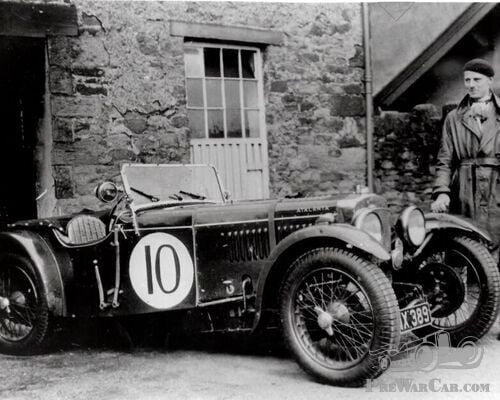
Fraser Nash TT Replica
AHX 389 ( chassis no. 2073, engine no. 10367).An important and correct short-chassis TT Replica with known history from new. Ex. H. P..
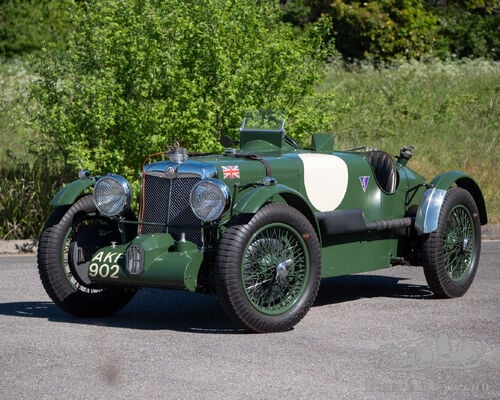
K3 Replica on KN Chassis
"The K3 Magnette must rank in the history books as the most famous and successful of all the record breaking MGs. With only 33 examples produced durin..
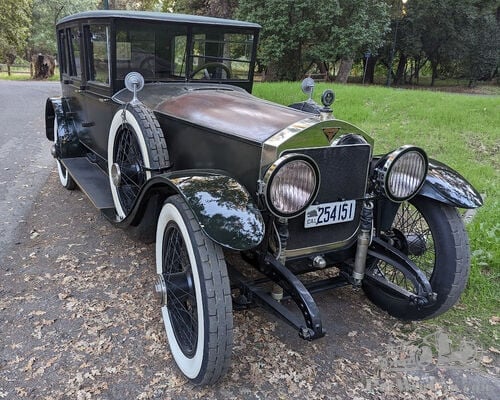
1916 Simplex, Crane model 5
1916 Simplex, Crane MODEL 5CUSTOM MADE HISTORIC PRESERVATION VEHICLE – READY TO TOUR!This Simplex recently completed th..