The global magazine and marketplace for classic car enthusiasts, by enthusiasts.


Filter
Classic Studebaker, Isotta Fraschini for sale - Studebaker, Isotta Fraschini cars for sale
-

Studebaker Commander Big Six 1928
A special and very beautiful Studebaker Commander from 1928, also known as the Big Six due to its powerful 5.8-liter 6-cylinder engine.The car was very well restored in the 1970s and subsequently won a senior award at the Hershey car show in 1973. After that, the car was purchased by a collector, well maintained, and used for several rall.. -
Isotta Fraschini 8A Cesare Sala
This 1927 Tipo 8A was delivered from the factory to coachbuilder Cesare Sala in Milan. One of Italy’s most prestigious and skilled coachbuilders, Sala was a popular choice for Isotta’s customers, together with fellow Milan concern Castagna. Sala had made its name in the pre-automobile era, supplying fine horse-drawn carriages to European royalty.. -
Short wheelbase 1930 Isotta Fraschini tipo 8A project
Short wheelbase 1930 Isotta Fraschini tipo 8A project. Enginenumber 1420 Chassisnumber unknown. Wheelbase 3400mm. Rare and ideal opportunity to complete this exciting project of the famous Isotta. The engine is in good condition and turns over freely with a healthy compression. The car has the big hubs with matching wheels as used on some 8A and 8A.. -
1919 Studebaker Chummy Roadster
Model: chummy roadsterColour: soft yellow body with black mudguardsInterior: dark brown leatherEngine: in-line 6 cylinderTransmission: 3-speed manual transmissionCondition: body off restoredPrice € : 49,500,- Description:Beautifully restored car. Very special model because of its tou..


Studebaker
US/ CDN, 1902 – 1966
(1) Studebaker Corp, South Bend, Indiana, 1902 – 1954
(2) Studebaker-Packard Corp, South Bend, Indiana, 1954 – 1964
(3) Studebaker Corp of Canada Ltd, Hamilton, Ontario, 1964 – 1966
The brothers Henry and Clem Studebaker opened a blacksmith’s and wagon-building shop in South Bend in 1852, horse-drawn vehicles of their construction serving in both the American Civil War and World War 1, and production continuing until 1919. Their first Studebaker cars were electrics, made in modest numbers from 1902 to 1912: these Studebaker carwere joined in 1904 by the Model-C petrol Studebaker car, a typically American 16hp flat-twin with amidships engine, 2-speed gearbox, and chain drive. This Studebaker carwas followed a year later by a vertical 4 on more European lines, this Studebaker car was selling for $3.000. For the next few seasons, however, Studebaker electred to act as selling gents for Studebaker cars built to their order, and their more expensive offerings of Studebaker cars were built by Garford of Elyria. The cheaper machines were the EMF and Flanders built by the Everitt-Metzger-Flanders Co, and these two makes accounted for 9.700 Studebaker cars in 1910. 1913 saw a brace of Studebaker cars made at South Bend, both with sv monobloc engines, dual ignition, and electric lighting and starting: the 3-speed gearboxes on the Studebaker cars were mounted in unit with the back axles, and the 6-cylinder Studebaker car was claimed to be the first such car to retail in the USA for less than $2.000. In 1914 there was a smaller, 15/20hp Studebaker car with 3.2-litre 4 with coil ignition only. Studebaker sold over 45.000 Studebaker cars in 1915, and their sixth position in 1916 US sales was matched by a seventh place in 1920. 1919 was the last year for 4-cylinder Studebaker cars, and the 1920 Studebaker cars, while retaining separate gearboxes, abandoned the transaxle layout. Studebaker carmodels available were 6s of 4.7-litres and 5.8-litres, the latter establishing a line of really large 6-cylinder Studebaker cars which survived until 1928. An inexpensive 3.3-litre Studebaker Light 6 joined the range in 1921, and 1923 Studebaker cars had all-metal bodies with welded steel pressings. Balloon tyres were standardized on Studebaker cars in 1925, in which year contracting-type hydraulic front wheel brakes were an option: open Studebaker cars were made with permanent tops of the ‘California’ type and detachable side-curtains. Front wheel brakes were standard on the Studebaker carin 1926, but the Studebaker carcompany reverted to mechanical actuation in 1927, in which year a ‘compact’, the Studebaker Erskine, was marketed. Studebaker cars went after stock-car records in a big way in the later 1920s, an outstanding performance of a Studebaker car being 25.000 miles in 25.000 minutes. The 1929 range Studebaker cars consisted of two 6s, the ‘Studebaker Dictator’ and ‘Studebaker Commander’ (at $1.265 and $1.495 respectively), and a brace of straight-eights of 4-litres’ and 5.5-litres’ capacity. Pierce-Arrow was acquired by the Studebaker car company in 1928, but regained its independence five years later. In 1930 Studebaker cars, with Plymouth, pioneered the free wheel, offered initially on 8-cylinder Studebaker cars alone, but available throughout the range by the latter part of the year, when the cheapest Studebaker car, the Light 6, could be bought in England for £295.
Another compact Studebaker carappeared under the Rockne nameplate in 1932. Special versions of the ‘Studebaker President 8’ distinguished themselves in the Indianapolis 500-Mile Race. Cliff Bergere’s Studebaker Special finishing 3rd, while in 1933 6th to 12th places were filled by similar Studebaker cars. Studebaker cars went into receivership in 1933, but came back strongly in 1934 with an unattractively-styled three-model range of Studebaker cars – the 3.4-litre ‘Studebaker Dictator 6’, the 3.6-litre ‘Studebaker Commander 8’, and the 4.1-litre ‘Studebaker President 8 ‘, all with synchromesh, free wheel, and X-braced frames. Subsequent evolution of Studebaker cars followed accepted American lines: transverse independent front suspension, automatic overdrive, and hydraulic brakes once more in 1935: a hill-holder (modernized version of the sprag) in 1936: headlamps half-faired into the wings of the Studebaker car in 1938: and column change in 1939, when Raymond Loewy became responsible for the Studebaker car Corporation’s styling. 1939 was also the first year for one of America’s longest-lived modern economy cars, the 2.7-litre 6-cylinder sv ‘Studebaker Champion’ selling at $765. Fluid couplings was available on the 1942 Studebaker car range, which included Studebaker cars last straight-8s. The revolutionary post-war ‘coming or going’ style with wrap-around rear window on Studebaker cars was launched by Loewy on the 1946/ 1947 Studebaker cars with 2.8-litre and 3.7-litre 6-cylinder engines. Sales climbed to 239.000 Studebaker cars in 1949, and the inevitable ohv V8 – a relatively small one of 3.8-litres – replaced the bigger 6 in 1951 Studebaker cars. Studebaker car companys answer to the big battalions was the low and elegant line of the 1953 Studebaker cars, which unfortunately became more cluttered down the years, and finances were not impoved by the merger of the Studebaker car company with Packard in 1954. An interesting departure was the sporting ‘Studebaker Hawk’ coupé powered by Packard’s V8 engine and Ultramatic transmission in 1956: 1957 versions had blown Studebaker car engines, the only example of a factory-equipped super-charger (save the 1954 Kaiser) since the Graham. The Studebaker car company managed to get their ‘Studebaker Lark’ compact sedan tooled and into production in ten months in 1959, and this descendant of the old sv ‘Champion’ was the only Studebaker car now offered with the exception of the ‘Studebaker Hawk’. The small 6 Studebaker car achieved ohv at long last in 1961, and 1962 saw the exciting fiberglass-bodied ‘Studebaker Avanti’ coupé with disc brakes on the front wheels, a 4-speed gearbox, and optional supercharger. The Studebaker car annexed 29 stock-car records, including a flying mile at 168.15mph, but neither this nor the continuing ‘Lark’ range could save Studebaker cars. A wide choice of Studebaker car models – two 6s and three 8s – was listed for 1964, but early in the season South Bend stopped making Studebaker cars, and production was transferred to the Canadian plant which had been assembling Studebaker cars since 1912. Even as an ‘import’, the Studebaker car did not sell well: the last examples of the Studebaker car marque had 3.2-litre 6-cylinder and 4.7-litre 8-cylinder Chevrolet engines, but even these were abandoned in the spring of 1966. Production of the ‘Studebaker Avanti’ was continued on a small scale by an independent factory in South Bend.
Source: Georgano, encyclopedia of motorcar; MCS
The information is written with the greatest of care. However, if you have any suggested amendments please contact us at office@prewarcar.com
Isotta-Fraschini
Italy, 1900 – 1949
(1) Società Milanese d’Automobili Isotta, Fraschini & Cia, Milan, 1900 – 1904
(2) Fabbrica Automobili Isotta-Fraschini, Milan, 1904 – 1949
Cesare Isotta and Vincenzo Fraschini went into partnership in 1899, importing French cars (Mors, Renault) and proprietary engines (Aster); when their company was floated a year later the first Isotta Fraschini cars to bear their names were thinly disguised Renaults with shaft drive and 5hp single-cylinder Aster power units. A 12hp twin Isotta Fraschini car appeared in 1902, but the first wholly Italian designed Isotta Fraschini cars were not seen until 1903. These new Isotta Fraschini cars followed the fashionable Mercédès idiom with pair-cast 4-cylinder engines, side valves in a T-head, low tension magneto ignition, 4-speed gearboxes and side-chain drive. Initially three Isotta Fraschini carmodels were listed – a 4.180cc Isotta Fraschini 12, a 5.426cc Isotta Fraschini 16 and a 7.433cc Isotta Fraschini 24 – and there were few major changes until 1908, though foot accelerators and high tension ignition came in 1906 on Isotta Fraschini cars, and compressed-air starters were offered briefly in 1907, when the largest Isotta Fraschini carcar in the catalogue was the 11.3-litre Isotta Fraschini Tipo C.
Like FIAT and Itala, theIsotta Fraschini carfirm was quick to recognize the prestige value of racing: in 1905 they built an unsuccessful 17.2-litre machine with gear-driven ohc; in 1907 Minoia won the Coppa Florio with a Isotta Fraschini car; and in 1908 Trucco won the Targa Florio. The last year brought numerous successes in the USA, where 40 Isotta Fraschini cars were sold. By 1906 Isotta Fraschini were Italy’s second-ranking manufacturers, after FIAT, but they were hard hit by the Agadir Crisis, and in 1907 there was a successful takeover bid by Lorraine-Dietrich of France, whose intention it was to integrate the Milan Isotta Fraschini car-factory into their organization. By 1909, however, Isotta Fraschini were independent again and had sold a manufacturing licence to Praga in Prague.
A novelty in 1908 was a 1.327cc racing voiturette with ohc 4-cylinder monobloc engine said to run up to 3.500rpm; this Isotta Fraschini car went into limited production as the FENC type. More important, a successful uncoupled 4-wheel braking system was evolved by Oreste Fraschini and Giustino Cattaneo (who had joined theIsotta Fraschini car firm in 1905 and was to be responsible for all Isotta Fraschini cars up to 1935). This was available on production Isotta Fraschini cars by 1911, and three years later was standardized on the larger Isotta Fraschini cars. The 1909 range included a modern sv monobloc four, the ENC, available in 2.1-litre and 2.2-litre forms, though the old combination of T-head engine and chain drive persisted until 1913. The smaller Isotta Fraschini cars of 1914 closely paralleled the offerings of FIAT and Itala, coming in 2.3-litre, 3-litre and 4.4-litre sizes, with monobloc engines, 4-speed gearboxes, and optional electrics. However, for the enthusiast the Isotta Fraschini car company offered some 16-valve ohc sports cars with 4-wheel brakes and chain drive – the 6.2-litre Isotta Fraschini TM and the 10.6-litre Isotta Fraschini KM. The latter boasted dual magneto ignition, could be had with pear-shaped or V-radiator, and this Isotta Fraschini car was capable of 85-90mph on 140bhp. A Isotta Fraschini car with 130bhp 7.2-litre engine was raced unsuccessfully at Indianapolis in 1913, and there was also a shaft-driven variant of the TM, designated the Isotta Fraschini TC.
After World War 1 Cattaneo switched to a one-model Isotta Fraschini car programme with the Isotta Fraschini Tipo 8, a 5.880cc 9-bearing pushrod ohv straight-8 with alloy block, magneto ignition, 3-speed unit gearbox, central ball change, multi-plate clutch, semi-elliptic springing, and coupled 4-wheel brakes. Output was 80bhp at a low 2.200rpm, and the Isotta Fraschini car was conceived from the start as a chauffeur-driven carriage – hence the ponderous handling that attracted unfavourable comparisons with the contemporary 32CV Hispano-Suiza. Most straight-8s were exported: of 1.370 delivered Isotta Fraschini cars between 1919 and 1935 about 450 went to the United States and there were agencies in eight foreign capitals. In 1925 the Isotta Fraschini Tipo 8 gave way to the 7.4-litre Isotta Fraschini 8A with servo brakes, higher gear ratios, and an output of 110 – 120bhp; the 135 bhp Isotta Fraschini 8ASS sports version was said to do 104mph. By 1929 a Isotta Fraschini carlimousine cost £2.900 in London or $22.750 in New York. Two years later came the last of Isotta Fraschini car with a straight-8, the Isotta Fraschini 8B. This had a redesigned engine capable of 3.000rpm, coil ignition, and a stiffer and deeper frame; from 1932 Isotta Fraschini car was available with a 4-speed preselective gearbox, a conversion initiated by Antione Lago, then the Isotta Fraschini company London agent. In 1934 a 4-speed synchromesh box was offered, but by now sales were down to a trickle (only 25-30 8Bs were made all told, as against 950 8As) and the Isotta Fraschini car company, after unsuccessful negotiations for a merger with Henry Ford, elected to concentrate on aero engines. In 1936 Isotta Fraschini joined the Caproni organization, and their only roadgoing products were diesel trucks made under MAN-licence.
There was a final comeback of Isotta Fraschini cars in 1947 with the Rapi-designed 8C Monterosa – Isotta Fraschini never marketed a six. This Isotta Fraschini car had a 90 degrees ohc V8 engine mounted at the rear of a platform chassis, with independent front suspension by rubber in compression and swing-axle rear suspension. The 5-speed all-synchromesh gearbox incorporated an overdrive top, brakes were hydraulic, and a curious feature was an ignition warning light that went out in the event of trouble. Various cylinder capacities were tried: the 1947 Paris Salon Isotta Fraschini car had a 3.4-litre unit, but production models were to have had 2.544cc engines. Prototype Isotta Fraschini cars wore aerodynamic convertible and closed coachwork by Touring of Milan, but less than 20 Isotta Fraschini 8Cs had been built when the factory was shut down by order of the Italian government. The name Isotta Fraschini was acquired by the Breda armaments firm, who attempted a revival of the diesel commercial vehicle range as late as 1958
Source: Georgano, encyclopedia of motorcar; MCS
The information is written with the greatest of care. However, if you have any suggested amendments please contact us at office@prewarcar.com


Featured
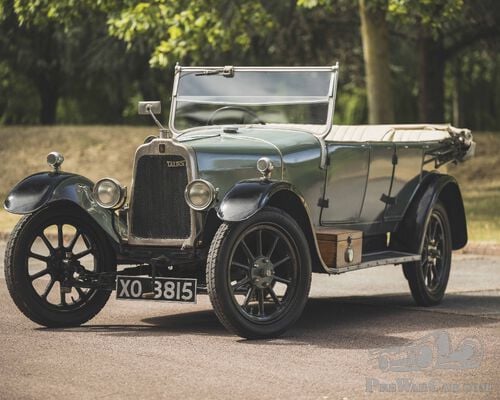
Rare RHD, low miles & great history file
This is an ONLINE-ONLY AUCTION at THE MARKET. The price shown here is the lower estimate. To see all the details, description, 250+ high-res photog..
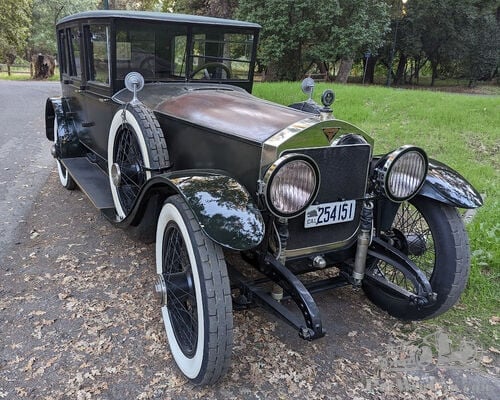
1916 Simplex, Crane model 5
1916 Simplex, Crane MODEL 5CUSTOM MADE HISTORIC PRESERVATION VEHICLE – READY TO TOUR!This Simplex recently completed th..
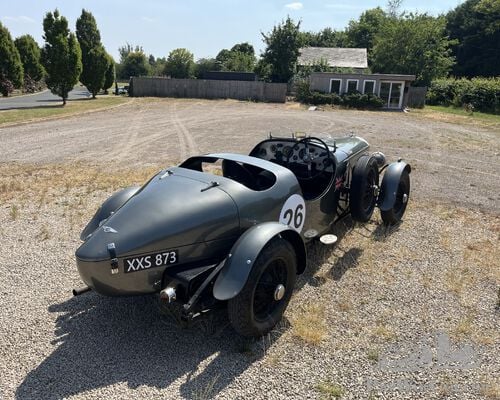
Derby Bentley Special 4-1/4
Sadly i am having to sell on my Bentley special ( Icarus) A great opportunity to be able to buy a Derby special to finish with your own touch..