The global magazine and marketplace for classic car enthusiasts, by enthusiasts.


Filter
Classic Packard, Studebaker for sale - Packard, Studebaker cars for sale
-

1934 Packard Eight 1101 Club Sedan
1934 Packard Eight 1101 Club Sedan Chassis Number: 377903 Registration Number: YXG567 A magnificent & fully restored Packard in simply superb running condition. The current owner at some 90 years old has decided to part with it due to his advanced years. During his tenure a .. -
Studebaker Commander Big Six 1928
A special and very beautiful Studebaker Commander from 1928, also known as the Big Six due to its powerful 5.8-liter 6-cylinder engine.The car was very well restored in the 1970s and subsequently won a senior award at the Hershey car show in 1973. After that, the car was purchased by a collector, well maintained, and used for several rall.. -
1930 Packard 745 Deluxe Eight Roadster | RM Sotheby's | Private Sales
Asking | $550,000 USD A superb example of one of the most desirable Classic PackardsReportedly purchased new by Philadelphia sporting icon John ShibeFormerly owned by noted collectors Mark Smith, Robert Thayer, and Joseph Cassini IIIAward-winning restoration by RM Auto Restoration; extensive cosmetic freshening .. -
1928 Packard 533 Golfers Coupe
1928 Packard 533 Golfers Coupe Chassis number 144148RRegistration number: UC1064 Vintage and Prestige Fine Motor Cars are proud to be offering this 1928 Packard 533 Golfers Coupe for sale. A spectacular Packard in mint order throughout. This right hand drive example was sold new to the UK in 1928 and has remained here since... -
Sehr authentischer Packard Single Six 133 von 1922
Wir verkaufen unseren Packard Single Six, der sich seit mehr als 30 Jahren in unserer Familie befindet. Der Packard gehört zu der Baureihe, die ab 1922 mit 6 Zyl., 4.400 ccm, 40 kW und einem Radstand von 3.378 mm ausgestattet wurde. Das Fahrzeug verfügt über 7 Sitze (incl. 2 Notsitze). Das Dach läßt sich zusammenfalten und die Seitenteile abnehm.. -
1 OF 1 BARKER COACHWORK, EXTRAORDINARY HISTORY!
INTRODUCTION:*CCCA Senior First Prize*Packard Automobile Classics National 1st Place*Pebble Beach Concours D'Elegance Best in Class*Shown in multiple concours events*Featured in 2 books In 1938 Harry Hatch, the man behind one of the largest and most successful distilleries in the world: Hiram Walk.. -
1929 Packard 640 Sport Phaeton
Elite definition: A select group that is superior to the rest of a group. Our Elite Collection is comprised of automobiles we consider to be superior in terms of significance, desirability, rarity, quality and beauty. These are cars that only a select group of privileged people will ever have the good fortune of owning. As care tak.. -
1936 Packard 1404 Super 8 956 Club Sedan
1936 Packard 1404 Super 8 956 Club Sedan Chassis Number: 757703 Registration Number: YXS196 Imported to the Uk a decade or so ago as a freshly restored mint car; since then the car has been sparingly but regularly used & is in really really fine condition. -
1940 Packard One Twenty Convertible Victoria by Darrin | The Quail Auction 2026
Please expect delays in obtaining the Lot's title beyond standard processing time as it has a Title in Transit or is subject to a loan, which will be satisfied with sale proceeds. Vehicle No. 1801-2025 Engine No. C317807C When Packard elected to officially offer Howard "Dutch" Darrin's designs as factory coachwork in its 1940 ca.. -
1930 Packard 740 Custom Eight Roadster
A new arrival at Oldtimer Australia is this very impressive, opulent 1930 Packard 740 Custom Eight Roadster (7th Series).Ask the Man Who Owns One was Packards famous advertising slogan. It was a simple but powerful line, suggesting that the best endorsement of a Packard car came from its owners themselves - reinforcing the brands reputati..


Packard
US, 1899 – 1958
(1) New York & Ohio Automobile Co, Warren, Ohio, 1899 – 1901
(2) Ohio Automobile Co, Warren, Ohio, 1901 – 1902
(3) Packard Motor Car Co, Warren, Ohio, 1902 – 1903
(4) Packard Motor Car Co, Detroit, Mich., 1903 – 1955
(5) Studebaker – Packard Corp, Detroit, Mich., 1955 – 1958
The brothers J.W. and W.D. Packard bought a Winton in 1898 and determined to improve upon it. The result was the first 12hp Packard car of 1899. This Packard car followed traditional early-American lines with a single horizontal cylinder, central chain drive, buggy styling and wire wheels, but the Packard car was more advanced than its competitors in having a 3-speed and reverse gearbox and automatic spark advance. This gave way to the wheel-steered Model C Packard car, which proved capable of 40mph. An even more powerful Packard car, a single old for $3.000 in 1903 and on one of these Fetch and Krarup Packard cars successfully drove from San Francisco to New York in 61 days. In the same year a very big Packard car four of over 12 litres’ capacity was designed on European lines by Charles Schmidt, late of Mors. This Packard car sold for $7.500 and led to the famous Packard Model L, the first Packard car to bear the classic Packard radiator. This Packard car had side valves in an L-head and the gearbox was mounted in unit with the back axle; a similar engine was used in the racing car Gray Wolf, a streamlined lightweight Packard car capable of 75mph. 1906 Packard cars had T-head engines and magneto ignition in place of coil; engine capacity was 5¾-litres, increasing to 7-litres Packard cars in 1907 with the introduction of the famous ‘Packard 30’, from which 60bhp was claimed. For the next few years these high-quality four-cylinder Packard cars engaged all Packard’s attentions, the ‘Packard 30’ at $4.200 being joined by a short-wheelbase Packard 18 intended for use as a town carriage. Dry-plate clutches were adopted on Packard cars in 1910 and in 1911 a third model joined the range: Packard cars first six, the 7¼-litre ‘Packard48’.
Six-cylinder Packard cars only were offered in 1913, when electric lighting and starting were standardized. Spiral bevel final drive followed in 1914. Revolutionary was the world’s first series-production 12-cylinder, the Packard Twin-Six, which Packard car was announced in 1915 for 1916: this Packard car was also the first American touring car to use aluminium pistons and was quite modestly priced at $2.600. First series Packard cars had the unusual combination of left-hand drive and left-hand gear-change, abandoned on later series Packard car which also had detachable cylinder heads. A special racing car version of the Packard car, the 905 with a much bigger engine, recorded 149.9mph in the hands of Ralph de Palma at Daytona in 1919. From 1916 to 1920 only the Packard Twin Six was made, but this Packard car was then joined by a straightforward sv Single-Six selling from $2.350 up. This Packard car was given front-wheel brakes as standard replaced the Packard Twin-six during 1923; the Packard car came in two wheelbase lengths. A tourer Packard car cost $3.750 and it was the ancestor of the whole line of ‘Senior’ Packard cars up to 1939. 1925 Packard cars had centralized chassis lubrication and over 40.000 sixes were sold, as against less than 5.700 eights. Innovations on Packard cars for 1927 were a hypoid back axle, and a bigger 8-cylinder engine of 6.3-litres’ capacity, developing 106bhp. Only eight-cylinder Packard car were made in 1929, in which year a 5.3-litre Standard model was catalogued at $2.435, while in 1930 a limited series of ‘Packard 734’ sports models with high axle ratio, 145 bhp engines and 4-speed gearboxes was introduced. 1932 Packard cars had V-radiators. An inexpensive Packard Light 8 at $1.750, using the 5.3-litre engine, proved uneconomic to make, but there was also an excellent 7-litre V12 and all Packard cars had synchromesh gearboxes and vacuum-servo brakes. The Packard car company’s styling with its traditional radiator shape continued up to 1939.
In 1935 the Packard car company made a bid for the low-priced market with the 3.7-litre straight-8 ‘Packard 120’ with hydraulic brakes and independent front suspension, priced from $980, as against $2.475 for the Packard Standard-eight, $2.990 for the Packard Super-eight and $3.820 for the Twelve. The new Packard car model accounted for 24.995 of the 31.889 cars sold by Packard cars that year and was joined two seasons later by a very similar 3.6-litre six, the ‘115’ at $860; this and the ‘120’, now enlarged to 4.6-litres, were made in a separate factory. In 1938, 50 percent of the Packard car company’s labour force was engaged in making the senior Packard cars which accounted for no more than 8 percent of total production.
In 1937 hydraulic brakes and independent front suspension were standardized on Packard cars throughout the range. 1939 was the last year of the true senior Packard cars; column change was introduced and overdrive was available on all Packard cars except the Twelve. Air conditioning was a 1940 option and 1941 brought the first of the handsome Packard Clipper line, made in 4-litre 6-cylinder and 4.6-litre straight-8 versions. Expensive Packard cars were still made, with custom bodywork by Rollson, Le Baron and Darrin available on the 5.8-litre chassis. During World War 2, body dies for the bigger, conventionally-bodied Packard cars were sold to the Soviet Government, the result being the 1945 Z.I.S.
Production of Packard cars was resumed with the Clipper 6 and 8 in 1946, but Packard never regained their former pre-eminence. Styling was unfortunate and the Packard car company retained the old straight-8 until 1954, though they evolved their own ‘Ultramatic’ automatic transmission in 1949 and had power brakes, steering and window lifts in 1954. Super-luxury Packard cars included the eight-seater Executive limousine at $6.900 in 1953 and the big Caribbean convertible.
The 1954 merger of Packard cars with Studebaker brought about a new 260bhp, ohv V8 with an ingenious inter-linked torsion-level suspension, while engines were sold to American Motors for their Nash and Hudson lines. Sales fell to a depressing 13.000 in 1956 and though the Packard lingered on until 1958, the last two seasons’ cars were nothing more than disguised Studebakers.
Source: Georgano, encyclopedia of motorcar; MCS
The information is written with the greatest of care. However, if you have any suggested amendments please contact us at office@prewarcar.com
Studebaker
US/ CDN, 1902 – 1966
(1) Studebaker Corp, South Bend, Indiana, 1902 – 1954
(2) Studebaker-Packard Corp, South Bend, Indiana, 1954 – 1964
(3) Studebaker Corp of Canada Ltd, Hamilton, Ontario, 1964 – 1966
The brothers Henry and Clem Studebaker opened a blacksmith’s and wagon-building shop in South Bend in 1852, horse-drawn vehicles of their construction serving in both the American Civil War and World War 1, and production continuing until 1919. Their first Studebaker cars were electrics, made in modest numbers from 1902 to 1912: these Studebaker carwere joined in 1904 by the Model-C petrol Studebaker car, a typically American 16hp flat-twin with amidships engine, 2-speed gearbox, and chain drive. This Studebaker carwas followed a year later by a vertical 4 on more European lines, this Studebaker car was selling for $3.000. For the next few seasons, however, Studebaker electred to act as selling gents for Studebaker cars built to their order, and their more expensive offerings of Studebaker cars were built by Garford of Elyria. The cheaper machines were the EMF and Flanders built by the Everitt-Metzger-Flanders Co, and these two makes accounted for 9.700 Studebaker cars in 1910. 1913 saw a brace of Studebaker cars made at South Bend, both with sv monobloc engines, dual ignition, and electric lighting and starting: the 3-speed gearboxes on the Studebaker cars were mounted in unit with the back axles, and the 6-cylinder Studebaker car was claimed to be the first such car to retail in the USA for less than $2.000. In 1914 there was a smaller, 15/20hp Studebaker car with 3.2-litre 4 with coil ignition only. Studebaker sold over 45.000 Studebaker cars in 1915, and their sixth position in 1916 US sales was matched by a seventh place in 1920. 1919 was the last year for 4-cylinder Studebaker cars, and the 1920 Studebaker cars, while retaining separate gearboxes, abandoned the transaxle layout. Studebaker carmodels available were 6s of 4.7-litres and 5.8-litres, the latter establishing a line of really large 6-cylinder Studebaker cars which survived until 1928. An inexpensive 3.3-litre Studebaker Light 6 joined the range in 1921, and 1923 Studebaker cars had all-metal bodies with welded steel pressings. Balloon tyres were standardized on Studebaker cars in 1925, in which year contracting-type hydraulic front wheel brakes were an option: open Studebaker cars were made with permanent tops of the ‘California’ type and detachable side-curtains. Front wheel brakes were standard on the Studebaker carin 1926, but the Studebaker carcompany reverted to mechanical actuation in 1927, in which year a ‘compact’, the Studebaker Erskine, was marketed. Studebaker cars went after stock-car records in a big way in the later 1920s, an outstanding performance of a Studebaker car being 25.000 miles in 25.000 minutes. The 1929 range Studebaker cars consisted of two 6s, the ‘Studebaker Dictator’ and ‘Studebaker Commander’ (at $1.265 and $1.495 respectively), and a brace of straight-eights of 4-litres’ and 5.5-litres’ capacity. Pierce-Arrow was acquired by the Studebaker car company in 1928, but regained its independence five years later. In 1930 Studebaker cars, with Plymouth, pioneered the free wheel, offered initially on 8-cylinder Studebaker cars alone, but available throughout the range by the latter part of the year, when the cheapest Studebaker car, the Light 6, could be bought in England for £295.
Another compact Studebaker carappeared under the Rockne nameplate in 1932. Special versions of the ‘Studebaker President 8’ distinguished themselves in the Indianapolis 500-Mile Race. Cliff Bergere’s Studebaker Special finishing 3rd, while in 1933 6th to 12th places were filled by similar Studebaker cars. Studebaker cars went into receivership in 1933, but came back strongly in 1934 with an unattractively-styled three-model range of Studebaker cars – the 3.4-litre ‘Studebaker Dictator 6’, the 3.6-litre ‘Studebaker Commander 8’, and the 4.1-litre ‘Studebaker President 8 ‘, all with synchromesh, free wheel, and X-braced frames. Subsequent evolution of Studebaker cars followed accepted American lines: transverse independent front suspension, automatic overdrive, and hydraulic brakes once more in 1935: a hill-holder (modernized version of the sprag) in 1936: headlamps half-faired into the wings of the Studebaker car in 1938: and column change in 1939, when Raymond Loewy became responsible for the Studebaker car Corporation’s styling. 1939 was also the first year for one of America’s longest-lived modern economy cars, the 2.7-litre 6-cylinder sv ‘Studebaker Champion’ selling at $765. Fluid couplings was available on the 1942 Studebaker car range, which included Studebaker cars last straight-8s. The revolutionary post-war ‘coming or going’ style with wrap-around rear window on Studebaker cars was launched by Loewy on the 1946/ 1947 Studebaker cars with 2.8-litre and 3.7-litre 6-cylinder engines. Sales climbed to 239.000 Studebaker cars in 1949, and the inevitable ohv V8 – a relatively small one of 3.8-litres – replaced the bigger 6 in 1951 Studebaker cars. Studebaker car companys answer to the big battalions was the low and elegant line of the 1953 Studebaker cars, which unfortunately became more cluttered down the years, and finances were not impoved by the merger of the Studebaker car company with Packard in 1954. An interesting departure was the sporting ‘Studebaker Hawk’ coupé powered by Packard’s V8 engine and Ultramatic transmission in 1956: 1957 versions had blown Studebaker car engines, the only example of a factory-equipped super-charger (save the 1954 Kaiser) since the Graham. The Studebaker car company managed to get their ‘Studebaker Lark’ compact sedan tooled and into production in ten months in 1959, and this descendant of the old sv ‘Champion’ was the only Studebaker car now offered with the exception of the ‘Studebaker Hawk’. The small 6 Studebaker car achieved ohv at long last in 1961, and 1962 saw the exciting fiberglass-bodied ‘Studebaker Avanti’ coupé with disc brakes on the front wheels, a 4-speed gearbox, and optional supercharger. The Studebaker car annexed 29 stock-car records, including a flying mile at 168.15mph, but neither this nor the continuing ‘Lark’ range could save Studebaker cars. A wide choice of Studebaker car models – two 6s and three 8s – was listed for 1964, but early in the season South Bend stopped making Studebaker cars, and production was transferred to the Canadian plant which had been assembling Studebaker cars since 1912. Even as an ‘import’, the Studebaker car did not sell well: the last examples of the Studebaker car marque had 3.2-litre 6-cylinder and 4.7-litre 8-cylinder Chevrolet engines, but even these were abandoned in the spring of 1966. Production of the ‘Studebaker Avanti’ was continued on a small scale by an independent factory in South Bend.
Source: Georgano, encyclopedia of motorcar; MCS
The information is written with the greatest of care. However, if you have any suggested amendments please contact us at office@prewarcar.com


Featured
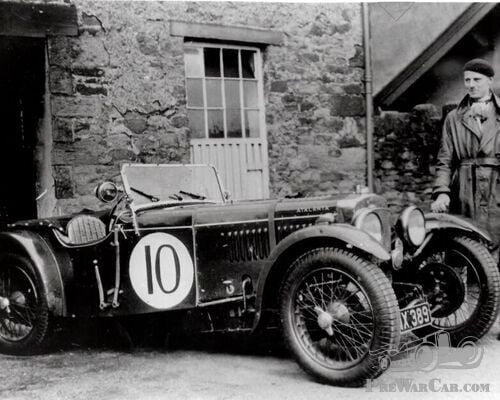
Fraser Nash TT Replica
AHX 389 ( chassis no. 2073, engine no. 10367).An important and correct short-chassis TT Replica with known history from new. Ex. H. P..
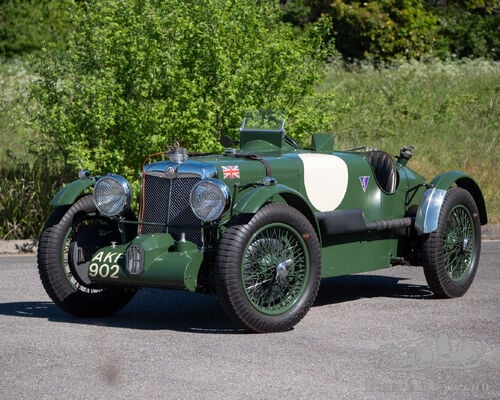
K3 Replica on KN Chassis
"The K3 Magnette must rank in the history books as the most famous and successful of all the record breaking MGs. With only 33 examples produced durin..
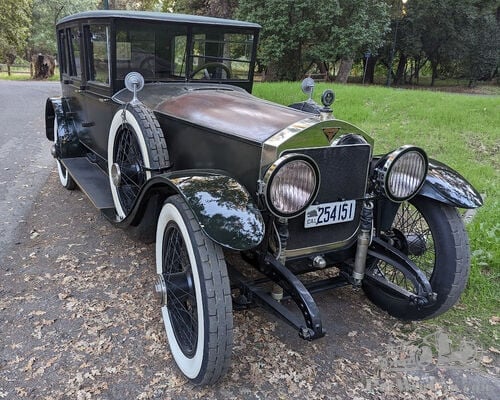
1916 Simplex, Crane model 5
1916 Simplex, Crane MODEL 5CUSTOM MADE HISTORIC PRESERVATION VEHICLE – READY TO TOUR!This Simplex recently completed th..