The global magazine and marketplace for classic car enthusiasts, by enthusiasts.


Filter
Classic Studebaker, Plymouth for sale - Studebaker, Plymouth cars for sale
-

1928 Studebaker UK Commander, guter Zustand, überholter Motor
Zum Verkauf steht mein Studebaker Commander von 1928. Er ist ein seltener amerikanischer Vorkriegsklassiker in gutem, fahrbereitem Zustand. Motor und Getriebe wurden vor ca. 2.000 km komplett überholt, inklusive überholter Lichtmaschine und Anlasser. Seitdem läuft der Wagen zuverlässig, es gibt keinen Investitionsstau. -
Studebaker Commander Big Six 1928
A special and very beautiful Studebaker Commander from 1928, also known as the Big Six due to its powerful 5.8-liter 6-cylinder engine. The car was very well restored in the 1970s and subsequently won a senior award at the Hershey car show in 1973. After that, the car was purchased by a collector, well maintained, and used for seve.. -
1940 Plymouth P10 Deluxe Convertible Coupe | RM Sotheby's | The Hershey Auction
Sold | $43,680 USD One of 6,986 Deluxe Convertible Coupes produced for 1940Benefits from an excellent rotisserie restoration under previous ownershipL-head inline six-cylinder engine; three-speed manual with overdriveWonderfully presented in Boatswain Blue over red leather Richly appointed with a remark.. -
1932 Plymouth Model PB Sport Roadster | RM Sotheby's | The Hershey Auction
Sold | $22,400 USD One of just 2,163 Sport Roadsters produced for 1932Final year for Plymouth's original Silver Dome four-cylinder engineEquipped with dual side-mounted spares, rumble seat, and folding rear luggage rackOne of Plymouth's most attractive and desirable pre-war open body styles By 1932, .. -
1919 Studebaker Chummy Roadster
Model: chummy roadsterColour: soft yellow body with black mudguardsInterior: dark brown leatherEngine: in-line 6 cylinderTransmission: 3-speed manual transmissionCondition: body off restoredPrice € : 49,500,- Description:Beautifully restored car. Very special model because of its tou..


Studebaker
US/ CDN, 1902 – 1966
(1) Studebaker Corp, South Bend, Indiana, 1902 – 1954
(2) Studebaker-Packard Corp, South Bend, Indiana, 1954 – 1964
(3) Studebaker Corp of Canada Ltd, Hamilton, Ontario, 1964 – 1966
The brothers Henry and Clem Studebaker opened a blacksmith’s and wagon-building shop in South Bend in 1852, horse-drawn vehicles of their construction serving in both the American Civil War and World War 1, and production continuing until 1919. Their first Studebaker cars were electrics, made in modest numbers from 1902 to 1912: these Studebaker carwere joined in 1904 by the Model-C petrol Studebaker car, a typically American 16hp flat-twin with amidships engine, 2-speed gearbox, and chain drive. This Studebaker carwas followed a year later by a vertical 4 on more European lines, this Studebaker car was selling for $3.000. For the next few seasons, however, Studebaker electred to act as selling gents for Studebaker cars built to their order, and their more expensive offerings of Studebaker cars were built by Garford of Elyria. The cheaper machines were the EMF and Flanders built by the Everitt-Metzger-Flanders Co, and these two makes accounted for 9.700 Studebaker cars in 1910. 1913 saw a brace of Studebaker cars made at South Bend, both with sv monobloc engines, dual ignition, and electric lighting and starting: the 3-speed gearboxes on the Studebaker cars were mounted in unit with the back axles, and the 6-cylinder Studebaker car was claimed to be the first such car to retail in the USA for less than $2.000. In 1914 there was a smaller, 15/20hp Studebaker car with 3.2-litre 4 with coil ignition only. Studebaker sold over 45.000 Studebaker cars in 1915, and their sixth position in 1916 US sales was matched by a seventh place in 1920. 1919 was the last year for 4-cylinder Studebaker cars, and the 1920 Studebaker cars, while retaining separate gearboxes, abandoned the transaxle layout. Studebaker carmodels available were 6s of 4.7-litres and 5.8-litres, the latter establishing a line of really large 6-cylinder Studebaker cars which survived until 1928. An inexpensive 3.3-litre Studebaker Light 6 joined the range in 1921, and 1923 Studebaker cars had all-metal bodies with welded steel pressings. Balloon tyres were standardized on Studebaker cars in 1925, in which year contracting-type hydraulic front wheel brakes were an option: open Studebaker cars were made with permanent tops of the ‘California’ type and detachable side-curtains. Front wheel brakes were standard on the Studebaker carin 1926, but the Studebaker carcompany reverted to mechanical actuation in 1927, in which year a ‘compact’, the Studebaker Erskine, was marketed. Studebaker cars went after stock-car records in a big way in the later 1920s, an outstanding performance of a Studebaker car being 25.000 miles in 25.000 minutes. The 1929 range Studebaker cars consisted of two 6s, the ‘Studebaker Dictator’ and ‘Studebaker Commander’ (at $1.265 and $1.495 respectively), and a brace of straight-eights of 4-litres’ and 5.5-litres’ capacity. Pierce-Arrow was acquired by the Studebaker car company in 1928, but regained its independence five years later. In 1930 Studebaker cars, with Plymouth, pioneered the free wheel, offered initially on 8-cylinder Studebaker cars alone, but available throughout the range by the latter part of the year, when the cheapest Studebaker car, the Light 6, could be bought in England for £295.
Another compact Studebaker carappeared under the Rockne nameplate in 1932. Special versions of the ‘Studebaker President 8’ distinguished themselves in the Indianapolis 500-Mile Race. Cliff Bergere’s Studebaker Special finishing 3rd, while in 1933 6th to 12th places were filled by similar Studebaker cars. Studebaker cars went into receivership in 1933, but came back strongly in 1934 with an unattractively-styled three-model range of Studebaker cars – the 3.4-litre ‘Studebaker Dictator 6’, the 3.6-litre ‘Studebaker Commander 8’, and the 4.1-litre ‘Studebaker President 8 ‘, all with synchromesh, free wheel, and X-braced frames. Subsequent evolution of Studebaker cars followed accepted American lines: transverse independent front suspension, automatic overdrive, and hydraulic brakes once more in 1935: a hill-holder (modernized version of the sprag) in 1936: headlamps half-faired into the wings of the Studebaker car in 1938: and column change in 1939, when Raymond Loewy became responsible for the Studebaker car Corporation’s styling. 1939 was also the first year for one of America’s longest-lived modern economy cars, the 2.7-litre 6-cylinder sv ‘Studebaker Champion’ selling at $765. Fluid couplings was available on the 1942 Studebaker car range, which included Studebaker cars last straight-8s. The revolutionary post-war ‘coming or going’ style with wrap-around rear window on Studebaker cars was launched by Loewy on the 1946/ 1947 Studebaker cars with 2.8-litre and 3.7-litre 6-cylinder engines. Sales climbed to 239.000 Studebaker cars in 1949, and the inevitable ohv V8 – a relatively small one of 3.8-litres – replaced the bigger 6 in 1951 Studebaker cars. Studebaker car companys answer to the big battalions was the low and elegant line of the 1953 Studebaker cars, which unfortunately became more cluttered down the years, and finances were not impoved by the merger of the Studebaker car company with Packard in 1954. An interesting departure was the sporting ‘Studebaker Hawk’ coupé powered by Packard’s V8 engine and Ultramatic transmission in 1956: 1957 versions had blown Studebaker car engines, the only example of a factory-equipped super-charger (save the 1954 Kaiser) since the Graham. The Studebaker car company managed to get their ‘Studebaker Lark’ compact sedan tooled and into production in ten months in 1959, and this descendant of the old sv ‘Champion’ was the only Studebaker car now offered with the exception of the ‘Studebaker Hawk’. The small 6 Studebaker car achieved ohv at long last in 1961, and 1962 saw the exciting fiberglass-bodied ‘Studebaker Avanti’ coupé with disc brakes on the front wheels, a 4-speed gearbox, and optional supercharger. The Studebaker car annexed 29 stock-car records, including a flying mile at 168.15mph, but neither this nor the continuing ‘Lark’ range could save Studebaker cars. A wide choice of Studebaker car models – two 6s and three 8s – was listed for 1964, but early in the season South Bend stopped making Studebaker cars, and production was transferred to the Canadian plant which had been assembling Studebaker cars since 1912. Even as an ‘import’, the Studebaker car did not sell well: the last examples of the Studebaker car marque had 3.2-litre 6-cylinder and 4.7-litre 8-cylinder Chevrolet engines, but even these were abandoned in the spring of 1966. Production of the ‘Studebaker Avanti’ was continued on a small scale by an independent factory in South Bend.
Source: Georgano, encyclopedia of motorcar; MCS
The information is written with the greatest of care. However, if you have any suggested amendments please contact us at office@prewarcar.com
Plymouth
US, 1928 to date
Chrysler Corporation, Detroit, Mich.
The 4-cylinder 21hp Plymouth car appeared in 1928 at a list price of $725 for a sedan. This Plymouth car replaced the earlier 4-cylinder Chryslers and represented a serious challenge for Ford and Chevrolet in their lowest price class. The Plymouth car had side valves, internal-expanding hydraulic brakes and ribbon-type radiator and gave the Plymouth car a close resemblance to the 1928 Chryslers and De Sotos, and Plymouth cars sold over 100.000 in its first year, even improving its sales position in the bleak economic climate of 1932. Plymouth cars adhered to four cylinders until 1933, when the Plymouth PD-series 6-cylinder was listed at less than $600. 1934 de luxe models of Plymouth cars had independent front suspension, but this was dropped after a year and did not reappear for some time on Plymouth cars. The standard engine in the later 1930 Plymouth cars had a capacity of 3.3-litres, rather smaller than that used in comparable Chevrolets and Fords: a small-bore 2.8-litre version Plymouth car was made for export up to 1939, but the name Plymouth was not usually found on Plymouth cars sold in England, which were nominally Chrysler Kew and Wimbledon sixes. After World War 2 evolution followed that of other Chrysler Corporation cars closely, the old-fashioned styling losing the Plymouth car division its long-held third place in American sales to Buick. Further, Plymouth cars retained the L-head six as its staple power unit right up to 1955, when Flight Sweep versions were introduced with over-square ohv V8 engines on accepted American lines in a variety of powers from 157 to 177bhp. The capacity of these Plymouth cars had 4.3-litres, while the six, now of 3.8-litres, remained available. These 1955 Plymouth cars were lower and longer than their predecessors and could be obtained with synchromesh, overdrive or automatic gearboxes.
The Plymouth Fury models of the ensuing decade represented a breakaway from the traditional Plymouth stolid family car, while the Plymouth Car Division was also responsible for Chrysler’s contribution to the compacts, the Plymouth Valiant launched for 1960. This Plymouth car had rather more European styling than its competitors, with a dummy spare-wheel moulding on the tail; interesting items of specification were the unitary construction of the Plymouth car, alternator ignition, and inclined in-line 2.8-litre ohv 6-cylinder engine. The influence of the Plymouth GT car on America resulted in the Plymouth Barracuda of 1965, a fastback coupé using the Valiant’s 8ft 10in wheelbase and a 4½-litre V8 power unit. Plymouth cars, like Ford and Chevrolet, was aiming at comprehensive coverage of the low and medium price market in 1966, with the compact Plymouth Valiant, the sports-compact Plymouth Barracuda, the medium-sized Plymouth Belvedere, the full-size Plymouth Fury, and the luxurious ‘VIP’ 4-door hardtop Plymouth car, offered only with a 5.2-litre V8 engine and selling for $2.930. An increasing emphasis on sporting Plymouth cars was detectable by 1968, when in addition to the established Barracuda there were two other sports coupés Plymouth car, the Plymouth GTX and the Plymouth Road Runner. All three Plymouth cars were available with 4-speed manual gearboxes and the 6.981cc 425bhp hemi-head V8 also used by Dodge. In 1970, when Valiant prices started at a low $2.172, there was also a Valiant sports coupé, the Plymouth Duster.
In 1971 Plymouth car company added a sub-compact to their Plymouth car range when they offered the 1½-litre Hillman Avenger as the Plymouth Cricket. The 1972 range of Plymouth cars embraced the Valiant on a 9ft wheelbase, the Barracudas and Satellites, and the full-size Furys with V8 engines and automatic transmission as standard. Engines in the Plymouth cars ranged from the Valiant’s 3.2-litre and 3.7-litre sixes up to the largest Chrysler unit, a V8 of 7.210cc. Electronic ignition was offered on the costliest Barracuda model. Casualties of new Federal regulations were the hemi-head engine and convertibles, and the same range Plymouth cars with minor improvements, among them manually-operated sun roofs, was offerd in 1973.
Source: Georgano, encyclopedia of motorcar; MCS
The information is written with the greatest of care. However, if you have any suggested amendments please contact us at office@prewarcar.com



Featured
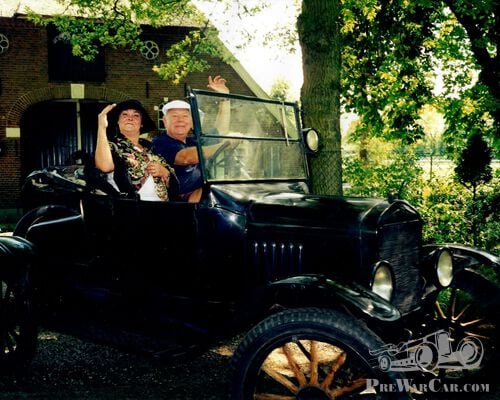
Zeer originele Ford Model T runabout
2 zits cabrio, motor is los, niet gerestaureerd, volledig orgineel, ingevoerd uit california in 1998, van de 2e eigenaar (m'n Oom) die hem van zn b..
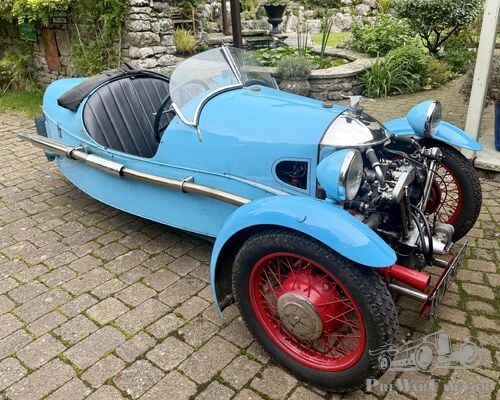
1933 Morgan Three-Wheeler Super Sports, Beetle Back • Show-Specification Car
First registered24 March 1933RegistrationXJ 6336 - original and transferableChassis numberD174Engine numberDTZE 94 H 31..
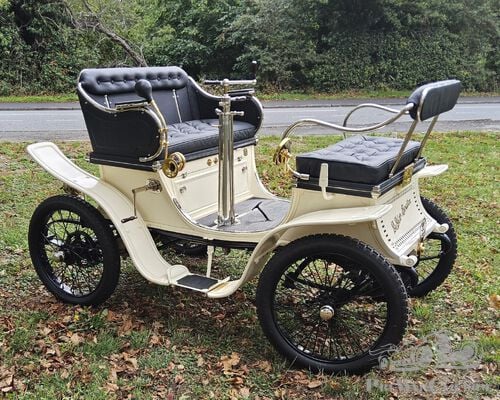
1902 De Dion Bouton Vis-a Vis 4.5 H.P. Reg No. Y123 V.C.C. Cert No. 1649
1902 De Dion Bouton Vis-à-vis 4.5 H.P.Reg. No. Y132 V.C.C. Cert No. 1649Beautifully presented and completely restored following an ex..