The global magazine and marketplace for classic car enthusiasts, by enthusiasts.


Filter
Classic Studebaker, Riley for sale - Studebaker, Riley cars for sale
-

Studebaker 1927 for sale
Authentic race car of the time - Everything is working - All parts of its original mechanics - I have the history of the car - 6 cylinders - Ready to export - for more info visit www.aragonaclassiccars.com -
Riley Biarritz 1929
Present owner since 2019, nice original condition. Regular light use and campaigned on Welsh LC&ES Rallies, driving there and back from Wiltshire. (VSCC Light Car eligible. photo (c) Peter McFadyen).Reconditioned Magneto, refurbished petrol tank, electric fan, five new tyres, new battery. Fabric body. Being sold due to loss of.. -
1935 Riley MPH 14/6
1935 Riley MPH 14/6 for saleOne of only c16 genuine MPH cars to be builtUnique Bertelli coachworkExtensively researched by marque expert Robin Cameron Riley achieved immense competition success during the inter-war years and, with its rakish styling and six-cylinder engine, the MPH model was, i.. -
Riley 12/4 Special Project
Due to many Projects, we are selling our long term 1935 Adelphi based Special. Engine is 12/4 with preselector gearbox.The Body was inspired by an Alfa Romeo Race Car. ( see photos ).All Original Adelphi parts are included and in need of refurbished and re assembly. Original old registration book and V5 Finished it will be.. -
Studebaker Commander Big Six 1928
A special and very beautiful Studebaker Commander from 1928, also known as the Big Six due to its powerful 5.8-liter 6-cylinder engine.The car was very well restored in the 1970s and subsequently won a senior award at the Hershey car show in 1973. After that, the car was purchased by a collector, well maintained, and used for several rall.. -
Riley 14/6 MPH Rep. 1936
This beautiful MPH Replica was accurately recreated by Riley Specialist Barrie Gillies circa 2002.Every detail is beautifully crafted, just like the original. This includes the interior and the storage compartments for the racing windows.Fast 6 cylinder engine that makes an impressive sound.Ideal car for rallies and events. -
RILEY 12/4 Sport komplette Technik überholt
Riley 12/4 SportCompletely ooverhauled technique and rebuilt by a specialist companyEngine tuned for increased performancePreselector tested on a dynamometerAxles, steeringNew rims and tiresBuilt to a high standardSoft top and cockpit coverRuns very well.German registration (H) -
Riley 14/6 Special 1933
The ExperienceStep into the golden age of British motoring. This 1933 Riley 14/6 Special is a masterclass in pre-war engineering. It creates a rare sensation where the world slows down, leaving only the roar and rush of a true vintage racer. Meticulously built to pair breathtaking aesthetics with the power of the.. -
The famous white Riley 12/4 from 1936 with Race History ex New Zealand
The famous white Riley of racing driver Mrs. Ivy Stephenson , Riley 12/4 Kestrel Special from 1936A car which was built as a race car and still can be successfully raced today!- A known car with racing history in New Zealand -Restored in excellent state and condition-Comprehensively files and documentation .. -
Riley 12/4 Sports Special
The 1937 Riley 12/4 Sports Special sits at the intersection of two important British motoring traditions: Riley's sophisticated pre-war engineering and the long-standing culture of building "specials" from older chassis.The Riley 12/4: An Advanced Sporting CarThe underlying Riley 12/4 was introduced in 1935 as Ri..


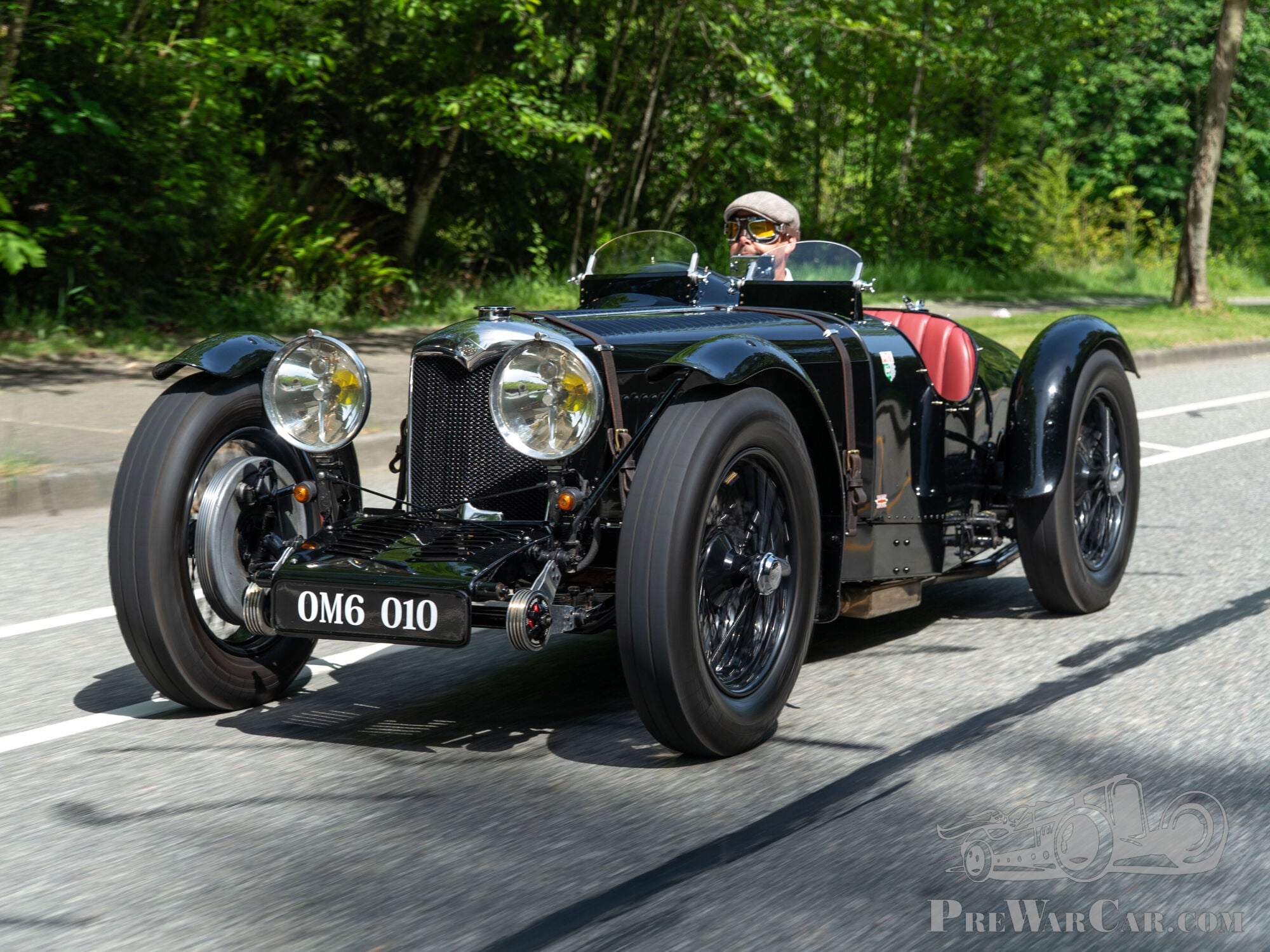


Studebaker
US/ CDN, 1902 – 1966
(1) Studebaker Corp, South Bend, Indiana, 1902 – 1954
(2) Studebaker-Packard Corp, South Bend, Indiana, 1954 – 1964
(3) Studebaker Corp of Canada Ltd, Hamilton, Ontario, 1964 – 1966
The brothers Henry and Clem Studebaker opened a blacksmith’s and wagon-building shop in South Bend in 1852, horse-drawn vehicles of their construction serving in both the American Civil War and World War 1, and production continuing until 1919. Their first Studebaker cars were electrics, made in modest numbers from 1902 to 1912: these Studebaker carwere joined in 1904 by the Model-C petrol Studebaker car, a typically American 16hp flat-twin with amidships engine, 2-speed gearbox, and chain drive. This Studebaker carwas followed a year later by a vertical 4 on more European lines, this Studebaker car was selling for $3.000. For the next few seasons, however, Studebaker electred to act as selling gents for Studebaker cars built to their order, and their more expensive offerings of Studebaker cars were built by Garford of Elyria. The cheaper machines were the EMF and Flanders built by the Everitt-Metzger-Flanders Co, and these two makes accounted for 9.700 Studebaker cars in 1910. 1913 saw a brace of Studebaker cars made at South Bend, both with sv monobloc engines, dual ignition, and electric lighting and starting: the 3-speed gearboxes on the Studebaker cars were mounted in unit with the back axles, and the 6-cylinder Studebaker car was claimed to be the first such car to retail in the USA for less than $2.000. In 1914 there was a smaller, 15/20hp Studebaker car with 3.2-litre 4 with coil ignition only. Studebaker sold over 45.000 Studebaker cars in 1915, and their sixth position in 1916 US sales was matched by a seventh place in 1920. 1919 was the last year for 4-cylinder Studebaker cars, and the 1920 Studebaker cars, while retaining separate gearboxes, abandoned the transaxle layout. Studebaker carmodels available were 6s of 4.7-litres and 5.8-litres, the latter establishing a line of really large 6-cylinder Studebaker cars which survived until 1928. An inexpensive 3.3-litre Studebaker Light 6 joined the range in 1921, and 1923 Studebaker cars had all-metal bodies with welded steel pressings. Balloon tyres were standardized on Studebaker cars in 1925, in which year contracting-type hydraulic front wheel brakes were an option: open Studebaker cars were made with permanent tops of the ‘California’ type and detachable side-curtains. Front wheel brakes were standard on the Studebaker carin 1926, but the Studebaker carcompany reverted to mechanical actuation in 1927, in which year a ‘compact’, the Studebaker Erskine, was marketed. Studebaker cars went after stock-car records in a big way in the later 1920s, an outstanding performance of a Studebaker car being 25.000 miles in 25.000 minutes. The 1929 range Studebaker cars consisted of two 6s, the ‘Studebaker Dictator’ and ‘Studebaker Commander’ (at $1.265 and $1.495 respectively), and a brace of straight-eights of 4-litres’ and 5.5-litres’ capacity. Pierce-Arrow was acquired by the Studebaker car company in 1928, but regained its independence five years later. In 1930 Studebaker cars, with Plymouth, pioneered the free wheel, offered initially on 8-cylinder Studebaker cars alone, but available throughout the range by the latter part of the year, when the cheapest Studebaker car, the Light 6, could be bought in England for £295.
Another compact Studebaker carappeared under the Rockne nameplate in 1932. Special versions of the ‘Studebaker President 8’ distinguished themselves in the Indianapolis 500-Mile Race. Cliff Bergere’s Studebaker Special finishing 3rd, while in 1933 6th to 12th places were filled by similar Studebaker cars. Studebaker cars went into receivership in 1933, but came back strongly in 1934 with an unattractively-styled three-model range of Studebaker cars – the 3.4-litre ‘Studebaker Dictator 6’, the 3.6-litre ‘Studebaker Commander 8’, and the 4.1-litre ‘Studebaker President 8 ‘, all with synchromesh, free wheel, and X-braced frames. Subsequent evolution of Studebaker cars followed accepted American lines: transverse independent front suspension, automatic overdrive, and hydraulic brakes once more in 1935: a hill-holder (modernized version of the sprag) in 1936: headlamps half-faired into the wings of the Studebaker car in 1938: and column change in 1939, when Raymond Loewy became responsible for the Studebaker car Corporation’s styling. 1939 was also the first year for one of America’s longest-lived modern economy cars, the 2.7-litre 6-cylinder sv ‘Studebaker Champion’ selling at $765. Fluid couplings was available on the 1942 Studebaker car range, which included Studebaker cars last straight-8s. The revolutionary post-war ‘coming or going’ style with wrap-around rear window on Studebaker cars was launched by Loewy on the 1946/ 1947 Studebaker cars with 2.8-litre and 3.7-litre 6-cylinder engines. Sales climbed to 239.000 Studebaker cars in 1949, and the inevitable ohv V8 – a relatively small one of 3.8-litres – replaced the bigger 6 in 1951 Studebaker cars. Studebaker car companys answer to the big battalions was the low and elegant line of the 1953 Studebaker cars, which unfortunately became more cluttered down the years, and finances were not impoved by the merger of the Studebaker car company with Packard in 1954. An interesting departure was the sporting ‘Studebaker Hawk’ coupé powered by Packard’s V8 engine and Ultramatic transmission in 1956: 1957 versions had blown Studebaker car engines, the only example of a factory-equipped super-charger (save the 1954 Kaiser) since the Graham. The Studebaker car company managed to get their ‘Studebaker Lark’ compact sedan tooled and into production in ten months in 1959, and this descendant of the old sv ‘Champion’ was the only Studebaker car now offered with the exception of the ‘Studebaker Hawk’. The small 6 Studebaker car achieved ohv at long last in 1961, and 1962 saw the exciting fiberglass-bodied ‘Studebaker Avanti’ coupé with disc brakes on the front wheels, a 4-speed gearbox, and optional supercharger. The Studebaker car annexed 29 stock-car records, including a flying mile at 168.15mph, but neither this nor the continuing ‘Lark’ range could save Studebaker cars. A wide choice of Studebaker car models – two 6s and three 8s – was listed for 1964, but early in the season South Bend stopped making Studebaker cars, and production was transferred to the Canadian plant which had been assembling Studebaker cars since 1912. Even as an ‘import’, the Studebaker car did not sell well: the last examples of the Studebaker car marque had 3.2-litre 6-cylinder and 4.7-litre 8-cylinder Chevrolet engines, but even these were abandoned in the spring of 1966. Production of the ‘Studebaker Avanti’ was continued on a small scale by an independent factory in South Bend.
Source: Georgano, encyclopedia of motorcar; MCS
The information is written with the greatest of care. However, if you have any suggested amendments please contact us at office@prewarcar.com
Riley
GB, 1898 – 1969
(1) Riley Cycle Co Ltd, Coventry, Warwickshire, 1898 – 1912
(2) Riley (Coventry) Ltd, Coventry, Warwickshire, 1912 – 1948
(3) Riley Motors Ltd, Abingdon, Berks., 1948 – 1969
The first Riley car was a small single-cylinder belt-driven voiturette which Riley car did not go into production. Motor Riley tricycles followed n 1900, and a handlebar-steered Riley tricar with 2 forward speeds, and a 517cc engine with mechanically-operated inlet valves in 1903. Riley Tricars were made until 1907, later examples of these threewheeled Riley cars being twins with driver’s seats in place of saddles, water cooling and wheel steering. The 1.034cc V-twin engine was also fitted to the Riley car company’s first 4-wheelers, which Riley car had amidships-mounted power unit with their gearboxes alongside and chain drive, and the Riley car sold for £168. Bigger V-twins of 2-litres’ capacity, more conventional layout and round radiators were made from 1908 onwards. These Riley car incorporated pressure lubrication, shaft drive, constant-mesh 3-speed gearboxes, and Riley’s own patent detachable wheels, the demand for which brought Riley car production almost to a standstill and was responsible for the formation of the new Riley car company in 1912. In 1914 the 2-cylinder Riley cars were still being made, but there was also a new 2.9-litre sv monobloc four Riley car with worm drive, which was offered again after World War 1 by the Riley engine Co, though this Riley car soon disappeared from the market.
The first post-war 1 Riley cars were the Riley Elevens with sv 1½-litre 35bhp engines, alloy pistons and full electrical equipment which Riley cars were selling £550 in 1920, acquiring spiral bevel final drive in 1921. The Redwinger sports version of the Riley car, with wire wheels and polished-aluminium coachwork appeared in 1923, offering 70mph for £450, and the sv Riley cars were continued until 1928, with a 1.645cc engine and the option of front-wheel brakes in 1925. One of these Riley Twelves was used to prospect Kenya’s road system in 1926, and in 1927 there was even a supercharged development Riley car of the Redwinger available, though this Riley car was overshadowed by Percy Riley’s advanded new Riley Nine, with a 1.987cc 32bhp 4-cylinder engine, twin camshafts and high push-rods, a unit which was to form the basis of all Riley car designs made up to 1957.
In 1928 came the handsome Riley Monaco fabric sports saloon version at £298, a best-seller Riley car from the start, and the lowered and tuned Riley Brooklands sports, inspired by the late J.G. Parry Thomas, which Riley car weighed 1.120lb, had a twin-carburettor 50bhp engine, and was capable of 80mph, all for £395. A twin carburettor variant of the touring Riley Nine followed in 1929, along with a new 1.6-litre 6-cylinder Riley Fourteen of similar styling at £495.
Riley cars had a distinguished competition record in the following years: class wins with a Riley car in the 1929, 1930, and 1931 Tourist Trophies were followed by Whitcroft’s outright victory in 1932, while two more wins were recorded by F.W. Dixon on the later 1½-litre 4-cylinder Riley car in 1935 and 1936. A 4th place at Le Mans in 1933 led to 2nd, 3rd, 5th, 6th, 12th and 13th places in 1934, not to mention three successive wins – 1934, 1935, and 1936 – in the BRDC 500 Mile Race at Brooklands. Leverett won the light-car class of the 1931 Monte Carlo Rally on a Riley Nine, while the 6-cylinder racing Riley cars of 1933-1934 formed the genesis of the ERA, and nearly twenty years later the late Mike Hawthorn was to make his name in Club Racing on sports Riley Nines and 1½-litres. Both the Riley Nine and the Riley 14/6 were progressively developed, the former Riley car acquiring vacuum feed in 1931, a lowered chassis and semi-panelled bodywork in 1932, and an optional (later standard) preselector gearbox in 1934. A super-sports 6-cylinder 1½-litre Riley car with water-cooled centre main bearing appeared in 1932, being followed in 1933 by the touring Riley Mentone version at £348. 1933 also brought two advanced body styles of Riley cars, the fastback Riley Kestrel saloon (listed up to the end of the old Riley car company in 1938) and the more-conservatively styled Riley Falcon on which the doors opened into the roof. A Salerni automatic transmission was offered on the 14/6 Riley car, but did not go into regular production.
Two handsome sports two-seater variants Riley cars were listed in 1934/ 1935, the Riley 9hp Imp on a 7ft 6in wheelbase and the 1.654cc 6-cylinder Riley MPH which gave over 90mph for £550, while a newcomer in 1935 was the classic 1½-litre Four Riley car with Wilson gearbox, rod-operated Girling brakes and centralized chassis lubrication, a best-seller in its class at £335, and available in single- and twin-carburettor versions: subsequent developments were the 85mph Riley Sprite two-seater and the Riley Kestrel-Sprite and Riley Lynx-sprite saloon and tourer which offered more room but the same highly-tuned engine for £398. A cheaper Riley Nine, the Riley Merlin with pressed-steel bodywork, came on the market in 1936, along with the 1½-litre, a 6-cylinder 15/6 Riley car, and a 2.2-litre V8 Riley car, of which very few were made, the engine of the V8 Riley car made up of two 9hp blocks. 1937 Riley Nines came with new 6-light Riley Monaco bodies and twin-carburettor 42bhp engines as standard, while other new models of Riley cars were an abortive 3-litre luxury V8 made by a subsidiary company, Autovia Cars, and a more successful long-stroke 2.4-litre Big Four Riley car on classic lines, with an 85bhp engine and Borg-Warner 3-speed synchromesh gearbox incorporating an overdrive at £385. Overdrive was optional on 1938 1½-litres Riley cars.
Finances, however, were insecure and the Riley car company were acquired by the Nuffield Organization later in that year. Under the new management only the 1½-litre and the Big Four Riley cars were continued, with disc wheels, conventional synchromesh gearboxes and Wolseley-like bodywork. The post-World War 2 successors Riley cars used the same engines, but were altogether more handsome Riley cars with independent torsion-bar front suspension and fabric tops, the bigger engine’s output being boosted first to 90bhp and then to 100bhp: this Riley car unit was also used by Healey in the 1946 – 1954 period, while some open three-seater versions with column change were made by Riley cars for export. Hypoid back axles and full hydraulic brakes were incorporated in 1952 Riley cars.
After the Nuffield-Austin amalgamation the 1½-litre Riley car was continued into 1955 with relatively little change, but the 1954 2½-litre Riley Pathfinder shared its bodywork with Wolseley’s 6-90, the new chassis being a BMC design with coil rear suspension and cam-type steering. Even this disappeared after 1957 in favour of a version with a 2.6-litre 6-cylinder ohv BMC engine, and subsequent Riley cars were merely luxury versions of BMC themes, starting with the Riley One-Point-Five (basically a Wolseley 1500), and working through variations of the Farina-styled 1½-litre and 1.6-litre saloon Riley cars, the Mini, and, from 1966, the 1100/1300 family with Hydrolastic suspension, known in Riley cars guise as the Kestrel. Riley’s Mini, the Riley Elf, had a built-out boot and (from 1963) a 998cc engine in place of the standard 848cc Austin/ Morris type. This meaningeless badge-engineering was stopped by British Leyland in 1969.
Source: Georgano, encyclopedia of motorcar; MCS
The information is written with the greatest of care. However, if you have any suggested amendments please contact us at office@prewarcar.com


Featured
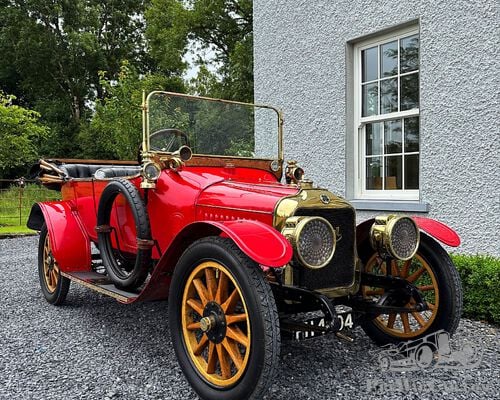
1914 Brasier
1914 Brasier Tourer 9ABrasier were a French manufacturer who were in business from 1901 until 1930, when the company became victim of the gr..
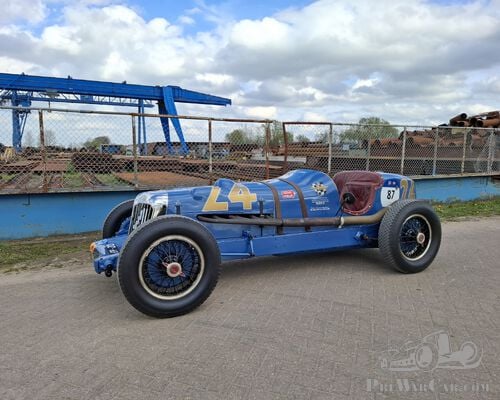
1932 - Graham " Lucenti " Indianapolis
Original participant of the 1932, 1934 and 1935 Indy 500. Best result: finishing 10th overall in the 1934 Indy 500 with driver “Herb” Ardinger...
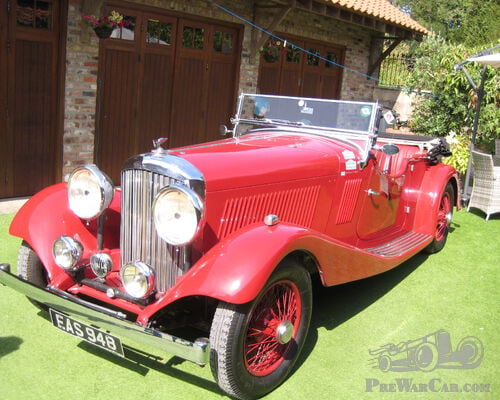
1935 Bentley 3.5 ltr. VDP 4str. Tourer
Chassis B 123 CW was first registered 14th March 1935, and in the late eighties underwent a " body-off" restoration and fitted with VANDEN PLAS