The global magazine and marketplace for classic car enthusiasts, by enthusiasts.


Filter
Classic Sunbeam, Darracq for sale - Sunbeam, Darracq cars for sale
-

1924 Sunbeam 4.5 litre 24/70 tourer
1924 Sunbeam 4.5 litre 24/70 tourer Chassis Number: 7079DRegistration number: BF7480 A magnificent late 4.5 litre Sunbeam tourer. The car was first supplied to the antipodes in engine & chassis form, prior to receiving its current Australian body. It is featured in the recognised authority o.. -
Exceptional 8Hp Darracq Type C
This breath-takingly original 1901 Veteran Darracq Motorcar is the later version of the Type C Rear-entrance Tonneau Model. One of about 1200 thought to have been built, it is the most original example of a veteran or vintage car that we have ever encounteredIt stands as a true witness to over 125 years of motoring, and is, in our opinio.. -
1919 SUNBEAM 24HP 4 1/2 LITRE TOURER BY BREWSTER.
1919 Sunbeam 24hp 4 1/2 Litre Tourer by Brewster. Chassis number: 24/5124/19 Registration Number: DA3651 TRULY EXCEPTIONAL & LIKE NEW!!! The recipient of a massive £160,000 restoration over four years with the majority of the mechanical works being undertaken by noted vintage specialists VBE restorations. A massive sheaf of.. -
1926 Sunbeam Super-Sports 3 Litre Twin Cam
Year: 1926 Chassis No:4163GF Engine No:4017F Car No: 18689 U.K. Registration No: YM4066 Coachwork: Original Open Touring Factory The Wolverhampton based Sunbeam Motorcar Company traded from 1899-1935. During that short 36 year period they produced some of the most important and well engineered motorcars ever to be designed and built in G..


Sunbeam
GB, 1899 – 1937, 1953 to date
(1) John Marston Ltd, Wolverhampton, Staffs., 1899 – 1905
(2) Sunbeam Motor Car Co Ltd, Wolverhampton, Staffs., 1905 – 1935
(3) Sunbeam Motors Ltd, London W.11, 1936 – 1937
(4) Sunbeam-Talbot Ltd, Ryton-on-Dunsmore, Warwickshire, 1953 – 1970
(5) Chrysler United Kingdom Ltd, Ryton-on-Dunsmore, Warwickshire, 1970 to date
John Marston’s tinplate and japanware firm, which had been making bicycles since 1887, built its first 4hp belt-driven prototype Sunbeam car in 1899, followed by another machine with a twin-cylinder engine in 1901. The first model Sunbeam car to see series production was, however, the diamond-formation and allegedly skidproof Sunbeam-Mabley voiturette with 2¾hp De Dion engine, a number of which were sold for £130 in the 1901-1904 period. More conventional was the 12hp Sunbeam car marketed under T.C. Pullinger’s direction in 1903, which was based on a Berliet design and had a flitch-plate frame, chain drive with Sunbeam cars patent oil-bath chain cases, and a 2.4-litre 4-cylinder engine with automatic inlet valves. A 3.6-litre 6-cylinder Sunbeam car was on the market briefly in 1904, but Sunbeam cars soon progressed to Shaw-designed T-head fours, though another short-lived six Sunbeam car appeared in 1907. Sunbeam cars great years started in 1909 when Louis Coatalen joined the Sunbeam car firm from Hillman. In that season the Sunbeam car company was offering three L-head fours with chain drive, and capacities of 3.4, 4.5 and 6.3-litres, plus an odd 3.2-litre twin-cylinder Station Cart Sunbeam car. Coatalen’s first effort was a T-headed 14/18hp Sunbeam car, available with either shaft or chain drive. This Sunbeam car was followed a year later by a 2.4-litre 12/16 on similar lines, but with pressure lubrication and on overdrive gearbox, while overhead valves were tried out on a racing Sunbeam car, the Nautilus, at Brooklands in 1910. An improved 12/16 Sunbeam car of 3-litres’ capacity with monobloc engine ran in the 1911 Coupe de l’Auto race, foreshadowing an immensely successful touring development which Sunbeam car sold initially for £375. This Sunbeam car had an L-head engine and was made up to 1921. In 74bhp racing guise the Sunbeam car scored 1-2-3 victory in the 1912 Coupe de l’Auto, following this up with a 3rd place in 1913. In 1914 Sunbeam car company built Henri-inspired twin-ohc 4-cylinder racers both for the Tourist Trophy and for the French Grand Prix, and at the outbreak of World War 1 the Sunbeam car range consisted of the 12/16 in standard and sporting forms, a 4-litre 16/20 Sunbeam car of similar general design, and a 6.1-litre 6-cylinder Sunbeam car rated at 25/30hp, all offered with electric lighting. The Sunbeam car company concentrated on aero engines during the war years, though a 4.9-litre twin-ohc 6-cylinder Sunbeam ca was sent to Indianapolis in 1916 and took 3rd place, while Rovers took over production of the 12/16 for the Flighting Services. Renamed the 16, this Sunbeam car reappeared in civilian form with full electrical equipment at £790, along with a smaller vesion of the pre-war 25/30 Sunbeam car powered by a 4½-litre engine.
The Sunbeam car company amalgamated with Talbot and Darracq in 1920 to form the STD combine, and the next five years saw an energetic racing programme of Sunbeam cars. Twin-ohc 108bhp straight-8 Sunbeam cars were made for the 3-litre formula of the immediate post-war years, followed by some unsuccessful 2-litre fours, and finally the twin-ohc 6-cylinder ‘Fiats in green paint’, designed by Bertarione, which won the French and Spanish GPs in 1923, and this Sunbeam car ran supercharged in 1924, as well as having a long and distinguished competition career in later years. Chassagne won the Tourist Trophy on a 3-litre straight-8 Sunbeam car in 1922, while one of the regular 3-litre sports Sunbeam cars finished 2nd at Le Mans in 1925. Sunbeam cars took the World’s Land Speed Record five times in the 1922-1927 period: Lee Guiness started with 133.75mph on the 350hp V12 sprint Sunbeam car, a figure which Campbell subsequently raised, first to 146mph on the 4-litre V12, a Sunbeam car which was also used for road racing, and the following year he became the first man to exceed 200mph on land with the twin-engined chain-drive 45-litre Sunbeam car. Sunbeam cars last record car, the Silver Bullet of 1930, was unsuccessful.
Touring Sunbeam carss of the 1920s were cars of great refinement if not outstanding performance. The basic 16 and 24hp types Sunbeam cars were redesigned with push-rod overhead valves in 19222, ohc sporting versions being also listed, while a more modest 2-litre 14hp Sunbeam car with unit gearbox was available at £725. Front-wheel brakes arried on the 6-cylinder 16/50 Sunbeam car in 1924, and were optional also on the 14/40 Sunbeam car which replaced the 14hp model. An impressive 3-litre 6-cylinder twin-ohc sports Sunbeam car with dry-sump engine was made in small numbers between 1925 and 1930, but the Sunbeam car was ‘too fast for its chassis’ as well as being expensive to make and buy. A big straight-8 Sunbeam car with a push-rod engine, available in 4.8-litre and 5.4-litre forms, was introduced in 1926 at prices from £1.295 up and front-wheel brakes became standard on all Sunbeam cars. All Sunbeam cars had the V-radiator by 1927, when the fours were dropped, and the standard touring sixes were the 2-litre 16hp at £550, the 2.9-litre 20hp Sunbeam car at £750, and the 3.6-litre 25hp at £950, all with plate clutches, spiral bevel final drive, and cantilever rear suspension. Thereafter Sunbeam car design changed little, and sales of Sunbeam cars declined though quality was maintained. Semi-elliptic springs were found at the rear of the smaller 1930 Sunbeam carmodels, in 1931 the Sunbeam cars acquired hydraylic brakes and radiator shutters, and the 16’s engine was enlarged to 2.2-litres. The 1932 Sunbeam cars’ silent-third gearboxes gave way to synchromesh on 1933 16 and 20hp Sunbeams. That year there was also a 2.9-litre Speed Model Sunbeam car with crash box at £745, though its main competitor was STD’s other fast tourer, the Talbot 105. The old Sunbeam car firm’s last new model was a ponderous 1.6-litre ohv four, the Sunbeam Dawn of 1934, with preselector gearbox and independent front suspension. This Sunbeam car was offered again in 1935, along with the 20, the 25, and the Speed Model, but the collapse of the STD combine brought receivership and purchased by Rootes, and an ohv Roesch-designed 4½-litre straight-8 Sunbeam car announced for 1937 never went into production. There were no Sunbeams in 1938, and when the Sunbeam-Talbot range was announced for 1939 the Sunbeam car was based on the later Rootes Talbots.
The name of Sunbeam cars did not reappear until 1953, when it was given to a sports two-seater Sunbeam car of the 2.3-litre ohv 4-cylinder Sunbeam-Talbot 90, the Sunbeam Alpine, which sold for £1.269, and this Sunbeam car collected four Coupes des Alpes in that year’s Alpine Rally, following this up with a Gold Cup (for Stirling Moss) and a Coupe des Dames (for Sheila Van Damm) in 1954. In 1955 the basic 90 saloon Sunbeam car was marketed as the Sunbeam MK III, and further laurels included the Malling/ Fadum win in that year’s Monte Carlo rally. The type Sunbeam car was listed until 1957, being joined in 1956 by a Hillman Minx-based sports saloon, the Sunbeam Rapier, with a 1.4-litre square 4-cylinder 62bhp engine, unitary construction, and overdrive as standard equipment, at £986. This Sunbeam car did well in subsequent Alpines and Monte Carlo Rallies, as well as winning its class in the 1956 Mille Miglia, and by 1958 the Sunbeam car had grown up to 1½-litres and 68bhp, acquiring a less Hillman-like grill in the process, though overdrive was now an extra. A sports two-seater Sunbeam car, another Alpine, with integral construction, was listed for 1960, and subsequent evolution was on regular Rootes lines: diaphragm clutches in 1964, with the option of automatic on the Alpine, all-synchromesh gearboxes in 1965, and 1.7-litre 5-bearing engines in 1966. 1964 brought two new developments of the basic theme Sunbeam car, an Italian-bodied Venezia sports saloon based on the Humber Sceptre, and the Tiger Sunbeam car, which was an Alpine with rack-and-pinion steering and a 4.3-litre, 164bhp Ford V8 engine, this despite the Rootes-Chrysler conncection. In 1966, the Rapier V, Alpine V, and Tiger comprised the Sunbeam car name. A 51bhp Sunbeam car-version of the Imp was available in the home market in 1967, and this Sunbeam car was followed by the more sporting Stiletto coupé for 1968.
An entirely new Rapier Sunbeam car on Hillman Hunter lines was announced for that year, its fastback styling inspired by Plymouth’s Barracuda. It had an 88bhp engine, a close-ratio gearbox, and overdrive as standard.
During 1968 the old Sunbeam Alpine was discontinued (the Tiger had already gone), and the Rapier range was rounded out, first by the H120 of 1969 with twin-carburettor Holbay-tuned engine giving 105bhp and Rostyle wheels, and then by the Alpine, a simplified version of the basic theme introduced for 1970. These three fastback Sunbeam cars were still being made in 1973, along with the Sunbeam Sport based on the Imp saloon. The Stiletto was discontinued during 1972.
Source: Georgano, encyclopedia of motorcar; MCS
The information is written with the greatest of care. However, if you have any suggested amendments please contact us at office@prewarcar.com
Darracq , Talbot Suresnes
France, 1896 – 1959
(1) Société A. Darracq, Suresnes, 1896 – 1905
(2) A. Darracq & Co (1905) Ltd, Suresnes, 1905 – 1920
(3) Automobiles Talbot, Suresnes, 1920 – 1959
An immense complexity of nomenclature surrounds the two makes, Darracq and Talbot Suresnes. While the cars themselves were always designed and built in France, the Darracq company was financed in England during its golden period and after (1905-1935), then merged with a French concern which had been formed to make Italian cars, and subsequently acquired American affiliations. Alexandre Darracq founded the Gladiator cycle company in 1891, selling out to British interests five years later. Darracq then turned briefly to the manufacture of electric carriages, exhibiting a Darracq coupé at the 1896 Paris Salon. In 1898, however, he acquired (for £10.000) the manufacturing rights of Léon Bollée’s 4-wheeler voiturette, a belt-driven 5hp machine with a single-cylinder air-cooled horizontal engine, tube ignition and steering-column gear-change. It was not a success, though column change was to persist on some of Darracq’s own designs until 1910.
The idea of a small and inexpensive Darracq runabout persisted, and in 1900 came the first real Darracq: its 785cc front-mounted vertical single-cylinder engine had automatic inlet valves, coil ignition, a cone clutch and shaft drive – Alexandre Darracq, like Louis Renault, never marketed a chain-driven car. The Darracq could be bought in England for £250 in 1901, in which year the Société Darracq took up racing with a 1.9-litre 2-cylinder machine driven by Henry Farman. Though only ‘Darracq singles’ were offered to the public in 1902, racing Darracq cars were formidable voiturettes with 5.9-litre 4-cylinder engines and won the light-car category of the Concours du Ministre alcohol race, besides doing well in the Paris-Vienna. A manufacturing licence for Germany was taken out by Opel that year. Darracq cars were raced until 1906, winning the light-car and voiturette categories of the Circuit des Ardennes. The Darracq company’s grandes voitures were less successful: Darracq was determined to win the 1904 Gordon Bennett Cup and entered not only his Darracq own team of 11.3-litre machines for the French éliminatoire, but also sponsored three Opel-built cars in Germany, with another three Darracq cars specially built from scratch by Weir of Glasgow, to carry the British colours. Only von Opel’s Opel-Darracq actually raced at Homburg and this failed to survive a single lap. Some very light 9.9-litre ohv Darracq cars were prepared for 1905, but it was not until the following season that a twofold success was achieved: Wagner’s victory in the Vanderbilt Cup, and Algernon Lee Guinness’s 117.66mph over the kilometer at Ostend on a special 22.5-litre ohv V8 Darracq sprint car. Darracq cars took 2nd and 3rd places in the 1908 TT but no more were raced until 1921.
Meanwhile the utility cars prospered. Single-, twin- and 4-cylinder Darracq models were marketed in 1903, all but the smallest having mechanically-operated side valves in a T-head, while the simplified 8hp Darracq Populaire sold for only 4.800fr in France. 1904 saw the introduction of steel frames pressed out of a single sheet of metal and also the advent of the rapid 3.1-litre 4-cylinder Darracq Flying 15 for sale at £460. The new type of chassis was universal by 1905, when the Darracq company was reorganized under British registry, and some quite big Darracq car were offered, though these were modestly priced, at the top of the regular range being a 5.9-litre 28hp with dual ignition and a 12ft 4in wheelbase at only £687. It was also possible to buy a 70hp Darracq sporting model based on the 1904 Gordon Bennett cars.
The 1907 1100cc single Darracq sold for £159 and had mechanically-operated valves, but at the other end of the range there were the 4.7-litre ‘20/28’, the 11½-litre ohv ‘Vanderbilt Cup’ type, and a 5.7-litre 4-speed six Darracq selling for £850. This had grown up to 8.1-litres with square cylinder dimensions a year later, though Darracqs still had a progressive gear change, and there was a short vogue for rear-axle-mounted gearboxes on a brace of new L-head monobloc fours with 2.3-litre and 3.1-litre engines. This transmission was dropped in 1909, the last year of ‘Darracq singles’, and the twins disappeared twelve months later. Gate change arrived in 1910 on Darracq cars for sale. In 1911 there were seven Darracq models, the 15hp at £275 having overhead inlet valves. The 1912 p Darracq rogramme, however, saw a catastrophic flirtation with the Henriod rotary-valve engine, installed in the 4.4-litre P12 4-cylinder with a 10ft 5in wheelbase, worm drive and dashboard radiator. A 2.6-litre rotary-valve Darracq model had conventional cooling arrangements, but profits faded away to almost nothing, and in the ensuing upheaval M. Darracq retired. Owen Clegg from Rover took over the management and the 1913 Darracq cars were obviously inspired by his successful Rover Twelve. They came in 2.1-litre and 2.9-litre sizes with L-head Monobloc-cylinder engines and worm drive and very soon the Darracq firm was back on a sound footing. Additional to the 1914 range was a 4-litre ’ Darracq 20/30’ and the 16hp Darracq was sold with electric lighting and starting. This latter Darracq model went back into production in 1919 and was joined shortly afterward by an advanced 4.6-litre sv V8 with coil ignition and spiral bevel final drive, which had acquired 4-wheel brakes by the time it reached the production stage.
In June 1920 the British firms of Sunbeam and Talbot, who had joined forces in 1919, merged with Darracq and thenceforward nomenclature becomes complex. For the first few years after the amalgamation, the term ‘Talbot-Darracq’ was freely used on both sides of the Channel, but strictly the cars were ‘Talbot’ (pronounced à la Francaise) in Europe, and ‘Darracq’ in the British Commonwealth up to 1939. The new combine Talbot and Darracq supported racing, though the very successful Henry-designed twin ohc 4-cylinder differential-less voiturettes evolved in 1922 ran indiscriminately as Talbots and Darracqs. They and their descendants were, however, conceived and designed at Suresnes and victories included the 200-Mile Race at Brooklands (1922 running unblown, 1924 and 1925 in supercharged form), the Coupe des Voiturettes (1922 and 1923), and the Penya Rhin race (1923). 1926 saw a team of advanced blown twin ohc 1½-litre straight-8s which never really proved themselves before Sunbeam-Talbot-Darracq’s precarious finances forced a withdrawal from racing in 1927.
In the touring-car field, Sunbeam-Talbot-Darracq settled down to fifteen years of competing against themselves. A 3.2-litre sv 15hp Darracq with detachable head appeared in 1921, still with worm drive, and this was followed a year later by a small ohv 970cc Darracq machine with no differential and coil ignition, made also in England as the 8/18 Talbot, and the first of a line of 1½-litre ohv fours, the 10CV, selling at £595. Worm drive was dropped, and fwb had spread to the smaller Darracq cars in 1924 with the 2.1-litre Darracq DS – in sports form this was said to give 57bhp – but though the firm reverted to magneto ignition they retained wood wheels (still found on some Darracq cars as late as 1931) and 3-speed gearboxes. A year later the 1½-litre Darracq had grown up into the handsome ‘Darracq 12/32’ with 4-wheel brakes and Weymann saloon bodywork; this theme was continued until 1928, by which time the car had a 1.7-litre engine and four forward speeds. Late in 1925 came the first of a long line of ohv push-rod sixes on conventional lines, with 3-speed gearboxes, single-plate clutches, magneto ignition and Perrot-type fwb: the 2.5-litre Darracq TLA gave 72bhp and sold for £800. Both an extra forward ratio and the option of a 2.9-litre unti came the following year. 1928 saw a real light six of 2 litres’ capacity with coil ignition, Talbot’s bi-metal pistons and Bendiz brakes. Only 6-cylinder cars were marketed for sale by Darracq in 1929, when 7-bearing crankshafts and centralized chassis lubrication made their appearance, while the inevitable straight-8 was listed for 1930: it featured a 3.8-litre 100mhp engine with a 9-bearing crank and nitralloy liners, and could be had on an 11ft 10in wheelbase. The next major facelift came in 1933, with box-section frames and transverse ifs on the sixes and eights. Only one 6-cylinder Darracq model was catalogued in 1934, the year in which Darracq followed the lead of Roesch at Talbot by adopting the Wilson preselective gearbox which was retained until 1954.
After the collapse of Sunbeam-Talbot-Darracq Motors in 1935 the Suresness factory came under the control of Major A.F. Lago, who had been well known in London for his L.A.P. ohv conversions in the 1920s. Lago introduced a new line of 6-cylinder ohv cars retaining the X-braced frames and ifs, while synchromesh gearboxes were available on the cheaper variants. The 2.7-litre Darracq 15CV and 3-litre Darracq 17CV were pleasant but not particularly lively tourers, but the 4-litre Darracq 23CV with 7-bearing crank disposed of 165bhp in its Lago Special guise with cross-push-rod valve gear and hemispherical head, and would comfortably exceed 100mph. A 1-2-3- victory in the 1937 French sports-car Grand Prix at Montlhéry in 1937 was followed up by Comotti’s win in the TT. Under the 1938 GP formula the cars were less successful – stripped sports machines could do nothing against Mercedes-Benz and Auto-Union, while the low offset 1939 4½-litre single-seaters were not much faster. A 3-litre blown V16 engine never came to anything, any more than did a plan laid in 1937 to revive the Invicta name by building 3-litre and 4-litre Darracqs with Delage-style bodywork in London.
After World War 2, however, the 4½-litre racers (now ‘Talbot’ or ‘Lago-Talbot’, never ‘Darracq’) came into their own. What they lacked in power they made up in modest fuel consumption, and could often go through a race without refueling, an attribute not shared by blown 1½-litre machines. Chiron’s win at Comminges in 1947 was a prelude to a career that spanned four seasons, and was backed by Rosier’s 1950 Le Mans victory on a similar machine with sketchy road equipment. Pierre Levegh would have repeated this in 1952, against Mercedes-Benz, had he not attempted a single-handed drive for the 24 hours. Touring-car production was hampered by crippling taxation and uncertain finances: 433 cars were sold in 1950, but only 80 in 1951. In spite of this M. Lago had a revised 4½-litre 170bhp Lago Record sports car with hydraulic brakes in production in 1946, following it up with a simpler and cheaper corss-pushrod four, the 2.7-litre Baby in 1950. This was said to have 118bhp, had hydraulic brakes and the choice of synchromesh or preselector, and was offered only with rhd; but it was not a particularly good car, and its styling did not enhance it. By 1952 the range had been restyled, but though Lago was extracting 247bhp from his Le Mans engines, he met with no success, and henceforward the road lay downhill. Various engines were tried: in 1955 there was a 5-bearing 2½-litre four on established Talbot lines, with a 4-speed ZF gearbox and handsome GT-style bodywork. In 1956 Maserati 250 engines were fitted in the Le Mans cars and in 1957, when two cars were still being turned out every week, a final attempt was made to earn dollars with the Lago America, the 1955 chassis with a 2.6-litre BMW V8 power unit. By 1959 Simca were in control at Suresnes, and the Talbot coupé had yet another engine – the old sv V8 motor inherited from Ford of France. Though an odd-looking coupé with Simca Aronde engine was shown on the Talbot stand at the 1960 Paris Salon, no more cars have been made. It is ironic to note that the three partners in the Sunbeam-Talbot- Darracq venture were re-united once more as a result of the Rootes-Chrysler deal in 1965, Chrysler already having a substantial stake in Simca.
Source: Georgano, encyclopedia of motorcar; MCS
The information is written with the greatest of care. However, if you have any suggested amendments please contact us at office@prewarcar.com


Featured
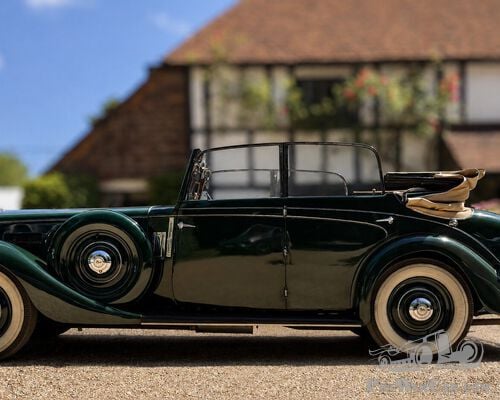
1936 Armstrong Siddeley 20/25 Cabriolet with Tickford coachwork by Salmons & Sons, Newport Pagnell
This exceptionally rare Armstrong Siddeley 20/25 Cabriolet with original Tickford coachwork by Salmons & Sons of Newport Pagnell was first reg..
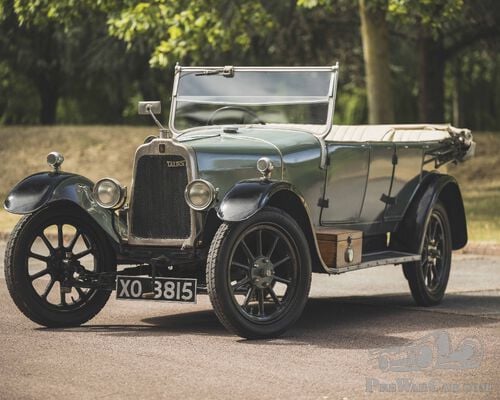
Rare RHD, low miles & great history file
This is an ONLINE-ONLY AUCTION at THE MARKET. The price shown here is the lower estimate. To see all the details, description, 250+ high-res photog..
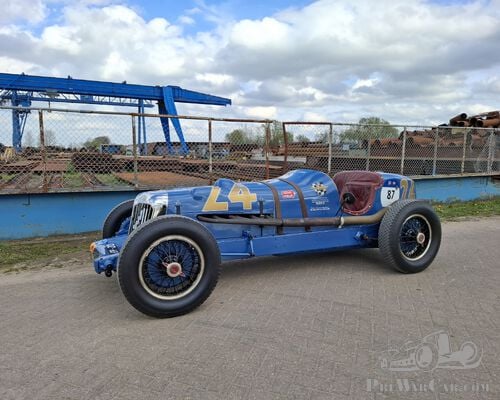
1932 - Graham " Lucenti " Indianapolis
Original participant of the 1932, 1934 and 1935 Indy 500. Best result: finishing 10th overall in the 1934 Indy 500 with driver “Herb” Ardinger...