The global magazine and marketplace for classic car enthusiasts, by enthusiasts.


Filter
Classic Sunbeam, Wolseley (-Siddeley) for sale - Sunbeam, Wolseley (-Siddeley) cars for sale
-

1924 Sunbeam 4.5 litre 24/70 tourer
1924 Sunbeam 4.5 litre 24/70 tourer Chassis Number: 7079DRegistration number: BF7480 A magnificent late 4.5 litre Sunbeam tourer. The car was first supplied to the antipodes in engine & chassis form, prior to receiving its current Australian body. It is featured in the recognised authority o.. -
1913 Wolseley 24/30HP Two-Seater
1913 Wolseley 24/30HP Two-Seater Chassis no. 20034Registration no. J1296Engine no. 34/1134 1913 Wolseley 24/30HP Two-Seater for sale: A large and imposing Edwardian two seat tourer, this 24/30hp model sports Wolseleys large 5 litre six cylinder engine giving ample power and easy modern day cruising spe.. -
1919 SUNBEAM 24HP 4 1/2 LITRE TOURER BY BREWSTER.
1919 Sunbeam 24hp 4 1/2 Litre Tourer by Brewster. Chassis number: 24/5124/19 Registration Number: DA3651 TRULY EXCEPTIONAL & LIKE NEW!!! The recipient of a massive £160,000 restoration over four years with the majority of the mechanical works being undertaken by noted vintage specialists VBE restorations. A massive sheaf of.. -
1926 Sunbeam Super-Sports 3 Litre Twin Cam
Year: 1926 Chassis No:4163GF Engine No:4017F Car No: 18689 U.K. Registration No: YM4066 Coachwork: Original Open Touring Factory The Wolverhampton based Sunbeam Motorcar Company traded from 1899-1935. During that short 36 year period they produced some of the most important and well engineered motorcars ever to be designed and built in G.. -
Wolseley Hornet - 1935
This beautiful Wolseley Hornet began life as a closed saloon. in 2009, the car was extensively restored in Germany by a marque specialist. During the restoration, the saloon body was replaced by an old ‘Daytona’ body fromt Eustace Watkins (London, UK), which was also fully restored. The Hornet is powered by the original (rebuilt) and very smooth.. -
Wolseley Nine 2+2 seater Sports 1935 for sale
Attractive Wolseley "Nine". Very sound chassis with original overhead cam 4 cylinder /1018cc engine. New wooden body frame and floor made by Dennis Compter coachbuilder. Comes complete with frontscreen, bucket seats, dashboard, rear guards, running boards and all instruments. Ask for more photos. The panel work can be completed in our workshop..


Sunbeam
GB, 1899 – 1937, 1953 to date
(1) John Marston Ltd, Wolverhampton, Staffs., 1899 – 1905
(2) Sunbeam Motor Car Co Ltd, Wolverhampton, Staffs., 1905 – 1935
(3) Sunbeam Motors Ltd, London W.11, 1936 – 1937
(4) Sunbeam-Talbot Ltd, Ryton-on-Dunsmore, Warwickshire, 1953 – 1970
(5) Chrysler United Kingdom Ltd, Ryton-on-Dunsmore, Warwickshire, 1970 to date
John Marston’s tinplate and japanware firm, which had been making bicycles since 1887, built its first 4hp belt-driven prototype Sunbeam car in 1899, followed by another machine with a twin-cylinder engine in 1901. The first model Sunbeam car to see series production was, however, the diamond-formation and allegedly skidproof Sunbeam-Mabley voiturette with 2¾hp De Dion engine, a number of which were sold for £130 in the 1901-1904 period. More conventional was the 12hp Sunbeam car marketed under T.C. Pullinger’s direction in 1903, which was based on a Berliet design and had a flitch-plate frame, chain drive with Sunbeam cars patent oil-bath chain cases, and a 2.4-litre 4-cylinder engine with automatic inlet valves. A 3.6-litre 6-cylinder Sunbeam car was on the market briefly in 1904, but Sunbeam cars soon progressed to Shaw-designed T-head fours, though another short-lived six Sunbeam car appeared in 1907. Sunbeam cars great years started in 1909 when Louis Coatalen joined the Sunbeam car firm from Hillman. In that season the Sunbeam car company was offering three L-head fours with chain drive, and capacities of 3.4, 4.5 and 6.3-litres, plus an odd 3.2-litre twin-cylinder Station Cart Sunbeam car. Coatalen’s first effort was a T-headed 14/18hp Sunbeam car, available with either shaft or chain drive. This Sunbeam car was followed a year later by a 2.4-litre 12/16 on similar lines, but with pressure lubrication and on overdrive gearbox, while overhead valves were tried out on a racing Sunbeam car, the Nautilus, at Brooklands in 1910. An improved 12/16 Sunbeam car of 3-litres’ capacity with monobloc engine ran in the 1911 Coupe de l’Auto race, foreshadowing an immensely successful touring development which Sunbeam car sold initially for £375. This Sunbeam car had an L-head engine and was made up to 1921. In 74bhp racing guise the Sunbeam car scored 1-2-3 victory in the 1912 Coupe de l’Auto, following this up with a 3rd place in 1913. In 1914 Sunbeam car company built Henri-inspired twin-ohc 4-cylinder racers both for the Tourist Trophy and for the French Grand Prix, and at the outbreak of World War 1 the Sunbeam car range consisted of the 12/16 in standard and sporting forms, a 4-litre 16/20 Sunbeam car of similar general design, and a 6.1-litre 6-cylinder Sunbeam car rated at 25/30hp, all offered with electric lighting. The Sunbeam car company concentrated on aero engines during the war years, though a 4.9-litre twin-ohc 6-cylinder Sunbeam ca was sent to Indianapolis in 1916 and took 3rd place, while Rovers took over production of the 12/16 for the Flighting Services. Renamed the 16, this Sunbeam car reappeared in civilian form with full electrical equipment at £790, along with a smaller vesion of the pre-war 25/30 Sunbeam car powered by a 4½-litre engine.
The Sunbeam car company amalgamated with Talbot and Darracq in 1920 to form the STD combine, and the next five years saw an energetic racing programme of Sunbeam cars. Twin-ohc 108bhp straight-8 Sunbeam cars were made for the 3-litre formula of the immediate post-war years, followed by some unsuccessful 2-litre fours, and finally the twin-ohc 6-cylinder ‘Fiats in green paint’, designed by Bertarione, which won the French and Spanish GPs in 1923, and this Sunbeam car ran supercharged in 1924, as well as having a long and distinguished competition career in later years. Chassagne won the Tourist Trophy on a 3-litre straight-8 Sunbeam car in 1922, while one of the regular 3-litre sports Sunbeam cars finished 2nd at Le Mans in 1925. Sunbeam cars took the World’s Land Speed Record five times in the 1922-1927 period: Lee Guiness started with 133.75mph on the 350hp V12 sprint Sunbeam car, a figure which Campbell subsequently raised, first to 146mph on the 4-litre V12, a Sunbeam car which was also used for road racing, and the following year he became the first man to exceed 200mph on land with the twin-engined chain-drive 45-litre Sunbeam car. Sunbeam cars last record car, the Silver Bullet of 1930, was unsuccessful.
Touring Sunbeam carss of the 1920s were cars of great refinement if not outstanding performance. The basic 16 and 24hp types Sunbeam cars were redesigned with push-rod overhead valves in 19222, ohc sporting versions being also listed, while a more modest 2-litre 14hp Sunbeam car with unit gearbox was available at £725. Front-wheel brakes arried on the 6-cylinder 16/50 Sunbeam car in 1924, and were optional also on the 14/40 Sunbeam car which replaced the 14hp model. An impressive 3-litre 6-cylinder twin-ohc sports Sunbeam car with dry-sump engine was made in small numbers between 1925 and 1930, but the Sunbeam car was ‘too fast for its chassis’ as well as being expensive to make and buy. A big straight-8 Sunbeam car with a push-rod engine, available in 4.8-litre and 5.4-litre forms, was introduced in 1926 at prices from £1.295 up and front-wheel brakes became standard on all Sunbeam cars. All Sunbeam cars had the V-radiator by 1927, when the fours were dropped, and the standard touring sixes were the 2-litre 16hp at £550, the 2.9-litre 20hp Sunbeam car at £750, and the 3.6-litre 25hp at £950, all with plate clutches, spiral bevel final drive, and cantilever rear suspension. Thereafter Sunbeam car design changed little, and sales of Sunbeam cars declined though quality was maintained. Semi-elliptic springs were found at the rear of the smaller 1930 Sunbeam carmodels, in 1931 the Sunbeam cars acquired hydraylic brakes and radiator shutters, and the 16’s engine was enlarged to 2.2-litres. The 1932 Sunbeam cars’ silent-third gearboxes gave way to synchromesh on 1933 16 and 20hp Sunbeams. That year there was also a 2.9-litre Speed Model Sunbeam car with crash box at £745, though its main competitor was STD’s other fast tourer, the Talbot 105. The old Sunbeam car firm’s last new model was a ponderous 1.6-litre ohv four, the Sunbeam Dawn of 1934, with preselector gearbox and independent front suspension. This Sunbeam car was offered again in 1935, along with the 20, the 25, and the Speed Model, but the collapse of the STD combine brought receivership and purchased by Rootes, and an ohv Roesch-designed 4½-litre straight-8 Sunbeam car announced for 1937 never went into production. There were no Sunbeams in 1938, and when the Sunbeam-Talbot range was announced for 1939 the Sunbeam car was based on the later Rootes Talbots.
The name of Sunbeam cars did not reappear until 1953, when it was given to a sports two-seater Sunbeam car of the 2.3-litre ohv 4-cylinder Sunbeam-Talbot 90, the Sunbeam Alpine, which sold for £1.269, and this Sunbeam car collected four Coupes des Alpes in that year’s Alpine Rally, following this up with a Gold Cup (for Stirling Moss) and a Coupe des Dames (for Sheila Van Damm) in 1954. In 1955 the basic 90 saloon Sunbeam car was marketed as the Sunbeam MK III, and further laurels included the Malling/ Fadum win in that year’s Monte Carlo rally. The type Sunbeam car was listed until 1957, being joined in 1956 by a Hillman Minx-based sports saloon, the Sunbeam Rapier, with a 1.4-litre square 4-cylinder 62bhp engine, unitary construction, and overdrive as standard equipment, at £986. This Sunbeam car did well in subsequent Alpines and Monte Carlo Rallies, as well as winning its class in the 1956 Mille Miglia, and by 1958 the Sunbeam car had grown up to 1½-litres and 68bhp, acquiring a less Hillman-like grill in the process, though overdrive was now an extra. A sports two-seater Sunbeam car, another Alpine, with integral construction, was listed for 1960, and subsequent evolution was on regular Rootes lines: diaphragm clutches in 1964, with the option of automatic on the Alpine, all-synchromesh gearboxes in 1965, and 1.7-litre 5-bearing engines in 1966. 1964 brought two new developments of the basic theme Sunbeam car, an Italian-bodied Venezia sports saloon based on the Humber Sceptre, and the Tiger Sunbeam car, which was an Alpine with rack-and-pinion steering and a 4.3-litre, 164bhp Ford V8 engine, this despite the Rootes-Chrysler conncection. In 1966, the Rapier V, Alpine V, and Tiger comprised the Sunbeam car name. A 51bhp Sunbeam car-version of the Imp was available in the home market in 1967, and this Sunbeam car was followed by the more sporting Stiletto coupé for 1968.
An entirely new Rapier Sunbeam car on Hillman Hunter lines was announced for that year, its fastback styling inspired by Plymouth’s Barracuda. It had an 88bhp engine, a close-ratio gearbox, and overdrive as standard.
During 1968 the old Sunbeam Alpine was discontinued (the Tiger had already gone), and the Rapier range was rounded out, first by the H120 of 1969 with twin-carburettor Holbay-tuned engine giving 105bhp and Rostyle wheels, and then by the Alpine, a simplified version of the basic theme introduced for 1970. These three fastback Sunbeam cars were still being made in 1973, along with the Sunbeam Sport based on the Imp saloon. The Stiletto was discontinued during 1972.
Source: Georgano, encyclopedia of motorcar; MCS
The information is written with the greatest of care. However, if you have any suggested amendments please contact us at office@prewarcar.com
Wolseley (-Siddeley)
GB, 1899 – 1906, 1911 to date
(1) Wolseley Sheep Shearing Machine Co Ltd, Birmingham, 1899 – 1901
(2) Wolseley Tool and Motor Car Co Ltd, Birmingham, 1901 – 1914
(3) Wolseley Motors Ltd, Birmingham, 1914 – 1927
(4) Wolseley Motors (1927) Ltd, Birmingham, 1927 – 1948
(5) Wolseley Motors (1927) Ltd, Cowley, Oxford, 1949 – 1970
(6) Austin-Morris Division, British Leyland Motor Corp Ltd, Cowley, Oxford, 1970 to date
The first prototype Wolseley car was a 3-wheeler on Léon Bollée lines made by the Wolseley car company’s General Manager, Herbert Austin, in 1896. The Wolseley car featured two horizontal cylinders and overhead camshaft. A second improved Wolseley car model was made in 1897, but production Wolseley cars were based on the 3½hp 4-wheeler of 1899, which competed successfully in the Thousand Miles’ Trial of 1900. This Wolseley car had a single-cylinder horizontal engine mounted at the front with the head pointing forward, automatic inlet valve, coil ignition, a wrap-round tubular radiator, 3-forward speeds, tiller steering, and belt primary and chain final drive, and formed the basis for the Austin-designed Wolseley cars made under Vickers auspices for the next six years.
By 1901 wheel steering, artillery wheels and chain primary drive had been adopted on the Wolseley car, and the single, now rated at 5hp, could be bought for £260, while there was a 10hp 2.6-litre twin Wolseley car at £360, and a 4-cylinder racing Wolseley car with 5-speed gearbox available to special order. Wolseley cars were already among the biggest British producers with 327 Wolseley cars sold that year, increasing to 800 in 1903 and 3.000 Wolseley cars by 1914, when they led the national industry. A 5.2-litre horizontal-four Wolseley car was listed in 1902, from which 52mph was claimed, and the twin-cylinder Wolseley cars of 1905-1906 had mechanically-operated inlet valves.
Austin supported racing energetically, entering 3- and 4-cylinder Wolseley cars for the Paris-Vienna in 1902, while the big 11.9-litre flat-4 Beetles put up the best British performances in the Gordon Bennett Cup Races of 1904 and 1905. Queen Alexandra bought a Wolseley car in 1904, but Austin’s obstinate adherence to the horizontal engine was not appreciated by the Wolseley car company’s directors, and he resigned in 1905 to form his own company. Already Wolseley were making a 3.3-litre vertical-engined 4-cylinder Wolseley car to the designs of J.D. Siddeley (variously known as a Wolseley-Siddeley or Siddeley), and these versions dominated the Wolseley car range in 1906, though single- and twin-cylinder Wolseley cars of the Austin era survived for one more season. 1906 Wolseley-Siddeley cars were made with overhead inlet valves, and (in some cases) overdrive gearboxes, bigger Wolseley car models having oversquare engines, separately-cast cylinders, and chain drive, while the range embraced everything from a shaft-driven 12hp vertical-twin at £325 up to a touring version of Siddeley’s 1905 Gordon Bennett Trials racer, a 15.7-litre Wolseley-Siddeley car listed at £1.250. Licence-production of Wolseley cars in Italy was initiated under the name of Wolsit. Thermo-syphon cooling was introduced on the Wolseley-Siddeley Ten in 1907, in which year a shaft-driven version of the 5½-litre 4-cylinder 30 could be bought, as well as the Wolseley car company’s first six, an 8½-litre 45 with dual ignition. L-head engines were standard in 1908, and 1909 saw the end of chain drive and the introduction of a smaller 24/30hp 6-cylinder Wolseley-Siddeley car. In 1910 came the very successful monobloc 2.2-litre 4-cylinder Wolseley-Siddeley 12/16 with pressure lubrication and worm drive at £370. At the other end of the range was the big bevel-driven 6-cylinder Wolseley-Siddeley 40/50 at £660 for a chassis.
Siddeley had gone to Deasy in 1909, and for 1911 the cars became plain Wolseley cars once more. 1913 Wolseley cars had air-pressure fuel feed, the best seller being the 3.2-litre 16/20 Wolseley car with dual ignition at under £500. In this year an experimental gyrocar was made for the Russian inventor Count Schilovsky, while a worm-driven light car, the Wolseley Stellite, was being made by a subsidiary company. The 1914 Wolseley car range consisted of the 16/20, and two sixes rated at 24/30 and 30/40, all Wolseley cars with electric lighting and detachable wire wheels. The Wolseley sixes had bevel drive, and came equipped with compressed-air starters, supplanted in 1919 by conventional electrical units.
Wolseley cars made the V8 overhead-camshaft Hispano-Suiza aero engines during World War 1, and their first true post-war 1 Wolseley cars featured both overhead camshafts and detachable heads, though a 3.9-litre sv six Wolseley car was made in various forms up to 1927. The 1.3-litre 10 Wolseley car had a rear-axle gearbox, quarter-elliptic springs, worm drive, and coil ignition, and replaced the Stellite; it cost £500, and there was a companion 2.6-litre ohc 15 Wolseley car with a conventionally-mounted gearbox. In 1921 the Wolseley car company made 12.000 Wolseley cars, and numerous types were offered in ensuing years, including aluminium-bodied sports versions of the 10 and 15 Wolseley cars, an austerity edition of the 10 two-seater, and a 7hp flat-twin at £295. In 1925 the 10 grew up into a four-seater 11/22 Wolseley car, and the 15 was replaced by an sv 16/35 Wolseley car, the last new side-valve Wolseley car.
For 1927 the Wolseley car company offered a new 2-litre 16/45hp ohc Wolseley car Silent 6 with spiral bevel final drive and 4-speed gearbox, but in the meanwhile the Wolseley car company had gone bankrupt, and had been acquired by Sir William Morris (Lord Nuffield). Under new management the ohc designs Wolseley cars were developed as well as being adapted to the companion makes of Morris and MG. New Wolseley cars in 1928 were a coil-ignition 2.7-litre straight-8 at £750, and a 12/32hp 4-cylinder, also ohc, at £315. In 1929 there was a short-lived and very expensive 8-cylinder 32/90 Wolseley car and a more important 6-cylinder 21/60 Wolseley car which in export form boasted Budd welded all-steel bodywork and Lockheed hydraulic brakes, and was virtually a Wolseley car edition of the Morris Isis which followed it in the 1930 season.
That year Wolseley cars pioneered the really cheap small six in England with the 1.3-litre Wolseley Hornet; this Wolseley car shared the 21/60’s hydraulics, and resembled a Morris Minor with two extra cylinders and an elongated bonnet. The Wolseley car offered remarkable flexibility for £185, and attracted a vast diversity of inexpensive special bodywork from such firms as E.W. (Eustace Watkins) and Swallow. The 1931 stablemates of this Wolseley car were a 2-litre Wolseley Viper with Morris styling at £285, and 6- and 8-cylinder versions of the 21/60 Wolseley car, all with overhead camshafts. 1932 Wolseley Hornets had a forward engine mounting allowing of roomy 4-door saloon bodywork without lengthening the wheelbase, while a twin-carburettor sports version, the Wolseley Hornet Special, was marketed as a chassis only at £175.
In 1933 came the illuminated radiator badge on the Wolseley car, a Wolseley hallmark over since, and 1934 Wolseley cars had synchromesh, a roomy 1-litre 4-cylinder Wolseley Nine at £179 joining the Wolseley Hornet, now available with free wheel at £215. In 1935 there was a brief venture with preselector gearboxes and some new ohc 6-cylinder Wolseley cars. The Wolseley Nine gave way to the bigger Wolseley Wasp, the Wolseley Hornet grew up to 1.4-litres, and a 1.6-litre 14hp Wolseley car formed the basis for a 50bhp Wolseley Hornet Special capable of nearly 80mph, but 1936 was the last year of overhead camshafts on Wolseley cars. Already the old 21/60 had been replaced by a range of ohv push-rod Super Sixes, virtually luxury 4-speed Wolseley car derivatives of the Series II Morris with easy-clean wheels and more luxurious equipment, and by the end of the year the 4-cylinder light Wolseley cars had fallen into line with this theme. Last to go was the Wolseley Fourteen which in June, 1936 reappeared as a push-rod 1.8-litre 14/56 selling for £265.
By 1939-1940 a comprehensive Wolseley car range included a 1.140cc Wolseley Ten (the mechanical components of Morris’s Series-M mounted in a separate chassis), a 1½-litre 4-cylinder 12/48 Wolseley car, and sixes of 14, 16, 18, 21, and 25hp, the last-mentioned version of the Wolseley Super Six being also available as a sporting drophead coupé and a limousine. The 18hp model Wolseley car, introduced in 1937, was adopted by Scotland Yard and was the first Wolseley car to win general favour with police forces, a connection that has continued with subsequent 6-cylinder models into the 1960s. A 1939 18/85 Wolseley car driven by Humfrey Symons broke the London-Cape record with a time of 31 days 22 hours despite falling through a bridge in the Congo.
A rather smaller range of similar Wolseley cars went back into production in 1945, rounded out by an 8hp Wolseley car which was a de luxe, ohv development of the Series-E Morris 8. For 1949 a removal to Cowley was accompanied by two entirely new Wolseley cars with unitary construction, and hypoid final drive: these Wolseley cars were basically similar to the Morris Oxford and Six, though the smaller 4/50 had a 4-cylinder version of the ohc power unit common to the Morris and Wolseley Sixes. Coil-and-wishbone independent front suspension replaced the torsion-bar layout in the 1953 4/44 Wolseley car, powered by a detuned version of the T-type MG engine, but the effect of the Nuffield-Austin merger was soon felt in a rationalization of design.
The first Austin-engined Wolseley car was the 2.6-litre 6/90 of 1955, which Wolseley car shared a both with Riley’s Pathfinder, and was available the following year with overdrive or automatic transmission, but 1958 brought an attractive compact 1½-litre saloon, the Wolseley 1500, which was basically an expanded Morris Minor with rack-and-pinion steering and a close-ratio 4-speed gearbox. A Riley equivalent was also marketed, and BMC’s Australian factory offered variants with Austin and Morris nameplates.
This was Wolseley cars last individual effort, and subsequent Wolseley cars have been luxury editions of basic Austin/ Morris themes, a Mini variant, the Hornet, making its appearance in 1962. A luxury 1100 variant appeared in 1966, evolving into a 1300 by 1968. A year earlier Wolseley cars had announced their 18-85 or de luxe 1800, though the Hornet had gone by 1969. In 1973 the 1300, the 18-85, and a 6-cylinder front wheel drive 2200 were offered.
Source: Georgano, encyclopedia of motorcar; MCS
The information is written with the greatest of care. However, if you have any suggested amendments please contact us at office@prewarcar.com


Featured
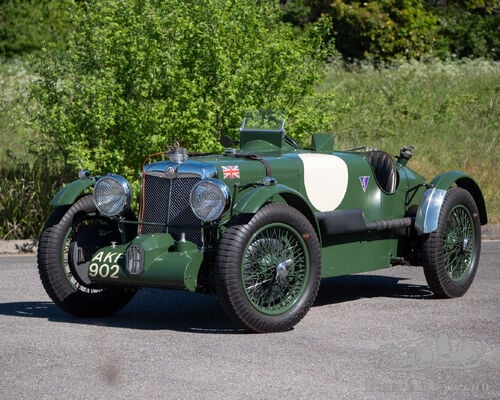
K3 Replica on KN Chassis
"The K3 Magnette must rank in the history books as the most famous and successful of all the record breaking MGs. With only 33 examples produced durin..
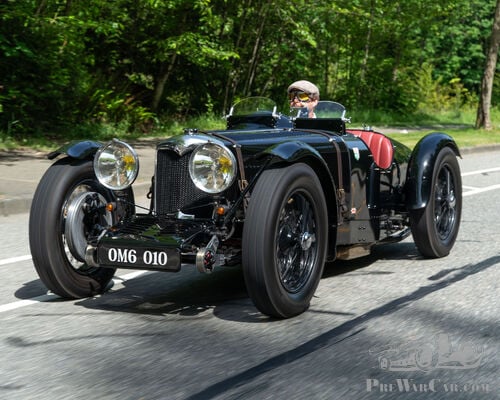
Riley 14/6 Special 1933
The ExperienceStep into the golden age of British motoring. This 1933 Riley 14/6 Special is a masterclass in pre-w..
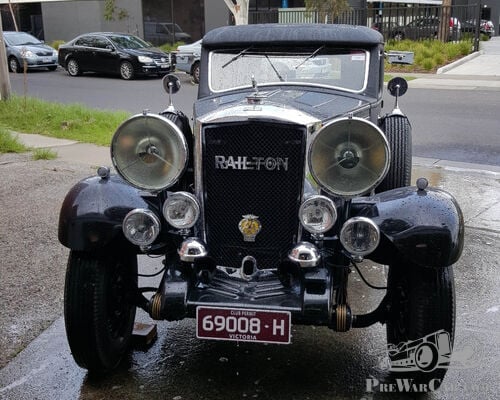
Railton straight 8 sports coupe for rallying REDUCED PRICE run with the bentleys at a fraction of the price
1934 Railton Sports CoupeBuilt for long distance rallyingRebuilt 2017built up at a cost of $160,000AUD, OFFERED FOR SALE AT A ..