The global magazine and marketplace for classic car enthusiasts, by enthusiasts.


Filter
Classic Talbot for sale - Talbot cars for sale
Change your filters to get results, or show all
Sorry, there are no results with your filters Cars
.
Talbot
1903 – 1938
Clement-Talbot Ltd, North Kensington, London W.10
From 1903, Clement-Talbot Ltd, a company backed by the Earl of Shrewsbury and Talbot, began importing the French Clément car into Britain; in spite of its name and an interest held by Adolphe Clément, the concern was British, and by the end of the year its cars were called Talbot cars. The 1904 models Talbot cars were a 6hp single, and 11hp twin, and two big fours. All of the Talbot cars had shaft drive and side valves in T-heads, except for the biggest, the 27hp voiture de luxe Talbot car, which used overhead inlet valves and a single camshaft. Trucks, buses and boats were also advertised, next to Talbot cars. Promotion of the Talbot car, which was at first in the hands of the managing director, D.M. Weigel, was energetic and successful.
By the end of 1904, an impressive Talbot car factory had been built, complete with test track, and in the following year British-assembled, and partly British-made Talbot cars emerged from it. A wide variety of types Talbot cars was listed, from an 11hp twin to a great 50hp 4-cylinder Talbot car. One model that was to be famous, the 12/16hp Talbot car, had already been designed. French cars were still being imported by the Talbot car company. However, the 20hp Talbot car of 1906 was the first British-made Talbot car. It was designed by C.R. Garrard, and while still conventional, this Talbot car had an unusually efficient engine of 3.8 litres’ capacity. Both this and the 2.7-litre ‘12/16’ Talbot car were fast cars that quickly made a name for themselves in competitions; the slogan for the Talbot cars became ‘The Invincible Talbot’. For 1907 a 3-litre 15hp, a Talbot car in the same mould, superseded the ‘12/16’. By 1908 this Talbot car was the only British chassis offered, into which could be installed 15hp, 25hp or 35hp engines. The Talbot car popularity was due to a combination of smoothness, reliability, speed and reasonable price. The French range Talbot cars was still listed. A six was introduced for 1910, and the 4½-litre 25hp was revised by G.W.A. Brown with an L-head valve arrangement. This model Talbot car, highly tuned and lightened, and fitted with a racing body, became the first car to cover 100 miles in an hour, at Brooklands in 1913 in the hands of Percy Lambert. In the same year a new model Talbot car, the 2.6-litre 15/20hp, was introduced. This Talbot car and the 25hp, now called the ‘25/50’, were the famous cars that kept the Talbot car name before the public eye in competitions. A sports model Talbot car of the latter was also listed. By this time, the French range Talbot cars had been dropped.
In 1919 Clement-Talbot was taken over by another French-sounding, but in fact British-owned firm, the Société Alexandre Darracq of Paris. Darracq proceeded to acquire Sunbeam as well, but private Talbot car policy was at first unaffected. The 25/50hp and 15/20hp Talbot cars were continued. For 1922, however, the new 1-litre Darracq light car was offered as the 8/18hp Talbot car. In the Talbot tradition, this Talbot car was a solid car with above-average performance and handling. The push-rod overhead valve engine had coil ignition, there were only two seats in the Talbot car, there was no differential, and suspension was by quarter-elliptic springs all round. Both acceleration and brakes of the Talbot car were excellent; in other words, this Talbot car was a light car more typical in France than of England. Georges Roesch, who had been Chief Engineer since 1916 and had already devised the Talbot 12hp of 1919, a Talbot car which was never put on the market, quickly revised the ‘8/18’ Talbot car as the 10/23hp, which was more ‘English’ in that the Talbot car had a long, wide, roomy body, and a differential, with an enlarged bore and 1100cc to cope with the added weight.
From 1923 to 1926, the Talbot car company tried to exist on the ‘10/23’ Talbot car and a series of obscure small sixes of which few Talbot cars were made. The pre-war big four Talbot cars had been dropped, but nothing as popular had been found. Clement-Talbot cars were at a very low ebb when Georges Roesch saved them with a one-model policy, based on a small six of the type just becoming fashionable. However, the 14/45hp Talbot car was better than the rest because the Talbot car combined efficiency and high quality with comfort, roominess and smoothness. Considering all this, the price of the Talbot car was not high. It was, in fact, Roesch’s intention to provide the characteristics of the Rolls-Royce 20hp to the Talbot car but with half the engine size, weight and price. The cubic capacity was only 1665cc (61x95mm). The reciprocating parts, including the overhead valves, were very light, and the compression ratio was notably high, enabling revolutions and power output to be high also. Even so, the engine of the Talbot car was an unusual combination of silence and flexibility. The brakes were excellent, though it was suprising to find only quarter-elliptic springs at the rear of the Talbot car. The car’s main drawback was weight: bodies of these Talbot cars were very spacious, mounted on a deep, stiff but heavy frame with a long wheelbase. However, most Talbot car customers did not want ultra-high performance; the 60-65mph of the ‘14/45’ Talbot car was very good for such a large car with so small an engine.
The Talbot car company’s crisis had allowed no time for development, so the new Talbot car came straight off the drawing board to the public; but the Talbot car was so good in design that there were no major snags, and the Talbot car firm sold all they could make. The engine of the Talbot car was very difficult to work on without garage equipment, but the ‘14/45’ Talbot car was designed for replacement rather than repair of parts: another very modern, if not entirely desirable, feature. The design was obviously capable of great development, and during 1930 the first stages were announced – the Talbot 75 and 90. Both Talbot cars had the same size of engine; the ‘14/45’ Talbot car with an enlarged bore, providing 2¼ litres. The ‘75’ Talbot car was a touring model available alongside the ‘14/45’ to those who wanted a little more performance, while the ‘Talbot AM90’ was a more highly-tuned sports Talbot car, giving over 80mph with the same refinement. This Talbot car was sold in closed as well as open form, but the most handsome body was the standard sports tourer. Additionally, a cheaper Light Six 14/45 Talbot car with a shorter chassis was added at the lower end of the range.
With the ‘Talbot AM90’ began Talbot cars second lease of life as a distinguished sporting make. Third and fourth places in the Le Mans 24 Hour Race were followed by class wins of Talbot cars in the Irish Grand Prix, the Ulster Tourist Trophy Race and the Brooklands 500 Miles Race. In spring 1931 the Talbot 105 was introduced with a new, 75x112mm engine providing 3-litres. To improve the breathing, the valves were in a staggered arrangement instead of bing in line as hitherto. All types of body, from saloon to four-seater sports, were offered on this Talbot car chassis. The last Talbot car was a 100mph machine. The bigger engine of the Talbot car was difficult to start, in spite of assistance from two 12-volt batteries, for the starter was not geared down. It was no help when the optional Wilson self-changing gearbox was fitted from 1933. In competitions, the Talbot car name went from strength to strength. The ‘Talbot 105’ came 3rd in the Irish Grand Prix and at Le Mans, 4th in the Tourist Trophy and 2nd in the 500 Miles Race. A 105 tourer Talbot car took home a Coupe des Glaciers after a fault-free performance in the Alpine Trial. The Coupe des Alpes team prize was won in 1932 by Talbot 105s, and in that year came a 2nd place in the Brooklands 1000 Miles Race (which replaced the Double Twelve), and 3rd place at Le Mans and in the 500 Miles Race with a Talbot car.
These racing successes were won by Talbot cars prepared by Fox & Nicholl Ltd with works support; in spite of the fame and success of the Talbot car, the Sunbeam-Talbot-Darracq group had been in financial trouble since 1930 and earlier, and racing was a luxury. At the end of 1932, however, Fox & Nicholl’s participation was discontinued and the great run of triumphs for Talbot cars ended. The normal production Talbot cars continued to do well. In 1932 the Talbot 65, a new model basically the same as the ‘14/45’, was announced. The ‘Talbot 95’, consisting of the ‘Talbot 105’ engine in a longer wheelbase for more sedate use, was introduced for 1933. In the following year Talbot cars with the self-changing gearbox were given a centrifugal clutch to avoid drag, and for 1935 there appeared the last developments of the standard type Talbot car, the ‘Talbot 110’. This superb Talbot car had a larger bore than the 105, giving 3½-litres. Early in 1935, however, Rootes gained control of Clement-Talbot. The ‘Talbot 65’ was dropped for 1936 in favour of the Rootes Talbot Ten, a Hillman Minx-based design, and by 1938 the last Roesch survivor, the ‘Talbot 110’ was gone.
Source: Georgano, encyclopedia of motorcar; TRN
The information is written with the greatest of care. However, if you have any suggested amendments please contact us at office@prewarcar.com


Featured
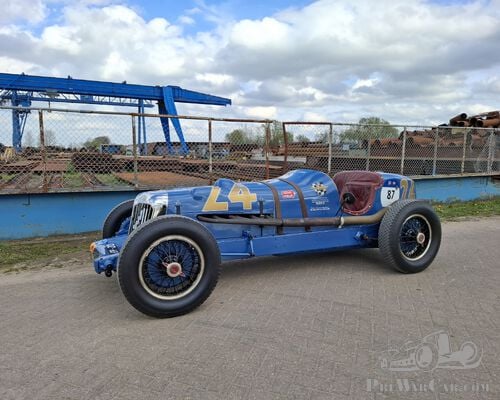
1932 - Graham " Lucenti " Indianapolis
Original participant of the 1932, 1934 and 1935 Indy 500. Best result: finishing 10th overall in the 1934 Indy 500 with driver “Herb” Ardinger...
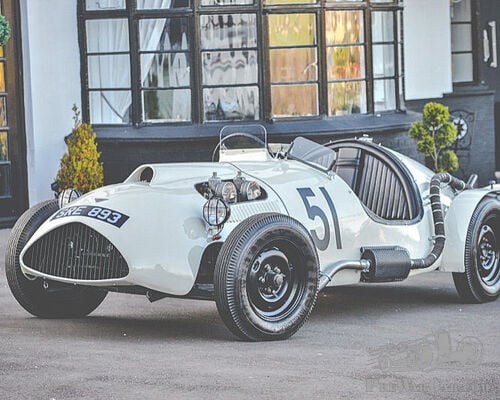
1933 Alvis 3.0 Special - One-Off Alloy Body | Period Competition Car | Featured in “Alvis – A Century of Drivers”
1933 Alvis 3. 0 Special - One-Off Alloy-Body | Period Competition Car | Featured in “Alvis – A Century of Drivers”