The global magazine and marketplace for classic car enthusiasts, by enthusiasts.


Filter
Classic Thomas for sale - Thomas cars for sale
-

Fiat 509 Torpedo / Spider – Exceptionally Original and Complete
A Rare and Highly Original Example with Long-Term Dutch HistoryOffered for sale is an exceptionally original and remarkably complete Fiat 509 Torpedo / Spider, preserved with many of its original components, fittings and period details still intact.For the serious collector of early Italian motor cars, its principal appeal lies not.. -
1929 Delage DMN (6 Cyl.) Tourer
Delage is a marque synonymous with style and a sporting history. This example is no exception, wearing a stunning body in the style of Vanden Plas. Its most adequately powered by its 3.8 liter overhead valve, straight six engine. The DMN offered the larger valves that would be used in the D8 model, and a lightened fly wheel. The 6 cylinde.. -
Singer 9 Le Mans Special Speed in British Racing Green, bouwjaar 1935
Prachtige Singer 9 Le Mans Special Speed. (De Singer 9 Le Mans werd uitgebracht na het succes van Singer in de gelijknamige 24u race.) 4 cilinder in lijn, 972cc, 34 pk met dubbele solex carburators. De special speed heeft een getunede motor met dubbele carburators en een versnellingsbak met kortere overbrenging.De buitenkleur is Br.. -
C1926 DFP open
Rare DFP from c1926Mechanical complet, Missing interior and hood topno documents,can see in LisbonCan help with transportchassis # 40 273 -
Citroën B2, 10hp, 1923 Coupé docteur
Der Typ B2 war ab 1921 das zweite Modell, das der französische Hersteller Citroën baute.Das hier angebotene Fahrzeug von 1923 besitzt eine seltene geschlossene Kabine "Coupé docteur" mit 2 Sitzplätzen plus Notsitz. Es scheint das einzige überlebende Fahrzeug dieser Bauart mit dem stärkeren 10-hp-Motor (1452 ccm) und mit langem Radstand zu.. -
Horch 854 – A Masterpiece of Automotive Craftsmanship (1939)
This Horch 854 represents one of the finest examples of pre-war German luxury engineering. Built on the shorter and more agile 854 chassis and equipped with the more powerful A-engine, this vehicle combines elegance, rarity, and exceptional craftsmanship. Originally, only 7 chassis of the 854 series we.. -
1928 Mercedes Benz SSK Rebuild
A faithful, high-quality rebuild of an SSK, carried out in 2003 by a renowned specialist in GermanySubsequently owned and actively used by a single owner for 20 years Original 1929 supercharged engine with impressive performanceComprehensive documentation availableEligible to participate in numerous histo.. -
1936 Chevrolet - 2D Business Coupe
1936 Chevrolet - 2D Business Coupe*** in Excellent condition ***Engine: Inline 6 cil SixDisplacement: 206.8 cu. in.Horsepower: 79 @ 3200 RPMWheelbase: 109 inches - 276.86 cmThe 1936 Business Coupe was a more practical approach as 2 passengers could cram in behind the front riders. Primarily a salesman's car wit.. -
2X BUICKS !! 1941 Buick Roadmaster 76s Coupe + 1948 Buick Roadmaster 2 doors serie 79, convertible
Car no 1.1941 Buick Roadmaster 76s Coupe ***one price two cars, both cars in Excellent conditions***Engine : 320 cu in (5.2 L) Fireball I8, 168hpTransmission : 3-speed sliding shift manualWheelbase : 126.0 in (3,200 mm)Length 1941 : 215.0 in (5,461 mm)Sold : 3.991 unitsThe Roadmaster Series 76s, f.. -
1932 Rolls Royce 20/25 H/J/ Mulliner Sports Saloon (Woolf Barnato.)
1932 Rolls Royce 20/25 H/J/ Mulliner Sports Saloon (Woolf Barnato.) Chassis number: GBT37 Registration Number: GX41 Ordered new for Captain Woolf Barnato whom was residing at 50 Grosvenor Square at the date of order. The car was carefully specified by him to include a number of ..


Thomas
US, 1902 – 1919
(1) E.R. Thomas Motor Co, Buffalo, N.Y., 1902 – 1911
(2) E.R. Thomas Motor Car Co, Buffalo, N.Y., 1911 – 1919
The first Thomas car was the Autotwo of 1899, but from 1900 to 1902 the Thomas car company built engines only, having granted a licence to the Buffalo Automobile & Auto-Bi Company to build light Thomas cars and motorcycles. In 1902 Thomas cars took over Buffalo’s operations and in July 1903 introduced a touring Thomas car powered by a 24hp 3-cylinder in-line engine. A De Dion-type bonnet was used on the Thomas car with a gilled-tube radiator slung low in front, but by November 1903 this had been replaced by a conventional bonnet and honeycomb radiator. These Thomas cars used double chain drive. For 1905 the Thomas car model was called a 24/30hp, and this year saw the introduction of larger 40 and 50hp 4-cylinder Thomas cars, together with a 60hp six. The name Thomas Flyer was applied to the Thomas cars from 1905 onwards, and a wide range of bodies was offered on Thomas cars, from two-seater racer to limousine. The most famous model Thomas car was the Thomas-Flyer K6-70, with a 72hp 6-cylinder engine; it was one of these Thomas cars which won the 1908 New York to Paris Race.
One chain-driven Thomas cars was continued into 1909, but later Thomas cars tended to be more sedate, with emphasis on town cars and landaus. In 1911 and 1912 only 6-cylinderTHomas cars were made. The Model 6-70 was continued to the end, its massive 12.8-litre engine being the largest in the range. Thomas cars were listed up to 1919, available to special order only.
GB, 1903
W.F. Thomas, Birmingham
The English Thomas car used an 8hp 2-cylinder engine mounted at the front, driving via friction transmission and chain final drive. A 6hp single-cylinder Thomas car, and a 10hp twin were planned, but not built.
Source: Georgano, encyclopedia of motorcar; GMN, GNG
The information is written with the greatest of care. However, if you have any suggested amendments please contact us at office@prewarcar.com


Featured
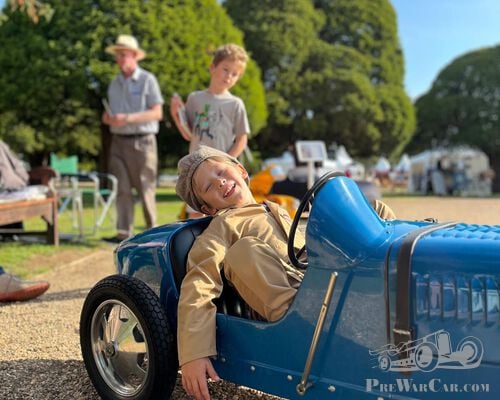
Bugatti type 52 Crosthwaite and Gardener
Bugatti Type 52 tool room copyThis is a Tool Room Copy of the junior electric cars modelled on Type 35s created for Bugattis clients I from..
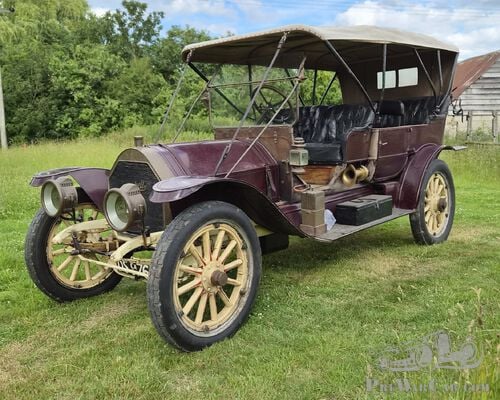
1910 Mitchell Model S - 50HP Six Cylinder
Based in Racine, Wisconsin and being the largest wagon manufacturer in the USA, Mitchell-Lewis produced their first motor car in 1903. Sales grew ..
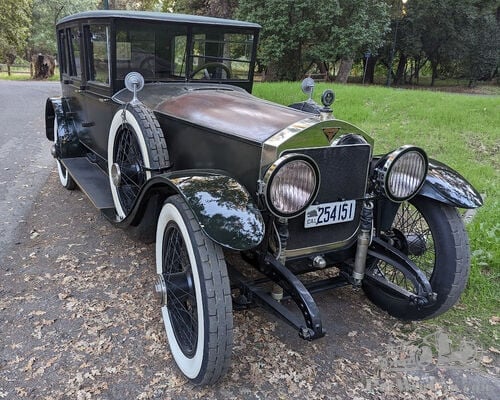
1916 Simplex, Crane model 5
1916 Simplex, Crane MODEL 5CUSTOM MADE HISTORIC PRESERVATION VEHICLE – READY TO TOUR!This Simplex recently completed th..