The global magazine and marketplace for classic car enthusiasts, by enthusiasts.


Filter
Classic Tracta for sale - Tracta cars for sale
-

1936 Chevrolet - 2D Business Coupe
1936 Chevrolet - 2D Business Coupe*** in Excellent condition ***Engine: Inline 6 cil SixDisplacement: 206.8 cu. in.Horsepower: 79 @ 3200 RPMWheelbase: 109 inches - 276.86 cmThe 1936 Business Coupe was a more practical approach as 2 passengers could cram in behind the front riders. Primarily a salesman's car wit.. -
2X BUICKS !! 1941 Buick Roadmaster 76s Coupe + 1948 Buick Roadmaster 2 doors serie 79, convertible
Car no 1.1941 Buick Roadmaster 76s Coupe ***one price two cars, both cars in Excellent conditions***Engine : 320 cu in (5.2 L) Fireball I8, 168hpTransmission : 3-speed sliding shift manualWheelbase : 126.0 in (3,200 mm)Length 1941 : 215.0 in (5,461 mm)Sold : 3.991 unitsThe Roadmaster Series 76s, f.. -
1932 Rolls Royce 20/25 H/J/ Mulliner Sports Saloon (Woolf Barnato.)
1932 Rolls Royce 20/25 H/J/ Mulliner Sports Saloon (Woolf Barnato.) Chassis number: GBT37 Registration Number: GX41 Ordered new for Captain Woolf Barnato whom was residing at 50 Grosvenor Square at the date of order. The car was carefully specified by him to include a number of .. -
4 ½ Litre Vanden Plas Tourer
Chassis AD3652 was delivered 90 years ago from Mayfair by Jack Olring & Co to a Mr Grout. A sports four seater with fully valanced wings in green. This heavy chassis 4 ½ model was built to the latest specification including self-wrapping brakes, electron engine etc. and was unusually delivered with an aluminium sump and long bonnet. Dr William .. -
Speed Six Close Couple Coupe
This matching numbers Speed Six Bentley was supplied new to Viscount Mandeville the 10th Duke of Manchester. Termed a ‘Folkestone’ close-coupled saloon by the coachbuilder Martin Walter it was the second of only two built. The 1930 Vintage Bentley Speed Six, registration GJ755, has been in the Medcalf family ownership for over 40 years. Campaigned .. -
Bugatti type 52 Crosthwaite and Gardener
Bugatti Type 52 tool room copyThis is a Tool Room Copy of the junior electric cars modelled on Type 35s created for Bugattis clients I from 1927-36. There was a short and long chassis versions, the long chassis was 10 cm longer.Renown engineers Crosthwaite and Gardener famous for their Bugatti and Auto Union built this exac.. -
1937 Delahaye 135 S — Vanden Plas (Brussels) Coachwork — Chassis No. 47473
Here is one of the true greats of the golden age: a Delahaye 135S, the top-tier competition variant of the chassis, dressed in coachwork by Vanden Plas of Brussels. This particular car, No. 47473, is a race chassis rebody in drop-top coupe form that runs and drives today, its rebuilt engine backed by original gauges that still read true. .. -
BMW 319 Drauz Cabriolet 1936
Beautiful and powerfull BMW 319 CabrioletCabriolet Body build by Drauz from Heidelborn.Engine rebuild by previous owner.Been in a BMW collection for a long preriod in the NetherlandsRegistered in the Netherlands since 1959Now on a Belgium road registration -
Ford V8 Pickup 1933
Beautifully restored Ford V8 Pickup.Repainted in the original Ford colours, Chicle drab grey with black fenders.Engine overhauledBeautiful interior.Painted loading floor.Dutch license plate -
1925 Lanchester 40hp with spectacular Skiff bodywork.
This unique Lanchester 6.2 litre, 6-cylinder car has teak & ash Skiff touring bodywork. Derived from George Lanchester's design which "follows in the beautiful lines of a racing boat", it is indeed eye-catching and built to the highest standards. Its two hoods fold away into the bodywork so as not to impede the eye-lines of the sloping tail...


Tracta
France, 1926 – 1934
SA des Automobiles Tracta, Asnières, Seine
Towards the end of the 1920s, several French manufacturers took up front-wheel drive, but only one made a success of it in this period. J.A. Grégoire’s Tracta cars was unusual, too, in that Tracta racing cars preceded production Tracta cars. Indeed, the Tracta car was always primarily a sporting make.
First made in 1926, and raced during 1927, the Tracta car was offered to the public at the Paris Saloon of the latter year. An ohv 4-cylinder engine of 1.100cc drove the front wheels of the Tracta car, with the assistance, if required, of a Cozette supercharger. The 4-speed gearbox of the Tracta car was in front of the engine. Sliding-pillar independent front suspension was used, with inverted quarter-elliptics at the rear of the Tracta car. The front wheels were pronouncedly crab-tracked, and the front brakes of the Tracta car were inboard.
These compact, low-built sports Tracta cars were entered consistently in the Le Mans 24 Hours Race, finishing in 1927, and the Tracta car took second place in their class in 1928 and the Tracta car won it in the following two years. By 1929, there were two models Tracta car: a two-seater Tracta car that came just within the 1½-litre racing class, and a 1.600cc four-seater saloon Tracta car. They were capable of 80mph and nearly 70mph respectively. The latter model Tracta car was continued until 1934, accompanied by two 6-cylinder types, with 2.7-litre Continental sv and 3-litre Hotchkiss ohv engines.
Source: Georgano, encyclopedia of motorcar; TRN
The information is written with the greatest of care. However, if you have any suggested amendments please contact us at office@prewarcar.com


Featured
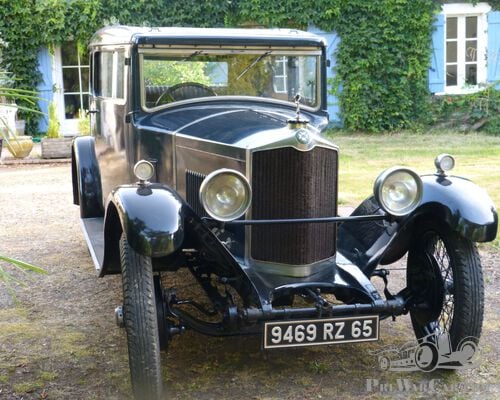
2-door 15.7hp six cylinder saloon
The car is a 6-cylinder 2-door saloon described as the "Sportsman's coach built coupé". Only three of this model are known to have survived. I have..
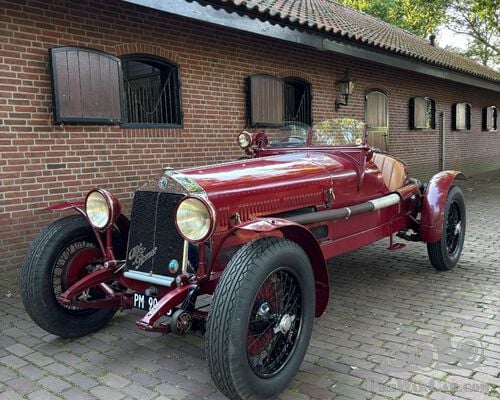
1930 Alfa Romeo 6C 1750 Spider
1930 Alfa Romeo 6C 1750 Spider with complete history from delivery to first owner in 1930 in Firenze till today with copy Libretto/license plate.
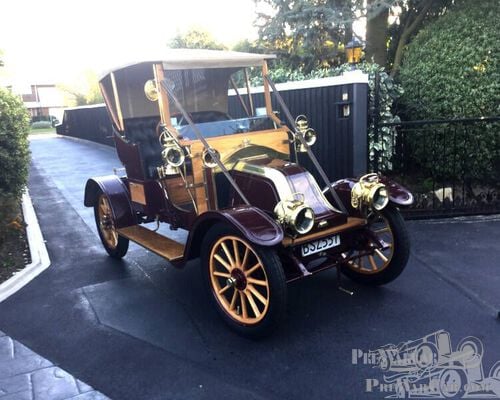
Renault /AX 1913 - named Gigi
Purchased fully renovated from New Zealand and imported to the UK. We have owned her for over10 years. Gigi is currently living in France where she..